
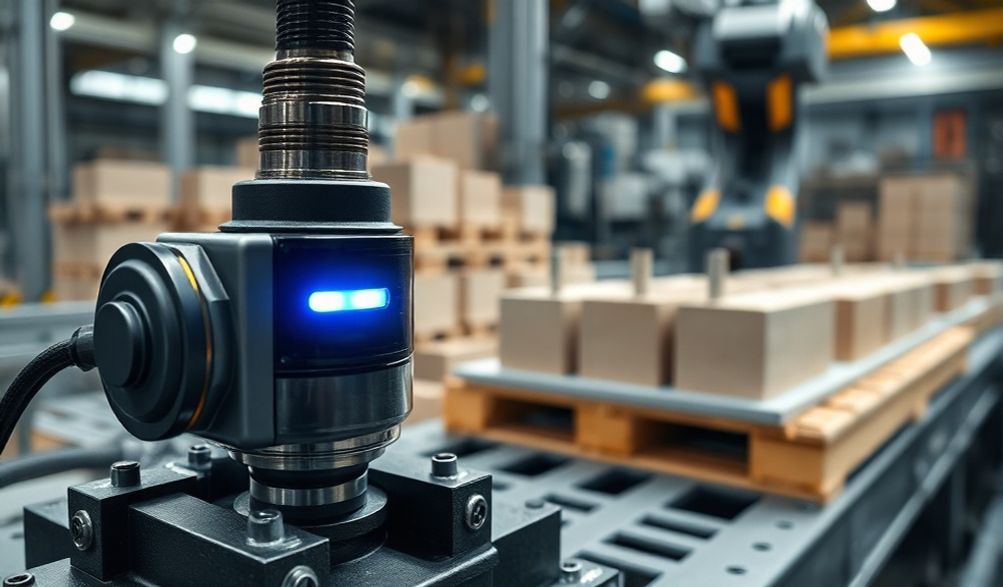
Smart Brick Machine Interlock: Ang Kumpletong Gabay sa Kaligtasan, Kahusayan, at Automasyon
Panimula
Isipin mo ito: nasa gitna ka ng isang mataas na priyoridad na order. Ang ritmikong kalampag ng brick press ang tibok ng puso ng iyong planta. Biglang, ang isang hindi nakaayos na paleta ay nagdulot ng pagka-bara. Huminto ang press. Nagkalat ang hilaw na materyal sa conveyor. Isang operator, nagmamadaling mag-ayos ng harang, nilampasan ang isang panangga, at nanganganib na magkaroon ng malubhang pinsala. Sumunod ang oras ng paghinto, nasayang na materyal, at isang nakakabahalang pangamba sa kaligtasan. Ngayon, paano kung may isang sistema na makapipigil sa buong pangyayaring ito?
Ito ang pangako ngSmart Brick Machine InterlockHigit pa sa isang simpleng safety gate, ang integrated na electronic at software control system ang siyang nagsisilbing sentral na katalinuhan para sa buong linya ng paggawa ng ladrilyo. Ito ang namamahala sa sunud-sunod, ligtas, at episyenteng operasyon ng panghalo, conveyor, pindutera, at tagapagpatong, na nagpapalit sa mga ito mula sa mga hiwalay na makina tungo sa isang buo at matalinong yunit.
Sa komprehensibong gabay na ito, ating lilinawin ang mahalagang teknolohiyang ito. Lalampasan natin ang mga pangunahing kaalaman upang ipaliwanagAnoang mga sistemang ito ay tunay nga,bakitAng mga ito ay hindi maaaring pag-usapan para sa moderno at mapagkumpitensyang pagmamanupaktura, atpaanoSila ay lubos na nagbabago sa produktibidad ng halaman, kalidad ng produkto, at kaalaman sa operasyon. Sa pagsasama-sama ng mga prinsipyo mula sa inhinyeriya ng awtomasyon sa industriya, pinakamahusay na kasanayan sa disenyong mekanikal, at karanasan sa aktwal na planta, ang gabay na ito ay naglalayong magbigay sa iyo ng mapagkakatiwalaan at magagamit na kaalaman upang makagawa ng mga maalam na desisyon para sa iyong operasyon.
Ano ang Smart Interlock System sa Paggawa ng Brik?
Sa puso nito, ang isang smart interlock system ay isang network ng mga sensor, controller, at actuator na nagpapatupad ng isang ligtas at lohikal na pagkakasunod-sunod ng mga operasyon. Tinitiyak nito na ang Machine B ay hindi maaaring magsimula hanggang sa matapos ng Machine A ang kanyang gawain, at na walang proteksiyon na takip ang maaaring mabuksan habang gumagalaw ang isang mapanganib na mekanismo.
Lampas sa Pangunahing Tarangkahan ng Kaligtasan
Noong una, ang kaligtasan ay nakadepende sa mga mekanikal na pangharang at sa pagiging alerto ng mga operator. Ang isang simpleng pintuang may limit switch ay maaaring pumigil sa isang pindutang makapag-siklo kung nakabukas ang pinto. Subalit, ito ay isang binary at payak na pamamaraan.
A Matalinong Sistema ng InterlockIto ang ebolusyon. Ito ang "sentral na sistemang nerbiyos" ng iyong linya ng produksyon. Hindi lang nito sinisiyasat kung nakasara ang isang pinto; sinusubaybayan nito ang eksaktong posisyon ng hulma, ang presyon sa silindrong haydroliko, ang bilis ng conveyor, at ang presensya ng isang palyete—sabay-sabay. Gumagawa ito ng mga komplikadong desisyon sa loob ng ilang millisecond upang i-optimize ang daloy at matiyak ang kaligtasan.
Mga Pangunahing Bahagi ng Sistema
Ang katalinuhang ito ay itinatag sa tatlong magkakaugnay na haligi:
-
Mga Sensor at Mga Kagamitan sa Pag-input:Ito ang mga "mata at tainga" ng sistema.
- Mga Sensor ng Kalapitan:Tukuyin ang pagkakaroon o kawalan ng pallet o hulma.
- Rotary Encoder:Eksaktong sukatin ang posisyon ng umiikot na ehe (halimbawa, sa isang panghalo o drive ng conveyor).
- Mga Pandetect ng PresyonSubaybayan ang presyong haydroliko o pneumatiko sa pindutin.
- Sistemang PangitainMga kamera na makakapag-verify ng pagkakahanay ng ladrilyo o makakapag-check para sa mga depekto.
- Safety Light Curtains:Lumikha ng isang hindi nakikitang hadlang; kung masira ito, hihinto ang makina.
-
Ang Logic Controller (PLC/Industrial PC): This is the “brain.” The Programmable Logic Controller (PLC) or industrial computer constantly reads inputs from all sensors, processes this data against its programmed logic (the sequence of operations), and sends output commands.
-
Actuators & Output Devices: These are the “muscles” that execute commands.
- Solenoid Valves: Control the flow of air or hydraulic fluid to cylinders.
- Motor Drives & Servo Controllers: Start, stop, and regulate the speed of motors.
- Human-Machine Interface (HMI): The touchscreen panel where operators monitor the line, view alarms, and adjust parameters (with appropriate access levels).
How It Works: A Step-by-Step Cycle
Let’s follow a simplified, intelligent cycle for a single brick:
1. The PLC checks the “mixer empty” sensor. Once clear, it starts the mixer discharge and the raw material conveyor.
2. A “mold full” optical sensor at the press confirms the precise amount of material is present. The conveyor stops.
3. The system verifies the press safety guard is closed at that no part of an operator is detected via a light curtain. Only then does it send the signal to activate the press solenoid valve.
4. During pressing, a pressure transducer ensures the correct tonnage is achieved and held for the set time.
5. After pressing, an encoder confirms the ejection plate is fully retracted. A proximity sensor then checks that the pallet on the transfer car is perfectly in position.
6. Once all these conditions are “TRUE,” the PLC commands the ejector to push the green brick onto the pallet, and the cycle repeats.
This seamless, sensor-verified handoff between each stage is the essence of smart interlocking.
Key Benefits of Implementing a Smart Interlock System
Investing in a smart interlock system is not merely a safety compliance cost; it’s a strategic driver for operational excellence with measurable returns.
Uncompromising Operator & Machine Safety
This is the primary and most critical benefit. The system enforces safety procedurally.
* It physically prevents access to dangerous areas (like the press or shear point) during an active machine cycle.
* It incorporates safety-rated functions like two-hand control (requiring both hands to be on safe buttons to cycle) and anti-tie-down protection to prevent bypassing.
* It provides a documented, electronic framework that helps ensure compliance with stringent international safety standards like ISO 13849 (Safety of Machinery) and ANSI B11 series, reducing liability and protecting your workforce.
Dramatic Boost in Production Efficiency
Efficiency is where the smart system pays for itself.
* Eliminates “Wait States”: Perfect synchronization means the conveyor starts the moment the mixer is ready, and the press cycles the instant the mold is full. No more manual timing or hesitation.
* Minimizes Jams and Downtime: By verifying conditions at every step, it prevents the misalignment and misfeeds that cause major stoppages.
* Enables Faster Cycle Times: With reliable, automated checks, machines can often run at their optimal speed with confidence, as the system guarantees safety isn’t compromised for speed.
Superior na Kalidad at Katatagan ng Produkto
A smart system is a relentless quality inspector.
* It ensures precise material volume in every mold, eliminating under-filled or over-filled bricks.
* It guarantees consistent pressing time and pressure, the two most critical factors for brick strength and dimensional stability.
* This rigorous process control drastically reduces waste from cracked, chipped, or malformed bricks, directly improving your yield and material cost.
Enhanced Operational Intelligence & Data
This transforms your plant from a black box into a data-driven operation.
* It automatically calculates Pangkalahatang Epektibidad ng Kagamitan (OEE), giving you a true measure of availability, performance, and quality.
* It logs detailed fault codes and event histories. Instead of “the press stopped,” you see “Fault #47: Pallet Presence Sensor 2 Not Detected at Cycle Start.” This enables predictive maintenance and slashes mean-time-to-repair (MTTR).
* It provides real-time dashboards for plant managers, showing production rates, downtime reasons, and shift summaries at a glance.
Critical Features to Look for in a Smart Interlock System
Not all interlock systems are created equal. When evaluating a system for your brick plant, prioritize these features.
Robust and Redundant Sensor Technology
The system is only as reliable as its sensors.
* Fail-Safe Design: Sensors should be designed to default to a “safe state” (e.g., signal a fault) if they fail or lose power.
* Redundancy: For critical safety functions, look for systems that use two independent sensors (e.g., both a position switch at a pressure check to confirm a cylinder is retracted). This is a core principle of safety-rated systems (Category 3/4, PL d/e per ISO 13849).
Programmable Logic Controller (PLC) Flexibility
The PLC should be a partner, not a constraint.
* It must allow for easy customization of logic for different brick types, sizes, and production “recipes.”
* It should offer straightforward troubleshooting tools, like forcing inputs/outputs (in maintenance mode) and detailed diagnostic buffers.
* Open communication protocols (e.g., Ethernet/IP, Profinet) are essential for seamless integration with weigh scales, material handling systems, or plant-wide SCADA systems.
User-Friendly Human-Machine Interface (HMI)
The HMI is the window into the system for your team.
* It should provide a clear, visual mimic diagram of the entire production line, with color-coded statuses (green for running, red for fault).
* Alarm messages must be intuitive and actionable (e.g., “Mixer Exit Chute Blocked – Inspect and Clear”), not just a numeric code.
* Secure, multi-level login is mandatory to prevent unauthorized parameter changes (Operator, Technician, Manager levels).
Connectivity & Industry 4.0 Readiness
Future-proof your investment.
* The system should support modern Industrial IoT (IIoT) protocols like OPC UA or MQTT for secure data exchange.
* Remote monitoring capabilities (with robust cybersecurity measures) allow managers or support engineers to view line status and assist with diagnostics from off-site, a powerful feature for multi-plant operations or getting expert support.
Integration and Maintenance Best Practices
Successful implementation hinges on careful planning and disciplined upkeep.
Planning for Successful Integration
- Involve Specialists Early: Engage automation engineers or controls specialists during the machine design or purchasing phase. Their input on sensor placement and control architecture is invaluable.
- Conduct a Formal Risk Assessment: Before installation, perform a thorough risk assessment (as required by standards) to identify all necessary hazard points and interlock requirements. Don’t just automate an existing, potentially unsafe process—design a safer one.
Routine Maintenance Checklist
A smart system requires smart maintenance.
* Daily:
* Visual inspection of all sensors for physical damage, dirt, or misalignment.
* Check that safety guards are undamaged and close properly.
* Weekly:
* Perform a functional test of all emergency stop buttons and safety gate interlocks.
* Check pneumatic/hydraulic lines for leaks near sensors and actuators.
* Monthly:
* Verify calibration of critical analog sensors (e.g., pressure transducers).
* Clean optical sensor lenses and check alignment of proximity sensors.
* Review fault logs with maintenance staff to identify recurring issues.
Troubleshooting Common Interlock Faults
When a machine won’t cycle, the interlock system provides the clues.
* Scenario: “Press Will Not Start Cycle.”
1. Step 1: Go to the HMI. What is the active alarm or status message?
2. Step 2: Check the PLC Program. In maintenance mode, view the logic rung that enables the press. Which input condition is not being met? (e.g., “Pallet In Position – FALSE”).
3. Step 3: Inspect the Physical Hardware. Locate that specific sensor. Is it dirty, misaligned, or damaged? Is its indicator light active when a pallet is present?
4. Step 4: Check Wiring. Inspect the sensor’s cable and connection for damage.
* Golden Rule: Always follow formal Lockout/Tagout (LOTO) procedures before conducting any physical inspection or repair. Never bypass an interlock to “keep the line running.”
Mga Madalas Itanong (FAQ)
Q1: Is a smart interlock system only for large, new brick plants?
Isalin ang teksto sa Filipino. I-output LAMANG ang isinalin na teksto. Absolutely not. While they are standard in new, high-end machinery, modular and scalable systems are widely available for retrofitting older machines. For small-to-medium operations, the return on investment from reduced waste, lower downtime, and improved safety can be remarkably fast, making it a viable and strategic upgrade.
Q2: How does this differ from a simple emergency stop button?
Isalin ang teksto sa Filipino. I-output LAMANG ang isinalin na teksto. An e-stop is a critical, but reactive, last-resort safety device—it stops everything when a problem has already occurred. A smart interlock system is proactive and preventative. It is designed to prevent the unsafe condition from arising in the first place by controlling the machine’s normal operation sequence.
Q3: Can the system be overridden for maintenance?
Isalin ang teksto sa Filipino. I-output LAMANG ang isinalin na teksto. Yes, but this must be done under a strictly controlled procedure. This typically involves a secure keyswitch that places the system in a safeguarded “maintenance mode,” combined with a physical lockout/tagout (LOTO) by the technician. All such overrides should be logged by the system. Safety during maintenance is a top priority.
Q4: What is the typical return on investment (ROI) period?
Isalin ang teksto sa Filipino. I-output LAMANG ang isinalin na teksto. ROI varies based on plant size, current efficiency levels, and material costs. However, many plants report a payback period of 12 to 24 months. This is achieved through quantifiable gains: higher throughput, lower scrap rates, reduced energy consumption, and the avoided costs of accidents and unplanned downtime.
Q5: How do we ensure the system remains trustworthy over time?
Isalin ang teksto sa Filipino. I-output LAMANG ang isinalin na teksto. Trust is built on consistent practice. This requires a commitment to regular preventive maintenance (as outlined above), sourcing high-quality, reliable components, keeping PLC and HMI software/firmware updated, and, crucially, ensuring that all operational and maintenance staff are thoroughly trained on how the system works and why it is essential.
Konklusyon
AngSmart Brick Machine Interlock System represents a fundamental shift in brick manufacturing. It is no longer an optional accessory or a mere safety checkbox. It is a foundational component for any operation that aims to be competitive, safe, and sustainable in the modern industrial landscape. It transforms your brick-making machine from a powerful but dumb press into an intelligent, connected, and supremely reliable asset.
By seamlessly weaving together safety, efficiency, quality, and data, this technology delivers a compelling value proposition that touches every aspect of your business. To move forward, we recommend two actionable steps:
- For plant owners and managers: Consult with a certified automation engineer or a trusted integrator to conduct a professional interlock and safety audit of your current production line. This will identify gaps and provide a clear roadmap for improvement.
- When sourcing new equipment or upgrades: Prioritize suppliers and manufacturers who demonstrate deep, proven expertise in both the mechanical art of brick making at the science of industrial control systems. Your machine’s intelligence is as important as its strength.
Embrace this intelligence, and build a stronger, safer, and more profitable future for your plant.
<