
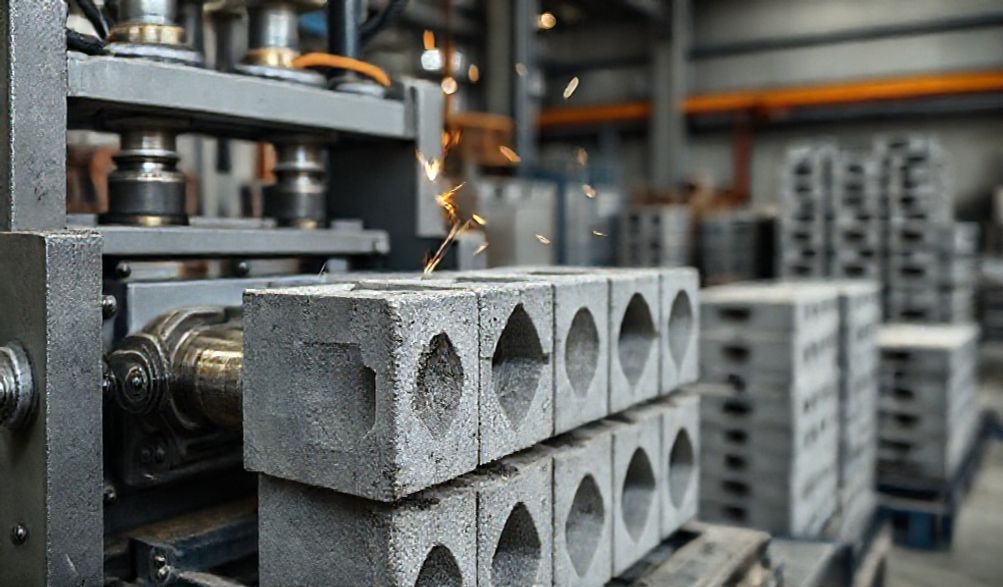
Guide complet sur les machines à blocs de ciment creux : sélection, fonctionnement et retour sur investissement
Introduction
La poussée mondiale pour une construction abordable, rapide et durable a fait du bloc de ciment creux un élément fondamental du monde moderne. Des maisons résidentielles aux complexes commerciaux, ces unités polyvalentes offrent un mélange inégalé de résistance, d'efficacité et de rentabilité. Cependant, le cœur de toute entreprise de fabrication de blocs prospère ne réside pas seulement dans les matières premières—il se trouve dans lamachine à blocs de ciment creuxChoisir le bon est une décision capitale cruciale, aux enjeux élevés, qui peut déterminer le sort de votre entreprise.
Compilé à partir de décennies d'expérience pratique combinée de vétérans de l'industrie, d'ingénieurs mécaniciens et d'opérateurs d'usine chevronnés, ce guide transcende le bruit du marché. Nous comprenons la confusion et les risques inhérents à cet investissement. Un mauvais choix peut entraîner des temps d'arrêt paralysants, des blocs de qualité inférieure et un rendement négatif sur l'investissement.
Cet article constitue votre ressource fiable et complète. Nous irons au-delà des brochures commerciales pour fournir une analyse factuelle et approfondie, couvrant les types de machines, les principes opérationnels de base, le coût réel de possession et des voies claires vers la rentabilité. Chaque conseil s'appuie sur des spécifications techniques, des études de cas concrètes et les meilleures pratiques de l'industrie, vous garantissant ainsi les informations fiables nécessaires pour bâtir des bases solides pour votre entreprise.
Qu'est-ce qu'une machine à blocs de ciment creux ? Principes fondamentaux et avantages
Avant d'investir, il est crucial de comprendre ce que vous achetez et la valeur qu'il crée. Une machine à blocs de ciment creux est plus qu'une simple presse ; c'est un système d'ingénierie de précision conçu pour transformer des matières premières en composants de construction standardisés et à haute résistance.
Définition de la machine et de sa production
Fondamentalement, une machine à blocs de ciment creux est un dispositif qui compacte un mélange semi-sec de ciment, de sable et de granulats (comme de la pierre concassée) dans un moule spécifique. Sa caractéristique déterminante est l'inclusion de « noyaux » ou de « poinçons » à l'intérieur du moule, qui créent les cavités creuses caractéristiques du bloc fini.
Ces cavités ne sont pas un signe de faiblesse, mais une marque de conception intelligente. Elles offrent des avantages significatifs :
* Léger :Réduit la charge permanente totale d'une structure, permettant des fondations plus légères et une manutention plus facile.
* Isolation thermique et acoustique :Les poches d'air à l'intérieur des blocs agissent comme une barrière contre la chaleur et le bruit.
* Efficacité des matériauxUtilise moins de béton pour la même surface de façade, réduisant ainsi le coût des matériaux par bloc.
* Intégration des services publics :Les vides offrent des passages pratiques pour faire passer les conduits électriques et les tuyaux de plomberie.
Fonctionnement : Le processus de production
Bien que la complexité des machines varie, le processus de production fondamental demeure constant. Comprendre ce flux démontre le rôle de la machine à chaque étape.
- Alimentation en matières premières :Des quantités pré-mesurées de ciment, de sable et de granulats sont chargées dans la trémie de la machine.
- Mélange :Les matériaux sont mélangés à fond, souvent avec une quantité mesurée d'eau, pour obtenir une consistance uniforme et semi-sèche.
- Molding and Compaction: This is the machine’s critical function. The mix is fed into the mold box. Simultaneously, two forces act:
- Vibration : High-frequency vibration removes air pockets and ensures the mix flows into every corner of the mold.
- Pression de compactage : A hydraulic or mechanical ram applies intense pressure from the top, densifying the mixture to achieve the required block strength.
- Ejection and Curing: The freshly formed, green block is ejected onto a wooden or steel pallet. It is then moved to a curing area, where it gains strength over time through controlled hydration.
- Palettisation : Once cured, blocks are stacked and prepared for transport.
Key Advantages Over Solid Blocks and Other Materials
Why choose hollow blocks over solid ones or traditional bricks?
* vs. Solid Concrete Blocks: Hollow blocks offer a superior strength-to-weight ratio, better insulation, and lower material cost per unit. They are easier for masons to handle and lay, speeding up construction time.
* vs. Fired Clay Bricks: The production of hollow blocks is faster, more energy-efficient (no kiln firing required), and less dependent on specific types of soil. They also typically offer larger unit sizes, leading to faster wall construction.
Types of Hollow Cement Block Machines: Finding Your Perfect Match
The market offers a spectrum of machines, from simple manual presses to fully automated production lines. Your choice must align with your business scale, budget, and labor strategy.
Manuels / Machines à commande manuelle
These are the most basic type, relying entirely on human leverage to compact the mix.
* Idéal pour : Entrepreneurs testing the market, very small-scale projects (e.g., building your own home), or regions with extremely limited or unreliable power access.
* Avantages : Very low initial investment, simple mechanics with minimal maintenance, portable, no electricity required.
* Inconvénients : Extremely labor-intensive, very low output (typically 100-400 blocks per day), inconsistent block quality dependent on operator strength and technique, not suitable for commercial production.
Machines semi-automatiques
This category strikes the most popular balance for small to medium businesses (SMBs). They use electric power to drive a hydraulic system and vibration table, automating the most strenuous parts of the process.
* Idéal pour : Growing startups and established SMBs aiming for consistent commercial production.
* Avantages : Significantly higher and more consistent output than manual machines (e.g., 800-3000 blocks per 8-hour shift), better block density and strength due to powered vibration and pressure, reduces physical labor to feeding and palletizing.
* Inconvénients : Requires a stable power supply, higher upfront cost than manual machines, requires basic operational training, and some manual intervention is still needed.
Machines de fabrication de blocs entièrement automatiques
These are complete production systems, often with robotic pallet handlers, conveyor belts, and computerized controls.
* Idéal pour : Large-scale manufacturers, industrial plants supplying major construction projects, or businesses focused on maximizing output with minimal labor.
* Avantages : Highest possible output (10,000+ blocks per day), exceptional consistency in block quality, minimal manual labor required (often just supervision and maintenance), can integrate with automated curing and stacking systems.
* Inconvénients : Very high capital investment, requires significant space and industrial-grade power supply, complex maintenance requiring specialized technicians, lower flexibility for short production runs.
Machines à blocs stationnaires vs mobiles
This is another key distinction:
* Machines stationnaires : These are fixed installations, typically the semi-automatic and fully automatic types. They form the core of a block-making plant and are chosen for high-volume, centralized production.
* Mobile Machines (Block Making Plants on Wheels): These are smaller, trailer-mounted units designed for on-site production. They eliminate transport costs for blocks and are ideal for large, remote projects like dams, large housing estates, or infrastructure where transporting finished blocks is expensive.
Critical Factors for Choosing Your Machine (Buyer’s Checklist)
Armed with knowledge of machine types, use this authoritative checklist to evaluate specific models and suppliers. Prioritizing these factors is a lesson learned from countless successful (and unsuccessful) setups.
Évaluation de vos besoins de production
Answer these questions honestly before looking at any machine brochure:
* Daily/Shift Output: How many blocks do you need to produce to meet demand and be profitable? Be realistic about your market.
* Spécifications du bloc What are the standard block sizes (e.g., 4″, 6″, 8″) and types (hollow, solid, paving, interlocking) in demand in your region?
* Espace disponible : Do you have adequate covered space for the machine, raw material storage, and a curing area?
* Alimentation électrique : What is your available electrical power (Voltage, Phase)? Can it support the machine’s motor?
Machine Specifications to Scrutinize
Don’t just look at the price tag; examine the engineering.
* Système de Pression et Vibration : This is the engine of your machine. A high compaction force (measured in tons or kN) and a powerful, balanced vibration system are non-negotiable for producing dense, high-strength blocks that meet ASTM or IS codes. Ask about the vibration motor’s frequency and amplitude.
* Temps de cycle : How many blocks does the machine produce per hour? A faster cycle time means higher potential output. Compare this figure across models in the same category.
* Polyvalence des moules : Can the machine easily accept different mold sets? How quickly can molds be changed? A versatile machine allows you to adapt to market demands for different block styles and paving slabs.
* Qualité de fabrication et durabilité : Inspect the quality of steel used in the frame and mold. Are critical components like hydraulic cylinders and pumps from reputable brands? A machine built with inferior steel will wear out quickly under constant vibration and pressure, leading to frequent breakdowns.
Beyond the Machine: Total Cost of Ownership
The purchase price is just the beginning. A savvy buyer considers:
* Installation et mise en service : Are these services included? Is technical support provided to get your first batch right?
* Formation : Is comprehensive operator training part of the deal? Proper training prevents costly mistakes and accidents.
* Coûts d'entretien : What is the cost and availability of spare parts (like mold liners, hydraulic seals, vibration motors)? A cheap machine with expensive, hard-to-find parts is a false economy.
* Consommation d'énergie : Request the motor power ratings. A more efficient machine saves significant money on electricity over its lifespan.
Operating and Maintaining Your Machine for Longevity
Your machine is a productivity asset. Treating it with care, based on practical expertise, is the single best way to ensure a long service life and consistent block quality.
Raw Material Preparation: The Foundation of Quality Blocks
The best machine cannot compensate for poor raw materials. This is the most common on-site challenge.
* Conception du mélange: Follow a proven mix ratio (e.g., 1 part cement : 6 parts aggregate/sand blend is common for non-load-bearing blocks). The exact ratio depends on your desired block strength and local material properties.
* Qualité des matériaux : Use clean, sharp sand and well-graded aggregates. Avoid silt or organic matter. Cement must be fresh and stored properly.
* Water Content: This is critical. The mix should be semi-dry—just enough water to allow compaction but not so much that the block slumps after ejection. A simple “ball-in-hand” test (the mix should hold its shape when squeezed) is a classic operator technique.
Step-by-Step Operational Guide
- Pre-Start Check: Ensure all guards are in place, the hydraulic oil level is correct, and no tools are left on the vibration table.
- Lubrication : Grease all moving points as per the manual.
- Chargement des matériaux : Fill the hopper with a consistent, well-mixed batch.
- Initiation du cycle : Start the machine cycle. The operator typically fills the mold, initiates vibration/compaction, and then removes the finished block onto a pallet.
- Post-Operation: Clean the mold, hopper, and feed system thoroughly before shutting down. Any leftover mix will harden and cause major issues.
Essential Maintenance Schedule
Preventive maintenance is far cheaper than repair downtime.
* Daily: Clean the machine thoroughly, especially the mold cavity. Check for loose bolts or nuts. Inspect hydraulic lines for leaks.
* Weekly: Check and tighten all electrical connections. Inspect the mold for wear or damage. Lubricate all bearings and guide rails.
* Monthly: Change hydraulic oil and filters as specified. Check the vibration motor mounts and alignment. Perform a thorough inspection of all safety devices.
Troubleshooting Common Issues
- Cracked Blocks: Usually caused by too much water in the mix, excessive vibration, or premature handling of green blocks.
- Poor Surface Finish/Sticking in Mold: Often due to an under-lubricated or worn-out mold, or a mix that is too wet.
- Machine Jam or Low Pressure: Check hydraulic oil level and filters. Look for a failed solenoid valve or a leaking hydraulic cylinder.
Calculating ROI and Building a Profitable Business
A hollow block machine is a business-in-a-box. Understanding the financials is as important as understanding the mechanics.
Initial Investment Breakdown
- Machine Cost: The largest variable, based on type and automation.
- Land & Shed: Cost for the production floor and curing area.
- Raw Material Inventory: Initial stockpile of cement, sand, and aggregates.
- Main-d'œuvre : Wages for operators and helpers.
- Utilities & Installation: Electrical work, water connection, and machine setup.
Operational Cost Analysis (Cost per Block)
This is your key metric. Break down the cost to produce one standard block:
* Matériaux : Cost of cement, sand, aggregate used in one block.
* Main-d'œuvre : (Total daily labor cost) / (Number of blocks produced per day).
* Pouvoir : (Machine’s hourly power consumption * hours run) / (Blocks produced).
* Maintenance & Depreciation: (Estimated annual maintenance cost + machine depreciation) / (Annual production volume).
Exemple : If your total cost per block is $0.50 and the market selling price is $0.80, your gross profit per block is $0.30.
Revenue Projections and Market Strategies
- Pricing: Research local market prices. Your price must cover your cost-per-block and provide a healthy margin while remaining competitive.
- Customers: Identify your target market: local contractors, real estate developers, hardware/construction material retailers, government housing projects.
- Marketing: Quality and consistency are your best advertisements. Offer samples to contractors. Ensure your blocks are neatly stacked and delivered on time.
Key Success Factors
Long-term profitability hinges on:
1. Uncompromising Block Quality: Consistently producing blocks that meet or exceed strength standards builds an unbeatable reputation.
2. Reliable Supply: Never miss a delivery deadline. Build a buffer stock to manage demand fluctuations.
3. Customer Relationships: Work closely with your clients. Understand their needs and be a reliable partner in their projects.
Foire aux questions (FAQ)
Q1: What is the average production capacity of a small-scale hollow block machine?
A: For a typical semi-automatic machine suitable for an SMB, expect a realistic output range of 800 à 2 500 blocs par quart de travail de 8 heures. This varies dramatically based on block size, operator speed, and machine model. Manual machines produce far less, while automatic systems produce far more.
Q2: Can one machine produce different sizes of blocks?
A: Yes, absolutely. This is achieved by changing the mold set. Reputable manufacturers offer a variety of interchangeable molds for different block sizes and styles (e.g., hollow, solid, paving). However, purchasing additional molds is an extra cost, and changing them requires time and care.
Q3: What is the curing time for blocks, and how should they be stored?
A: Blocks gain strength over time. They should remain in their molds on pallets for at least 24 hours before being carefully stacked. For full strength (as per ASTM C90), blocks require a 28-day curing period. Best practice involves keeping them moist (through water spraying or covered storage) for the first 7 days to ensure proper cement hydration.
Q4: Is special training required to operate a semi-automatic/automatic machine?
A: While suppliers provide basic operational training, investing in thorough training is crucial. Proper training ensures operator safety, maximizes production efficiency, minimizes raw material waste, and extends machine life by preventing misuse. It is not a step to be skipped.
Q5: How do I ensure the blocks meet local construction standards?
A: First, use a proven mix design and operate your machine within its specified parameters. Then, have samples of your blocks tested at a certified construction materials laboratory. They will test for compressive strength, water absorption, and dimensional tolerance against relevant standards (e.g., ASTM in the US, IS in India, BS in the UK). This certification is a powerful tool for marketing and building trust.
Conclusion
Choosing the right hollow cement block machine is a strategic decision that hinges on a clear understanding of your production scale, budget, and long-term business goals. It’s an investment that goes beyond metal and motors—it’s an investment in your capability to supply the construction industry.
Our final, hard-earned advice from the field: due diligence is paramount. Whenever possible, visit the supplier’s factory or an existing client’s site to see the machine in operation. Listen to the sound of its operation, observe the blocks it produces, and ask current owners about after-sales service and parts availability. Remember, the cheapest machine can become the most expensive if it leads to downtime and poor-quality products.
Ready to move forward? Use the detailed checklist in Section 3 to crystallize your requirements. Then, approach reputable suppliers with clear, informed specifications. By investing in knowledge upfront, you lay the strongest possible foundation for a profitable, sustainable, and respected block manufacturing business.
<