
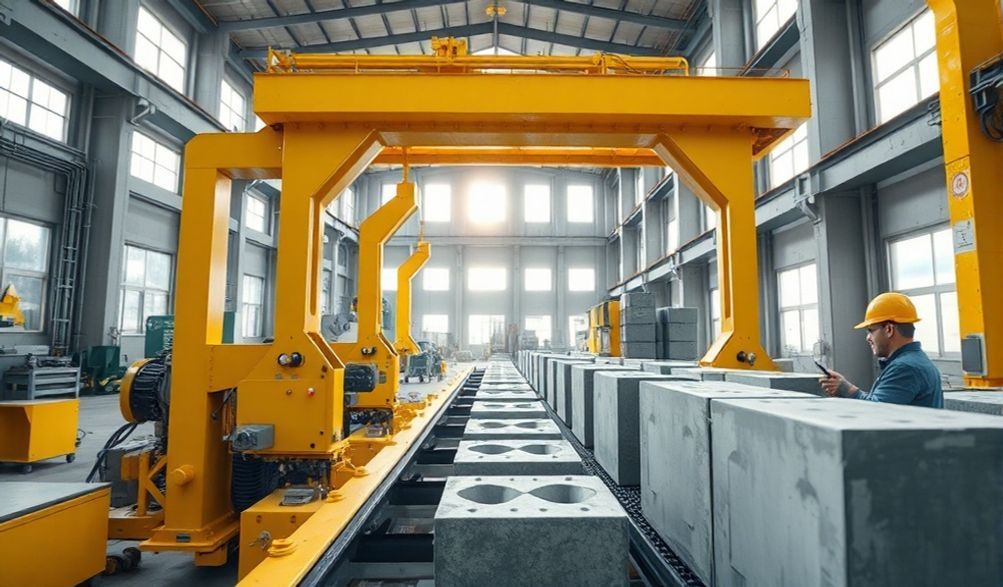
The Ultimate Guide to Brick Manufacturing Machines: Inside the FUDA Block Making Factory
Introduction :
The global construction industry is a relentless engine of growth, with an estimated 15 trillion bricks produced annually worldwide. This staggering demand underscores a fundamental truth: the backbone of modern infrastructure, from housing to commercial spaces, is built one brick at a time. Yet, for decades, meeting this demand was hampered by traditional, labor-intensive methods plagued by inconsistent quality, high waste, and unpredictable output.
Entrez dans le modernebrick manufacturing machine—a technological marvel that has revolutionized the sector. These automated powerhouses are no longer a luxury but a necessity for businesses aiming to scale, compete, and build with unwavering quality. But with numerous manufacturers in the market, how do you identify a partner whose machinery is built on a foundation of reliability and innovation?
This in-depth guide draws on industry expertise and a close examination of the Usine de fabrication de blocs FUDA to help you understand the technology, benefits, and key considerations when investing in a brick manufacturing machine. We prioritize factual, transparent information to support your decision-making, moving beyond sales pitches to deliver the insights you need.
What is a Brick Manufacturing Machine? Core Technology Explained
At its core, a brick or block making machine automates the process of forming raw material into precise, high-strength masonry units. It replaces the variability of manual labor with the consistency of engineering.
Composants principaux et leur fonctionnement
Understanding the machine’s anatomy demystifies its operation. Here’s a breakdown of the key components in a typical automated system:
- Trémie et Alimentateur : The starting point. Raw materials (like concrete mix) are loaded into the hopper, which feeds them in measured quantities onto a conveyor belt or directly into the mixer.
- Mélangeur: This chamber ensures a homogeneous blend of cement, aggregates (sand, gravel), and water. A consistent mix is critical for the final block’s structural integrity.
- Système de convoyeur : Transports the mixed material to the molding area. In advanced lines, this is fully automated and controlled for precise dosing.
- Moule ou Boîte de Moulage : The heart of the machine. This is a precision-engineered steel cavity that defines the block’s shape (e.g., hollow, solid, paving). High-quality, hardened steel molds are essential for product consistency and long life.
- Système hydraulique : The muscle. Hydraulic rams apply immense pressure (measured in KiloNewtons or KN) to compact the material within the mold. This vibration and compression force out air pockets, creating a dense, strong block.
- Panneau de configuration : The brain. Modern machines feature PLC (Programmable Logic Controller) systems that allow operators to set parameters like cycle time, pressure, and vibration. Touchscreen interfaces make operation more intuitive.
Le processus de base : Material is mixed, conveyed to the mold, compacted under high pressure and vibration, and then ejected onto a pallet or curing rack. The cycle then repeats automatically.
Types of Brick Manufacturing Machines
Machines are categorized by their operation and mobility:
- Machines à blocs statiques : High-output stationary plants. They are the core of large-scale factories, often integrated into fully automatic production lines with pallet feeders and stackers.
- Machines à blocs mobiles : Also known as egg-laying or movable block makers. These are self-contained units that produce blocks directly on the ground, ideal for on-site production or smaller businesses with limited space.
- Automatic Production Lines: The pinnacle of efficiency. These integrate the block maker with automatic pallet circulators, stackers, and sometimes curing systems, requiring minimal human intervention for material feeding and block removal.
Materials Used: Beyond Clay
Modern machines offer remarkable versatility, moving far beyond traditional fired clay. The most common material is vibro-compacted concrete, but machines can expertly handle:
* Cement & Standard Aggregates (sand, crushed stone)
* Industrial By-Products like fly ash and slag, promoting eco-friendly construction.
* Quarry Dust & Crushed Waste (like construction debris), enabling sustainable, low-cost production.
* Soil-Cement Mixes for specific applications like interlocking stabilized soil blocks (ISSB).
This material flexibility allows producers to adapt to local resource availability and market demands.
Pleins feux sur le fabricant : À l'intérieur de l'usine de fabrication de blocs FUDA
Choosing a machine is also about choosing a manufacturer. A factory tour—even a virtual one—reveals the commitment to quality that defines a brand.
FUDA’s Legacy and Manufacturing Philosophy
Established with a focus on construction machinery, FUDA has built its reputation on a foundation of engineering precision and scalable solutions. Their philosophy typically centers on providing robust, reliable machinery that offers a clear return on investment for small-to-medium enterprises and large plants alike. Reputable manufacturers like FUDA operate under stringent international certifications (like ISO and CE), which are not just badges but promises of adherence to safety, quality, and performance standards. Continuous R&D investment is what allows such factories to refine hydraulic systems, improve energy efficiency, and develop new mold designs.
A Walk Through the FUDA Production Line
A glimpse into a typical production workflow at a dedicated factory builds immense trust:
- Raw Material & Component Inspection: High-grade steel plates, hydraulic cylinders, and electrical components are sourced and inspected upon arrival.
- Precision Fabrication & Machining: CNC machines cut, drill, and shape critical parts like mold boxes and machine frames with tolerances measured in millimeters.
- Sub-Assembly & Welding: Skilled welders assemble components. Robust welding is critical for withstanding years of high-pressure operation.
- Intégration des systèmes : The hydraulic system, electrical wiring, and PLC controls are installed and integrated.
- Rigorous Quality Control & Testing: This is the most critical phase. Every machine undergoes a no-load test (checking all movements) and a full-load production test. Blocks produced during this test are often measured for dimension and tested for compressive strength to ensure the machine meets its specifications before leaving the factory floor.
- Paint, Packaging, and Dispatch: The finished machine is prepared for its journey, with critical parts protected for overseas shipping.
FUDA’s Machine Range and Specifications
A reputable manufacturer offers a range to suit different needs. Here’s a simplified comparison of common model types:
| Model Type | Output Capacity (8″ Blocks per 8hrs) | Key Power | Primary Feature | Ideal For |
| :— | :— | :— | :— | :— |
| Mobile Block Machine | 3,000 – 6,000 | 7.5 – 11 kW | Produces blocks on ground, no pallets needed. | Start-ups, on-site projects, low-capital entry. |
| Semi-Automatic Machine | 8,000 – 15,000 | 15 – 22 kW | Manual feeding of material/pallets, automatic molding. | Small-to-medium plants scaling up production. |
| Fully Automatic Line | 20,000 – 40,000+ | 30 – 55 kW | Fully automated from mixing to stacking. PLC control. | Large-scale commercial block yards and factories. |
Note: Capacities are approximate and depend on block type and model. Always request factory specification sheets.
Key Benefits of Investing in a Modern Block Making Machine
The shift from manual or outdated methods to a modern machine is transformative. Here’s how your business gains a competitive edge.
Efficacité et productivité inégalées
- High, Predictable Output: Machines don’t tire. A single automatic line can produce thousands of uniform blocks per shift, enabling you to meet large orders reliably.
- 24/7 Operation Capability: With proper maintenance and shifts, production can continue around the clock, drastically accelerating project timelines.
- Achèvement plus rapide des projets : On-site production with a mobile machine eliminates supply chain delays, putting you in control of your building schedule.
Qualité de produit supérieure et constante
- Ingénierie de précision : Every block is an identical replica of the hardened steel mold, ensuring perfect dimensional accuracy for faster, easier bricklaying.
- Force Contrôlée : The calibrated hydraulic pressure and vibration create a dense, high-compressive-strength product that consistently meets or exceeds Normes ASTM ou ISO.
- Professional Finish: Blocks have smooth faces and sharp edges, enhancing the aesthetic appeal of the final construction.
Significant Cost Reduction & ROI
While the upfront investment is substantial, the long-term savings are compelling:
* Économies de main-d'œuvre : One automated line can replace dozens of manual laborers, reducing long-term payroll and management overhead.
* Material Waste Reduction: Precise mixing and molding minimize spillage and reject blocks, optimizing raw material use.
* Efficacité opérationnelle : Faster production lowers the cost per block, improving your profit margins and accelerating the return on your investment.
Versatility and Customization
- Multiple Products, One Machine: By simply changing the mold, you can switch between producing solid blocks, hollow blocks, paving slabs, interlocking bricks, and even decorative landscaping units.
- Adapt to Market Demand: This flexibility allows you to quickly respond to changing customer preferences and tap into multiple revenue streams.
Critical Factors to Consider Before You Purchase
A successful purchase requires careful self-assessment and supplier due diligence.
Évaluation de vos besoins de production
Ask these foundational questions:
* Sortie quotidienne/hebdomadaire How many blocks do I need to produce to meet my business goals?
* Types de blocs : What products are in highest demand in my market?
* Available Space & Infrastructure: Do I have the factory floor space, electrical connection (3-phase power is often required), and raw material storage area?
* Niveau de compétence de la main-d'œuvre : Do I have, or can I train, personnel to operate and perform basic maintenance on an automated system?
Plongée approfondie dans les spécifications des machines
Look beyond the brochure headline. Key specs include:
* Pressure Force (KN): Higher pressure generally produces stronger, denser blocks.
* Temps de cycle : The time to produce one block cycle; faster cycles mean higher output.
* Exigences en matière d'alimentation électrique : Ensure your facility can supply the necessary voltage and phase.
* Niveau d'automatisation : Be honest about your need for labor savings versus initial capital. A semi-automatic may be a perfect stepping stone.
The Importance of After-Sales Support & Training
This is where reputable factories separate themselves. Your checklist must include:
* Installation et mise en service : Will they send an engineer to set up the machine and ensure it runs correctly?
* Formation complète des opérateurs : Proper training prevents damage and maximizes productivity.
* Disponibilité des pièces de rechange : Are common wear parts (molds, hydraulic seals) readily available? What is the lead time?
* Service Warranty: A clear, substantive warranty (e.g., 12 months on parts, excluding wear items) is a sign of confidence.
Cost Analysis: Machine Price vs. Total Value
The cheapest machine can become the most expensive. Consider:
* Durabilité et qualité de construction : A heavier, well-welded frame will last decades.
* Coûts d'entretien : Machines with standard, globally available components are cheaper to maintain.
* Supplier Reputation: A manufacturer with a long track record and many working machines in the field offers peace of mind that a new, unknown brand cannot.
FAQ: Your Brick Manufacturing Machine Questions Answered
Q1: What is the average production capacity of a standard automatic block making machine?
A: Capacity varies widely. A standard fully automatic single-pallet system can produce between 2,500 to 5,000 standard 8-inch hollow blocks per 8-hour shift. High-end multi-pallet lines can exceed 10,000.
Q2: How much manual labor is required to operate a semi-automatic vs. a fully automatic brick machine?
A: A semi-automatic machine typically requires 3-4 people to feed material, place pallets, and remove finished blocks. A fully automatic line with automatic feeders and stackers may only need 1-2 people for monitoring and occasional pallet loading.
Q3: Can these machines use local raw materials like soil or quarry dust?
A: Absolutely. Most machines are designed for this versatility. The key is developing the right mix ratio (e.g., soil-cement ratio) and ensuring the raw materials are free of large debris and organic matter. A good supplier can often provide mix design guidance.
Q4: What is the typical lead time for delivery and installation from a factory like FUDA?
A: For standard models, lead times can range from 30 to 60 days after order confirmation, depending on production schedule and shipping method (sea freight is common). Installation timelines vary by machine complexity but often take 5-10 days with a factory engineer.
Q5: How do I maintain my brick manufacturing machine for optimal longevity?
A: Daily cleaning, weekly greasing of all bearings and moving parts, and regular checking of hydraulic oil levels and hose connections are essential. Follow the manufacturer’s maintenance schedule strictly for hydraulic system servicing.
Q6: What are the key differences between a mobile block machine and a stationary plant?
A: A mobile machine is lower-cost, produces blocks on the ground (no pallets needed), and is ideal for lower output or direct on-site production. A stationary plant is higher-output, uses pallets for a cleaner product with better finish, and is designed for fixed-location, factory-scale production.
Conclusion :
Modern brick manufacturing machines are more than just equipment; they are strategic assets that transform construction businesses by delivering unprecedented efficiency, quality, and cost control. As this guide has illustrated, the technology is robust and the benefits are substantial.
The journey to acquiring the right machine, however, hinges on partnering with a manufacturer whose expertise is evident in their factory processes, whose authoritativeness is backed by certifications and testing, and whose trustworthiness is demonstrated through transparent communication and robust after-sales support. Evaluating a Usine de fabrication de blocs—its workflow, quality controls, and technical support—is the most critical step in your investment process.
Use this guide as a foundation for your research. For your next project, prioritize suppliers who demonstrate transparent manufacturing expertise and robust customer support. Request detailed specifications, ask for client references, and insist on a virtual or in-person factory tour to make an informed investment in your construction business’s future.
<