
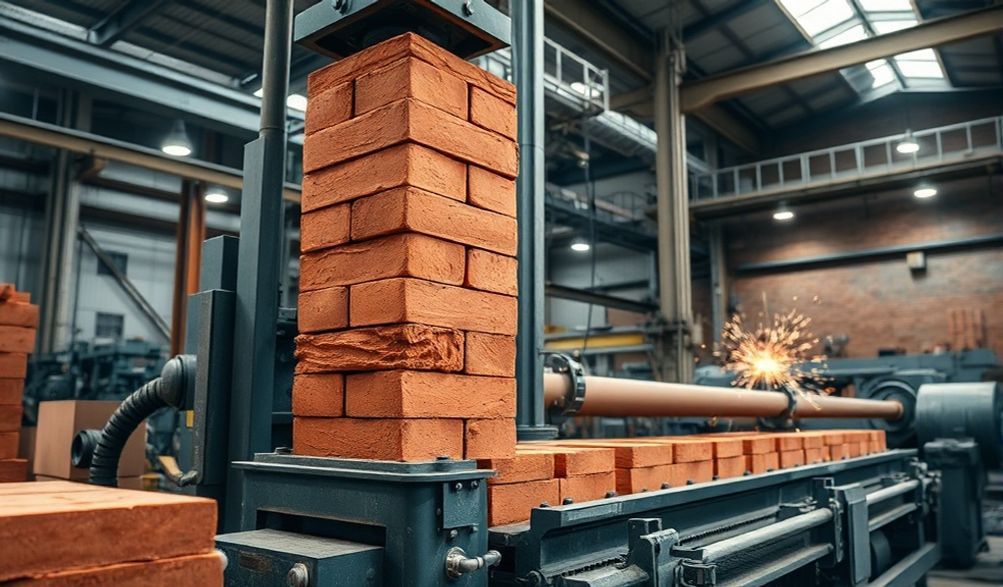
The Ultimate Guide to Clay Brick Making Machines: Inside the FUDA Brick Making Factory
Introduction
For millennia, clay bricks have formed the literal and figurative bedrock of human civilization. From the ancient walls of Babylon to the modern skylines of today, their durability, thermal mass, and timeless aesthetic have remained unmatched. However, the art of brickmaking has undergone a profound revolution. Gone are the days of purely manual, labor-intensive production. Today, the heart of a robust brick manufacturing operation beats within the precise, powerful mechanisms of the Machine à fabriquer des briques en argile.
This guide delves into the world of these transformative machines. We’ll explore how they automate and perfect the age-old process, delivering unparalleled efficiency, consistency, and scalability. For anyone from a construction entrepreneur to a large-scale factory manager, understanding this technology is key to unlocking productivity and profit.
This isn’t just a theoretical overview. It’s an expert guide built on real-world ExpérienceetExpertise. We’ll be looking through the lens of the Usine de fabrication de briques FUDA, an authoritative leader in the field. With years of hands-on experience in both manufacturing and operating these machines, FUDA embodies the engineering excellence required to succeed. Their team provides robust, tailored solutions for a diverse global clientele, from small workshops to industrial plants.
Our purpose here is to provide you with trustworthy, actionable insights. We will break down machine types, tangible benefits, the meticulous FUDA process, and the critical criteria for selecting the right equipment for your project. Consider this your comprehensive roadmap to modern brick production.
Comprendre les machines de fabrication de briques en terre cuite : types et technologies
At its core, a clay brick making machine automates and enhances the traditional process, transforming raw clay into perfectly formed, high-strength bricks with remarkable speed and precision.
Core Operating Principles: How These Machines Transform Clay
The journey from clay to brick follows a streamlined, mechanized path:
- Alimentation et mélange : Raw clay is fed into a mixer, often combined with a precise amount of water and other additives (like sand or fly ash) to achieve the ideal plasticity and composition.
- Molding – The Heart of the Process: The prepared clay is then conveyed to the molding mechanism. This is typically done via one of two methods:
- Extrusion : The clay is forced through a die of the desired brick profile, creating a continuous column of shaped clay.
- Pressage : Clay is fed into a mold cavity and compacted under immense hydraulic or mechanical pressure.
- Coupe: For extrusion machines, the continuous clay column is cleanly cut into individual brick units by automatic wire cutters or knives.
- Éjection et manutention : The green (unfired) bricks are automatically ejected onto pallets or conveyor belts for handling.
- Séchage et durcissement : The bricks are then moved to drying chambers (often part of a full plant) before final firing in a kiln, a step usually handled separately from the molding machine.
Types of Clay Brick Making Machines
Machines are categorized by their level of automation and mobility, catering to different scales of operation.
- Machines manuelles et semi-automatiques : Perfect for small-scale startups, community projects, or low-volume production.
- À forte intensité de main-d'œuvre : Require more manual intervention for feeding and brick removal.
- Sortie réduite : Ideal for producing hundreds to a few thousand bricks per day.
- Investissement initial inférieur A cost-effective entry point into mechanized production.
- Usines de fabrication de briques entièrement automatiques : These are the powerhouses of the industry, designed for uninterrupted, large-scale factory production.
- Production à grand volume : Can produce tens of thousands to hundreds of thousands of bricks per day.
- Computer-Controlled: Feature PLC systems for precise control over every parameter (pressure, speed, timing).
- Systèmes intégrés : Often include automated material handling, stacking, and feeding systems for a seamless production line.
- Machines à fabriquer des briques mobiles : A game-changer for large construction sites.
- Production sur place : Manufacture bricks directly where they are needed, drastically cutting transport costs and logistics.
- Versatile Deployment: Can be towed or mounted to be operational in remote or temporary locations.
Key Technological Components
The performance of a brick making machine hinges on the quality and integration of its core components. FUDA’s Expertise lies in meticulously selecting and engineering each part:
- Mélangeur: Ensures a homogeneous, air-free clay body critical for strength.
- Extruder or Press: The core of the machine. High-quality augers (for extrusion) or hydraulic rams (for pressing) must be built from hardened materials to withstand constant wear and extreme pressure.
- Moules/Matrices: Precision-engineered from hardened steel to define the brick’s shape, texture, and dimensional accuracy. Easy mold changing is a mark of a versatile machine.
- Système de contrôle : From simple relays to advanced PLC panels, this is the brain of automatic machines, ensuring consistent operation and allowing for parameter adjustments.
- Cadre et structure : A heavy-duty, vibration-resistant frame is essential for stability and longevity under continuous operation.
Why Choose a Professional Clay Brick Machine? Key Benefits
Investing in a professional-grade machine from a reputable manufacturer like FUDA is a strategic decision that delivers compounding returns.
Unmatched Efficiency and Consistent Output
- Exponential Production Increase: Replace the output of dozens of manual laborers with a single, continuously operating machine. Automatic plants can run 24/7.
- Perfect Consistency: Every brick is identical in dimensions, weight, and density. This eliminates waste on-site, speeds up bricklaying, and ensures structural predictability for engineers.
Superior Brick Quality and Structural Integrity
- Controlled Compaction: Hydraulic or mechanical pressure far exceeds manual tamping, compressing clay particles more densely. This results in bricks with:
- Résistance à la compression supérieure Essential for load-bearing walls and multi-story construction.
- Absorption d'eau réduite Increased durability and frost resistance.
- Finition de surface excellente : Aesthetically pleasing, uniform appearance straight from the machine.
Significant Cost Reduction and ROI
While the initial investment is substantial, the long-term economics are compelling:
* Drastic Labor Cost Savings: Automate the most labor-intensive part of the process.
* Réduction des déchets de matériaux : Precise mixing and molding minimize clay spillage and defective bricks.
* Achèvement plus rapide des projets : A reliable supply of on-site bricks prevents construction delays.
* Génération de revenus : Excess production capacity can be sold, creating a new profit center.
Versatility in Brick Design and Production
Modern machines are not monolithic. By simply changing the mold or die, a single machine can produce a wide range of products to meet market demands:
* Briques pleines : For maximum strength.
* Hollow or Perforated Bricks: Lighter weight, better insulation, and material efficiency.
* Pavés autobloquants : For driveways and walkways.
* Special Shapes: For architectural features and decorative purposes.
Inside the FUDA Brick Making Factory: A Model of Expertise
To understand what sets a superior machine apart, one must look at its origin. The FUDA Brick Making Factory is not just a vendor; it’s a center of manufacturing excellence and practical knowledge.
FUDA’s Commitment to Engineering Excellence
FUDAAutorité is built on a foundation of deep industry involvement. With a history rooted in solving real production challenges, they have evolved into a full-fledged manufacturer. Their commitment is clear through:
* Recherche et développement dédiée : Continuously improving machine designs for better efficiency, ease of use, and durability.
* Certifications de l'industrie : Adherence to international standards for manufacturing quality and safety.
* State-of-the-Art Facility: A manufacturing plant equipped with advanced CNC machinery, welding robots, and testing apparatus to build machines that last.
The FUDA Manufacturing and Quality Assurance Process
Every FUDA machine is a product of a rigorous, multi-stage process that ensures Fiabilité:
1. Conception et ingénierie Customizable designs are modeled and stress-tested digitally before any metal is cut.
2. Sélection des matériaux : Only certified, high-grade materials are used—from structural steel for the frame to specially hardened alloys for wear parts like molds and augers.
3. Precision Fabrication: Components are manufactured with tight tolerances to ensure perfect fit and long-term alignment.
4. Assembly & Integration: Skilled technicians assemble the machine, integrating mechanical, hydraulic, and electrical systems.
5. Stringent Testing: This is non-negotiable. Every machine undergoes:
* Dry Run Testing: Checking all movements, pressures, and control sequences without material.
* Production Run Testing: Running actual clay through the machine to verify output quality, stability, and performance metrics.
* Final Inspection: A comprehensive check before disassembly for shipping or delivery.
Real-World Applications: Case Studies from FUDA Clients
FUDAExpérience is proven on the ground. Here are anonymized examples of their impact:
* Case Study 1: Regional Construction Boom: A mid-sized construction company in Southeast Asia partnered with FUDA for a semi-automatic plant. They moved from manual production to an output of 15,000 bricks per day, enabling them to secure and fulfill larger contracts, increasing their annual revenue by over 150%.
* Case Study 2: Government Infrastructure Project: For a large dam construction project in Africa, FUDA supplied mobile brick making machines. On-site production eliminated a 200km transport loop, saving significant costs and ensuring an uninterrupted brick supply, keeping the critical infrastructure project on schedule.
How to Select the Right Clay Brick Machine for Your Project
Choosing the correct machine is a critical investment decision. Here’s a framework to guide your selection.
Évaluation de vos besoins de production
Start by asking these foundational questions:
* Daily/Annual Output Needed: Are you supplying a single project or running a commercial plant?
* Types de briques et dimensions : What products does your local market demand?
* Available Space & Infrastructure: Do you have a factory shed, or do you need a mobile solution? What is your power supply (voltage, phase)?
* Matière première : Have you tested your clay’s plasticity and composition?
Key Machine Specifications to Compare
When evaluating models, scrutinize these specs:
* Degré d'automatisation : Manual, semi-automatic, or fully automatic.
* Power Capacity: Measured in kW or HP; indicates the machine’s capability.
* Pression de service : For hydraulic presses, higher pressure (measured in tons) generally correlates with denser, stronger bricks.
* Temps de cycle : How many bricks per hour/day can it produce under optimal conditions?
* Personnalisation des moules : Does the supplier offer easy mold changes and custom mold design?
* Support après-vente : This is arguably as important as the machine itself.
The Importance of Supplier Reliability and Support
Your relationship with the manufacturer lasts long after the purchase. A reliable supplier like FUDA provides:
* Garantie complète : Clear terms on parts and workmanship.
* Pièces de rechange facilement disponibles : A global parts network to minimize downtime.
* Installation et mise en service :Envoi d'ingénieurs pour installer la machine et s'assurer qu'elle fonctionne correctement.
* Operator & Maintenance Training: Empowering your team to use and care for the equipment.
* Support technique : Access to experts for troubleshooting via phone, email, or site visits.
Frequently Asked Questions (FAQ) About Clay Brick Making Machines
Q1: What is the average production capacity of a standard automatic clay brick making machine?
Capacity varies widely. A mid-range fully automatic plant from a manufacturer like FUDA can typically produce between 20,000 to 50,000 standard bricks per 8-hour shift. High-end systems can exceed 100,000 bricks daily. The exact output depends on brick size, model, and material properties.
Q2: What kind of after-sales service and training does FUDA Brick Making Factory provide?
FUDA provides a full support package. This includes detailed installation manuals, on-site commissioning by their engineers, comprehensive training for your operators and maintenance staff on machine operation, routine maintenance, and basic troubleshooting. They also offer a clear warranty and maintain an inventory of critical spare parts for prompt support.
Q3: Can the machine produce different types and sizes of bricks? How easy is it to change molds?
Yes, versatility is a key feature. By changing the mold or extrusion die, you can produce solid, hollow, perforated, or paving bricks of various dimensions. Well-designed machines feature a quick-change mold system, allowing a trained operator to switch production in a matter of minutes, maximizing operational flexibility.
Q4: What are the main differences between hydraulic and mechanical brick pressing systems?
* Presse hydraulique : Uses fluid pressure to generate immense, controllable force. It allows for precise pressure adjustment, is quieter, and can handle variations in clay feed more gently, often resulting in higher-quality brick faces. It’s common in modern, high-quality machines.
* Presse mécanique : Uses cams, flywheels, and levers to generate impact force. It can be very fast and robust but offers less control over the pressing profile and can be noisier with more vibration.
Q5: How do I calculate the potential Return on Investment (ROI) for a brick making machine?
A basic ROI calculation involves:
1. Total Investment: Machine cost + shipping + installation + initial raw material stock.
2. Annual Operational Costs: Labor, power, clay, maintenance.
3. Annual Revenue: (Number of bricks sold annually) x (Sale price per brick).
4. Annual Profit: Revenue – Operational Costs.
5. Simple ROI Period (Years): Total Investment / Annual Profit.
A FUDA consultant can help you build a detailed financial model based on your local costs and market prices.
Conclusion
The transition from manual craftsmanship to automated precision with a Machine à fabriquer des briques en argile is more than an upgrade—it’s a transformation of your business model. It unlocks unprecedented levels of efficiency, ensures consistently superior quality, and turns brick production into a scalable, profitable enterprise.
This journey, however, hinges on the technology you choose and, more importantly, the partner you select to provide it. The engineering, the quality control, and the long-term support are what separate a productive asset from a costly headache. This is where the proven Expérience, technical Expertiseet inébranlableFiabilité of a manufacturer like the Usine de fabrication de briques FUDA become invaluable.
They provide more than a machine; they provide a solution tailored to your goals, backed by a commitment to your long-term success. As you consider modernizing or scaling your brick production, let this guide be your starting point. Conduct thorough research, clearly define your needs, and prioritize consultations with established industry experts. The right partnership will build the foundation for your growth, one perfect brick at a time.
<