
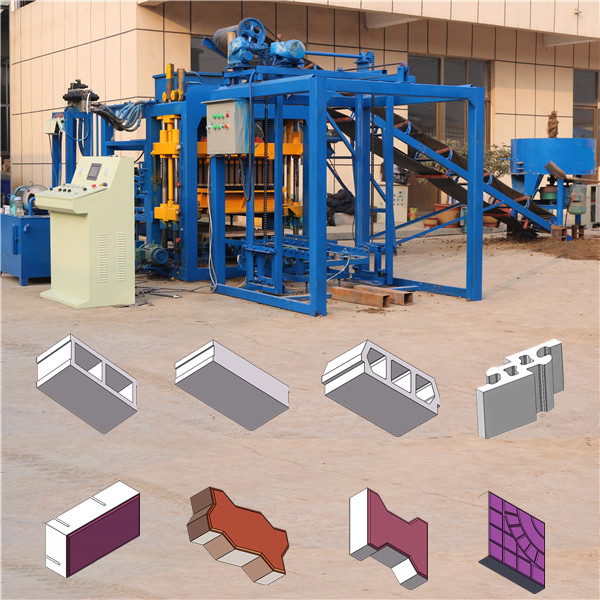
Analyse de la structure des coûts des machines de fabrication de blocs
Le prix d'une machine à fabriquer des blocs est le reflet direct de sa conception, de sa capacité et de la technologie qu'elle intègre. Une décomposition claire des facteurs qui l'influencent est essentielle pour orienter précisément le client.
1. Déterminants principaux du prix des machines
Plusieurs choix fondamentaux en matière d’ingénierie et de production déterminent directement le coût de base de l’équipement.
- Niveau d'automatisation :C'est le principal facteur de coût.
- Machines manuelles :Représenter l'investissement de départ. Le coût est déterminé par la robustesse du cadre, la qualité du moule et le système de levier mécanique.
- Machines semi-automatiques :Intégrez des systèmes de vibration motorisés, un compactage hydraulique ou mécanique, et des panneaux de commande de base. Les prix augmentent en fonction de la sophistication du mécanisme de vibration (par exemple, unidirectionnel ou multidirectionnel), de la puissance du système hydraulique et de l'inclusion d'alimentateurs de palettes automatisés ou d'éjecteurs de produits.
- Lignes de production entièrement automatiques :Commandez l'investissement le plus élevé. Le coût englobe non seulement la machine de formage de blocs, mais l'écosystème intégré : dosage et mélange automatisés des matériaux, systèmes de convoyeurs, cabines de contrôle informatisées, empileurs robotisés, et parfois des systèmes de durcissement intégrés. Le degré de contrôle logiciel et de synchronisation du système constitue un facteur majeur de prime.
- Production Capacity and Output: The machine’s designed output per hour (e.g., number of blocks per cycle, cycles per hour) is a primary pricing metric. Higher-capacity machines require more powerful motors, larger and more durable vibration tables, heavier-duty structural frames, and higher-specification hydraulic systems to maintain speed without compromising product quality or machine longevity.
- Versatility and Mold Technology: A machine capable of producing a wide array of products (standard blocks, pavers, interlocking bricks, curbstones) by quickly switching molds will carry a higher price than a single-purpose model. The cost reflects a more complex mold clamping system, a versatile vibration profile, and often a larger table size. The quality and durability of the mold steel itself are also a direct cost component.
2. Additional Cost Factors Beyond the Base Unit
The total investment for a client extends beyond the machine’s invoice price. A comprehensive quote should account for these elements:
- Équipement auxiliaire : A functional production line requires supporting machinery. Key items include:
- Malaxeur à béton : A pan mixer or planetary mixer of appropriate capacity.
- Manutention des matériaux : Belt conveyors, forklifts, or hoppers for moving raw mix.
- Block Handling Equipment: Curing racks, pallet carts, and forklifts for green blocks.
- Power Generator: For locations with unreliable grid electricity.
- Logistics and Installation: Costs for international shipping (CIF/FOB terms), customs clearance, inland transportation, on-site installation, and commissioning by technical staff must be clearly outlined.
- Spare Parts Initial Kit: A recommended starter kit of critical wear parts (e.g., mold liners, vibration motor bearings, hydraulic seals) is a prudent initial investment to minimize early downtime.
3. Strategic Cost Analysis: From Expenditure to Investment
For the business-minded client, the discussion must pivot from mere coûtàRetour sur investissement (RSI).
- Capital vs. Operational Cost Balance: A higher initial investment in a more automated machine typically leads to significantly lower operational costs per block—through reduced labor, higher efficiency, and better material utilization. Conversely, a lower-cost manual machine incurs much higher variable labor costs and lower output.
- Market Alignment: The “right” machine is one whose output capacity matches the proven and projected demand in the client’s target market. Over-investing in excessive capacity ties up capital, while under-investing leaves profit on the table and fails to meet demand.
- Coût total de possession (CTP) : An educated assessment includes long-term factors: energy consumption, expected lifespan of critical components, local availability and cost of spare parts, and the supplier’s reputation for after-sales support and technical documentation.
Conclusion: Framing the Financial Discussion
Ultimately, the question of “What is the cost?” should be met with a structured, consultative response. By systematically evaluating the client’s production targets, product mix, labor market conditions, and growth strategy, you can guide them to the appropriate point on the cost spectrum. Emphasize that the optimal purchase is the machine that offers the lowest cost per quality-produced-block over its operational lifetime, not merely the lowest initial purchase price. As a trusted intermediary, your role is to illuminate the long-term value proposition—durability, reliability, serviceability, and productivity—embedded within the price tag, thereby transforming a capital expenditure into a strategic growth asset for your client’s business.
Foire aux questions (FAQ)
Q1: What is the typical price range for different types of block machines?
A : While prices fluctuate with market and specification, ranges are generally tiered. Manual machines are the most accessible, often priced as basic capital equipment. Semi-automatic machines represent a middle range, with prices scaling noticeably with output capacity and features. Fully automatic plants require a significant industrial investment, with costs reflecting a complete, integrated production system. Specific figures should be provided based on current, detailed quotations for the exact model required.
Q2: Are there significant hidden costs I should warn my clients about?
A : Yes, clients should be made aware of costs beyond the machine price. These include: import duties and taxes in their country, costs for constructing a solid, level factory foundation, electrical hook-up by a certified electrician, potential costs for water and raw material storage infrastructure, and the working capital required to fund raw materials and labor before revenue from block sales is generated.
Q3: How does production output specifically affect the price?
A : Output increases are not linear with cost. Moving from a 1,000-blocks-per-shift machine to a 5,000-blocks-per-shift model involves substantial upgrades in motor power, structural steel, vibration system capacity, and control systems, leading to a more than proportional increase in price. The cost per unit of capacity often decreases with larger models, highlighting the efficiency of scale in equipment design.
Q4: What financing options are typically available for such equipment?
A : Clients often require financing. Common structures include a significant down payment (e.g., 30-50%) with the balance paid before shipment or via a letter of credit. Some suppliers or their regional partners may offer installment plans or have relationships with equipment financing institutions. Leasing can also be an option for certain models, preserving working capital.
Q5: How should I advise a client comparing a lower-priced machine to a higher-priced one?
A : Guide them through a feature-by-feature and TCO comparison. Ask: What is the difference in energy efficiency? What is the warranty period and scope? What is the expected lifespan of key components? How accessible and affordable are spare parts? What is the reputation of the manufacturer for build quality and support? Often, a higher initial investment safeguards against frequent breakdowns, high maintenance costs, and production stoppages, securing a more reliable and profitable operation.
