
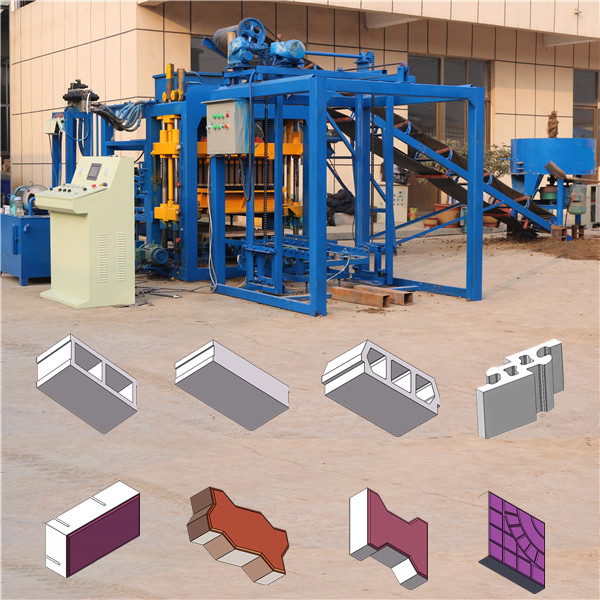
Análise da Estrutura de Custos de Máquinas para Fabricação de Blocos
O preço de uma máquina de fabricar blocos reflete diretamente seu design, capacidade e a tecnologia que incorpora. Uma análise clara dos fatores influenciadores é essencial para uma orientação precisa ao cliente.
1. Determinantes Principais do Preço de Máquinas
Várias escolhas fundamentais de engenharia e produção determinam diretamente o custo base do equipamento.
- Nível de Automação:Este é o fator de custo mais significativo.
- Máquinas Manuais:Representa o investimento inicial. O custo é determinado pela robustez da estrutura, pela qualidade do molde e pelo sistema de alavancagem mecânica.
- Máquinas Semiautomáticas:Incorpore sistemas de vibração motorizados, compactação hidráulica ou mecânica e painéis de controle básicos. Os preços aumentam com a sofisticação do mecanismo de vibração (por exemplo, unidirecional vs. multidirecional), a potência do sistema hidráulico e a inclusão de alimentadores automáticos de paletes ou ejetores de produtos.
- Linhas de Produção Totalmente Automáticas:Comande o maior investimento. O custo abrange não apenas a máquina de formar blocos, mas o ecossistema integrado: dosagem e mistura automatizadas de materiais, sistemas de transporte, cabines de controle computadorizadas, empilhadores robóticos e, às vezes, sistemas de cura integrados. O grau de controle de software e sincronização do sistema é um fator importante de valor agregado.
- Production Capacity and Output: The machine’s designed output per hour (e.g., number of blocks per cycle, cycles per hour) is a primary pricing metric. Higher-capacity machines require more powerful motors, larger and more durable vibration tables, heavier-duty structural frames, and higher-specification hydraulic systems to maintain speed without compromising product quality or machine longevity.
- Versatility and Mold Technology: A machine capable of producing a wide array of products (standard blocks, pavers, interlocking bricks, curbstones) by quickly switching molds will carry a higher price than a single-purpose model. The cost reflects a more complex mold clamping system, a versatile vibration profile, and often a larger table size. The quality and durability of the mold steel itself are also a direct cost component.
2. Additional Cost Factors Beyond the Base Unit
The total investment for a client extends beyond the machine’s invoice price. A comprehensive quote should account for these elements:
- Equipamento Auxiliar: A functional production line requires supporting machinery. Key items include:
- Betonadeira: A pan mixer or planetary mixer of appropriate capacity.
- Manuseio de Materiais: Belt conveyors, forklifts, or hoppers for moving raw mix.
- Block Handling Equipment: Curing racks, pallet carts, and forklifts for green blocks.
- Power Generator: For locations with unreliable grid electricity.
- Logistics and Installation: Costs for international shipping (CIF/FOB terms), customs clearance, inland transportation, on-site installation, and commissioning by technical staff must be clearly outlined.
- Spare Parts Initial Kit: A recommended starter kit of critical wear parts (e.g., mold liners, vibration motor bearings, hydraulic seals) is a prudent initial investment to minimize early downtime.
3. Strategic Cost Analysis: From Expenditure to Investment
For the business-minded client, the discussion must pivot from mere custoparaRetorno sobre o Investimento (ROI).
- Capital vs. Operational Cost Balance: A higher initial investment in a more automated machine typically leads to significantly lower operational costs per block—through reduced labor, higher efficiency, and better material utilization. Conversely, a lower-cost manual machine incurs much higher variable labor costs and lower output.
- Market Alignment: The “right” machine is one whose output capacity matches the proven and projected demand in the client’s target market. Over-investing in excessive capacity ties up capital, while under-investing leaves profit on the table and fails to meet demand.
- Custo Total de Propriedade (CTP): An educated assessment includes long-term factors: energy consumption, expected lifespan of critical components, local availability and cost of spare parts, and the supplier’s reputation for after-sales support and technical documentation.
Conclusion: Framing the Financial Discussion
Ultimately, the question of “What is the cost?” should be met with a structured, consultative response. By systematically evaluating the client’s production targets, product mix, labor market conditions, and growth strategy, you can guide them to the appropriate point on the cost spectrum. Emphasize that the optimal purchase is the machine that offers the lowest cost per quality-produced-block over its operational lifetime, not merely the lowest initial purchase price. As a trusted intermediary, your role is to illuminate the long-term value proposition—durability, reliability, serviceability, and productivity—embedded within the price tag, thereby transforming a capital expenditure into a strategic growth asset for your client’s business.
Perguntas Frequentes (FAQ)
Q1: What is the typical price range for different types of block machines?
A: While prices fluctuate with market and specification, ranges are generally tiered. Manual machines are the most accessible, often priced as basic capital equipment. Semi-automatic machines represent a middle range, with prices scaling noticeably with output capacity and features. Fully automatic plants require a significant industrial investment, with costs reflecting a complete, integrated production system. Specific figures should be provided based on current, detailed quotations for the exact model required.
Q2: Are there significant hidden costs I should warn my clients about?
A: Yes, clients should be made aware of costs beyond the machine price. These include: import duties and taxes in their country, costs for constructing a solid, level factory foundation, electrical hook-up by a certified electrician, potential costs for water and raw material storage infrastructure, and the working capital required to fund raw materials and labor before revenue from block sales is generated.
Q3: How does production output specifically affect the price?
A: Output increases are not linear with cost. Moving from a 1,000-blocks-per-shift machine to a 5,000-blocks-per-shift model involves substantial upgrades in motor power, structural steel, vibration system capacity, and control systems, leading to a more than proportional increase in price. The cost per unit of capacity often decreases with larger models, highlighting the efficiency of scale in equipment design.
Q4: What financing options are typically available for such equipment?
A: Clients often require financing. Common structures include a significant down payment (e.g., 30-50%) with the balance paid before shipment or via a letter of credit. Some suppliers or their regional partners may offer installment plans or have relationships with equipment financing institutions. Leasing can also be an option for certain models, preserving working capital.
Q5: How should I advise a client comparing a lower-priced machine to a higher-priced one?
A: Guide them through a feature-by-feature and TCO comparison. Ask: What is the difference in energy efficiency? What is the warranty period and scope? What is the expected lifespan of key components? How accessible and affordable are spare parts? What is the reputation of the manufacturer for build quality and support? Often, a higher initial investment safeguards against frequent breakdowns, high maintenance costs, and production stoppages, securing a more reliable and profitable operation.
