
Votre guide ultime pour vous approvisionner en machine à fabriquer des briques à Guangzhou, en Chine
Introduction
Naviguer sur le marché mondial des machines industrielles peut être une tâche ardue. Si vous êtes propriétaire d’entreprise, chef de projet ou entrepreneur à la recherche d’une machine à fabriquer des briques fiable et économique, vos recherches vous ont probablement mené vers une destination de choix : Guangzhou, en Chine.
En tant que plaque tournante majeure du moteur manufacturier mondial, Guangzhou offre un éventail impressionnant d'options. Mais avec un grand choix vient un besoin crucial de navigation experte. Ce guide est conçu pour couper à travers le bruit. Nous mettrons à profit une connaissance approfondie de l'industrie pour vous fournir une feuille de route complète et fiable—depuis la compréhension de la domination de Guangzhou dans ce secteur jusqu'à la vérification des fabricants et la gestion de la logistique. Notre objectif est de vous permettre de prendre une décision d'achat éclairée et confiante qui maximise votre retour sur investissement.
Pourquoi Guangzhou est l'épicentre mondial des machines de fabrication de briques
Avant de plonger dans les spécifications des machines, il est essentiel de comprendrePourquoi广州已成为该领域无可争议的领导者。这种主导地位并非偶然,而是数十年战略产业发展的结果。
Un héritage d'excellence manufacturière
La puissance de Guangzhou s'enracine dans l'histoire plus large du delta de la rivière des Perles en tant que « l'usine du monde ». Pendant plus de 40 ans, cette région a affiné ses compétences dans l'industrie lourde, la fabrication des métaux et la production de machinerie. Cette concentration à long terme a cultivé une expertise profonde, transmise de génération en génération, dans les processus d'ingénierie et de fabrication. Lorsque vous vous approvisionnez à Guangzhou, vous puisez dans un bassin d'ingénieurs, de techniciens et de fabricants expérimentés qui comprennent les subtilités de la construction de machines durables et performantes.
Chaînes d'approvisionnement industrielles concentrées
L'un des avantages les plus significatifs de Guangzhou est « l'effet de grappe ». La région abrite un réseau dense de fournisseurs spécialisés pour chaque composant nécessaire à une machine de fabrication de briques.
* Aciers et alliages de haute qualité pour cadres et moules
* Systèmes et pompes hydrauliques de précision
* Moteurs électriques et unités de PLC (contrôleur logique programmable)
* Fabricants spécialisés de moules
Cette proximité réduit considérablement les délais et les coûts d'approvisionnement pour les fabricants, des économies qui vous sont souvent transmises. Elle simplifie également le contrôle de la qualité et accélère les cycles de production, rendant Guangzhou exceptionnellement efficace.
Innovation et adoption de la technologie
L'époque où la fabrication chinoise était synonyme de copiage à bas coût et à faible technologie est révolue. Les fabricants de Guangzhou ont résolument opéré un virage vers l'innovation. Aujourd'hui, on trouve des usines qui intègrent :
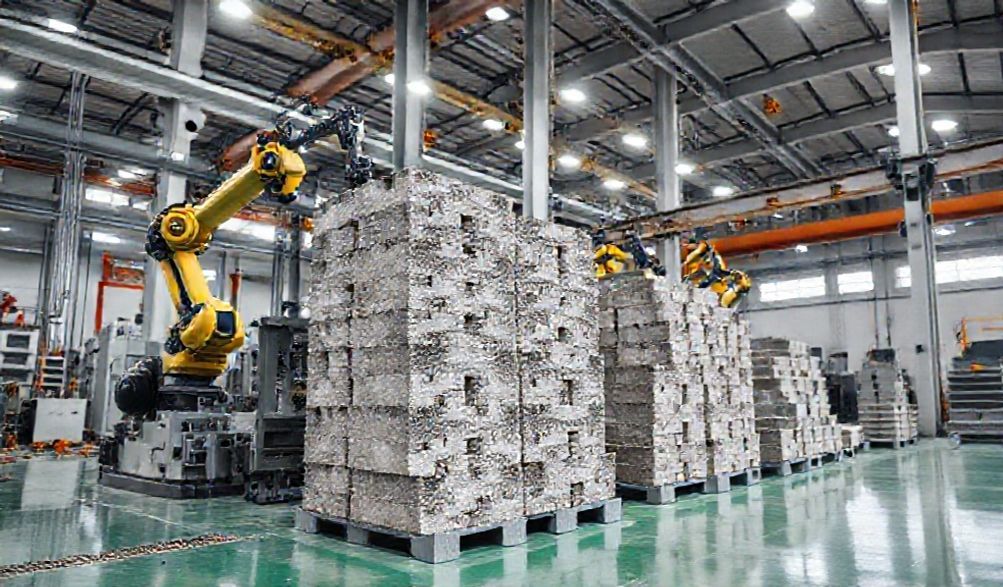
* Lignes de production entièrement automatisées avec manutention robotisée.
* Contrôles PLC à écran tactile avec interfaces multilingues.
* Capacités IoT (Internet des objets) pour la surveillance et le diagnostic à distance.
* Centres de R&D dédiés axés sur l'efficacité énergétique et l'utilisation de nouveaux matériaux (comme les cendres volantes ou le CLC).
Ce mélange de force manufacturière traditionnelle et d'adoption de technologies modernes crée une proposition de valeur unique.
Types de machines à fabriquer des briques disponibles à Guangzhou
Le marché de Guangzhou répond à tous les besoins imaginables, des projets ruraux à petite échelle aux développements urbains massifs. Comprendre les catégories est votre première étape.
Par opération : Machines manuelles, semi-automatiques et entièrement automatiques
- Machines manuelles :Faible coût en capital, entièrement alimenté par la force humaine. Idéal pour des projets à très petite échelle, communautaires, avec de faibles exigences de production. Forte intensité de main-d'œuvre.
- Machines semi-automatiques :Un choix équilibré pour les petites et moyennes entreprises. Elles mécanisent le processus de pressage et de moulage, mais peuvent nécessiter un alimentation manuelle en matière première ou le retrait manuel des briques finies. Offre un bon équilibre entre rendement et abordabilité.
- Machines entièrement automatiques :L'apogée de l'efficacité. Ces lignes informatisées gèrent l'alimentation en matériaux, le mélange, le pressage, la cuisson et l'empilage avec une intervention humaine minimale. Elles commandent un prix plus élevé, mais offrent un rendement maximal, une grande uniformité et des coûts de main-d'œuvre réduits à long terme.
Par produit fabriqué : Machines à blocs, machines à pavés, machines à briques imbriquées
- Machines à blocs :Les chevaux de bataille de la construction, produisant des blocs de béton creux ou pleins standards pour les murs et les structures.
- Paver Machines: Specialize in producing thinner, denser bricks for landscaping, driveways, walkways, and patios. They often feature vibratory presses for a smooth, finished surface.
- Machines à briques imbriquées : Produce bricks with designed ridges and grooves that lock together without mortar. Gaining popularity for eco-friendly construction, retaining walls, and paving due to their speed of installation and permeability.
By Raw Material: Concrete, Clay, Fly Ash, and CLC Brick Machines
- Machines à briques en béton : The most common type, using a mixture of cement, sand, and aggregate.
- Machines à briques en argile : Utilize traditional clay or shale, often involving extrusion and high-temperature kilns.
- Machines à briques de cendres volantes : An eco-friendly option that uses fly ash (a coal combustion byproduct) as a primary material, reducing cement use and utilizing industrial waste.
- CLC (Cellular Lightweight Concrete) Block Machines: Produce ultra-lightweight blocks by introducing a foaming agent into the concrete mix. Ideal for insulation and reducing structural load.
Key Factors to Consider Before Purchasing
Jumping straight to price comparisons is a common mistake. First, you must define your own requirements.
Assessing Your Production Needs (Capacity, Brick Type, Automation Level)
Ask yourself this checklist of questions:
* What is my target daily or monthly output (in bricks or cubic meters)?
* What specific brick type(s) do I need to produce (size, shape, material)?
* What is my available labor force, and what skill level do they have?
* What is my available factory space and power supply (voltage, phase)?
* What is my budget, considering both initial investment and operating costs?
Your answers will naturally narrow down the field of suitable machines.
Critical Machine Specifications to Scrutinize
When reviewing offers, go beyond the brochure. Demand details on:
* Force de pression (Tonnage) : Higher tonnage generally produces denser, stronger bricks.
* Temps de cycle : How many seconds per brick or per mold? This directly dictates your maximum output.
* Mold Quality & Hardening: Molds should be made from high-chromium alloy steel and heat-treated for longevity.
* Exigences en matière d'alimentation électrique : Ensure your facility can meet the voltage (e.g., 380V/50Hz/3Phase is standard) and amperage demands.
* Marques de composants de base : Reputable manufacturers use known brands for hydraulics (like Rexroth, Yuken) and PLCs (like Siemens, Mitsubishi).
Understanding Total Cost of Ownership
The invoice price is just the beginning. A savvy buyer calculates the Total Cost of Ownership (TCO):
* Initial: Machine cost, shipping, insurance, customs duties, installation.
* Operational: Energy consumption, routine maintenance costs, labor, raw materials.
* Long-term: Spare parts (wear items like seals, mold liners), potential major overhauls, costs of downtime.
A slightly more expensive machine from a reputable supplier with lower energy use and guaranteed spare parts availability often has a lower TCO than a cheap, unsupported alternative.
How to Vet and Select a Reliable Manufacturer in Guangzhou
This is the most critical phase of your journey. Diligence here prevents immense future headaches.
Verifying Company Credentials and Experience
Start with basic but essential verification:
* Permis d'exploitation : Request a copy and cross-check it on Chinese official platforms or via Alibaba’s Gold Supplier verification (though this is a starting point, not a guarantee).
* Années d'exploitation : Prefer companies with a track record of 8-10+ years. It indicates stability and accumulated experience.
* Client Portfolio & References: Ask for case studies or contact information for past international clients in a region similar to yours. A genuine manufacturer will have them.
The Non-Negotiable Importance of Factory Audits (Virtual or In-Person)
Never skip this step. If an in-person visit isn’t feasible, insist on a live video tour.
What to look for during an audit:
* Production Floor: Is it organized, clean, and safe? Are workers using proper procedures?
* Contrôle de la qualité : Are there dedicated QC stations? Are components being measured and tested?
* Raw Material Storage: Is steel and other material stored properly, indicating care for input quality?
* Finished Goods Yard: Can you see machines ready for shipment? It’s a sign of real production activity.
Evaluating Technical Support and After-Sales Service
The quality of after-sales service separates the best from the rest. Your supplier should offer:
* Documentation détaillée : Comprehensive manuals in your language (English/Spanish/Arabic etc.).
* Installation Support: Detailed foundation drawings, and preferably, an engineer available for on-site or video-guided installation.
* Garantie : A clear warranty policy (typically 12 months for core parts).
* Pièces de rechange : A readily available catalog with part numbers and a promise of long-term supply (10+ years).
* Troubleshooting: Access to technical support via WhatsApp, email, or video call with reasonable response times.
The Procurement and Logistics Process: A Step-by-Step Walkthrough
Understanding the process reduces anxiety and ensures smooth progress.
From Inquiry to Pro Forma Invoice (PI)
- Initial Contact: Send a detailed inquiry specifying your needs (machine type, automation, capacity).
- Technical Communication: Engage with their engineers to finalize specifications. Be precise.
- Pro Forma Invoice (PI): The supplier will issue a PI detailing price, specifications, payment terms, and Incoterms (e.g., FOB Guangzhou, CIF your port). Understand what the Incoterm covers—FOB means you own the goods and are responsible for costs once they’re loaded on the ship in Guangzhou.
Navigating Payment Terms Securely
Standard and secure payment terms are:
* T/T (Telegraphic Transfer): Often 30% deposit, 70% against copy of shipping documents. Common but requires trust.
* Letter of Credit (L/C): A bank-guaranteed payment method. More secure for both parties but involves bank fees. Highly recommended for large orders.
* Escrow Services (e.g., through Alibaba): Provides a layer of protection by holding payment until you confirm receipt and satisfaction.
Shipping, Customs, and Delivery
- Freight Forwarder: Hire your own or use the supplier’s recommended one. Get quotes for sea freight (LCL or FCL).
- Emballage : Ensure machines are properly crated in a steel-frame wooden box for ocean transport.
- Documentation: The supplier must provide a clean set of shipping documents: Commercial Invoice, Packing List, Bill of Lading, and Certificate of Origin.
- Customs Clearance: Work with a customs broker in your country to handle duties, taxes, and clearance based on the provided documents.
Maximizing Your Investment: Installation, Operation, and Maintenance
Your responsibility begins once the machine arrives.
Foundation Preparation and Machine Installation
- Follow the Manual: The manufacturer’s foundation drawing is law. It will specify dimensions, depth, and bolt placements. Use the recommended concrete grade.
- Professional Installation: If not doing it yourself, use experienced local technicians. Supervise the uncrating to check for any shipping damage immediately.
Operator Training and Safety Protocols
- Mandatory Training: Ensure all operators are thoroughly trained on startup, operation, shutdown, and basic troubleshooting.
- Safety First: Enforce strict safety protocols: lock-out/tag-out procedures, wearing safety gear, and never performing maintenance while the machine is powered.
Routine Maintenance Schedule for Longevity
A simple, consistent maintenance routine is the key to years of service.
* Daily: Lubricate all moving parts as per the chart, check hydraulic oil levels, clean the machine.
* Weekly: Check for loose bolts and nuts, inspect hydraulic hoses for wear, clean the filter.
* Monthly: Conduct a more thorough inspection of the electrical system, mold condition, and pressure settings.
FAQ Section
Q1: What is the average price range for a brick making machine from Guangzhou?
A : Prices vary immensely. A small manual or semi-automatic machine can start from $5,000 – $15,000. A standard medium-capacity fully automatic block machine typically ranges from $45,000 – $80,000. Large, high-output, fully automated production lines can cost $150,000 to $300,000+. The final price depends on automation, capacity, brand of components, and customization.
Q2: Can I get a customized machine for a specific brick design?
A : Absolutely. Most reputable manufacturers offer custom mold design and fabrication as a core service. You provide the brick design drawings, and their engineering team will create the mold. This will add to the cost and extend the lead time, typically by 2-4 weeks.
Q3: How do I handle machine breakdowns or spare parts needs?
A : This underscores the importance of choosing a supplier with strong after-sales support. They should provide you with a detailed spare parts catalog. For breakdowns, you should have direct access to technical support for remote troubleshooting. For critical spare parts, they should be able to ship them via air freight within days. Always inquire about their standard response time and parts warranty.
Q4: Are the machines compliant with international safety and quality standards (CE, ISO, etc.)?
A : Many are, but you must explicitly ask for and verify the certificates. A serious manufacturer will have CE certification for their standard models (ensuring compliance with EU health, safety, and environmental standards) and likely hold an ISO 9001 quality management system certification. Do not assume; request the certificate for the specific machine model you are buying.
Q5: What is the typical lead time from order to delivery?
A : For a standard model from an established factory, expect 30 to 45 days for production and pre-shipment preparation. For large, customized production lines, 60 to 90 days is more common. This timeline is after receiving your deposit and finalized specifications. Sea freight transit then adds another 20-45 days depending on your destination port.
Conclusion
Sourcing a brick making machine from Guangzhou, China, presents a tremendous opportunity: unparalleled selection, competitive pricing, and deep supply chain efficiency. However, capitalizing on this opportunity requires a strategic and diligent approach. Success hinges on thorough supplier vetting, a clear understanding of your own needs, and careful management of the procurement and logistics process.
Use this guide as your foundational roadmap. Apply the principles of verification, audit, and total cost analysis. By doing so, you move from being a hopeful buyer to an informed partner, poised to build a profitable and long-term relationship with a quality manufacturer. Your journey to securing the right machinery for your project starts with expert knowledge—now you’re equipped to proceed with confidence.
<