
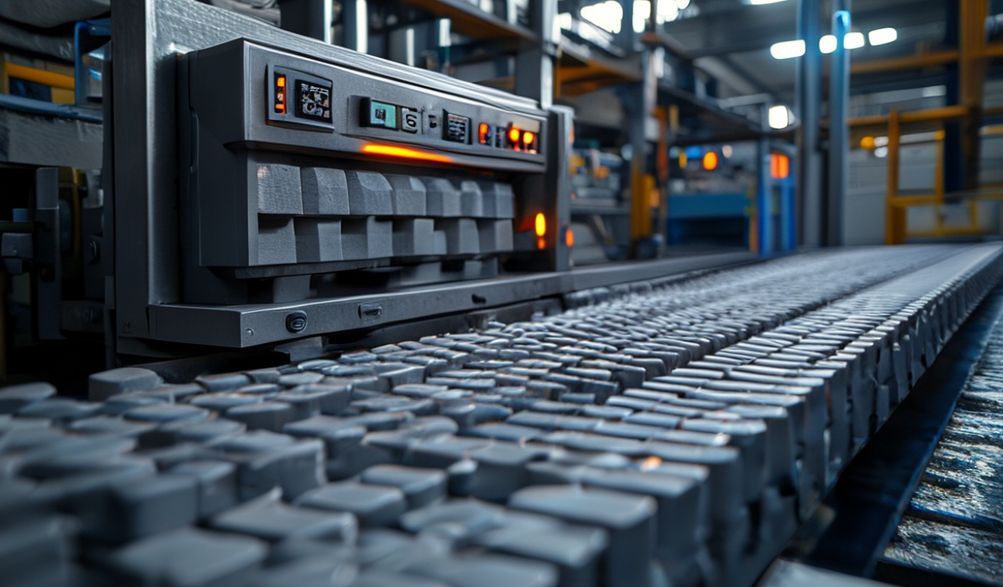
Le Guide Ultime des Machines à Fabriquer des Briques de Ciment : L'Innovation de l'Usine de Fabrication de Blocs FUDA
Introduction
Naviguer dans l'univers des machines de construction peut s'avérer complexe, avec son jargon technique et ses décisions d'investissement importantes. Ce guide complet est élaboré par les experts en ingénierie et en industrie de FUDA Block Making Factory. Forts de plus de deux décennies d'expérience pratique dans la conception, la fabrication et le déploiement de machines de fabrication de blocs sur six continents, nous nous appuyons sur des études de cas réelles et une expertise technique approfondie pour vous offrir des informations fiables et faisant autorité.
Que vous soyez un entrepreneur en construction développant votre entreprise, un ingénieur civil spécifiant les matériaux pour un projet, ou un organisme gouvernemental planifiant des infrastructures à grande échelle, ce guide sera votre ressource définitive. Nous démystifierons les machines à fabriquer des parpaings, en expliquant leur fonctionnement, leurs avantages tangibles et les facteurs cruciaux pour choisir le bon partenaire pour votre investissement. Notre priorité est de fournir des informations claires, factuelles et fiables pour éclairer votre processus de décision.
Comprendre les machines à fabriquer des briques de ciment : principes fondamentaux et types
Au cœur de la machine à fabriquer des blocs, il y a la précision, l'efficacité et la transformation. Comprendre les principes fondamentaux est la première étape vers un achat éclairé.
Qu'est-ce qu'une machine à fabriquer des briques en ciment ?
Une machine à fabriquer des briques en ciment est un dispositif industriel conçu pour automatiser et optimiser la production de blocs de construction. Elle transforme les matières premières—principalement un mélange de ciment, de sable, de granulats (comme de la pierre concassée) et d'eau—en briques ou blocs denses, uniformes et durables. Cela est réalisé grâce à une combinaison sophistiquée decompactage à haute pressionetvibrationLe processus garantit l'élimination des poches d'air et la consolidation du mélange dans un moule, ce qui donne un produit à haute intégrité structurelle et aux dimensions constantes, prêt pour la polymérisation et l'utilisation.
Principaux Types de Machines à Fabriquer des Blocs
Le marché propose un éventail de machines, catégorisées principalement selon leur niveau d'automatisation et leur mobilité. Choisir le bon type est crucial pour l'alignement avec vos objectifs de production et votre budget.
-
Machines manuelles vs. semi-automatiques vs. entièrement automatiques :
- Machines manuelles :Principalement actionnées à la main, y compris l'alimentation en matériaux et l'éjection des blocs. Elles sont peu coûteuses et adaptées aux projets de très petite envergure ou aux démarrages, avec des besoins de production quotidienne minimaux.
- Machines semi-automatiques :Ils représentent un bond significatif en productivité. Les processus clés tels que le mélange et le compactage sont mécanisés, mais le remplissage des moules ou l'extraction des blocs peuvent nécessiter une intervention de l'opérateur. Ils offrent un excellent équilibre entre coût, rendement et flexibilité, idéal pour les petites et moyennes entreprises.
- Machines entièrement automatiques :Le summum de l'efficacité de production. Ces systèmes commandés par ordinateur gèrent l'intégralité du processus—du dosage et du mélange des matières premières au moulage, au compactage, à la cuisson et à l'empilage—avec une supervision humaine minimale. Ils sont conçus pour une production continue à haut volume, offrant une constance inégalée et des coûts de main-d'œuvre réduits sur le long terme.
-
Machines à fabriquer des blocs stationnaires :Ce sont des machines robustes à haut rendement, installées dans un emplacement fixe, généralement au sein d'une usine de production dédiée. Elles constituent l'épine dorsale des entreprises d'approvisionnement en blocs à grande échelle et des grands projets de construction nécessitant un approvisionnement constant et massif en blocs.
-
Machines de fabrication de blocs mobiles :Également appelées « pondeuses » ou fabricants de blocs mobiles, ces unités peuvent être remorquées directement sur un chantier de construction. Cela élimine les coûts logistiques et les risques d'endommagement liés au transport de blocs finis sur de longues distances, ce qui les rend idéales pour les projets éloignés ou les grands ensembles de logements où la production peut suivre l'avancement du chantier.
L'Approche FUDA de la Conception de Machines
At FUDA, our engineering philosophy is built on three non-negotiable pillars, honed through thousands of installations:
1. Durabilité : We use high-grade steel, premium hydraulic components, and reinforced structures to ensure our machines withstand 24/7 operation in harsh environments.
2. Efficacité énergétique : Our designs incorporate optimized hydraulic systems and intelligent controls to reduce power consumption, directly lowering your operational costs.
3. Opération conviviale : We believe powerful machinery should not be complicated. From intuitive control panels to easy-access maintenance points, every FUDA machine is designed for smooth operation and minimal downtime.
Key Advantages of Using a Modern Cement Brick Machine
Transitioning from manual labor or outdated equipment to a modern block maker isn’t just an upgrade—it’s a strategic business transformation with measurable benefits.
Unmatched Productivity and Cost Efficiency
The numbers speak for themselves. A single semi-automatic machine can typically produce 1,500 to 4,000 blocks in an 8-hour shift, while a fully automatic line can exceed 20,000. This massive output drastically reduces dependency on large labor crews, converting a variable cost into a fixed, manageable one. The long-term Return on Investment (ROI) is compelling, often paying for the machine itself within 12-24 months through saved labor costs and increased sales capacity.
Qualité Supérieure et Constante des Produits
Hand-molded or poorly machine-made blocks suffer from dimensional inconsistency and variable strength. A modern machine applies precise, repeatable pressure (measured in tons), ensuring every single block has:
* Identical dimensions for faster, easier bricklaying.
* High and uniform compressive strength (often exceeding 4-5 MPa for hollow blocks, well above standard building code requirements like ASTM C90 or IS 2185).
* Excellent surface finish, reducing plastering costs and material use.
This consistency is critical for structural integrity, compliance with engineering specifications, and professional project outcomes.
Polyvalence dans la Gamme de Produits
Market demands change. A quality machine is a versatile asset. By simply changing the mold, a single FUDA machine can produce a diverse product catalog to capture different market segments:
* Hollow Blocks (for load-bearing and partition walls)
* Briques pleines
* Pavés et bordures de trottoir
* Briques à emboîtement (pour construction à joints secs)
* Decorative and Landscape Blocks
Sustainability and Eco-Friendly Production
Modern block production can be a green endeavor. Machines enable the precise use of raw materials, minimizing waste. Furthermore, they can efficiently utilize industrial by-products like cendres volantes or slag in the mix, diverting waste from landfills and creating “green” blocks. Producing blocks on-site with a mobile machine also slashes the carbon emissions associated with long-distance transportation of heavy materials.
How to Choose the Right Cement Brick Maker Machine for Your Project
Selecting a machine is a significant capital decision. This framework, based on our experience with countless client projects, will guide your evaluation.
Évaluation de Vos Besoins de Production
Start by asking these key questions:
* What is my current and projected daily block demand? (Be realistic about growth).
* What types of blocks are most in demand in my local market?
* What is my available budget, not just for purchase but for installation, power, and labor?
* Do I have a fixed factory location, or do I need the flexibility of on-site production?
Your answers will naturally point you toward the appropriate level of automation and machine type.
Spécifications techniques critiques à évaluer
Look beyond the brochure. Scrutinize these core specs:
* Force de Pression (Tonnage) : Higher tonnage (e.g., 150 tons vs. 80 tons) generally means denser, stronger blocks and faster cycle times.
* Temps de cycle : How many seconds does it take to produce one cycle of blocks? Lower cycle time = higher hourly output.
* Mold Customization Options: Can the supplier provide custom molds for unique block designs you may want to offer?
* Exigences en matière d'alimentation électrique : Ensure your facility or site can supply the necessary electrical power (e.g., 3-phase) for the machine.
* After-Sales Service and Parts Availability: This is perhaps the most critical long-term consideration. A machine is a long-term investment.
The Importance of Supplier Credentials: Why Choose FUDA?
The machine is only as good as the company behind it. Your supplier should be a partner.
* Expertise en Fabrication : FUDA operates state-of-the-art manufacturing facilities with rigorous quality control at every stage, from CNC cutting to final assembly and testing. Our in-house R&D team continuously innovates for better performance and reliability.
* Global Installation & Support Network: Our authoritative presence is proven by successful installations from Southeast Asia to Africa, the Middle East to South America. This global experience means we understand diverse local conditions and challenges.
* Forfait de Services Complet : Trust is built on support. FUDA provides detailed installation blueprints, comprehensive operator training (on-site or at our factory), a clear warranty, and maintains a large inventory of wear parts for prompt dispatch, minimizing your downtime.
Operational Insights and Best Practices from FUDA Experts
Here, we share first-hand knowledge from our technical service teams—the kind of practical advice that comes from being on the ground in hundreds of block yards.
Raw Material Preparation: The Foundation of Quality Bricks
A perfect machine cannot compensate for poor materials. Consistency starts here:
* Mix Ratio: A common, high-strength starting mix is 1 part cement : 6 parts aggregate (sand/stone). This must be adjusted based on your local material quality and desired block strength.
* Material Grading: Use well-graded, clean sand and aggregate. Fines content should be controlled.
* Teneur en humidité : This is critical. The mix should be damp, not wet or dry. A simple “hand-squeeze test” should result in a ball that holds its shape without dripping water. Incorrect moisture is the leading cause of block sticking and poor surface finish.
Routine Maintenance Checklist for Longevity
Treat your machine like the valuable asset it is. A simple daily and weekly routine prevents major breakdowns.
* Daily: Clean the machine thoroughly, especially the mold area and feed hopper. Check hydraulic oil levels and look for any leaks. Lubricate all moving points as per the manual.
* Weekly: Inspect mold liners, wear plates, and vibration motors for tightness and wear. Check hydraulic hoses for abrasions.
* Monthly: Perform a more detailed inspection of the hydraulic system, electrical connections, and tighten all structural bolts that may have vibrated loose.
Troubleshooting Common Operational Issues
- Problem: Blocks sticking in the mold.
- Solution: This is almost always due to excessive moisture in the mix or insufficient mold release agent. Adjust your water content and ensure the mold is properly cleaned and sprayed.
- Problem: Poor compaction or weak blocks.
- Solution: Check the vibration motor function and pressure settings. Ensure your raw material mix has the correct ratio and that the aggregate isn’t too large.
- Problem: Blocks breaking during ejection or handling.
- Solution: Likely caused by insufficient curing time. Freshly produced blocks need adequate time (often 24-48 hours) to gain “green strength” before being moved or stacked. Ensure your curing area is protected from sun and wind.
Frequently Asked Questions (FAQ) About Cement Brick Maker Machines
Q1: What is the average production capacity of a standard automatic block making machine?
A: Capacities vary widely based on model and block type. A standard fully automatic machine from a reputable manufacturer like FUDA can produce from 5,000 to over 25,000 standard hollow blocks in an 8-hour shift. Specific output for paving stones or solid bricks will differ.
Q2: Can the machine produce different sizes and shapes of blocks?
A: Yes, versatility is a key advantage. By changing the mold, a single machine can produce various sizes of hollow blocks, solid bricks, paving stones, and specialty shapes like interlocking or grass blocks. FUDA offers extensive standard and custom mold design services.
Q3: What kind of after-sales support should I expect?
A: A trustworthy supplier provides a full support package. This includes detailed installation manuals and drawings, comprehensive operator training (often on-site), a clear warranty period covering parts and workmanship, and most importantly, readily available spare parts through a dedicated service network. FUDA provides all of this, backed by direct access to our engineering team.
Q4: How do I calculate the return on investment (ROI) for this machine?
A: ROI is calculated by comparing your total investment (machine, installation, power, raw materials) against your revenue from block sales, factoring in saved labor costs. Key variables are local block selling price and your production volume. Our FUDA sales consultants can help you create a detailed financial projection based on your specific location and market data.
Q5: Are the bricks produced strong enough for load-bearing walls?
A: Absolutely. Machines from professional factories like FUDA are engineered to apply high, controlled compaction pressure. This produces bricks with compressive strength that far exceeds the requirements for load-bearing structures in international building codes (e.g., ASTM, IS, EN). Proper mix design and curing are also essential to achieving rated strength.
Conclusion
Investing in a cement brick maker machine is more than a machinery purchase; it’s a decisive step toward modernizing your construction practice, securing long-term profitability, and guaranteeing unmatched product quality. The journey to this success hinges on one critical factor: your choice of partner. You need a manufacturer that brings proven expérience, deep technical expertise, a strong market reputation for Autorité, and an unwavering commitment to digne de confiance, long-term customer relationships.
As a leading block making factory with a demonstrable track record of successful installations worldwide, FUDA is engineered to be that partner. We don’t just sell machines; we deliver production solutions and peace of mind.
We invite you to contact our engineering team for a personalized consultation. Share your project vision, capacity needs, and challenges. Let us provide you with a detailed machine recommendation and a transparent, tailored project proposal designed to meet your specific business goals.
Ready to transform your block production and build your future on a solid foundation? Get in touch with FUDA Block Making Factory today.
<