
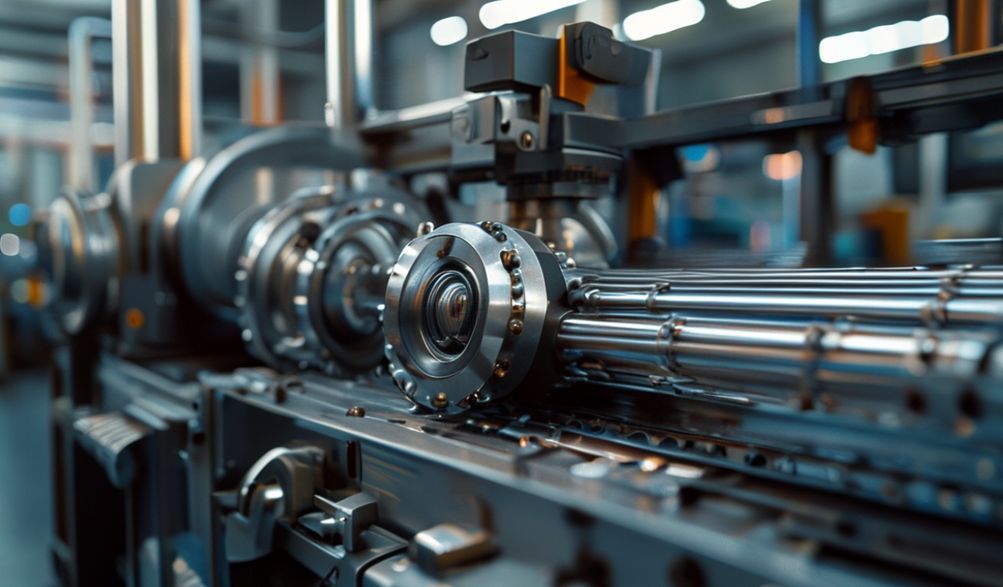
Comprendre les prix des machines de fabrication de blocs : Une analyse approfondie de l'usine de fabrication de blocs FUDA
Introduction
Trouver la machine à fabriquer des blocs adaptée au bon prix est un investissement crucial qui peut faire ou défaire la rentabilité de votre projet. Pour les entrepreneurs et les entreprises du bâtiment, s'orienter sur le marché peut sembler écrasant, avec des prix allant de quelques milliers à plusieurs centaines de milliers de dollars. Cette confusion conduit souvent à une erreur coûteuse : choisir une machine uniquement sur la base du prix d'achat le plus bas, sans comprendre la valeur à long terme et le coût total de possession.
C'est là que l'expertise fait la différence. FUDA Block Making Factory s'est imposée comme un fabricant de premier plan dans l'industrie mondiale des machines de construction, reconnue pour offrir une gamme complète de solutions, allant des presses manuelles simples aux lignes de production entièrement automatisées. Sa réputation repose sur l'ingénierie de machines robustes conçues pour les environnements de production réels.
Ce guide complet démystifiera les facteurs qui déterminent les prix des machines de fabrication de blocs, en se concentrant spécifiquement sur les offres de FUDA. Nous irons au-delà d'un simple tarif pour vous aider à comprendre la proposition de valeur, à calculer le retour sur investissement et à prendre une décision d'achat éclairée qui correspond à vos objectifs de production et à votre budget.
À la fin de cet article, vous disposerez d'un cadre clair pour évaluer les coûts des machines, comparer les modèles et interagir avec les fournisseurs comme FUDA en toute confiance. Posons les bases de votre succès, étape par étape.
Facteurs clés influençant les prix des machines de fabrication de blocs
Le prix d'une machine à fabriquer des blocs n'est pas arbitraire. Il reflète directement son ingénierie, ses capacités et ses composants. Comprendre ces facteurs est la première étape pour faire un investissement judicieux.
Type de Machine & Niveau d'Automatisation
C'est le principal facteur de prix. Le niveau d'automatisation est directement corrélé au coût, aux économies de main-d'œuvre et à la constance de la production.
- Manuel vs Semi-Automatique vs Automatique Complet :Les machines manuelles nécessitent un travail physique important pour le mélange, l'alimentation et le retrait des blocs. Les modèles semi-automatiques mécanisent la vibration et la compression, les opérateurs se chargeant de l'alimentation en matériau et du retrait des blocs. Les machines entièrement automatiques intègrent l'alimentation en matériau, le moulage, le durcissement et l'empilage avec une intervention humaine minimale.
- Machines à blocs stationnaires vs mobiles :Les installations fixes sont conçues pour une production à grand volume et en lieu fixe, et atteignent des prix plus élevés en raison de leur taille et de leur rendement. Les machines mobiles (souvent des pondeuses ou des machines à blocs mobiles) sont plus petites, peuvent être remorquées, et sont proposées à des prix inférieurs, adaptées à une production sur site.
- Types de sorties spécifiques :Les machines sont souvent optimisées pour des produits spécifiques. Une machine standard à blocs creux, une machine à pavés colorés et une machine à briques imbriquées pour la stabilisation des sols auront des prix différents en raison de leurs moules et systèmes spécialisés.
Capacité de Production et Rendement
Le prix évolue en fonction de la production potentielle. Vous investissez dans la capacité de production.
- Blocs par heure/jour :Une machine évaluée à 1 000 blocs par poste de 8 heures est fondamentalement différente – et moins coûteuse – qu’une machine évaluée à 10 000 blocs sur la même période. Soyez réaliste quant à vos besoins en volume.
- Taille du moule et vitesse de cycle :La taille physique du moule (par exemple, produire 4 blocs par cycle contre 10) et la vitesse de chaque cycle de production (temps de cycle) sont des spécifications techniques cruciales qui influent sur le prix. Plus de blocs par cycle et des cycles plus rapides signifient une productivité plus élevée et un coût initial plus important.
Composants principaux et qualité de fabrication
C'est là que les machines "bon marché" se distinguent des machines "rentables". Des composants supérieurs réduisent les temps d'arrêt et prolongent la durée de vie des machines.
- Grade d'Acier et Robustesse du Cadre :Un châssis en acier renforcé de qualité industrielle résiste aux vibrations et à la pression constantes, garantissant ainsi une longue durée de vie et une densité constante des blocs. Des châssis plus légers peuvent se déformer, entraînant une mauvaise qualité des blocs et des pannes fréquentes.
- Qualité du système hydraulique :Le cœur de la machine. Des marques comme Siemens ou Rexroth proposent des systèmes hydrauliques fiables et à commande précise. Les pompes et vannes de qualité inférieure sont sujettes aux fuites et aux pannes, provoquant des arrêts de production coûteux.
- Puissance et efficacité du moteur vibrant :Des moteurs vibrants puissants et bien équilibrés sont essentiels pour compacter le béton de manière approfondie. Les moteurs à haut rendement réduisent également les coûts d'électricité à long terme.
- Système de Contrôle de la Sophistication : A basic relay system is less expensive than a Programmable Logic Controller (PLC). A PLC allows for precise control, easier troubleshooting, and can often be programmed for different block types, adding flexibility and value.
Personnalisation et Fonctionnalités Supplémentaires
Standard models come at a base price; customization and add-ons increase it.
- Moules sur Mesure : Need a unique block design or size? Custom molds are engineered to specification and add to the cost.
- Integrated Add-Ons: To create a true production line, you may need:
- Automatic pan mixers or concrete batch plants.
- Belt conveyors for material handling.
- Alimentateurs et empileurs automatiques de palettes.
- Color feeders or splitters for multi-colored paving stones.
Each addition increases automation and price but drastically reduces labor and increases overall line efficiency.
An Overview of FUDA Block Making Machine Models & Price Ranges
Let’s translate those factors into the context of FUDA’s typical offerings. Note: Prices are estimated ranges for illustration and can fluctuate based on configuration, market, and raw material costs. Always request a formal quote.
Entry-Level & Semi-Automatic Models
- Target User: Small businesses, start-ups, community projects, or specific project-based production.
- Example Models: QMJ4-35 (Manual) / QMJ4-45 (Semi-Auto). These are classic, robust “egg-layer” style mobile machines.
- Key Features & Output: Manually fed, hydraulic vibration, mobile design. Can produce hollow blocks, solid blocks, and curb stones. Output can range from 1,500 to 4,000 blocks per 8-hour shift depending on model and operator speed.
- Fourchette de prix estimée : $4,000 – $15,000 (FOB).
- Idéal pour : Those needing a low initial investment, flexibility of on-site production, and where labor cost is less of a concern.
Fully Automatic Stationary Production Lines
- Target User: Established block yards, medium to large-scale manufacturers supplying local construction markets.
- Example Models: QFT8-15 / QFT10-15 / QFT12-15. These are stationary, fully automatic block making machines.
- Caractéristiques principales : High automation with automatic material feeding, molding, pressing, and block transfer. PLC control system for consistent operation. Designed to work with pallet circulation systems. Outputs can range from 8,000 to over 20,000 blocks per 8-hour shift.
- Fourchette de prix estimée : $45,000 – $120,000+ (FOB, for the core block machine).
- Idéal pour : Businesses focused on steady, high-volume commercial production where efficiency, consistency, and lower labor dependency are critical for profitability.
Specialized & High-Capacity Machines
- Target User: Large industrial plants, major infrastructure projects, and export-oriented production facilities.
- Example Models: Full Plant Solutions such as the QGM Zenith Series or custom-engineered lines.
- Caractéristiques principales : These are complete plants. They include the block machine, automatic batching systems, robotic pallet handling, high-speed stackers, and curing systems. They feature advanced monitoring and control for maximum uptime and output.
- Price Consideration: $200,000 – $1,000,000+. These require custom quotes based on a complete plant layout and production goal (e.g., 50,000 blocks per day).
- Idéal pour : Maximizing efficiency and output at an industrial scale, where the investment is justified by massive, continuous demand.
Beyond the Sticker Price: Calculating Total Cost of Ownership (TCO)
A savvy buyer looks beyond the invoice. The true cost of a machine is spread over its entire operational life.
Initial Investment Breakdown
The machine price is just the start.
* Machine Cost: The base FOB (Free On Board) price from the factory.
* Shipping, Insurance & Freight: Sea freight, insurance, and port charges (for CIF prices) or inland freight to your site.
* Installation et Mise en Service : Costs for a technician to install, calibrate, and test-run the machine. This is often a separate service but is non-negotiable for complex lines.
* Spare Parts Kit & Initial Molds: Purchasing a recommended set of wear parts (seals, filters, etc.) and your first set of production molds.
Operational & Maintenance Costs
These are your recurring expenses.
* Consommation d'énergie : The power draw of the motors (electric) or fuel for a diesel engine. A more efficient machine has a higher upfront cost but lower running costs.
* Besoins en main-d'œuvre : A fully automatic line may need 2-3 people, while a manual line needs 6-8 for the same output. Calculate wages into your cost-per-block.
* Routine Maintenance: Regular lubrication, part inspections, and cleaning. Factor in the cost of lubricants and technician time.
* Remplacement de pièce : Wear parts like hydraulic seals, vibration motor bearings, and mold liners will need replacement. Inquire about the availability and typical cost of FUDA spare parts.
The ROI Perspective: How a FUDA Machine Pays for Itself
This is the ultimate calculation. Return on Investment (ROI) justifies the purchase.
-
Framework for Calculation:
- Monthly Output Value: (Number of blocks produced per month) x (Selling price per block).
- Monthly Operational Cost: Raw materials + labor + energy + maintenance + overhead.
- Gross Profit: Output Value – Operational Cost.
- Période de récupération : (Total Initial Investment) / (Monthly Gross Profit) = Approximate months to break even.
-
Factors Enhancing ROI: A FUDA machine, with its emphasis on durability, contributes to ROI by:
- Minimizing Downtime: Robust build quality means fewer breakdowns and more production days.
- Increasing Efficiency: Higher cycles per hour mean more sellable blocks from the same labor and overhead.
- Lowering Reject Rate: Consistent pressure and vibration produce uniformly high-quality blocks, reducing waste.
-
Case Study Snippet: A client producing 30,000 standard hollow blocks per month with a FUDA QFT10-15 line might see a gross profit of $8,000 monthly after all costs. With an initial investment of $90,000 (machine, shipping, installation), the payback period could be around 11-12 months. After that, the machine generates largely pure profit for years.
How to Get an Accurate Quote from FUDA Factory
A precise quote requires precise information. Here’s how to prepare and what to expect.
Information to Prepare Before Inquiring
Being prepared signals you are a serious buyer and helps FUDA provide the best solution.
* Spécifications du bloc : Type (hollow, solid, paving, interlocking), dimensions (length, width, height), and required compressive strength.
* Production Volume: Your realistic target for blocks per shift, per day, and per month.
* Site Details: Available factory space (length, width, height), and power supply (voltage, phase, e.g., 380V/3Phase/50Hz).
* Niveau d'automatisation : How much manual labor are you willing to employ versus automate?
The Quotation Process: What to Expect
- Timeline: After a detailed inquiry, expect a preliminary proposal within 3-5 business days. A final, formal quote may take longer if custom engineering is involved.
- What a Professional Quote Includes:
- Detailed machine specifications and model number.
- Clear price terms (FOB Qingdao, CIF Durban, etc.).
- Warranty period and coverage details.
- Delivery timeline.
- Payment terms (e.g., 30% deposit, 70% before shipment).
- List of optional equipment and their prices.
- Red Flags: Vague quotes without technical details, requests for 100% payment upfront, reluctance to provide warranty in writing, or no clear company address/contact information.
Negotiation and Financing Considerations
- Package Deals: Inquire about the price for a complete package (e.g., block machine + mixer + conveyor + stacker). Bundles often offer better value.
- Warranty & Service: Negotiate the warranty terms. Discuss what after-sales support is included (remote video support, on-site technician availability, cost).
- Financing Options: While FUDA primarily deals in trade finance (Letters of Credit, T/T), ask if they have partnerships with export credit agencies or can recommend financing channels in your country.
FAQ: Block Manufacturing Machine Prices & FUDA
Q1: What is the cheapest block making machine from FUDA?
A: The most basic manual models, like the QMJ4-35, represent the lowest entry point. However, we strongly advise against choosing a machine solely on being the “cheapest.” Consider your labor costs, target output, and the Total Cost of Ownership. A slightly more expensive semi-automatic model may be far more cost-effective for your business.
Q2: Does the quoted price include installation and training?
A: Typically, a standard FOB (Franco à Bord) price quoted by the factory includes the machine ready for shipment at their port. It does pas include international freight, insurance, import duties, on-site installation, or operator training. These are crucial, often separate, cost items. Always clarify what is included in the quoted price and budget for these additional essential services.
Q3: How does FUDA’s pricing compare to other brands?
A: FUDA positions itself in the competitive mid-to-high range, focusing on a balance of affordability, durability, and performance. Rather than just comparing the initial number, we advise you to compare the specifications, component brands, warranty length, and the depth of after-sales service support. A machine that is $5,000 cheaper but breaks down frequently and has no local technical support will ultimately cost you far more.
Q4: What is the warranty on a FUDA block making machine?
A: Warranty terms can vary by model. Generally, you can expect a warranty of 12 to 24 months on core components like the hydraulic system, frame, and vibration motors (excluding wear parts like molds and seals). The single most important action is to get the specific warranty terms for your chosen model in writing as part of your sales contract.
Q5: Can I get spare parts easily, and how much do they cost?
A: As a direct manufacturer, FUDA has a significant advantage: they produce the spare parts. This typically means better availability than dealing with a trading company. Before purchase, request a recommended spare parts list with prices for your model. This allows you to budget for initial spares and understand the long-term maintenance cost structure.
Conclusion
Investing in a block manufacturing machine is a strategic decision that goes far beyond a simple price comparison. As we’ve explored, the final price from a reputable factory like FUDA is a direct reflection of the machine’s type, production capacity, component quality, and level of automation. Understanding these factors empowers you to see the machine not as an expense, but as a production asset.
Choosing a reliable machine from an established manufacturer is an investment in your business’s long-term stability and growth. It minimizes the profit-killing impact of downtime and ensures you can meet market demand consistently.
Ready to Get a Tailored Quote?
Now that you’re equipped with the right knowledge, the next step is to translate your project needs into a formal inquiry. Prepare your specific block specifications, target output, and site details as outlined in this guide.
Contact FUDA Block Making Factory directly for a detailed, no-obligation consultation. A professional supplier will work with you to match the right machine to your goals and provide a comprehensive quote that forms the basis of a successful partnership. Visit their official website to explore technical specifications and take the first step toward building a more profitable future.
<