
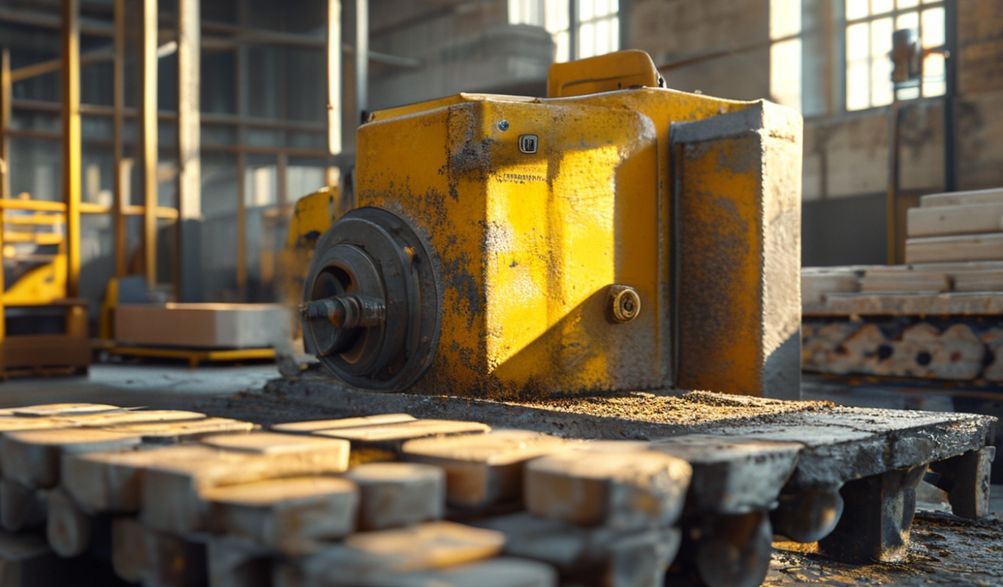
Combien Coûte une Machine à Fabriquer des Blocs de Béton Semi-Automatique ? (Guide d'Achat 2026)
Introduction
Vous vous trouvez à un carrefour. Votre entreprise de construction est en pleine croissance, ou peut-être êtes-vous un entrepreneur convoitant le marché florissant des matériaux de construction. Vous savez que produire vos propres blocs de béton peut réduire considérablement les coûts des projets ou créer une nouvelle source de revenus lucrative. Mais la voie est semée d’interrogations. Faut-il compter sur un travail manuel éreintant ? Une usine automatique robotisée à six chiffres est-elle excessive ? Il existe un juste milieu que des chefs d’entreprise avisés exploitent depuis des décennies : la machine semi-automatique de fabrication de blocs de béton.
Ce guide est conçu pour couper court au bruit et aux promesses des vendeurs. Nous ne nous contenterons pas de vous donner un prix générique. Le véritablecoût d'une machine semi-automatique de fabrication de blocs de bétonest une équation à plusieurs niveaux impliquant votre investissement initial, des frais d'installation cachés et des dépenses opérationnelles continues. Prendre une décision sans être informé peut transformer un investissement prometteur en un presse-papiers coûteux.
D'après les analyses du secteur, les spécifications des fabricants et les retours d'expérience opérationnels, ce guide 2026 offrira une répartition transparente. Nous détaillerons le prix d'achat initial, révélerons le coût total de possession souvent négligé, et vous fournirons un cadre pour calculer votre retour sur investissement (ROI) potentiel. À la fin, vous serez en mesure d'aborder les fournisseurs en toute confiance, sachant exactement quelles questions poser et quelle valeur exiger.
Comprendre les Machines de Fabrication de Blocs Semi-Automatiques
Avant d’aborder les chiffres, il est essentiel de comprendre ce que vous achetez. Une machine semi-automatique occupe le terrain stratégique intermédiaire entre les systèmes purement manuels et entièrement automatiques.
Comment ils fonctionnent : L'équilibre parfait entre puissance et contrôle
La désignation « semi-automatique » fait référence à la répartition des tâches entre la machine et l'opérateur. Voici le flux de travail typique :
- Alimentation manuelle :Les ouvriers introduisent le mélange de béton préparé dans la boîte à moules ou la trémie de la machine.
- Compactage Motorisé :La machine prend le relais, utilisant une combinaison de pression hydraulique et de vibrations haute fréquence pour compacter densément le mélange dans le moule. C’est là la valeur fondamentale : atteindre un compactage uniforme et de haute résistance, impossible à obtenir avec des méthodes manuelles.
- Manutention Manuelle :Une fois le bloc formé, les opérateurs le retirent manuellement (souvent avec la palette sur laquelle il a été formé) et le transportent vers la zone de durcissement.
Ce processus contraste fortement avec ses homologues :
* Machines entièrement manuelles :Nécessite un effort physique considérable pour le compactage par levier, entraînant une faible production, une qualité inconstante et une grande fatigue des travailleurs.
* Machines entièrement automatiques :Gérez l'alimentation, le compactage, la manutention des palettes, l'empilage et le durcissement avec une intervention humaine minimale. Ils offrent une production massive, mais s'accompagnent d'un prix élevé, d'une maintenance complexe et de besoins énergétiques importants.
Le modèle semi-automatique offre un compromis puissant : une cohérence mécanisée là où elle compte le plus (le compactage), avec un contrôle humain pour la flexibilité et un coût d'entrée bien plus bas.
Utilisateurs Idéaux : Cette Machine Est-Elle Adaptée à Votre Entreprise ?
Cette machine n'est pas pour tout le monde, mais elle convient parfaitement à certains profils :
- Fabricants de blocs à petite et moyenne échelle :Entreprises fournissant des matériaux aux constructeurs locaux, aux quincailleries ou à des projets spécifiques.
- Entreprises de Construction & Entrepreneurs :Les entreprises cherchent à produire des blocs pour leurs propres projets afin de maîtriser la qualité, les coûts et les délais d'approvisionnement.
- Start-ups & Entrepreneurs :Particulièrement dans les marchés émergents où les coûts de main-d'œuvre sont avantageux et la demande en logements abordables est élevée.
- Producteurs Spécialisés :Ceux qui fabriquent des produits de niche comme des pavés paysagers, des blocs à emboîtement ou des designs sur mesure nécessitant des changements fréquents de moules.
Une machine semi-automatique typique peut produire entre1 000 à 5 000+ blocs standard par poste de 8 heuresselon le modèle et l'efficacité de l'équipage.
Décomposition du Prix d'Achat Initial
Le prix affiché est le coût le plus visible, mais il varie énormément. Comprendre le "pourquoi" derrière le prix est essentiel pour comparer ce qui est comparable.
Déterminants Clés du Prix : Ce que Vous Payez Vraiment
Plusieurs facteurs influencent directement le coût de la machine :
- Capacité de production (blocs par heure) : This is the primary driver. A machine rated for 500 blocks/hour will cost significantly less than one rated for 1,500 blocks/hour. Higher capacity means a larger mold, more powerful vibration motors, and a sturdier frame.
- Block Size and Type: The complexity of the mold and compaction system changes with the product.
- Blocs creux : Most common and generally standard.
- Blocs Pleins & Paviers : May require slightly different pressure settings.
- Interlocking or Special Shapes: Complex molds and precise alignment features can increase cost.
- Machine Quality & Brand: You’re investing in steel, motors, and engineering.
- Economy/Local Brands: Often use lighter-gauge steel, standard-grade motors, and simpler controls. Lower upfront cost, but may compromise on longevity and consistency.
- Premium/International Brands: (e.g., brands like Zenith, Hess, or reputable regional manufacturers) Use heavy-duty materials, industrial-grade vibration systems, and offer better technical support. They command a higher price but deliver durability and lower lifetime operating costs.
- Niveau d'automatisation : The “semi-auto” spectrum is broad. Basic models are purely vibration-powered. Higher-priced models in this category may include add-ons like:
- An attached pan mixer for automatic feeding.
- A hydraulic system for mold lifting instead of manual cranks.
- A simple pallet stacker.
2026 Price Ranges (With Regional Context)
Crucial Disclaimer: Prices are highly sensitive to regional manufacturing costs, import duties, steel prices, and brand. The following are estimated global price brackets for a new machine (excluding shipping and taxes). Always, always get direct quotes from multiple suppliers.
| Machine Category | Daily Output Estimate (8 hrs) | Estimated Price Range (USD) | Best For |
| :— | :— | :— | :— |
| Entry-Level / Small Scale | 1,000 – 1,500 blocks | $4,500 – $9,000 | Start-ups, very small contractors, pilot projects. |
| Mid-Range / Standard | 2,000 – 4,000 blocks | $9,000 – $25,000 | The sweet spot for most small-to-medium businesses (SMBs) and dedicated block yards. |
| High-Capacity Semi-Auto | 5,000+ blocks | $25,000 – $45,000+ | Established block manufacturers looking to scale without full automation. |
Note: Machines at the upper end of the “High-Capacity” range often blur the line with basic automatic systems.
Beyond the Sticker Price: The Total Cost of Ownership
This is where true expertise matters. The purchase price is just the first deposit on your investment. Ignoring these costs is the #1 reason for business plan failures.
Shipping, Installation, and Commissioning
- Freight & Logistics: For international orders, sea freight is common but costs can add $1,000-$5,000+ depending on container size and destination port. Don’t forget inland transportation to your site.
- Installation & Foundation: The machine needs a level, solid concrete foundation. Factor in civil work costs. Some suppliers include installation in the price; others charge a separate fee.
- Commissioning: A technician from the supplier should install, calibrate, and test-run the machine, and train your staff. Verify if this is included or an extra cost.
Essential Accessories and Initial Setup
The machine alone cannot produce blocks. You must budget for the complete ecosystem:
- Bétonnière : A compulsory companion. A basic pan or drum mixer can cost $1,000 – $5,000.
- Palettes : You need hundreds. Steel or plastic pallets cost $5-$20+ each. A stock of 400-500 is a typical starting point.
- Curing Infrastructure: Blocks need to cure for weeks. This requires a sheltered area, racks, or simply a vast, organized yard with plastic sheeting.
- Raw Material Stockpile: Initial capital to purchase bulk cement, sand, and aggregate.
Operational Costs: Keeping the Machine Running
Your daily profit is what’s left after covering these expenses:
- Travail : Typically requires 2-4 workers per shift (feeding, operating, removing, curing). Calculate based on local daily wages.
- Consommation d'énergie : Estimate using the motor’s kW rating. A 10 kW machine running 8 hours/day at $0.12/kWh costs about $9.60 per day in electricity.
- Raw Materials (Cost per Block): This is your largest recurring cost. A rough estimate for a standard hollow block might be $0.30 – $0.50 in material, varying wildly by location.
- Maintenance & Pièces de Rechange : Budget 2-5% of the machine’s purchase price annually for:
- Wear parts: Mold liners, vibration motor bearings, springs, bolts.
- Hydraulic oil and filters.
- General servicing.
How to Get the Best Value for Your Investment
Armed with cost knowledge, your goal is to maximize value, not just minimize the initial price.
Vetting Suppliers and Manufacturers
- Check History & Reputation: How long have they been in business? Search for their company name + “reviews” or “complaints.”
- Request Client References: Ask for contacts of previous buyers in your region, and actually call them. Ask about machine performance and after-sales service.
- Verify After-Sales Service: Where is the nearest service technician? What is the guaranteed response time? Is there a local spare parts inventory?
- Demand a Live Demonstration: Insist on seeing a video of the exact model running, or better yet, visit a working installation.
Key Questions to Ask Before Buying
Put this checklist in front of every supplier:
1. What is included in the quoted price? (Installation? Training? Spare parts kit?)
2. What is the warranty period and what does it cover?
3. Can you provide a list of recommended spare parts with their prices?
4. What is the expected lead time for critical spare parts?
5. Do you provide operational and maintenance manuals in a language we understand?
6. What is the expected power consumption (in kW) for this model?
New vs. Used Machines: A Risk/Reward Analysis
Pros of Used: Can be 30-50% cheaper than a new machine.
Cons of Used:
* Unknown History: Hidden wear and tear, especially in critical components like the vibration system.
* Zero Warranty: All repairs are on you, from day one.
* Obsolete Parts: Finding replacement parts for an old or discontinued model can be impossible.
* No Training or Support.
Recommendation: Only consider used if you are a highly experienced mechanic or can bring an expert to inspect it thoroughly. For most, the security of a new machine warranty and support is worth the premium.
Calculating Your ROI: From Cost to Profit
The ultimate question: “When will this machine pay for itself?”
A Simple Feasibility Framework
Use this simplified formula to model your business:
(Selling Price per Block - Total Cost per Block) x Daily Production x Working Days per Year = Annual Gross Profit
Hypothetical Example:
* Selling Price per Hollow Block: $0.80
* Total Cost per Block (Materials, Labor, Power, Maintenance): $0.55
* Profit per Block: $0.25
* Daily Production (Mid-Range Machine): 2,500 blocks
* Daily Gross Profit: 2,500 x $0.25 = $625
* Annual Gross Profit (300 working days): $625 x 300 = $187,500
From this gross profit, you would deduct your machine financing cost, rental, and other overheads to find net profit. A $20,000 machine in this scenario could pay for itself in a matter of months.
Factors That Accelerate Your Payback Period
- High Local Demand & Price: Research your market’s selling prices thoroughly.
- Efficacité opérationnelle : Minimizing material waste, block breakage, and machine downtime.
- Diversification des produits : Producing higher-margin products like colored pavers or decorative blocks.
- Running Multiple Shifts: Maximizing the utilization of your capital asset.
FAQ Section
Q1: What is the cheapest semi-automatic block making machine available?
A: You can find very basic, single-station models online for as low as $3,000-$4,000. However, extreme caution is advised. These machines often suffer from poor durability, inconsistent compaction, and negligible after-sales support. Focus on finding the best valeur—reliable performance at a reasonable price—not just the lowest ticket.
Q2: Can I operate this machine with a single-phase power connection?
A: Many smaller entry-level models (up to ~5 kW) are designed for single-phase power (220V), which is common in workshops and homes. Most mid-to-large capacity machines require a three-phase (380V/415V) industrial connection due to their more powerful motors. Always confirm the electrical specifications before purchase.
Q3: How long does it take to learn to operate a semi-automatic machine?
A: A competent worker can learn the basic operation—feeding, starting the cycle, removing blocks—within a few days of training. However, mastering the mix design, troubleshooting common issues like block sticking or cracking, and achieving peak efficiency and consistent quality typically takes several weeks of hands-on experience.
Q4: Are there financing options available for these machines?
A: Yes, options exist. Some manufacturers or their dealers offer in-house financing or leasing plans. More commonly, you can explore equipment financing loans from banks or credit unions, which use the machine itself as collateral. Government small-business support schemes in your region may also offer favorable loans.
Q5: What is the typical lifespan of a well-maintained machine?
A: The core structure (frame, table) of a quality semi-automatic machine, with proper care and maintenance, can easily last 15-20 years or more. However, wear parts like mold liners, vibration motors, and springs will need replacement every few years depending on usage. Think of it as a long-term asset with periodic component renewals.
Conclusion
Navigating the coût d'une machine semi-automatique de fabrication de blocs de béton requires looking beyond the invoice. It’s a composite of your initial investment, the necessary ecosystem of accessories, and the ongoing drumbeat of labor, materials, and maintenance. As this guide has outlined, a $15,000 machine can quickly become a $25,000+ project once it’s operational on your floor.
The path to a profitable investment is paved with research. Use the price ranges as a starting point for budgeting, but let the questions about total cost of ownership and supplier vetting guide your final decision. Prioritize a reputable partner who offers robust support over the supplier with the rock-bottom bid and a disappearing act after the sale.
Your next step is to take this framework and apply it to your specific context. Assess your local market demand, calculate your potential ROI with realistic numbers, and then engage confidently with suppliers. By making an informed, value-driven decision, you’re not just buying a machine—you’re investing in the foundation of your business’s growth for years to come.
<