
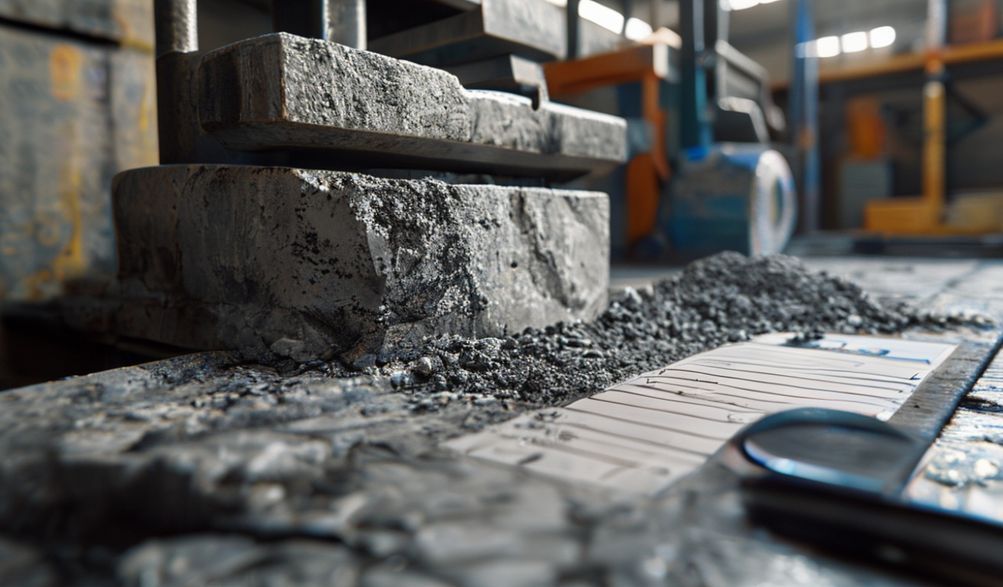
Guide Complet du Code Douanier SH pour les Machines de Fabrication de Blocs
Introduction
Naviguer dans le monde complexe du commerce international peut ressembler à un casse-tête à haut risque, surtout lorsqu'il s'agit de déplacer des machines lourdes comme des équipements de fabrication de blocs. Au cœur de ce casse-tête se trouve une simple mais puissante série de chiffres : le code du Système Harmonisé (SH). Pour les importateurs et exportateurs de machines à fabriquer des blocs, identifier correctement ce code n'est pas qu'une simple formalité bureaucratique : c'est une fonction commerciale cruciale qui impacte directement votre rentabilité et la fiabilité de votre chaîne d'approvisionnement.
Classer incorrectement vos machines peut déclencher une cascade de problèmes : des droits de douane inattendus, des retards de dédouanement coûteux, des saisies d'expédition et de lourdes pénalités financières. Cette confusion est compréhensible ; parmi des milliers de classifications, trouver le code précis pour une "machine à fabriquer des blocs de béton avec retour automatique des palettes" peut être décourageant.
Ce guide démêle la complexité. Nous vous fournirons des directives claires, fiables et applicables pour classer avec précision vos machines de fabrication de blocs. Notre objectif est de vous permettre de naviguer en douane en toute fluidité, d'optimiser vos paiements de droits, d'éviter les retards et de garantir que votre équipement essentiel atteigne sa destination sans interruptions coûteuses.
Qu'est-ce qu'un code SH et pourquoi est-il essentiel pour votre machine à fabriquer des blocs ?
Avant de nous plonger dans les chiffres spécifiques pour votre machinerie, établissons une compréhension fondamentale de ce qu'est un code SH et pourquoi il est non négociable de le déterminer correctement.
Le Système Harmonisé (SH) expliqué
Considérez le Système Harmonisé comme le langage universel du commerce mondial. Il s'agit d'une méthode numérique standardisée, développée et maintenue par l'Organisation mondiale des douanes (OMD), pour classer pratiquement tous les produits échangés à travers les frontières.
- Norme Mondiale:Utilisé par plus de 200 pays et économies.
- But principal :Il constitue la base des tarifs douaniers, des statistiques du commerce international et de nombreuses réglementations commerciales.
- La Structure :Un code SH est généralement un numéro à 6 chiffres. Les deux premiers chiffres identifient le Chapitre (par exemple, 84 pour les machines), les deux suivants spécifient la Position, et les deux derniers précisent la Sous-position. Les pays ajoutent ensuite des chiffres supplémentaires (généralement 2 à 4) pour une spécificité nationale plus poussée, créant ainsi un code de 8 à 12 chiffres.
Conséquences d'un code HS incorrect
Classifier incorrectement votre machine à fabriquer des blocs est un risque qu'aucune entreprise ne devrait prendre. Les répercussions vont bien au-delà d'une simple erreur de paperasse.
- Retards coûteux et frais de stockage :La douane retiendra votre expédition pour clarification. Chaque jour où elle reste au port ou à l'aéroport engendre des frais de surestarie et de stockage, ce qui réduit votre marge bénéficiaire.
- Sanctions financières :Le sous-paiement des droits peut entraîner de lourdes amendes, des rappels de paiement avec intérêts et des audits. Le surpaiement signifie que vous laissez de l'argent sur la table inutilement.
- Risques juridiques et de conformité :Dans les cas graves, une classification incorrecte peut être considérée comme une fraude douanière, entraînant des poursuites judiciaires, la saisie de l'envoi et la perte des privilèges d'importation.
- Perturbation de la Chaîne d'Approvisionnement :Des machines en retard entraînent des projets retardés, des travailleurs inactifs et des contrats rompus avec vos clients, nuisant ainsi à votre réputation et à vos revenus.
Détermination du Code SH Correct pour les Machines de Fabrication de Blocs
Trouver le bon code est un processus logique. En comprenant les principes et la structure du SH, vous pouvez identifier avec précision où votre équipement se classe.
Principes fondamentaux de classification des machines
Le processus de classification est régi par leRègles générales d'interprétation (RGI)Pour les machines de fabrication de blocs, nous comptons principalement sur :
- GRI 1 : Classification is determined first by the wording of the headings and any relevant Section or Chapter notes. This means we look for the heading that most accurately describes the product.
- Function Over Form: Machinery is generally classified by its principal function. A block making machine’s core function is to shape or mold mineral materials (like concrete, cement, or clay) into blocks. This functional description is our key.
Navigating Chapter 84: Nuclear Reactors, Boilers, Machinery
Most industrial machinery, including your block making equipment, is found in Section XVI (Chapters 84 & 85) of the HS. Chapter 84 is dedicated to machinery and mechanical appliances.
Our journey to find the correct code leads us through this chapter, looking for the most specific description of our machine’s purpose.
Key Heading 8474: Machinery for Working Mineral Materials
This is the destination for block making machines. Heading 8474 is precisely defined as:
“Machinery for sorting, screening, separating, washing, crushing, grinding, mixing or kneading earth, stone, ores or other mineral substances, in solid form…; machinery for agglomerating, molding or shaping mineral products in solid form…”
The second part of this description is the perfect fit: “machinery for… molding or shaping mineral products in solid form.” Whether it’s concrete, cement, or fly ash, a block making machine performs this exact function.
Sub-Heading Analysis: 8474.80 vs. 8474.90
Within Heading 8474, we reach the critical 6-digit level. Here, the distinction is clear:
- 8474.80: This covers the machines themselves for “molding or shaping” mineral products. This is the sub-heading for complete block making machines.
- 8474.90: This is designated for parts of the machinery falling under heading 8474. This includes spare parts and accessories.
Therefore, the universal 6-digit HS code for a block making machine is 8474.80.
Common HS Code Scenarios for Block Making Machines
Let’s apply this knowledge to real-world scenarios you’re likely to encounter. This practical application builds confidence and trust in the classification.
Fully Automatic Concrete Block Making Plant
A fully integrated plant with automatic material feeding, mixing, molding, curing, and palletizing systems is still performing the core function of shaping mineral products.
- Likely Classification: 8474 80 00 (The final two zeros are common placeholders at the 8-digit level; always check your national tariff).
- Point clé : The complexity or automation level does not move it out of this heading. Its principal function remains “molding or shaping.”
Manual or Semi-Automatic Block Making Machine
From a simple manual press to a semi-automatic machine with a hydraulic system, the principle remains unchanged.
- Likely Classification: 8474 80 00
- Point clé : The heading is based on function, not the degree of automation. All block making machines that mold mineral substances belong here.
Spare Parts and Accessories (Molds, Vibrators, Control Panels)
This is a crucial distinction. The molds, hydraulic pumps, vibration motors, and electronic control panels designed specifically for your block making machine are not classified as the machine itself.
- Likely Classification: 8474 90 00 (for parts).
- Point clé : Always classify parts separately on your commercial invoice. Misclassifying parts as a complete machine (or vice versa) is a common and costly error.
Mobile Block Making Machines on a Trailer
This scenario introduces potential complexity. While the unit is mobile, classification typically hinges on the essential character of the goods.
- Guidance: If the block making machine is a self-contained unit merely mounted on a trailer for transport, its primary function (block making) prevails. It should still be classified under 8474 80 00. However, if it’s a specially designed, integrated vehicle where the mobility is a core feature, consultation with a customs broker is essential, as Chapter 87 (Vehicles) may be considered.
How to Verify and Confirm Your HS Code: A Step-by-Step Process
While 8474 80 00 is your authoritative starting point, due diligence is required. Follow this process to verify and secure your classification.
1. Consult Your National Customs Tariff
The first six digits (8474.80) are global. You must confirm the full, nationally specific code (often 8-10 digits).
- Action: Visit the official website of your destination country’s customs authority.
- USA: U.S. International Trade Commission (USITC) Harmonized Tariff Schedule.
- UK: HM Revenue & Customs (HMRC) Trade Tariff.
- India: Central Board of Indirect Taxes and Customs (CBIC).
- EU: TARIC database.
- Méthode : Use “8474 80 00” as your search term in the online tariff database.
2. Use Detailed Product Descriptions
Never simply list “block making machine” on your commercial invoice. Provide a precise technical description for your customs broker or customs authority.
- Include:
- Primary Function: e.g., “For molding concrete into hollow blocks.”
- Operation Type: e.g., “Fully automatic, hydraulic press with vibration.”
- Capacity: e.g., “Production output of 2,000 blocks per hour.”
- Material Processed: e.g., “Processes concrete mix, cement, and similar mineral substances.”
3. Seek a Binding Ruling (The Most Authoritative Step)
For high-value shipments or frequent trade, this is the gold standard for eliminating risk.
- What it is: A Binding Tariff Information (BTI)ouCustoms Ruling is a legally binding decision issued by your national customs authority on the correct classification of your specific product.
- Le Processus : You submit a detailed application (with product literature, photos, and description) to customs. They review and issue a ruling number valid for several years.
- The Benefit: It provides absolute certainty. If customs later disputes your classification, you are protected by the ruling. It is the strongest step you can take to ensure compliance.
Partnering for Success: Working with Customs Brokers and Freight Forwarders
Even with this guide, international trade regulations are complex and ever-changing. Partnering with experts is a sign of prudent business management, not a lack of knowledge.
The Role of a Licensed Customs Broker
A licensed customs broker is your advocate and expert in the customs clearance process.
- Expertise : They are trained and tested on classification rules, tariff schedules, and regulatory updates.
- Risk Mitigation: They can prepare your documentation, submit entries, and handle any queries or disputes with customs on your behalf.
- Efficacité : They navigate the system daily, preventing delays and ensuring smooth clearance.
Providing Your Broker with the Right Information
To get the best from your broker, equip them with comprehensive information:
- Commercial Invoice (with your proposed HS code and detailed description).
- Detailed Packing List.
- Technical Manuals, Brochures, or Datasheets.
- Clear Photographs of the Machine.
- A Statement of the Machine’s Intended Use.
Frequently Asked Questions (FAQ)
What is the most common HS code for a block making machine?
The most widely applicable HS code for a complete block making machine is 8474 80 00. This covers machines that mold or shape mineral substances like concrete or cement.
Does the HS code change for clay or fly ash block machines?
Typically, no. The heading 8474 is defined for working with “earth, stone, ores or other mineral substances.” Both clay and fly ash (a mineral by-product) fall within this broad definition. Therefore, subheading 8474 80 remains correct.
Are HS codes the same in every country?
Lefirst six digits are universal. However, almost every country adds additional digits (usually 2-4) for more granular national statistical or duty purposes. You must always confirm the full 8, 10, or 12-digit code with your destination country’s specific tariff schedule.
Who is legally responsible for the correct HS code?
Leimporter of record (the entity listed on the customs declaration) bears the ultimate legal and financial responsibility for accurate classification and duty payment. The responsibility can also fall on the exporter depending on the agreed Incoterms® rules (e.g., DDP – Delivered Duty Paid).
What should I do if I’ve been using the wrong HS code?
Do not ignore it. Consult a licensed customs broker or trade attorney immediately. They can advise you on a voluntary disclosure process with customs authorities. Proactively correcting an error can significantly reduce potential penalties and demonstrate good faith, helping you avoid more severe consequences.
Conclusion
Successfully navigating the customs landscape for your block making machinery hinges on one critical task: accurate HS code classification. As we’ve established, the universal starting point is 8474 80 00 for the complete machineset8474 90 00 for their parts and accessories.
Mastering this process protects your business from financial loss, legal risk, and operational disruption. Remember the key steps: start with the functional description, consult your national tariff, document everything meticulously, and for the highest level of assurance, seek a binding ruling from customs authorities.
While this guide provides a robust framework and expert insight, the dynamic nature of international trade makes a partnership with a licensed customs professional one of the smartest investments you can make. By combining your product knowledge with their regulatory expertise, you can ensure your block making machines—the backbone of construction projects worldwide—move across borders efficiently, compliantly, and cost-effectively.
Avertissement : This blog post is for informational and educational purposes only. It does not constitute legal, financial, or professional customs advice. The classification of goods is complex and subject to interpretation by national authorities. Readers are strongly advised to consult with a licensed customs broker, trade attorney, or their national customs authority for binding decisions and advice pertaining to their specific shipments and circumstances.
<