
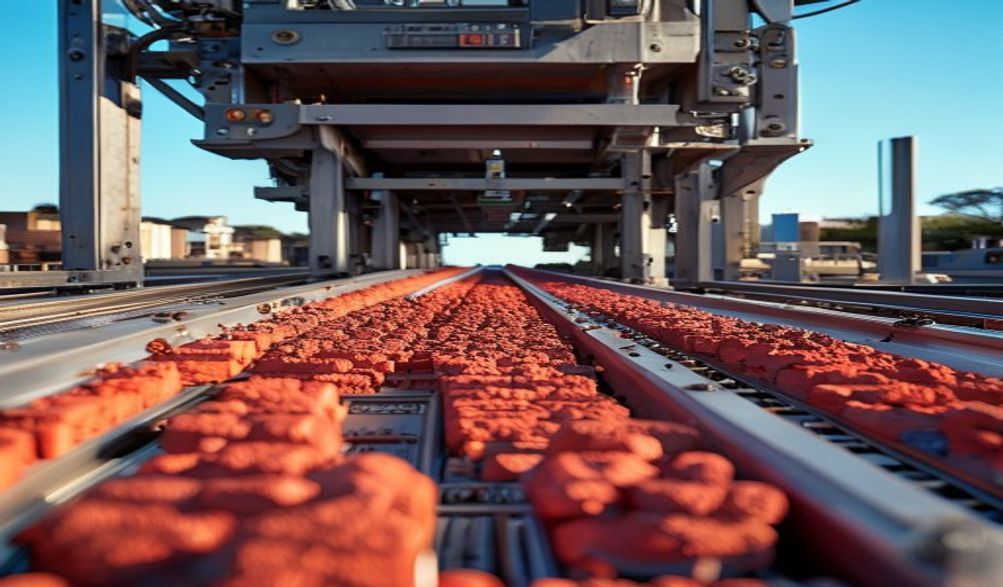
Comment choisir la bonne machine automatique de fabrication de briques à vendre en Afrique du Sud : Guide de l'acheteur 2026
Les secteurs sud-africains de la construction et de l'aménagement immobilier sont en pleine croissance. Portés par des projets d'infrastructure, la demande en logements et le développement commercial, le besoin de matériaux de construction fiables et de haute qualité n'a jamais été aussi grand. Pour les entrepreneurs avisés et les entreprises établies, investir dans une machine automatique de fabrication de briques représente une opportunité puissante de bâtir une entreprise rentable.
Cependant, naviguer sur le marché pour cet équipement critique peut être accablant. Avec une myriade de modèles, de marques et de spécifications techniques complexes, une décision hâtive peut entraîner des arrêts coûteux, une qualité de produit inconstante et des pressions financières importantes. Il ne s’agit pas seulement d’un achat ; c’est un investissement stratégique dans les fondations de votre entreprise.
Ce guide complet pour 2026 est conçu pour aller droit au but. Forts de plusieurs décennies d'expérience collective dans le secteur et d'une expertise technique approfondie, nous vous guiderons à travers chaque facteur crucial. Notre objectif est de vous permettre de prendre une décision éclairée et confiante, parfaitement adaptée à vos objectifs de production, à votre budget et aux exigences opérationnelles uniques du marché sud-africain. Construisons ensemble les bases de votre succès.
Comprendre vos besoins de production et objectifs commerciaux
Avant même de consulter une seule brochure de machine, vous devez vous tourner vers l’intérieur. Définir clairement vos paramètres opérationnels est l’étape la plus cruciale du processus de sélection. Cet audit interne vous transforme d’acheteur passif en spécificateur informé.
Évaluation de vos objectifs de production quotidiens/hebdomadaires de briques
Commencez par les chiffres. Votre objectif de production est le principal moteur de la capacité de votre machine.
* Calculer en fonction de la demande :Analysez vos commandes confirmées, les exigences des appels d’offres ou les études de marché. Approvisionnez-vous un développement à grande échelle ou un marché de détail local ?
* Sortie théorique vs. pratiqueUne fiche technique peut indiquer « 2 000 briques par heure ». En réalité, le rendement pratique est inférieur. Il faut prendre en compte le temps nécessaire aux changements de moule, à l’alimentation en matières premières, au nettoyage de routine et à la maintenance programmée. Une machine conçue pour 8 000 briques par jour pourrait produire de manière fiable 6 500 briques de haute qualité au cours d’un quart de travail standard.
Détermination des types et tailles de briques que vous prévoyez de fabriquer
Votre gamme de produits dicte la polyvalence des machines. Le marché sud-africain utilise une variété de blocs :
* Types courants :Briques de ciment standard, blocs creux (pour isolation et poids réduit), pavés (pour aménagement paysager) et blocs emboîtables (pour construction à sec sans mortier).
* Polyvalence vs. Spécialisation : A machine that can produce multiple block types with quick mold changes offers flexibility to adapt to market trends. A machine dedicated to one high-volume product may be faster and more robust. Your business model will dictate the choice.
Evaluating Your Available Space, Power Supply, and Workforce
A machine must fit your physical and operational ecosystem.
* Space Requirements: Account for the machine’s footprint, raw material storage (sand, stone, cement), a mixing area, a curing area for fresh bricks, and storage for finished products. A compact, vertical design might suit a smaller yard.
* Power Specifications: Most industrial automatic brick machines require a robust three-phase power supply, standard in South African industrial zones. Verify your available voltage and amperage. Smaller semi-automatic models may run on single-phase.
* Workforce & Skills: A fully automatic plant may only need 1-2 operators for monitoring and feeding, but they require basic technical understanding. Simpler machines might need more manual labor but less technical skill. Consider training costs.
Key Technical Specifications to Scrutinize
Technical sheets are filled with jargon. Here’s how to translate those specs into real-world performance and reliability you can trust.
Machine Type: Fully Automatic vs. Semi-Automatic
This choice balances investment, output, and labor.
* Machines entièrement automatiques : Integrated with PLC (Programmable Logic Controller) systems. They automate the entire process: mixing, feeding, compacting, molding, and stacking. They offer the highest output with minimal manual labor but come with a higher initial cost and require more technical maintenance.
* Machines semi-automatiques : Mechanized but require operator intervention for tasks like feeding the mix or removing finished bricks. Lower upfront cost and simpler mechanics, but higher labor costs and lower overall output.
* South African Scenario: For high-volume commercial production (e.g., supplying contractors), fully automatic is often the best ROI. For smaller, start-up, or niche operations, a robust semi-automatic machine can be a perfect entry point.
Core Mechanism: Hydraulic vs. Vibration Pressure
This is the heart of the machine and determines brick quality.
* Systèmes Hydrauliques : Use immense, controlled hydraulic pressure to compact the raw material mix. They produce extremely dense, high-strength bricks with excellent dimensional accuracy and a smooth finish. Ideal for high-quality cement bricks and blocks that must meet strict SANS standards.
* Systèmes de Vibration : Use high-frequency vibration to settle and compact the mix within the mold. Often faster and can be more energy-efficient for certain products. Best suited for hollow blocks and lighter weight products where ultimate compressive strength is less critical.
* Material Suitability: Hydraulic systems handle a wider range of raw material mixes, including those with higher percentages of crusher dust or fly ash, common in South Africa.
Critical Performance Metrics: Cycle Time, Pressure Force, and Mold Capacity
Look beyond the headline “bricks per hour” figure.
* Temps de cycle : The time to complete one molding cycle. A shorter cycle means higher potential output, but not at the expense of proper compaction.
* Pressure Force (Tons): This is critical for strength. For producing SANS-compliant load-bearing bricks (e.g., 7MPa or higher), sufficient compaction pressure (often 100+ tons for a standard brick) is non-negotiable. Do not compromise here.
* Mold Capacity: The number of bricks produced per cycle. A “10-brick mold” produces ten bricks every cycle. Multiply this by cycles per hour for your output calculation.
Navigating the South African Market: Suppliers, Costs, and Logistics
Your experience with the supplier is as important as the machine itself. Here’s practical, locally-focused advice.
Researching Reputable Suppliers and Manufacturers
Due diligence is your best insurance policy.
* Historique éprouvé : Prioritize suppliers with a verifiable history in South Africa. Look for companies with physical offices, showrooms, or workshops.
* Red Flags & Green Flags:
* Red Flag: Only a P.O. Box address, no local references, unwilling to let you visit a client site, pressure to pay upfront.
* Green Flag: Transparent about local clients, offers comprehensive after-sales terms, provides detailed technical support, has a warehouse of spare parts.
* The Site Visit: If possible, visit an existing installation. Speak to the operator about reliability, support, and any challenges.
Understanding the Full Cost Breakdown
The purchase price is just the beginning. Consider the Coût Total de Possession (CTP).
* Upfront Costs: Machine price, import duties (if not locally assembled), shipping to your site, installation, and commissioning.
* Coûts opérationnels : Electricity consumption (hydraulic systems can be power-hungry), cost and availability of wear parts (molds, liners, seals), and raw material efficiency (does the machine waste mix?).
* The Spare Parts Factor: Ensure critical spare parts are stocked locally in South Africa. Waiting six weeks for a part from overseas can bankrupt a project.
After-Sales Support: The Non-Negotiable for South African Buyers
This is where the best and worst suppliers are separated.
* Assistance technique locale : A supplier must have trained technicians based in South Africa who can respond to breakdowns within a reasonable timeframe (e.g., 24-48 hours for critical issues).
* Warranty & Training: Scrutinize the warranty. It should cover core components for at least 12 months. Comprehensive training for your operators and maintenance staff should be included in the purchase.
* Long-Term Partnership: You are buying into a partnership. Choose a supplier invested in your long-term productivity.
Ensuring Quality, Compliance, and Safety
A responsible investment prioritizes standards, durability, and the well-being of your team.
Machine Build Quality and Durability
Inspect what you expect.
* Construction de l'ossature : The main frame should be heavy-duty, welded steel, not lightweight bolted assemblies. It must withstand constant vibration and pressure.
* Component Brands: Recognizable, quality brands for hydraulics (e.g., Bosch Rexroth, Parker), electrical systems (Siemens, Schneider), and PLCs indicate a better-built machine.
* Protection contre la corrosion : Given local conditions, look for powder-coated paint or other anti-corrosion treatments on the frame and components.
Compliance with South African Standards
Your bricks must be fit for purpose.
* SANS Standards: Your machine must be capable of consistently producing bricks that meet the relevant SANS 1215 (Concrete masonry units) or other applicable standards. This is essential for structural integrity and market acceptance.
* Test Production: Before buying, insist on a test run using your specific raw material mix. Have samples tested for compressive strength at an accredited lab.
Essential Safety Features
Never compromise on safety.
* Machine Guards: All moving parts, especially compression areas, must have fixed guards.
* Emergency Systems: Multiple, easily accessible emergency stop (E-stop) buttons are mandatory.
* Electrical Compliance: The machine should have a certificate of compliance (CoC) for its electrical installation, adhering to South African regulations.
The Decision-Making Checklist
Use this actionable checklist when evaluating suppliers and machines:
- [ ] Production Needs: I have calculated my realistic daily output target and defined my primary brick products.
- [ ] Site Ready: I have confirmed my space, three-phase power supply, and operator skill plan.
- [ ] Type Selected: I have decided between Fully Automatic and Semi-Automatic based on my budget and output needs.
- [ ] Mechanism Understood: I know the pros/cons of Hydraulic vs. Vibration for my products.
- [ ] Key Specs Verified: I have noted the machine’s Cycle Time, Pressure Force (Tons), and Mold Capacity.
- [ ] Supplier Vetted: I have researched the supplier’s local reputation, visited a client site, and checked references.
- [ ] Full Costs Budgeted: I have a quotation covering machine, delivery, installation, and initial spare parts.
- [ ] After-Sales Confirmed: I have in writing the warranty details, local service response time, and spare parts availability.
- [ ] Quality & Safety Checked: I have seen the machine’s build quality, safety features, and will conduct a test production run.
- [ ] Compliance Assured: I am confident the machine can produce bricks meeting SANS standards for my market.
FAQ Section
Q1: What is the average price range for an automatic brick making machine in South Africa?
A: Prices vary dramatically. A small semi-automatic machine can start from around R150,000. Mid-range fully automatic models typically range from R500,000 to R1.2 million. Large, high-output turnkey plants can exceed R2 million. Always budget an additional 15-25% for ancillary equipment, installation, and initial spares.
Q2: Can I use local South African raw materials with these machines?
A: Absolutely. Reputable machines are engineered for locally available materials like Portland cement, crusher sand, stone dust (6mm or 9mm), and even industrial by-products like fly ash. Always provide your intended mix ratio to the supplier for confirmation.
Q3: How important is after-sales service, and can I get parts locally?
A: It is the single most important commercial factor after the machine itself. Downtime is lost revenue. Prioritize suppliers with a proven local service network and a guaranteed inventory of critical spare parts (like seals, hydraulic hoses, and mold liners) within the country.
Q4: What kind of warranty should I expect?
A: A trustworthy supplier should offer a minimum of 12 months on the machine frame and core components (hydraulic pump, cylinder, PLC). The warranty should be clear about what is excluded (e.g., wear parts like molds) and the process for lodging a claim.
Q5: How do I ensure the bricks will be strong enough for construction?
A: First, ensure the machine provides sufficient compaction pressure (consult the supplier for your target brick strength). Second, conduct a test production with your mix. Finally, send the cured brick samples to an independent lab (e.g., accredited with SANAS) for compressive strength testing against SANS 1215.
Conclusion
Choosing the right automatic brick making machine is a strategic decision that requires a blend of clear self-assessment, technical understanding, and diligent supplier vetting. In the South African context, factors like robust after-sales support, local spare parts availability, and the ability to meet SANS standards are not just advantages—they are necessities for a sustainable business.
Resist the temptation of the lowest upfront price. Instead, invest in a total solution backed by demonstrable experience, technical expertise, and a trustworthy local partnership. We recommend using the checklist provided to shortlist 2-3 reputable suppliers, request detailed quotations and site visits, and witness a test production. With this diligent approach, you can make your final decision with confidence, securing an asset that will build your profitability and reputation for years to come.
<