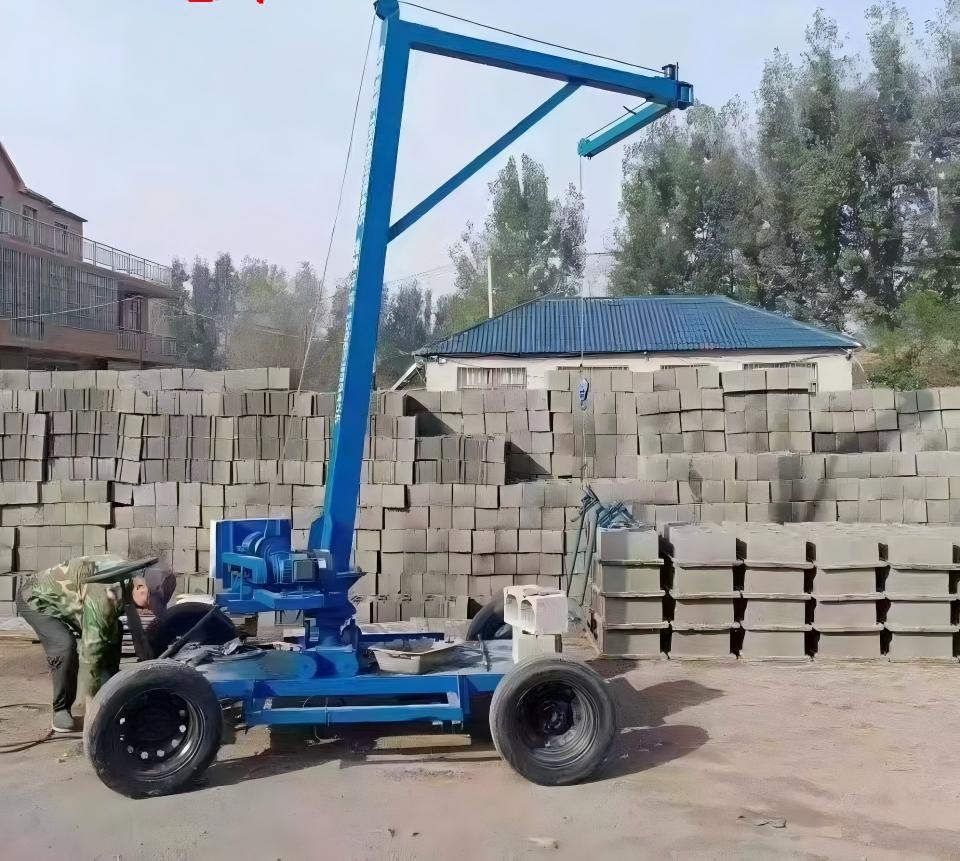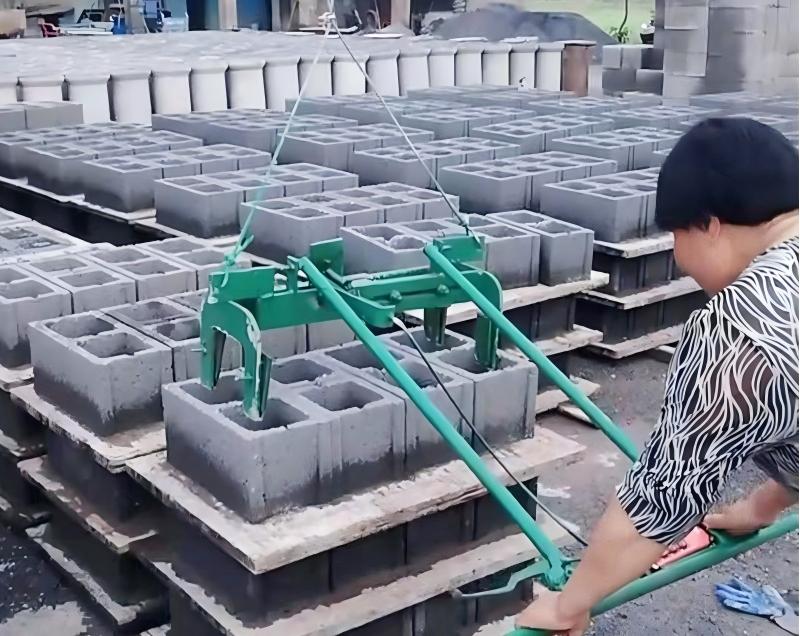
Les mécanismes opérationnels et les composants essentiels
Principes Fondamentaux de Fonctionnement
Dans son essence, cette machine automatise le ramassage, le transport et le placement précis de blocs de construction standardisés. Le processus commence par l'alignement de la machine sur une charge palettisée, souvent à l'aide de systèmes de guidage laser ou de guides physiques. Grâce à son mécanisme de serrage breveté, elle saisit solidement la pile entière. La charge est ensuite soulevée, généralement par un système robuste de ciseaux élévateurs ou de bras hydraulique, et stabilisée pour le transport. La machine se déplace ensuite — soit dirigée manuellement par un opérateur, soit par des instructions préprogrammées dans les modèles plus avancés — vers la zone de déchargement désignée. Ici, le placement est exécuté avec une précision millimétrique, garantissant que chaque unité est posée correctement pour les travaux de maçonnerie ou l'assemblage ultérieurs. Le cycle se termine par le retour de la machine à son point de départ, prête pour la charge suivante. Cette opération répétitive et de haute précision élimine la variabilité et la fatigue associées à la manipulation manuelle.
Sous-systèmes critiques et leurs fonctions
La fiabilité et la performance de cet équipement dépendent de plusieurs sous-systèmes intégrés :
- Châssis et cadre de mobilité :Cette structure constitue l’ossature de la machine, conçue pour assurer sa stabilité en charge maximale. Les options incluent des versions à chenilles offrant une traction supérieure sur les terrains accidentés et non préparés, ainsi que des modèles sur roues pour une mobilité plus fluide sur les surfaces dures. Le choix du train de roulement influence directement l’adaptabilité de la machine selon les conditions du chantier.
- Mécanisme de levage et de manipulation :C'est le cœur de la fonctionnalité de la machine. Les systèmes vont de simples fourches de type chariot élévateur à des têtes multi-griffes sophistiquées capables de manipuler des blocs de différentes tailles et formes. La puissance de levage est fournie par des systèmes hydrauliques, réputés pour leur densité de force élevée et leur contrôle fluide, ou par des actionneurs électromécaniques dans les modèles plus récents recherchant une meilleure efficacité énergétique.
- Interface de Contrôle et de Guidage :L'interface de l'opérateur va des leviers physiques et des manettes dans les modèles de base aux panneaux tactiles entièrement numériques. Les systèmes avancés intègrent des logiciels permettant la programmation de motifs de placement répétés, le stockage des paramètres de travail courants et un retour diagnostique. Certains appareils haut de gamme offrent un guidage semi-autonome, suivant des trajectoires prédéfinies ou des guides par fil.
- Système de puissance et de propulsion :Les moteurs diesel offrent une puissance élevée et une longévité traditionnelles pour un fonctionnement toute la journée sur des sites isolés. Les modèles à moteur électrique, alimentés par de grandes batteries, gagnent en popularité pour une utilisation en intérieur, zéro émission locale et un bruit de fonctionnement réduit, en accord avec les initiatives de construction écologique.
- Appareil de sécurité et de stabilisation :Les composants intégrés comprennent des stabilisateurs ou des pieds de stabilisation qui se déploient pour éviter le basculement lors des opérations de levage. Des capteurs surveillent en continu le poids de la charge, la pression hydraulique et l'équilibre de la machine. Des dispositifs d'arrêt automatique se déclenchent si les paramètres dépassent les limites de sécurité, protégeant ainsi à la fois la machine et le personnel.
Market Segmentation and Equipment Varieties
Classification by Mobility and Scale
The market offers differentiated products tailored to specific operational scales and environments.
- Compact and Mid-Range Units: These are highly maneuverable machines ideal for residential projects, smaller commercial builds, and retrofitting jobs. They are often trailer-mounted for easy transport between sites. Their focus is on agility and speed for frequent, smaller loads.
- High-Capacity Industrial Systems: Designed for large-scale industrial, commercial, and infrastructure projects, these units feature greater load capacity, extended reach, and often more sophisticated controls. They are built for durability and continuous operation, handling the vast material requirements of major construction sites.
- Specialized Attachment-Based Solutions: This category consists of modular attachments that can be fitted to existing carrier vehicles like telehandlers or mini-excavators. This offers a cost-effective entry point for contractors who already own compatible base machines, providing functional versatility.
Advanced Features and Technological Integration
Modern iterations are increasingly defined by their technological enhancements. Telematics systems allow fleet managers and dealers to monitor machine location, fuel levels, operational hours, and maintenance alerts remotely. This data is invaluable for preventive maintenance scheduling and optimizing machine utilization. Furthermore, integration with Building Information Modeling (BIM) represents the cutting edge. Machine controls can theoretically import data from a project’s BIM model, automating the placement pattern directly from the digital blueprint, thereby reducing layout errors and further accelerating the construction process.
Strategic Advantages for the Supply Chain and End-Users
Quantifiable Economic and Operational Benefits
The adoption of this machinery delivers a compelling return on investment through multiple channels. The most direct impact is the dramatic reduction in labor costs; a single machine and operator can replace a crew of several manual laborers, completing tasks in a fraction of the time. This translates directly to shorter project timelines, allowing contractors to take on more projects per year. Material waste due to handling damage is minimized, as the consistent, mechanical movement prevents chipping and breakage common in manual throws and carries. Furthermore, the precision placement reduces the need for subsequent adjustments, allowing masons or assemblers to begin their work immediately and more efficiently.
Enhancing Safety and Ergonomic Standards
Beyond economics, the safety imperative is profound. Manual handling of heavy, dense building materials is a leading cause of musculoskeletal injuries, including chronic back problems and strains. By assuming this physically demanding task, the machinery drastically lowers the incidence of such injuries. It also reduces foot traffic and congestion in the primary material drop zones, minimizing the risk of struck-by incidents. This creates a safer, more organized worksite, which can lead to lower insurance premiums and improved regulatory compliance for the end-user.
Sustainability and Industry Alignment
The efficiency gains have a direct positive environmental impact. Faster project completion reduces the overall duration of site disturbance and energy consumption on-site. Electric models, in particular, contribute to quieter, emission-free operation, which is crucial for urban projects with strict noise and pollution ordinances. By promoting a solution that aligns with goals for faster, safer, and cleaner construction, distributors align themselves with the broader trends shaping the future of the industry.
Conclusion: Positioning for a Productive Future
The transition towards automated material handling in construction is not a speculative trend but a demonstrable shift towards greater rationality and productivity. For dealers, distributors, and procurement professionals, this equipment category represents a high-value portfolio segment that addresses fundamental client pain points: cost, time, safety, and precision. Success in this market requires a deep technical understanding of the product variations, a clear communication of the total cost of ownership and ROI, and the ability to provide robust after-sales support and parts service. By becoming knowledgeable advocates for these solutions, supply chain partners do more than sell machinery; they enable their clients to build better, faster, and safer. The competitive advantage offered by this technology makes it an indispensable consideration for any forward-looking business servicing the modern construction landscape.
Foire aux Questions (FAQ)
Q1: What is the typical range of load capacity for these machines?
A: Load capacities vary significantly to suit different projects. Compact models may handle stacks weighing between 500 to 1,500 kg, while heavy-duty industrial machines can lift and transport palletized loads exceeding 3,000 kg. It is crucial to match the machine’s capacity with the most common pallet weights used by your clientele.
Q2: How does the training process work for operators, and is it complex?
A: Operator training is generally straightforward, especially for standard models. Most manufacturers provide comprehensive onsite training covering basic operations, safety protocols, and routine maintenance. For machines with advanced software or BIM integration, more in-depth training is provided. The intuitive nature of the controls allows skilled equipment operators to become proficient relatively quickly.
Q3: What are the primary considerations for choosing between a tracked and wheeled model?
A: The choice depends on anticipated ground conditions. Tracked models offer superior ground pressure distribution, making them ideal for soft, muddy, or uneven terrain as they are less likely to sink or cause damage. Wheeled models provide higher travel speeds and are better suited for hard, level surfaces like prepared pads or factory floors. They also tend to be easier to transport on trailers.
Q4: Can these machines handle other materials besides standard construction blocks?
A: Yes, with the appropriate attachments, many models can be adapted to handle a variety of palletized or bundled materials common on construction sites. This includes bags of mortar mix, landscaping blocks, certain types of paving stones, and dimensional lumber packs. This versatility enhances the machine’s utility and ROI for the end-user.
Q5: What does the maintenance schedule look like, and what is the parts availability like?
A: Maintenance is similar to other mobile construction equipment, involving regular checks of hydraulic systems, filters, structural components, and (in diesel models) the engine. Electric models have fewer moving parts and require less routine maintenance. Reputable manufacturers support their products with readily available spare parts networks and detailed service manuals. For distributors, establishing access to this parts supply chain is a critical component of customer support.
Q6: How do we effectively demonstrate the ROI to a skeptical contractor?
A: The most effective demonstration is a concrete cost-benefit analysis. Focus on direct labor savings: calculate the hours and crew size required to manually move a set quantity of material versus the machine’s cycle time. Add in quantifiable savings from reduced breakage, lower insurance costs (due to improved safety), and the potential for increased project throughput. Offering a live demonstration on the contractor’s own site, using their materials, is often the most persuasive tool.