
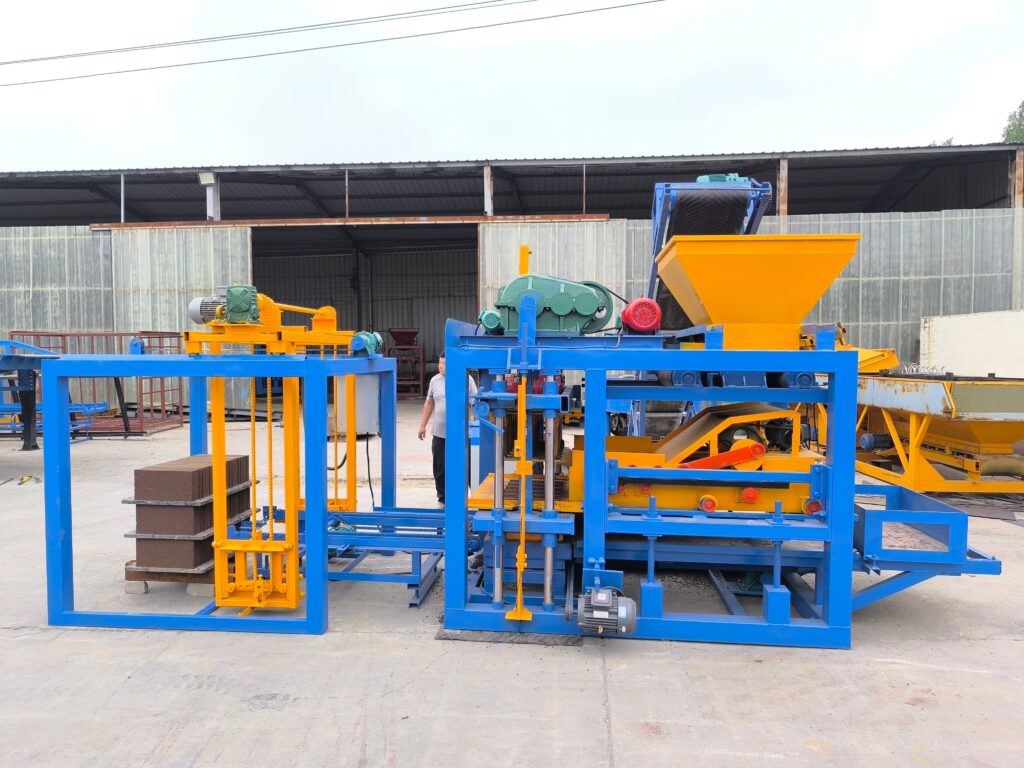
Introduction
L'évolution de l'industrie de la construction vers des procédés de fabrication durables et efficaces a positionné la machine entièrement automatique à fabriquer des briques de cendres volantes comme une technologie clé pour la production moderne de matériaux de construction. Cet équipement avancé représente un bond significatif au-delà de la fabrication de briques conventionnelle, alliant responsabilité environnementale et efficacité opérationnelle sans précédent. Pour les distributeurs, les concessionnaires et les responsables des achats, comprendre la sophistication technique, le potentiel de marché et les avantages opérationnels de ces machines est crucial pour tirer parti de la demande mondiale croissante en matériaux de construction écologiques. Ces systèmes de production intégrés transforment les sous-produits industriels en composants de construction de haute qualité grâce à un processus informatisé et fluide, qui minimise l'intervention humaine tout en maximisant la régularité de la production.
Architecture Technique et Principes Opérationnels
La machine entièrement automatique de fabrication de briques à base de cendres volantes incarne une intégration sophistiquée de l'ingénierie mécanique, des systèmes de contrôle électronique et de la technologie des matériaux.
Processus de Fabrication et Flux de Travail
La séquence de production dans ces machines suit un chemin méticuleusement conçu qui garantit une qualité constante et une utilisation optimale des matériaux.
- Dosage et Mélange Automatisés des Matériaux
La phase initiale intègre des systèmes de mesure de précision qui dosent les cendres volantes, le ciment, le sable et l'eau selon des recettes programmées. Les machines avancées sont équipées de capteurs de détection d'humidité et de capacités d'ajustement en temps réel qui maintiennent une consistance optimale du mélange. Le mécanisme de mélange utilise généralement des malaxeurs forcés à double arbre qui réalisent un mélange homogène en 45 à 60 secondes, garantissant une composition uniforme tout au long du cycle de production. Cette approche automatisée élimine les erreurs de formulation et assure une cohérence d'un lot à l'autre que les opérations manuelles ne peuvent atteindre. - Technologie de Compression Haute Pression
Le processus de moulage utilise des systèmes hydrauliques capables de générer une pression allant de 120 à 300 tonnes, selon la configuration de la machine et les exigences de production. Cette force de compression extrême active les propriétés cimentaires du mélange de cendres volantes tout en créant des structures de briques denses et durables. Les systèmes modernes intègrent une technologie de profilage de pression qui applique une force variable tout au long du cycle de compression, optimisant la distribution des matériaux et éliminant les poches d'air. L'application de pression contrôlée avec précision assure une densité uniforme pour chaque brique, ce qui se traduit par une résistance à la compression constante dépassant généralement 100 kg/cm². - Gestion Intelligente de la Durcissement
La post-production constitue une phase cruciale dans le développement de la qualité. Les systèmes entièrement automatisés intègrent des environnements de cure contrôlés qui maintiennent des niveaux optimaux de température et d'humidité pour l'hydratation du ciment et l'achèvement des réactions pouzzolaniques. Certaines installations avancées disposent de chambres de cure à la vapeur qui accélèrent le processus de gain de résistance, permettant la manutention des briques en 18 à 24 heures au lieu des 14 à 21 jours conventionnels. Cette cure accélérée réduit non seulement le temps de cycle de production, mais minimise également les besoins en espace pour le stockage des produits pendant la phase de développement de la résistance.
Composants de sous-systèmes intégrés
L'efficacité opérationnelle de ces machines découle de la coordination fluide de plusieurs sous-systèmes spécialisés.
- Manutention et systèmes de transport
La logistique automatisée sur la ligne de production comprend des convoyeurs à bande pour le transport des matières premières, des élévateurs à godets pour le déplacement vertical des matériaux et des alimenteurs à vis pour le dosage précis des ingrédients. Ces systèmes intègrent des capteurs de niveau et des dispositifs de pesée qui assurent un flux continu de matériaux sans intervention de l'opérateur. L'intégration de ces composants crée un pipeline fluide du stockage des matières premières à la sortie du produit fini, éliminant les goulots d'étranglement de production et les besoins de manutention manuelle. - Infrastructure de Contrôle et de Surveillance Programmables
The operational intelligence resides in industrial-grade programmable logic controllers (PLCs) that coordinate all machine functions. These systems feature human-machine interface (HMI) panels that provide real-time visualization of production parameters, including compression force, cycle timing, and output statistics. Modern controllers incorporate data logging capabilities that track production history, maintenance schedules, and quality metrics, enabling comprehensive operational analysis and preventive maintenance planning. - Hydraulic Power and Motion Control
The machine’s power transmission system employs high-efficiency hydraulic pumps, precision control valves, and heavy-duty cylinders designed for continuous operation. Advanced systems feature variable displacement pumps that adjust power consumption according to operational demands, reducing energy usage by 15-25% compared to conventional hydraulic systems. The motion control sequencing ensures smooth, precise movement of the molding, feeding, and product ejection mechanisms, minimizing mechanical stress and maximizing component lifespan.
Economic Advantages and Business Case Analysis
The implementation of fully automatic fly ash brick technology delivers compelling financial benefits that justify the capital investment.
Production Efficiency and Output Optimization
The automation of manufacturing processes generates substantial operational advantages that directly impact profitability.
- Continuous Operation Capability
These systems are engineered for 20-24 hour daily operation with minimal downtime, achieving utilization rates of 85-92% compared to 45-60% for semi-automatic alternatives. The uninterrupted production flow enables single machines to achieve annual outputs ranging from 15 to 60 million bricks, depending on model specifications and operational planning. This continuous operation capacity transforms fixed asset utilization, dramatically improving return on investment metrics. - Labor Productivity Enhancement
A fully configured production line typically requires only 3-5 operators per shift, regardless of output volume. This represents a 70-85% reduction in labor requirements compared to semi-automatic operations producing equivalent output. The consistency of automated operation also reduces skill dependency, allowing effective operation with appropriately trained technicians rather than highly experienced brick manufacturing specialists. - Quality Consistency and Waste Reduction
The precision of automated processes ensures dimensional accuracy and strength consistency exceeding 98%, compared to 80-85% in manual operations. This quality uniformity eliminates sorting requirements and reduces rejection rates to below 0.5%, significantly minimizing material waste and reprocessing costs. The consistent product quality enhances market acceptance and enables premium pricing positioning compared to variably quality manual products.
Resource Utilization and Cost Management
The operational economics of fly ash brick production create substantial competitive advantages in material markets.
- Raw Material Cost Optimization
Fly ash, typically constituting 60-80% of the brick composition, represents a low-cost or sometimes negative-cost raw material when sourced from thermal power plants. This fundamental material cost advantage, combined with precise automated batching that minimizes cement usage, creates production costs 25-40% lower than conventional clay brick manufacturing. The utilization of this industrial by-product also qualifies producers for various environmental incentives in many jurisdictions. - Energy Efficiency and Utility Management
Modern fully automatic machines incorporate energy recovery systems that capture and reuse hydraulic braking energy, reducing overall power consumption by 18-25%. The optimized production cycle minimizes idle time and eliminates energy waste associated with manual operation patterns. When combined with potential steam curing systems that reuse waste heat, these efficiency measures contribute significantly to reducing per-unit production costs. - Space Utilization and Infrastructure Requirements
The vertical integration of production processes and reduced curing time decreases land requirements by approximately 60% compared to conventional brick manufacturing facilities. The compact footprint reduces both land acquisition costs and material handling distances within the production facility, further enhancing operational efficiency and reducing overhead expenses.
Market Positioning and Strategic Implementation
The successful deployment of fully automatic fly ash brick technology requires careful strategic planning and market analysis.
Product Quality and Performance Characteristics
The technical superiority of machine-produced fly ash bricks creates distinct market advantages.
- Structural Performance Metrics
Factory-produced fly ash bricks demonstrate compressive strength ranging from 100-150 kg/cm², significantly exceeding the 35-75 kg/cm² typical of conventional clay bricks. The uniform density and precise dimensions facilitate faster construction with reduced mortar consumption. The enhanced structural properties enable use in multi-story construction and engineered buildings where conventional bricks may not meet specification requirements. - Environmental and Regulatory Compliance
The production process completely eliminates the fossil fuel consumption and emissions associated with clay brick firing. The utilization of fly ash, a challenging industrial waste product, contributes to resource conservation and qualifies for green building certification points under major rating systems. This environmental profile positions producers favorably within markets increasingly influenced by sustainability regulations and consumer preferences. - Product Diversification Capabilities
Modern machines can produce an extensive range of products including solid blocks, hollow blocks, paving tiles, and interlocking bricks through quick mold change systems. This manufacturing flexibility allows producers to respond to market demand shifts and target multiple construction segments with the same production infrastructure, maximizing market penetration and revenue opportunities.
Implementation Planning and Operational Integration
Successful technology adoption requires systematic planning across multiple business dimensions.
- Site Selection and Infrastructure Planning
Optimal facility location balances proximity to raw material sources (thermal power plants for fly ash) with access to target markets. The infrastructure requirements include three-phase power connection, water sourcing, and transportation access for material delivery and product distribution. Greenfield projects typically require 3-5 acres for complete production facilities including raw material storage, manufacturing area, and product curing yards. - Technical Training and Skill Development
Effective operation necessitates training programs covering machine operation, basic maintenance troubleshooting, quality control procedures, and production management. Equipment suppliers typically provide initial training, while ongoing skill development should be institutionalized through structured programs. The relatively automated nature of operations reduces skill requirements but increases the importance of systematic technical understanding. - Market Development and Distribution Strategy
The substantial production capacity of fully automatic plants necessitates strategic market development. Successful implementations typically combine direct sales to large construction projects with established distributor networks for retail market penetration. The quality consistency and environmental benefits provide compelling positioning advantages that facilitate market entry and premium pricing compared to traditional alternatives.
Conclusion
The fully automatic fly ash brick making machine represents a transformative technology that aligns industrial productivity with environmental sustainability. For equipment distributors and construction material producers, this technology offers a compelling value proposition combining operational efficiency, product quality, and competitive cost structure. The advanced integration of material handling, precision manufacturing, and intelligent control systems creates production capabilities that fundamentally outperform conventional brick manufacturing approaches. As global construction trends increasingly favor sustainable materials and consistent quality, the market position of automated fly ash brick technology continues to strengthen. Industry professionals who embrace this technology positioning will be uniquely equipped to lead the transition toward efficient, environmentally responsible construction material production, capturing significant market share while contributing to sustainable industrial development. The comprehensive advantages outlined in this analysis demonstrate why fully automatic fly ash brick manufacturing deserves serious consideration as a cornerstone technology for forward-thinking building material businesses.
Foire aux Questions (FAQ)
Q1: What is the typical production capacity range for these machines?
Production output varies by machine configuration, with standard models producing 8,000-12,000 bricks per hour during continuous operation. Higher-capacity systems can achieve 15,000-20,000 bricks hourly, while compact models may produce 4,000-6,000 units. Annual production potential ranges from 15 million bricks for basic models to over 60 million for high-capacity installations operating multiple shifts.
Q2: What are the primary raw material requirements and optimal ratios?
The standard composition includes fly ash (55-65%), sand (20-30%), cement (8-12%), and water. Precise ratios depend on material characteristics and desired product specifications. Some formulations incorporate lime or gypsum as activators, while others use chemical additives to enhance specific properties. Most machines can accommodate formulation adjustments through the control system.
Q3: How does the brick quality compare to traditional fired clay bricks?
Machine-produced fly ash bricks typically demonstrate 30-50% higher compressive strength, significantly lower water absorption, and superior dimensional consistency compared to fired clay bricks. The absence of firing eliminates soluble salts, preventing efflorescence issues common in clay bricks. The uniform shape and size reduce mortar consumption by 25-30% during construction.
Q4: What power requirements are necessary for operation?
Standard configurations require 75-150 HP depending on production capacity, typically utilizing 415V three-phase power. Complete production lines including material handling and mixing systems may require 200-300 HP total connected load. Energy consumption typically ranges between 1.0-1.8 kWh per 100 bricks produced, depending on machine efficiency and production parameters.
Q5: What maintenance expertise and spare parts inventory are required?
Routine maintenance includes daily inspection of hydraulic systems, monthly lubrication of mechanical components, and quarterly assessment of wear parts. Critical spares to maintain include hydraulic seals, vibration motor bearings, conveyor belts, and proximity sensors. Most manufacturers provide comprehensive maintenance documentation and training for in-house capability development.
Q6: What environmental approvals are typically required?
While significantly cleaner than fired brick operations, environmental clearances are still required for water usage, potential emissions from steam generation, and compliance with solid waste management regulations. The environmental benefits of utilizing fly ash typically streamline the approval process compared to conventional brick manufacturing facilities.
Q7: What is the typical installation and commissioning timeline?
Following site preparation, machine installation typically requires 4-6 weeks for foundation work, assembly, and utility connections. Commissioning and production ramp-up generally takes an additional 2-3 weeks, including operator training and initial production optimization. Complete project implementation from order to full production typically spans 4-6 months, including planning, site development, and installation phases.
