The Science and Methodology of Brick Batch Formulation
The mixing of brick ingredients is far more complex than merely combining dirt and water. It is a controlled, multi-stage process designed to achieve a homogeneous plastic mass with specific chemical, physical, and rheological properties that will survive drying and firing without defect.
1. The Core Ingredients and Their Roles
A standard brick mix is a carefully balanced system where each component plays a critical role.
1.1. The Primary Plastic Material: Clay Minerals
- Types : Illite, Kaolinite, Montmorillonite. Different clays offer varying degrees of plasticity, drying shrinkage, and fired color.
- Fonction : Provides the binding property when wet, allowing the mix to be shaped. Upon firing, the clay minerals undergo vitrification, fusing together to create permanent strength and durability. The selection of clay(s) is the single greatest determinant of the brick’s final characteristics.
1.2. The Non-Plastic Materials: Aggregates and Fillers
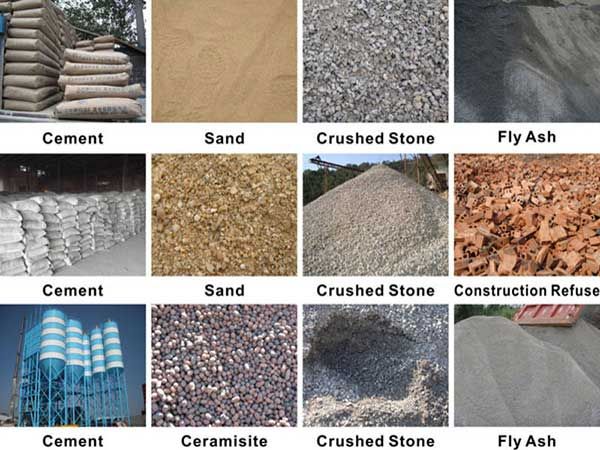
- Types : Sand, grog (pre-fired, crushed clay), fly ash, or finely crushed stone.
- Fonction : These materials are essential for modifying the properties of the pure clay. They reduce excessive plasticity and shrinkage (which cause cracking), improve texture, increase fired porosity (affecting insulation and weight), and can enhance compressive strength. The particle size distribution of these aggregates is carefully controlled.
1.3. The Fluxing Agents
- Types : Iron oxide, feldspar, or other minerals with lower melting points.
- Fonction : These ingredients promote vitrification at a specific kiln temperature. They act as a “glue” during firing, helping the clay particles fuse together more completely, which increases density and strength, and reduces water absorption. Iron oxide is also the primary contributor to the classic red brick color.
1.4. The Additives and Modifiers
- Types : Barium carbonate (to prevent scumming/efflorescence), organic burnout agents (sawdust, polystyrene beads to create controlled porosity), colorants (metal oxides for pigmented bricks).
- Fonction : These are used to solve specific problems or engineer specific brick properties, such as lighter weight, enhanced thermal performance, or consistent color beyond the natural clay hue.
1.5. The Catalyst: Water
- Fonction : Water activates the clay’s plasticity, enabling formation. The amount used is arguably the most critical variable in the entire process. Too little water results in a brittle, non-cohesive mix that won’t extrude or press properly. Too much water creates excessive shrinkage, leading to warping and cracking during drying, and increases fuel costs for drying and firing.
2. Stages of the Modern Mixing Process
Industrial mixing is a progressive journey towards absolute uniformity.
2.1. Pre-Processing and Storage of Raw Materials
- Objective: Consistent feed stock.
- Processus : Mined clay and aggregates are first stockpiled and weathered (exposed to elements to break down lumps). They are then processed through primary and secondary crushers to reduce particle size. Materials are often stored in separate, covered bays to prevent contamination and control moisture content before batching.
2.2. Batching and Proportionaling
- Objective: Absolute accuracy in formula.
- Processus : This is the “measuring” stage. Ingredients are dispensed by weight (not volume, for accuracy) using computerized belt scales or weigh hoppers. Modern plants use automated recipe management systems where the operator selects a formulation, and the system precisely meters each component onto a conveyor belt or into a primary mixer. This ensures batch-to-batch consistency.
2.3. Primary Mixing (Blending)
- Objective: Initial dry homogenization.
- Processus : The weighed dry (or semi-dry) ingredients enter a primary mixer, such as a paddle mixer or a rotating drum. The goal here is to achieve a uniform distribution of clay, aggregates, and powdered additives before water is introduced. This is crucial for color and strength consistency.
2.4. Secondary Mixing (Tempering)
- Objective: Achieving optimal plasticity.
- Processus : This is the most critical mixing phase. The blended dry materials are transferred to a high-intensity tempering unit, often a pugmill. Here, water is sprayed or injected into the mixture while powerful rotating shafts with knives or paddles work the mass intensely. The pugmill not only mixes but also de-airs the clay (in vacuum extrusion systems), removing entrapped air that can cause laminations or weak spots. The mix is “matured” for a controlled time, allowing water to fully permeate all clay particles.
2.5. Aging and Final Conditioning
- Objective: Stabilizing the mix.
- Processus : After pugging, the plastic clay mass may be transferred to an aging chamber for 24 to 72 hours. This allows for further, even moisture distribution (known as “curing”) and promotes bacterial activity that can enhance plasticity. The conditioned clay is then fed to the extruder or press hopper, often through a final pugmill segment to ensure a consistent feed.
3. Technological Systems for Precision Mixing
3.1. Continuous Mixing Systems
- Methodology: In high-output plants, batching and mixing are a continuous flow process. Materials are continuously metered, blended, tempered, and fed to the extruder in an unbroken stream. This system offers remarkable consistency and is controlled by sophisticated sensor feedback loops that monitor moisture content and flow rates.
3.2. Batch Mixing Systems
- Methodology: More common for specialty products, smaller runs, or specific formulations. A discrete batch—e.g., 2,000 kg—is mixed from start to finish as a single unit. This allows for absolute control over that specific batch and is ideal for custom-colored or engineered brick products.
3.3. Quality Control and In-Line Monitoring
- Critical Checks: Modern facilities integrate quality control directly into the mixing line.
- Moisture Probes: Provide real-time data on water content, allowing for automatic adjustment of water injection.
- Particle Size Analysis: Laser diffraction analyzers can monitor the fineness of the clay and aggregates.
- Laboratory Testing: Regular samples are taken for Atterberg Limits tests (measuring plasticity), dry shrinkage tests, and fired sample tests to validate the mix’s behavior before full-scale production commences.
4. The Impact of Mixing on Final Product and Business Outcomes
A poorly mixed batch creates defects that may not be apparent until after firing, leading to significant financial loss.
- Color Variation: Inconsistent distribution of colorants or iron oxide results in streaking or blotchy bricks, leading to rejected batches and aesthetic complaints from end-users.
- Dimensional Instability: Poor moisture uniformity causes differential shrinkage, leading to warping, twisting, or size variations outside of tolerance, affecting bricklaying speed and mortar joint consistency.
- Structural Weakness: Laminations from inadequate de-airing or uneven aggregate distribution create planes of weakness, reducing compressive strength and potentially failing load-bearing specifications.
- Efflorescence: Improper dispersion of soluble salts or anti-scumming agents leads to white, powdery deposits on the finished brick face, a major concern for architects and homeowners.
Conclusion: Mixing as a Benchmark of Manufacturing Excellence
For the professional in brick distribution and procurement, the mixing process is a key indicator of a manufacturer’s capability and commitment to quality. It is a stage where hidden value is created—or where costly future problems are baked in. When evaluating a supplier, inquiries should go beyond production capacity and price. Ask about their batching systems (automated vs. manual), their tempering technology (vacuum pugmill vs. standard), their quality control protocols during mixing, and their approach to recipe management.
A supplier who invests in precise, automated, and monitored mixing technology is investing in the consistency and reliability of the product you will sell. This reduces your risk of costly call-backs, maintains your reputation for quality, and ensures that the bricks you supply will perform as expected for decades. In essence, understanding and valuing the science of mixing is fundamental to building a robust and successful construction materials business.
FAQ
Q1: How can I, as a distributor, assess the quality of a supplier’s mixing process during a factory visit?
A: Focus on these indicators: Look for automated weigh scales and recipe control screens at the batching area. Observe the condition of the pugmill/mixer—well-maintained equipment is a positive sign. Ask to see quality control logs for moisture content and plasticity testing. Finally, inspect stockpiles of raw materials; they should be segregated, covered, and appear consistent, indicating good raw material management, which is the foundation of good mixing.
Q2: Why might two bricks from different suppliers, using similar clay from the same region, perform differently?
A: The difference almost always lies in the formulation and mixing precision. One supplier may use a superior aggregate gradation, a more effective fluxing agent, or a precise moisture control system during tempering. The mixing intensity, aging time, and use of additives like anti-scumming agents can dramatically alter the fired brick’s durability, absorption rate, and resistance to efflorescence.
Q3: Is a “vacuum” mixing/extrusion system significantly better?
A: Yes, for most extruded brick products. A vacuum de-airing pugmill removes trapped air from the clay mix. This results in a denser, more cohesive “pug” that extrudes with a smoother texture and fewer internal flaws. The finished brick has higher tensile and compressive strength, better frost resistance, and a more consistent appearance. It is a mark of a higher-tier production line.
Q4: How does mixing differ for pressed (pavers, engineering bricks) vs. extruded (common facing bricks) products?
A: Pressed brick mixes are typically “semi-dry” or “dry-pressed,” containing significantly less water (around 8-12%). The mixing focuses on creating an extremely homogeneous, granular, and free-flowing mix that can be precisely measured into a mold. Extruded brick mixes are plastic and contain more water (15-25%), requiring the intensive tempering and aging processes described above to achieve a stiff but malleable consistency.
Q5: Can additives in the mix affect the environmental profile of bricks?
A: Absolutely. The incorporation of industrial by-products like fly ash into the mix is a common practice that reduces the use of virgin clay and can improve certain properties. Mixes designed for lighter weight (using burnout agents) improve the thermal insulation of the final brick wall. A supplier with advanced mixing capabilities can reliably incorporate these sustainable materials without compromising batch consistency.