
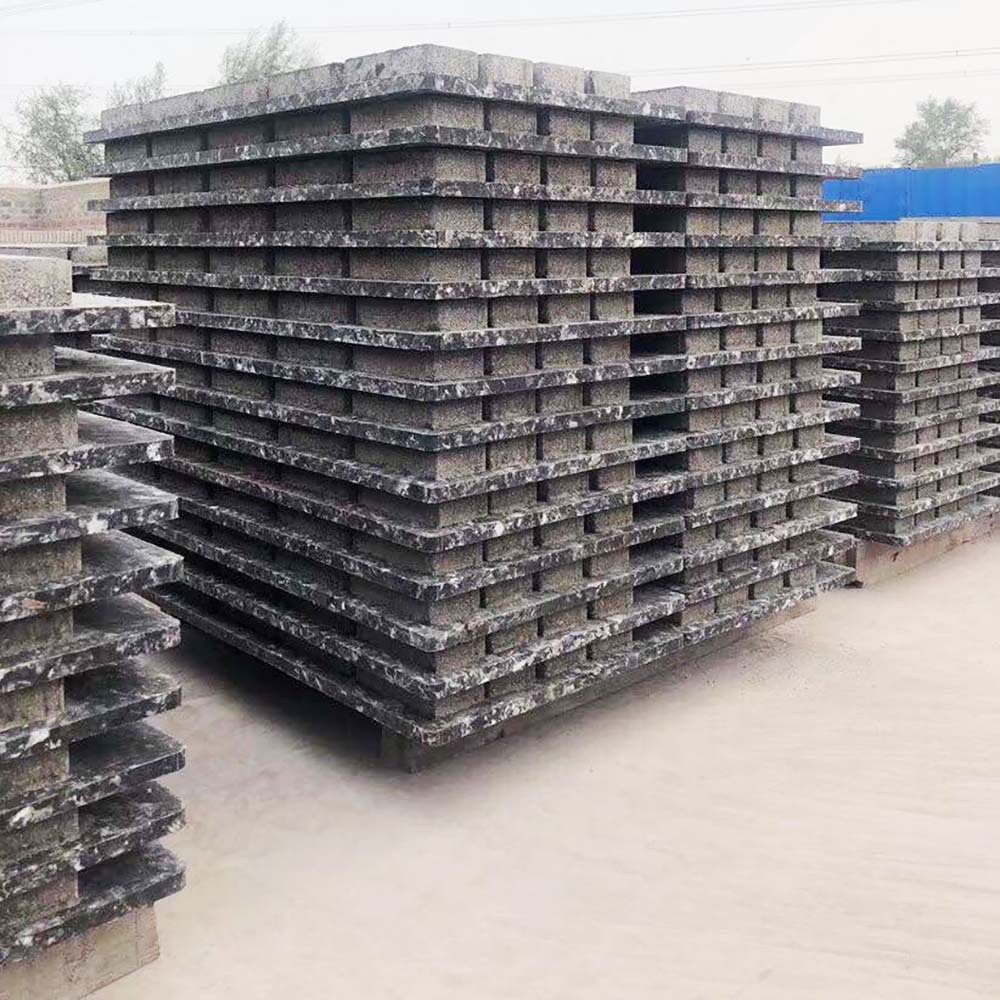
La Science de l'Hydratation : Le Fondement de la Guérison
Au cœur du processus, la cure consiste à maintenir des conditions d'humidité et de température adéquates pour faciliter et achever la réaction chimique entre le ciment Portland et l'eau.
1.1 La Réaction d'Hydratation : De la Pâte à la Pierre
Lorsque l'eau est ajoutée au ciment, une série complexe de réactions exothermiques (dégageant de la chaleur) débute. Les principaux composés de silicate de calcium (C3S et C2S) réagissent avec l'eau pour former un gel de silicate de calcium hydrate (C-S-H) et de l'hydroxyde de calcium. Le gel C-S-H est le liant essentiel, formant des fibres microscopiques entrelacées qui consomment progressivement l'eau et l'espace disponibles, liant les agrégats entre eux et aboutissant à une matrice solide dont la résistance et la densité augmentent. Cette réaction n'est pas instantanée ; elle progresse rapidement au début et se poursuit à un rythme décroissant pendant des semaines, des mois, voire des années.
1.2 Pourquoi le durcissement est indispensable
Un bon durcissement n'est pas simplement une étape de finition facultative ; c'est le facteur décisif pour réaliser le potentiel inhérent à la formulation du mélange de béton.
- Développement de la force :La résistance à la compression, à la traction et à la flexion d'une brique en béton est directement proportionnelle au degré d'hydratation atteint. Un durcissement insuffisant conduit à un produit final faible, poreux et friable.
- Durabilité et résistance aux intempériesUne matrice entièrement hydratée présente une perméabilité réduite, ce qui rend la brique plus résistante à la pénétration de l'eau, aux cycles de gel-dégel et aux attaques des sulfates ou chlorures. Cela se traduit directement par une durée de vie plus longue et une maintenance réduite pour les utilisateurs finaux.
- Minimiser le retrait et la fissuration :Lorsque l'eau s'évapore de la surface plus rapidement qu'elle n'est remplacée de l'intérieur, des fissures de retrait plastique peuvent se former. Un durcissement contrôlé minimise la perte d'humidité, réduisant ainsi le risque de fissures inesthétiques et compromettant la structure.
- Résistance à l'abrasion et à l'efflorescence.Une surface dense et bien durcie est plus résistante à l'usure. De plus, en limitant les voies d'eau, la migration des sels solubles vers la surface (efflorescence) est considérablement réduite.
Méthodologies et Technologies dans la Cure des Briques en Béton
Diverses méthodes établies sont employées pour créer l'environnement idéal pour l'hydratation, chacune ayant des implications opérationnelles et économiques distinctes.
2.1 Méthodes de rétention d'eau
Ces méthodes consistent à appliquer ou retenir physiquement de l'eau sur les surfaces des briques pour éviter la perte d'humidité.
- Flacage ou Immersion :Les briques nouvellement produites sur palettes sont entourées de digues et inondées d'eau. Bien que très efficace, cette méthode est gourmande en eau, nécessite un sol plat et imperméable, et est moins courante pour la production moderne à grande échelle.
- Pulvérisation et Brumisation :Les systèmes automatisés ou manuels pulvérisent par intermittence une fine brume d'eau sur les piles de briques. Cette méthode est efficace, mais peut entraîner un durcissement inégal si elle n'est pas soigneusement gérée et peut nécessiter des systèmes importants de recyclage de l'eau.
- Couvertures humides :L'utilisation de tissus retenant l'humidité, tels que la toile de jute, les tapis en coton ou des géotextiles spécialisés saturés d'eau et posés sur des piles de briques. Ceux-ci nécessitent un réhumidification régulière pour rester efficaces.
2.2 Méthodes d'étanchéité à l'humidité
Ces techniques visent à retenir l'eau de mélange pour empêcher son évasion.
- Feuille de plastique.Des feuilles de polyéthylène ou de polypropylène imperméables sont étroitement drapées sur les palettes de briques immédiatement après le démoulage. Il s'agit d'une méthode peu coûteuse et courante, mais qui risque de créer des marques de condensation sur les briques et nécessite une étanchéité soignée au niveau des bords.
- Composés de cure formant une membrane :Ces sont des pulvérisations liquides (généralement à base de résine ou de cire) appliquées sur les surfaces exposées des briques. Elles forment un film mince continu qui retarde l'évaporation de l'humidité. L'efficacité dépend du taux d'application correct et de l'uniformité. La membrane finit par s'user ou est retirée lors de la construction.
2.3 Méthodes de durcissement accéléré
To achieve rapid strength gain for faster turnover and shipping, controlled heat and moisture are applied.
- Low-Pressure Steam Curing: This is the industry standard for high-throughput plants. Pallets of green bricks are rolled into insulated, sealed chambers (curing kilns or rooms). Steam is introduced, raising the ambient temperature to a controlled range, typically between 50°C and 80°C (120°F-180°F), at near 100% relative humidity for a prescribed period (often 12-24 hours). This process accelerates early strength gain dramatically without damaging the long-term hydration process.
- Heat and Humidity Chambers: Similar to steam curing but using heated water mist or radiators in a highly humid environment. Offers precise control but can have higher energy costs.
- Insulated Curing Rooms: For operations without steam, simply housing green bricks in an enclosed, insulated space traps the heat of hydration and naturally released moisture, creating a favorable microclimate that is more effective than open-yard storage.
Critical Parameters for Optimized Curing
Successful curing requires precise control and monitoring of several interdependent variables.
3.1 The Critical Window: Initial Curing
The first 24 to 72 hours post-molding are the most critical. The brick must gain sufficient strength to be handled without deformation or damage (often called “green strength”) before it can be moved to a secondary curing area. During this period, preventing moisture loss is paramount. Many producers use immediate covering with plastic or transfer to a high-humidity “pre-curing” area.
3.2 Duration of Curing
While strength gain continues indefinitely, practical curing duration is defined to meet a specified strength, often the 28-day design strength.
- Minimum Practical Duration: Under ideal conditions, a minimum of 7 days of moist curing is recommended. For steam-cured bricks, the accelerated cycle (e.g., 18 hours) typically achieves a strength equivalent to 3-7 days of standard curing.
- Full Specification Strength: The benchmark 28-day compressive strength is the standard for compliance with building codes (e.g., ASTM C90). Proper curing for the initial 7 days is essential to achieving this strength reliably.
3.3 Temperature Control
Temperature governs the rate of the hydration reaction.
- Optimal Range: The ideal ambient temperature range for standard curing is between 15°C and 25°C (60°F-77°F). Temperatures below 10°C (50°F) severely slow hydration. Temperatures above 30°C (86°F) can lead to rapid moisture loss and, in extreme cases, thermal cracking.
- Managing the Heat of Hydration: In large, dense pours or tightly packed brick stacks, the internal heat generated by hydration must be monitored to prevent excessive temperature differentials between the core and the surface, which can cause stress cracking.
3.4 The Imperative of Moisture Continuity
The single most important factor is ensuring that the relative humidity (RH) immediately surrounding the bricks remains above 80%, and preferably above 90%. Any drop below this threshold slows hydration proportionally. Modern curing chambers are equipped with humidistats and automated misting systems to maintain this constant high-humidity environment.
Operational and Quality Assurance Considerations for Industry Professionals
For the supply chain intermediary, understanding curing translates to verifying quality and managing logistics.
4.1 Assessing Producer Capabilities
When evaluating a supplier, inquire specifically about their curing protocol. Key questions include: Do they use steam curing chambers? What is their standard curing cycle duration and temperature? How do they monitor and control humidity? How long do bricks remain in controlled curing before open storage? The answers will directly correlate to product consistency and performance.
4.2 Impact on Supply Chain Timing
Accelerated curing enables faster order fulfillment. A producer using a 24-hour steam cycle can demold, cure, and package bricks for shipment in 2-3 days. A producer relying on 7-14 days of moist curing requires longer lead times and more storage space. This has direct implications for inventory management and project scheduling for your clients.
4.3 Identifying and Preventing Curing-Related Defects
Knowledge of curing allows for root-cause analysis of common brick quality issues.
- Surface Dusting and Low Strength: Almost invariably caused by premature drying (inadequate curing), leading to a weak surface layer.
- Crazing and Fine Cracking: Often the result of drying occurring before sufficient strength has developed, or from drastic temperature/humidity fluctuations during the curing period.
- Inconsistent Color: Can be caused by uneven application of curing membranes, patchy wetting from sprays, or condensation dripping from improperly draped plastic sheeting.
Conclusion
The curing of concrete bricks is a deliberate and controlled engineering process, fundamental to transforming a shaped mixture into a reliable, high-performance construction material. For dealers and procurement experts, a sophisticated grasp of hydration science, curing methodologies, and critical control parameters is not merely academic—it is a vital commercial tool. It enables the discernment of quality between suppliers, provides the technical foundation for client advisory services, and ensures the procurement of bricks that will meet structural specifications and durability expectations in the field. In an industry where product integrity is paramount, understanding that true strength is developed not just in the mixer or the press, but patiently within the carefully managed environment of the curing chamber, separates the informed professional from the mere order-taker. Prioritizing proper curing is, unequivocally, an investment in product reputation and long-term customer satisfaction.
FAQ
Q1: What is the absolute minimum curing time required before bricks can be shipped or used in construction?
A: There is no universal absolute minimum, as it depends on the mix design and curing method. However, bricks must achieve a sufficient “handling strength” to prevent damage during shipping and placement. For steam-cured bricks, this is often within 24 hours. For moist-cured bricks, a minimum of 3-7 days is typical. Crucially, the brick must meet the specified compressive strength at 28 days, which requires adequate early curing. Shipping prematurely can risk damage and on-site performance failures.
Q2: Can concrete bricks be “over-cured,” and what are the risks?
A: While the hydration reaction benefits from extended moisture, the operational concept of “over-curing” in a controlled environment is rare. However, risks associated with excessive or improper heat/humidity include: Thermal Stress: If the temperature during steam curing is raised too high too quickly (generally above 85°C/185°F), it can damage the long-term strength development and cause delayed expansion. Condensation Staining: In sealed curing, uneven temperatures can lead to condensate dripping onto bricks, causing surface blemishes. The key is controlled, consistent conditions per a validated cycle, not indefinite exposure.
Q3: How does cold weather impact the curing process, and how do professional producers mitigate it?
A: Cold weather is a major challenge. Hydration slows significantly below 10°C (50°F) and virtually stops at freezing temperatures, which can cause irreversible damage if the mix water freezes. Professional mitigations include: Using insulated and heated curing chambers to maintain optimal temperature regardless of external weather. Extending the curing duration to account for slower strength gain. Utilizing admixtures (accelerators) in the mix design to speed up early reaction times in cold conditions. Open-yard curing is not viable in freezing climates without protective enclosures and heat.
Q4: What is the difference between “curing” and “drying” in the context of concrete bricks?
A: This is a vital distinction. Guérir is the addition of moisture or the retention of internal moisture to promote the strength-generating chemical reaction. Drying is the removal of excess moisture from the brick after it has gained sufficient strength. Drying occurs naturally after the brick leaves the curing environment and is exposed to ambient air. Bricks must be adequately cured before they begin drying. Attempting to dry (or use) an uncured brick will arrest strength development and compromise quality.
Q5: How can a distributor visually assess if a batch of bricks has been poorly cured?
A: While laboratory testing is definitive, visual and simple tactile checks can indicate potential curing issues:
- Surface Texture: Run a hand over the brick. A powdery, sandy, or easily abraded surface often indicates inadequate curing and low surface strength.
- Ring Test: Gently strike two bricks together. A clear, sharp “ring” suggests good density and bonding. A dull “thud” can indicate internal porosity or weakness, potentially from poor curing.
- Color Inconsistency: Patchy or blotchy coloration, especially in lines or drips, can suggest uneven application of water, curing compounds, or condensation during the curing process.
- Fine Cracking: A network of very fine, shallow cracks (crazing) on the surface can be a sign of premature drying during the critical early curing phase.
