
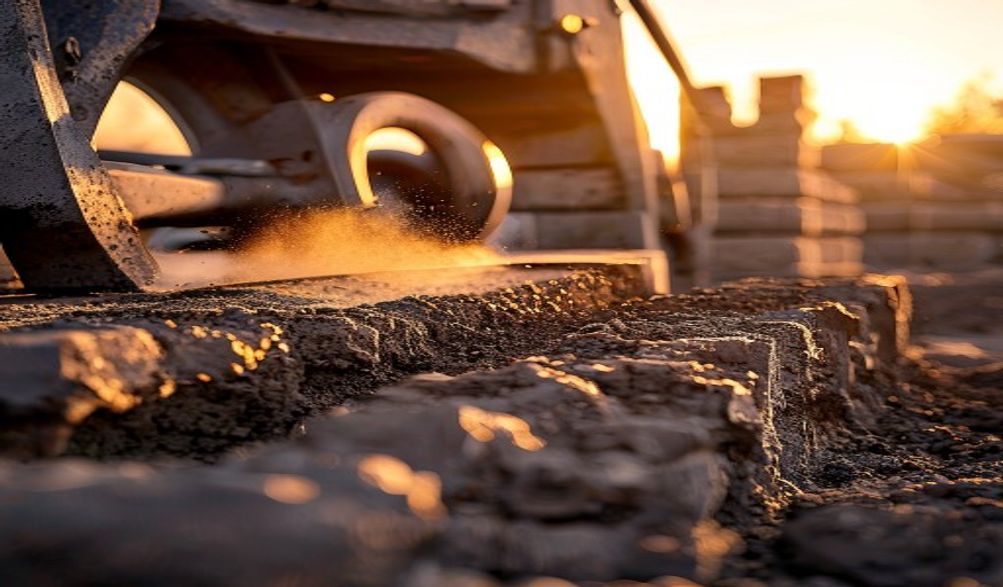
How to Choose a Compressed Earth Brick Making Machine: A Buyer’s Guide
Introduction
In an era of rising construction costs and growing environmental consciousness, builders worldwide are looking back to one of humanity’s oldest materials: earth. Compressed Earth Bricks (CEBs) are emerging as a powerful solution, offering a blend of sustainability, affordability, and remarkable durability. However, the journey to a finished earth-built structure begins with a single, critical decision: selecting the right machine to produce your bricks.
This choice can be daunting. With options ranging from simple manual presses to complex automated systems, varying technical specifications, and a wide price spectrum, it’s easy to feel overwhelmed. A poor decision can lead to project delays, budget overruns, or bricks that simply don’t meet strength requirements.
This guide is built on practical industry experience, sound engineering principles, and a deep respect for earth construction traditions. Our goal is to demystify the process. By the end of this comprehensive buyer’s guide, you will possess the knowledge to evaluate your project needs, understand key machine specifications, and confidently select the perfect CEB press to turn your soil into a lasting legacy.
Understanding Compressed Earth Bricks and Your Project Needs
Before comparing horsepower and production rates, you must first solidify your project’s foundation—both literally and figuratively. This initial clarity is the most important step in your selection process.
What Are Compressed Earth Bricks? Core Benefits.
Compressed Earth Bricks are created by mechanically compressing a damp mixture of subsoil—typically containing clay, sand, silt, and sometimes a small percentage of stabilizer like cement or lime—into a dense, solid block. It’s a process that uses immense pressure, not heat from a kiln.
The benefits driving their popularity are substantial:
- Durabilité : CEBs have an exceptionally low embodied energy, especially when using on-site soil and minimal stabilization. They are fully recyclable and non-toxic.
- Masse Thermique: Their high density allows them to absorb heat during the day and release it slowly at night, naturally regulating indoor temperatures and reducing energy costs.
- Rentabilitée The primary raw material (soil) is often free or very low-cost, dramatically reducing material expenses.
- Résistance au feu et aux ravageurs : Earth does not burn and is unappealing to termites and rodents.
- Matériaux Locaux : They promote local economies and reduce transportation emissions associated with conventional bricks or concrete blocks.
Defining Your Project Scope: The First Critical Step
Your machine must match your ambition. Categorizing your project helps narrow the field immediately.
For Homesteaders & DIY Builders
You’re likely building a single home, workshop, or garden wall. Your priorities are affordability, simplicity, and hands-on control.
* Machine Focus: Manual or small semi-automatic presses.
* Output Needs: Lower (50-300 bricks per day).
* Considération clé : Operability by a small crew or family.
For Commercial Builders & Developers
You’re constructing multiple units, commercial structures, or housing developments. Your priorities are speed, consistency, and return on investment.
* Machine Focus: High-output, fully automatic hydraulic machines with conveyor systems.
* Output Needs: High (1,000-5,000+ bricks per day).
* Considération clé : Production reliability and integration into a larger construction workflow.
For Social Housing & NGO Projects
You aim to build community infrastructure or affordable housing. Your priorities balance cost, ease of training, and creating local employment.
* Machine Focus: Robust semi-automatic machines that are easy to maintain.
* Output Needs: Medium (300-1,500 bricks per day).
* Considération clé : Durability in challenging conditions and the availability of local technical support.
The Non-Negotiable: Analyzing Your Soil
Here is where expertise is paramount: The best machine in the world cannot make good bricks from poor soil. Your soil is your most important ingredient.
-
Start with Simple Field Tests: Before you even look at machines, get to know your soil.
- The Ribbon Test: Moisten a handful of soil and roll it into a sausage. The longer it ribbons before breaking, the higher its clay content. You need a balance—too much clay leads to shrinkage cracks; too little reduces cohesion.
- The Jar Test: Place soil in a clear jar with water, shake vigorously, and let it settle. The layers will show approximate proportions of sand, silt, and clay. A good CEB soil often falls in the “sandy clay” or “clayey sand” range.
-
Professional Lab Analysis: For any project beyond a small garden wall, invest in a professional soil test from a geotechnical or agricultural lab. This provides precise data on:
- Particle size distribution.
- Plasticity Index.
- Optimal moisture content for compression.
- Crucially, it will tell you if and how much stabilizer (like 5-10% cement) is needed to achieve the required compressive strength for load-bearing walls in your climate.
Principales spécifications techniques à évaluer
With your project scope and soil data in hand, you can now dissect the technical details of the machines themselves.
Machine Type: Manual, Semi-Automatic, or Fully Automatic?
This choice dictates your labor model, speed, and investment.
| Type | Operation & Labor | Output Speed | Ideal For |
| :— | :— | :— | :— |
| Manuel | Human-powered lever, pedal, or screw press. Requires significant physical effort. 2-3 person crew. | 50-150 bricks/day | DIY projects, remote sites with no power, ultra-low-budget builds. |
| Semi-Automatique | Electric or engine-driven hydraulic press. Operators feed soil and remove bricks manually. 4-6 person crew. | 300-1,500 bricks/day | Most small-to-medium businesses, social projects, owner-builder homes. |
| Entièrement Automatique | Computer-controlled with automated feeding, pressing, and palletizing. Minimal direct labor. | 2,000+ bricks/day | Large-scale commercial production, developers requiring high, consistent output. |
Capacité de production (briques par heure/jour)
Don’t just look at the manufacturer’s peak rating. Think practically.
* Calculate Your Need: Estimate total bricks for your project. Divide by your desired construction timeline (in working days). This gives your required average daily output.
* Factor In Reality: Account for machine setup, maintenance, weather delays, and crew learning curves. Choose a machine whose durable output is 20-30% higher than your calculated daily need. This provides a buffer and allows for growth.
Brick Size and Mold Options
- Tailles standards : Many machines offer molds for common sizes (e.g., 300x150x100mm). Using a standard size simplifies planning.
- Moules sur Mesure : Can you order custom molds for unique architectural features? This is a sign of a flexible manufacturer.
- Interlocking vs. Standard: Interlocking brick designs can reduce or eliminate the need for mortar, speeding up construction. Ensure the machine you choose offers the brick profile you want.
Power Source: Mechanical, Electric, or Engine-Driven?
- Manual (Mechanical): Zero fuel costs, totally off-grid, but physically demanding.
- Moteur Électrique : Clean, quiet, and efficient operation. Requires reliable grid or substantial generator power.
- Diesel/Petrol Engine: Full mobility and ideal for remote sites. Higher fuel costs, noise, and maintenance.
Compression Force and Stabilization Compatibility
- Force de compression : Measured in tons, PSI, or MPa. This directly correlates to final brick density and strength. A typical range is 10-30 MPa for stabilized bricks. Higher force generally means stronger bricks, but only if the soil mix is correct.
- Stabilization Readiness: If your soil test recommends cement or lime stabilization, confirm the machine is designed to handle it. Some lighter-duty presses may not mix stabilizers evenly or achieve the required compression for chemically stabilized bricks.
Beyond the Machine: Operational and Support Factors
The machine’s price tag is just the beginning. Wise buyers evaluate the total ecosystem of ownership.
The Total Cost of Ownership
Create a budget that includes all foreseeable expenses:
1. Initial Purchase Price.
2. Shipping, Handling, and Import Duties (can be significant for international orders).
3. Site Preparation: A level, stable concrete foundation is often required.
4. Initial Consumables: Lubricants, spare mold liners, toolkits.
5. Ongoing Maintenance: Regular costs for hydraulic oil, filters, and replacement parts.
6. Labor & Training Costs for your crew.
Manufacturer Reputation and Support (A Critical Trust Factor)
This is where you assess trust. A machine is a long-term investment.
* Research: How long has the company been in business? Look for client testimonials, project galleries, and independent reviews.
* Assistance technique : Is support accessible via phone, email, or video call? Do they offer manuals in your language? The availability of spare parts is arguably more important than the machine price. A cheap machine is useless if a broken seal halts production for months.
* Expert Tip: A strong warranty (1+ years on major components) and comprehensive operator training—whether on-site or via detailed video—are invaluable. They signal a manufacturer that stands behind their product.
Labor Skill Requirements and Safety
- Niveau de compétence : A semi-automatic machine doesn’t require engineers, but it does need attentive operators who can follow mixing recipes, perform basic maintenance, and identify issues. Assess your team’s capability or training budget.
- Safety Features: Never compromise. Look for machines with proper guarding on moving parts, emergency stop buttons, pressure relief valves, and clear safety labels. A safe machine is a productive machine.
Making the Final Decision: A Step-by-Step Checklist
Use this actionable checklist to move from research to purchase confidently.
Step 1: Solidify Project Parameters & Soil Data.
Have clear answers on: Project size (total bricks), desired timeline, on-site soil characteristics (from lab test), and local building code strength requirements.
Step 2: Set a Realistic Budget (Including Contingencies).
Factor in the Coût Total de Possession, not just the purchase price. Allocate 10-15% for unexpected costs.
Step 3: Research & Shortlist 3-5 Reputable Suppliers.
Use the criteria above to find manufacturers with proven experience in projects similar to yours.
Step 4: Request Detailed Quotes & Specifications.
Ask for a line-item quote and complete technical specs. Compare them side-by-side on factors like pressure, output, power needs, and included accessories.
Step 5: Ask for Client References & Visit Projects if Possible.
Talk to past customers, especially those in a similar climate or region. Ask about machine performance, support responsiveness, and hidden challenges.
Step 6: Compare Lifecycle Value, Not Just Price.
The cheapest option often becomes the most expensive. Choose the machine and manufacturer that offer the best combination of reliability, support, and suitability for your long-term needs.
Foire aux Questions (FAQ)
Q: What is the average cost of a CEB machine?
A: Prices vary dramatically based on type and capacity. You can find basic manual presses for $1,500 – $5,000. Semi-automatic machines typically range from $10,000 to $30,000. Large, fully automatic production lines can cost $50,000 to $150,000+. Your project scope will dictate the appropriate investment.
Q: Can I make bricks with soil from my own property?
A: Very likely, but testing is essential. Most soils can be used, but many will require blending (adding sand or clay) or stabilization with a small amount of cement or lime to achieve optimal strength and durability, especially for load-bearing walls.
Q: How many people are needed to operate a CEB machine?
A: It depends entirely on the machine type. A manual press needs 2-3 people. A semi-automatic system requires a crew of 4-6 for efficient operation (mixing, feeding, pressing, handling, and curing). Fully automatic systems may only need 1-2 people for monitoring and maintenance.
Q: Are compressed earth bricks strong enough for load-bearing walls?
A: Yes, absolutely. When properly compressed and, if required, chemically stabilized, CEBs can meet and exceed the compressive strength requirements for load-bearing walls in most international building codes. The key is using the right soil mix and a machine capable of achieving sufficient compression.
Q: What maintenance does a CEB machine require?
A: Regular maintenance is simple but critical. It includes cleaning the machine after each use to prevent soil buildup, daily lubrication of moving parts, checking hydraulic fluid levels, and periodically inspecting wear items like the mold, compression plates, and seals for damage. Always follow the manufacturer’s specific maintenance schedule.
Conclusion
Choosing a Compressed Earth Brick making machine is a strategic decision that blends practical project goals with soil science, mechanical understanding, and partner reliability. It’s the crucial first step in transforming raw earth into beautiful, resilient, and sustainable architecture.
Move forward methodically. Trust the data from your soil tests and the transparent specifications from manufacturers over flashy sales pitches. Invest time in building a relationship with a knowledgeable supplier who acts as a partner in your success.
Ready to take the next step? [Consider a Call to Action here, e.g., “Download our free printable Machine Comparison Checklist,” “Sign up for our webinar on advanced soil stabilization,” or “Contact our team for a personalized consultation on your project.”]
With the right machine as your foundation, you’re not just purchasing equipment—you’re unlocking the potential to build structures that are healthy, affordable, and deeply connected to the earth beneath your feet.
<