
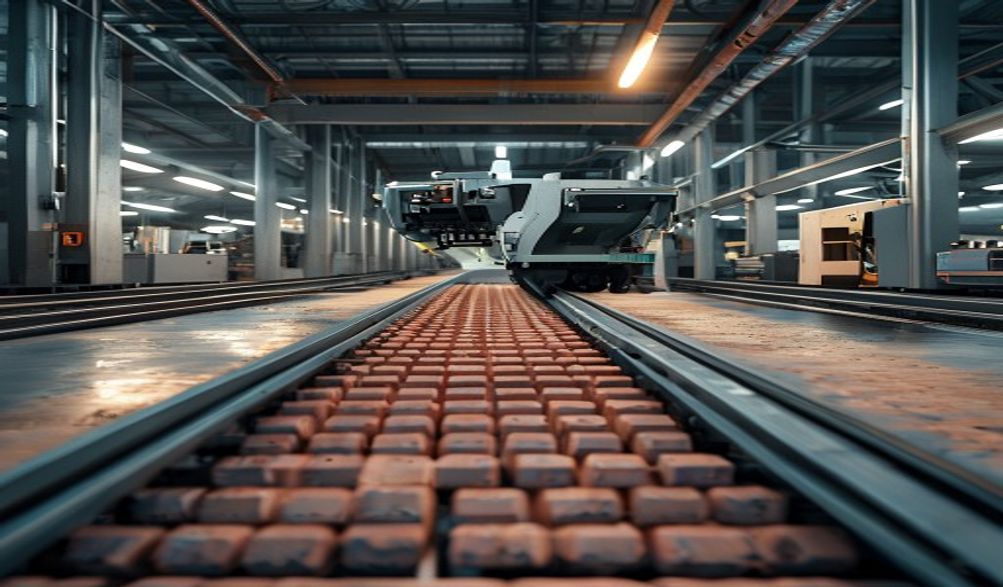
How to Choose a Concrete Brick Making Machine Factory: A Comprehensive Buyer’s Guide
Introduction
The heart of any successful block yard or brick manufacturing business isn’t just its location or its client list—it’s the machine that forms its very foundation. Choosing the right concrete brick making machine factory is arguably the most critical capital investment decision you will make. A reliable, efficient machine from a reputable partner is an engine for profit and growth. A poor choice, however, can become a source of relentless downtime, subpar product quality, and crippling financial loss.
The market is vast and complex. From simple manual presses to fully automated, computer-controlled production lines, the array of options is staggering. Suppliers span the globe, each with compelling brochures and promises. For an entrepreneur, a construction firm manager, or a business owner looking to upgrade, navigating this landscape alone is a daunting task.
This guide cuts through the noise. Drawing on decades of collective industry expertise, we provide a step-by-step framework to empower your decision. We’ll move beyond just comparing specs and prices, focusing instead on how to select a true long-term partner. Your goal isn’t just to purchase a machine; it’s to invest in the reliable, profitable production of quality construction materials for years to come.
1. Understanding Your Own Production Requirements
Before you look at a single factory website, you must look inward. A precise understanding of your own needs is the non-negotiable first step. This internal audit prevents you from being sold an over-specified machine that drains capital or an under-powered one that stifles growth.
Project Scale and Output Capacity
Your business plan dictates your machine’s required muscle. Output is typically measured in pieces per hour (or per 8-hour shift).
- Calculez vos besoins : Start with your sales projections. How many blocks (e.g., 4″, 6″, 8″) or bricks do you need to produce daily to meet demand and maintain inventory? Factor in a reasonable efficiency rate (e.g., 80-85%) for maintenance and changeover.
- Définissez Votre Échelle :
- À petite échelle : Outputs of 1,000 – 5,000 blocks per day. Often served by manual or semi-automatic machines.
- Moyenne Échelle : 5,000 – 20,000 blocks per day. The domain of robust semi-automatic and fully automatic stationary machines.
- Grande Échelle Industrielle : 20,000+ blocks per day. Requires a fully automatic plant with pallet circulation systems, often with multiple production stations.
Product Specifications and Versatility
What are you selling? The machine must be capable of producing it to the correct standard.
- Types de Produits : List every item you plan to make: solid blocks, hollow blocks (of various cavity patterns), paving slabs, interlocking bricks, curb stones, etc.
- Caractéristiques clés : For each product, define:
- Dimensions : Precise length, width, and height.
- Résistance à la compression : The required MPa (e.g., 7MPa, 10MPa, 15MPa). This is a critical selling point for your blocks.
- Finition de surface : Smooth, rustic, split-face? This depends on the mold and vibration system.
- Future-Proofing: Consider if you might expand your product line in 2-3 years. A machine that allows for easy mold interchangeability is a wise investment, protecting you from obsolescence.
Automation Level and Labor Considerations
Automation is a trade-off between capital expenditure and operational cost.
- Machines manuelles : Lowest cost, highest labor intensity. Suitable for very small startups or specific niche products.
- Machines semi-automatiques : Operators load mix and unload blocks, but the pressing/vibration cycle is automated. A good balance, offering higher output than manual with moderate investment.
- Machines entièrement automatiques : Raw material feeding, molding, curing, and stacking are automated via PLC controls. They maximize output, ensure consistent quality, and minimize labor costs but require a significant upfront investment and more skilled maintenance.
- Labor Analysis: Honestly assess the local availability and cost of skilled operators and maintenance technicians. A highly automated machine in an area without support can be a liability.
2. Core Evaluation Criteria for the Factory Itself
Now, shift your focus to the manufacturer. You are not just buying a machine; you are entering a relationship with the company that built it. Their expertise, processes, and integrity are embedded in every weld and circuit.
Manufacturing Expertise and Industry Experience
Longevity and focus are strong proxies for reliability.
- Années d'activité : Prioritize factories with a track record. A company that has navigated multiple industry cycles has likely improved its designs and learned from past mistakes.
- Spécialisation : Be wary of suppliers who sell everything from block machines to farm equipment. A factory dedicated to concrete and construction machinery is more likely to possess deep, focused expertise.
- Proof of Work: Request a detailed project portfolio and genuine client testimonials. Case studies that show machines operating in conditions similar to yours are invaluable. Can they provide contact information for 2-3 past clients in your region?
Technology, R&D, and Machine Quality
This is where technical due diligence begins.
- Design Capability: Do they have an in-house engineering and R&D team? Are they actively innovating, or simply copying old designs? Ask about their latest improvements in energy efficiency or durability.
- Qualité des composants The machine is only as strong as its weakest part. Inquire specifically about:
- Système Hydraulique : Brand of pumps and valves. Reputable brands (e.g., Bosch Rexroth, Kawasaki) indicate a commitment to reliability.
- Electrical Controls: Are PLCs from known manufacturers like Siemens or Mitsubishi used?
- Acier de Construction : Grade and thickness of steel used in the frame and vibration table.
- Moississures : Material (typically high-grade alloy steel) and precision machining quality. Molds define your product.
- Build Philosophy: Is the machine built for easy maintenance? Are components accessible? This speaks volumes about the designer’s practical experience.
Quality Control and Testing Protocols
How does the factory ensure consistency before the machine leaves its door?
- In-House QA: Do they have documented quality checkpoints at each stage of assembly (welding, machining, painting, electrical)?
- Test avant expédition : A reputable factory will insist on a Full Production Test before disassembly for shipping. You should receive a video of this test, showing the machine producing blocks to a specified standard.
- Certifications : While not an absolute guarantee, certifications like ISO 9001(Gestion de la Qualité) etCE (meeting EU health, safety, and environmental standards) demonstrate a formal commitment to systematic quality and safety processes.
3. The Critical Importance of After-Sales Support
This is the single greatest differentiator between a cheap transaction and a valuable partnership. The machine will require maintenance, parts, and support. The factory’s post-purchase behavior defines your total cost of ownership.
Warranty Terms and Spare Parts Availability
Read the warranty document line by line.
- Warranty Scrutiny: What is covered (parts, labor, travel)? For how long (e.g., 12 months from commissioning)? What voids the warranty? A clear, fair warranty is a sign of confidence.
- Spare Parts Pledge: The factory must guarantee the availability of genuine spare parts for the entire expected lifespan of the machine (10-15 years). Request a sample spare parts price list.
- Logistique : How quickly can they ship a critical part? What are the typical shipping costs and methods to your location?
Technical Support and Training Services
Proper installation and training prevent years of headaches.
- Commissioning: Does the price include supervision of installation and commissioning by a factory engineer? This is crucial for correct setup.
- Formation : Comprehensive training for both operators and maintenance staff is essential. Is it conducted on-site at your facility? Does it include both theory and hands-on practice, with manuals provided in your language?
- Ongoing Support: What channels exist for future questions? Direct phone/WhatsApp access to a senior engineer? A ticketed support system? The ability for remote diagnostics via the PLC?
Service Network and Response Time
Geography matters in a breakdown.
- Local Presence: Does the factory have authorized service agents or partners in your country or region? This can drastically reduce response times for minor issues.
- Emergency Protocols: For major breakdowns, what is their guaranteed response time to have an engineer on-site? 48 hours? 7 days? This should be clearly stated in your contract.
4. Practical Steps in the Selection Process
With your criteria set, it’s time for action. Follow this disciplined process to separate the contenders from the pretenders.
Conducting Thorough Supplier Shortlisting
Cast a wide net, then filter aggressively.
- Sources: Use industry-specific B2B platforms (e.g., Alibaba, but with caution), attend major construction machinery exhibitions (like bauma), and seek referrals from trusted industry contacts.
- Red Flags to Filter Out:
- Suppliers with an impossibly vast, unrelated product range.
- Companies with vague addresses, no clear factory photos, or only stock imagery.
- Unwillingness to provide direct client references.
- Pressure to decide immediately or offers that expire in 24 hours.
Requesting and Analyzing Quotations
A professional quote tells you about the company.
- Demand Detail: Your requested quotation must be a comprehensive document including:
- Detailed machine specifications and output capacity.
- Itemized price (machine, optional accessories, spare parts kit).
- Delivery terms (FOB, CIF, etc.).
- Payment terms (TT stages, Letter of Credit).
- Warranty terms.
- Delivery timeline.
- Compare TCO, Not Just Price: Calculate the Coût Total de Possession. A machine that is $10,000 cheaper but uses 30% more electricity, breaks down often, and has expensive, hard-to-get parts will cost far more over 5 years.
The Factory Visit and Machine Inspection (Virtual or Physical)
If possible, visit. If not, simulate it.
- The Factory Tour: Observe the workshop. Is it organized? Is the welding neat and clean? Are assembly stations orderly? Talk to the workers if you can.
- The Live Test: The golden rule: “No test, no investment.” Insist on seeing a machine identical or similar to your intended purchase run a full cycle. Better yet, provide a sample of your local raw material (sand, aggregate) for them to use in the test. Observe block quality, cycle time, and machine stability.
- Reference Checks: Contact the references the factory provided. Ask about machine performance, reliability, and most importantly, the quality and responsiveness of after-sales support.
5. Financial and Logistics Considerations
The final hurdles are practical but vital. Handle them correctly to ensure a smooth transition from order to operation.
Pricing Transparency and Payment Terms
Clarity prevents conflict.
- Inclusions/Exclusions: Is shipping insurance included? What about the cost of the commissioning engineer’s flight and accommodation? Get it in writing.
- Secure Payment: Avoid 100% upfront payments. Standard secure terms are:
- 30% deposit by T/T
- 70% against copy of shipping documents by T/T
- or 100% Irrevocable Letter of Credit at Sight
- Price Realism: Extremely low prices are a major risk indicator. They often reflect inferior materials, poor workmanship, and non-existent after-sales service.
Delivery, Installation, and Customs
Manage the journey to your site.
- Incoterms Clarity: Understand your responsibilities.
- FOB [Port]: You own the goods and are responsible for all costs and risks once they’re on the ship.
- CIF [Port]: The supplier pays freight and insurance to your nearest port. You handle import clearance and onward transport.
- DDP [Your Site]: The supplier delivers to your location, handling all costs and risks. This is the simplest but most expensive option.
- Timeline & Delay Penalties: The contract should include a firm delivery timeline with defined penalties for unreasonable delays by the supplier.
- Import Assistance: A good factory will assist you by providing all necessary documentation (commercial invoice, packing list, certificate of origin, etc.) and guidance on the import process for your country.
Foire aux Questions (FAQ)
Q1: What is the most important factor when choosing a concrete brick machine factory?
A: While price is a consideration, the quality of after-sales service and technical support is paramount for ensuring minimal downtime and long machine life. A reliable partner who answers the phone and ships the right part quickly is more valuable than a marginally cheaper machine from an unresponsive supplier.
Q2: How can I verify the quality of a machine without visiting the factory?
A: You can conduct rigorous virtual due diligence. Request detailed, unedited videos of the specific machine model in operation from raw material feeding to final block stacking. Ask for a list of local client references and call them. Insist on a live video call tour of the factory floor and a Q&A session with their senior engineers.
Q3: Is it better to buy from a local dealer or directly from the manufacturer?
A: Buying directly from a reputable manufacturer often provides better pricing and direct access to their technical expertise. However, a competent, well-established local dealer can offer invaluable quicker on-ground support and local spare parts inventory. Evaluate the dealer’s specific service capabilities and their formal relationship with the factory.
Q4: What’s the typical lifespan of a well-maintained concrete brick making machine?
A: A quality machine from a reputable factory, operated with the correct raw material mix and following a strict preventive maintenance schedule, can have a productive lifespan of 10 to 15 years or more. High-wear components like molds, hydraulic seals, and vibration motors may need scheduled replacement based on usage intensity.
Q5: Can one machine produce different types of blocks and bricks?
A: Yes, versatility is a key feature of many machines. The core enabling factor is the interchangeability of molds. Ensure the factory offers a wide range of standard mold options and has the capability to custom-manufacture molds for your specific designs at a reasonable cost and lead time.
Conclusion
Choosing the right concrete brick making machine factory is a systematic journey that begins with self-assessment and ends with a partnership contract. We’ve outlined the path: first, define your production needs with precision. Then, rigorously evaluate potential factories not just on their glossy brochures, but on their deep-seated expertise, manufacturing integrity, and—most critically—their unwavering commitment to after-sales support. Follow a diligent selection process, trusting evidence from tests and references over sales promises.
Remember, you are not merely purchasing a piece of equipment. You are selecting a long-term business partner for your most critical production asset. This decision forms the foundation upon which your product quality, your reputation, and your profitability will be built for the next decade. Prioritize the partnership, and you invest in reliable, efficient production that will drive your business forward for years to come.
Ready to move forward with confidence? [Contact our industry specialists today for a personalized consultation and a curated list of vetted factory recommendations tailored to your specific project.]
Want to ensure you don’t miss a critical question? [Download our free comprehensive checklist: “20 Essential Questions to Ask Any Brick Making Machine Factory Before You Buy.”]
<