
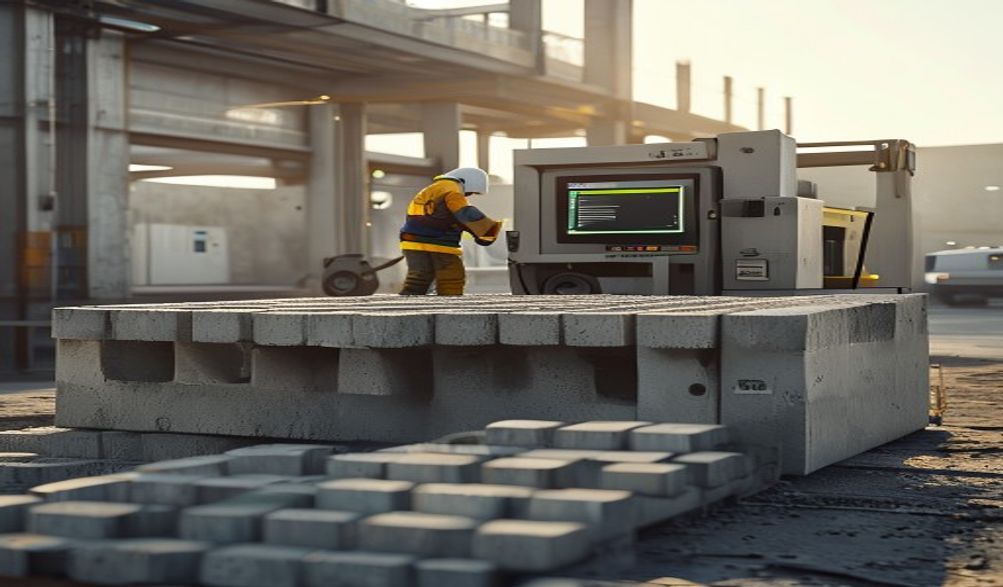
How to Choose a Concrete Brick Making Machine: A Price & Value Guide for Smart Buyers
Choosing a concrete brick making machine is a significant investment for any construction business, block yard, or ambitious entrepreneur. While the prix is a critical factor, focusing on it alone can lead to costly mistakes down the line.
The real question isn’t just “how much does it cost?” but “how do I choose a machine that delivers the best valeur for my specific needs and budget?”
This comprehensive guide will walk you through the key factors—beyond the initial price tag—that determine the true cost of ownership. We’ll help you navigate from production capacity and automation levels to operational costs and supplier reliability. Our goal is to ensure you make an informed, confident purchase that boosts your profitability for years to come.
Understanding What You’re Really Paying For: Beyond the Sticker Price
The invoice price is just the beginning. A savvy buyer evaluates the Coût Total de Possession (CTP). This includes all long-term operational, maintenance, and hidden expenses that a machine will incur over its lifespan. Understanding this separates a mere purchase from a strategic investment.
Initial Purchase Price vs. Long-Term Value
- The “Cheap Machine” Trap: A surprisingly low upfront cost is often the most expensive choice. It can mask poor-quality materials, substandard engineering, and a lack of technical support. These machines frequently suffer from high failure rates, excessive downtime, and a short operational life, erasing any initial savings.
- Calculating Return on Investment (ROI): Your true metric should be ROI. Calculate this based on:
- Production de sortie : A more reliable, faster machine produces more sellable product.
- Brick Quality: High-quality, dimensionally precise bricks command better market prices and reduce waste.
- Machine Uptime: A machine that runs consistently has a far higher lifetime value than one that is constantly being repaired.
- Key Components that Affect Price: The price is directly tied to the quality of core components. Superior-grade steel in the frame, industrial-grade hydraulic systems and pumps, reliable electrical panels (like Siemens or Schneider), and precision-engineered molds are primary drivers of both cost and long-term performance.
The Core Factors That Directly Influence Machine Price
Several technical specifications have the most direct and dramatic impact on a machine’s price.
-
Capacité de Production et Rendement : Price scales almost linearly with output. Compare:
- Machines manuelles : Low output (100-500 bricks/day), lowest price, highest labor cost.
- Machines semi-automatiques : Moderate to high output (1,000-5,000 bricks/8hr shift), mid-range price, optimal balance for growing businesses.
- Machines entièrement automatiques : Very high output (10,000+ bricks/shift), highest price, minimal labor but high initial investment.
-
Niveau d'automatisation : Each layer of automation adds cost but reduces labor and improves consistency.
- Basic: Manual feeding and brick setting.
- Mid-level: Automated pallet circulation and vibration.
- High-level: Integrated batching systems, robotic stackers, and computerized controls.
-
Type de machine et processus :
- Machines à blocs stationnaires : These are large, fixed plants that produce bricks on a stationary production table. They are generally more expensive but offer higher output, better brick density, and versatility for complex products.
- Machines à blocs mobiles (pondeuses) : These machines are mobile, laying bricks directly on the ground. They are typically lower in price and ideal for on-site production but often have lower output and brick quality compared to stationary models.
-
Brick Type & Mold Complexity: The product defines the machine. Producing a standard hollow block requires a different machine pressure and mold than producing a thin, high-precision paver or an interlocking landscaping brick. Specialty shapes and higher compressive strength requirements need more robust (and more expensive) machinery and custom molds.
A Step-by-Step Guide to Evaluating Your Needs Before Looking at Price
You cannot assess value or understand a price quote without first defining your own requirements. This step-by-step framework ensures you shop for a solution, not just a piece of equipment.
Step 1: Assess Your Project Scale and Business Goals
Start with the big picture. Ask yourself:
* Are you supplying bricks for a single, specific project?
* Are you starting a local block yard to supply your community?
* Are you aiming for large-scale commercial production to supply contractors and retailers?
* What is your required daily or weekly production volume to meet demand and grow?
Your answers here will immediately point you toward a machine class (manual, semi-auto, or full-auto) and a corresponding price bracket.
Step 2: Determine Your Required Brick Specifications
Your product mix dictates your machine needs.
* Types of Products: List every item you plan to make: hollow blocks, solid blocks, pavers, kerbstones, interlocking bricks, etc.
* Normes de Qualité : What is the required compressive strength (e.g., 3.5N/mm², 7N/mm²)? Is a smooth, painted finish needed, or is a rustic texture acceptable?
* Mix Flexibility: Will you need to quickly switch between product types? This emphasizes the need for a machine with easy mold-changing systems.
Step 3: Analyze Your Raw Material (Concrete) Availability
The machine must work with what you have locally.
* Aggregate Size & Quality: The size and sharpness of your local sand, gravel, or crushed stone will influence the optimal mix design and the required feeding system. Some machines struggle with very coarse or poorly graded aggregates.
* Conception du Mélange : Consider if you will use a simple mix or incorporate additives like fly ash. Ensure the machine’s mixer and hopper are suitable.
Step 4: Evaluate Your Site & Operational Constraints
Practical realities are decisive.
* Espace : Do you have space for the machine, a curing area (critical!), and raw material storage? A fully automatic line needs significant floor space.
* Pouvoir : Is reliable three-phase electricity available, or do you need a diesel-powered option?
* Travail : What is the skill level of your available workforce? A highly automated machine reduces labor but requires more skilled technicians for maintenance.
Navigating the Market: How to Source and Compare Quotes
Finding a reputable supplier is as important as choosing the machine itself. A good partner provides support; a bad one leaves you with an expensive paperweight.
Where to Find Reliable Machine Suppliers
- Direct Manufacturers: Established factories with a proven track record. They offer deep technical knowledge but may lack local presence.
- Authorized Distributors/Dealers: Local or regional experts who provide sales, service, and parts support. They bridge the gap between international manufacturers and local buyers.
- Industry Trade Shows: Excellent venues to see machines in operation, compare brands, and talk to multiple suppliers face-to-face.
Local vs. International: A local dealer offers faster service and support but may have higher prices. A direct international purchase may have a lower unit cost but can involve complex logistics and slower response times for parts.
Critical Questions to Ask Every Supplier
Your due diligence here protects your investment. Ask for details on:
- Service après-vente : Is installation and commissioning included? Is operator training provided? Do they have local technicians or a clear support protocol?
- Warranty & Parts Guarantee: What is covered and for how long (e.g., 12 months on parts)? How quickly can critical spare parts be delivered? Request a sample spare parts list and price list.
- Client References & Case Studies: Always ask for contact information for 2-3 past clients in a similar region or business. A confident supplier will provide these.
Decoding a Quotation: What to Look For
A professional quote should be detailed and transparent.
* Inclusions: Does it list everything? Machine, starter molds, pallets, a basic spare parts kit, and essential tools?
* Exclusions: What is not included? Often shipping, insurance, installation, and training are separate line items.
* Incoterms: Understand terms like FOB (Franco à Bord)ouCIF (Coût, Assurance et Fret). This defines who is responsible for shipping, insurance, and risk at each stage. CIF to your nearest port is generally safer for first-time importers.
Budgeting Wisely: Hidden Costs and Financing Considerations
The machine’s price is only part of your capital outlay. Failing to budget for these items can stall your project before it starts.
Common Hidden Costs to Budget For
- Logistique : Shipping, port fees, customs clearance, import duties/taxes, and inland transportation from the port to your site.
- Site Preparation: Concrete foundation construction, electrical connection (possibly requiring a transformer), and compressed air lines.
- Initial Spares: Beyond the basic kit, budget for an initial stock of wear-and-tear items like hydraulic seals, vibration motor bearings, and mixer blades.
- Training & Commissioning: If not included, factor in the cost for a technician to travel to your site to install and train your team.
Financing Your Investment
Few businesses pay the full amount upfront. Explore:
* Manufacturer Financing: Some large manufacturers offer in-house financing or leasing plans.
* Bank Loans: A traditional equipment loan from a commercial bank.
* Equipment Leasing: Lease the machine with an option to buy, preserving capital.
A well-prepared business plan with clear ROI projections (using your production and cost calculations) is essential to secure any form of financing.
Making the Final Decision: Balancing Price, Value, and Risk
With needs defined and quotes in hand, use this final checklist to make your decision.
| Criteria | Supplier A | Supplier B | Supplier C |
| :— | :— | :— | :— |
| Total Price & Payment Terms | | | |
| Machine Specs vs. My Needs | | | |
| Warranty & Service Terms | | | |
| Parts Availability & Cost | | | |
| Supplier Reputation & References | | | |
- The “Gut Check”: Does the supplier communicate clearly and professionally? Do they feel like a long-term partner who will be there when you need them?
- Trust the Data: Let your ROI calculations and needs assessment guide you, not sales pressure or the allure of the lowest bid. The middle-priced option from a superb supplier often represents the best value.
Frequently Asked Questions (FAQ) on Concrete Brick Machine Prices
Q1: What is the price range for a concrete brick making machine?
A: Prices can range from a few thousand dollars for a small manual or egg-layer machine to over $100,000 for a high-output, fully automatic stationary plant. The vast majority of productive semi-automatic machines for small to medium businesses fall in the 15 000 $ – 50 000 $ range, heavily dependent on configuration, automation, and brand.
Q2: Is it better to buy a new or used concrete brick machine?
A: A new machine comes with a warranty, latest technology, and full supplier support, offering lower long-term risk. A used machine has a lower upfront cost but carries risks like hidden wear, outdated technology, and limited or no support. Used machines are only recommended for buyers with strong technical expertise to evaluate and maintain them.
Q3: How much does it cost to operate a brick-making machine daily?
A: Operational costs include labor, raw materials (cement, aggregates), power/fuel, and routine maintenance. As a rough estimate, operational costs can be 30-50% of your total production revenue. A more efficient, automated machine reduces labor costs but may increase power consumption.
Q4: Can I get a single machine that makes multiple brick types?
A: Yes, most stationary machines can produce different products by changing the mold. However, each mold is a separate purchase. Ensure the machine you choose has the versatility (pressure, vibration system) to handle the different products you intend to make.
Q5: Why do prices vary so much between suppliers for seemingly similar machines?
A: Variations are due to: 1.) Component Quality (e.g., premium vs. generic hydraulics), 2.) Manufacturing Standards (welding, assembly precision), 3.) Included Services (training, installation), and 4.) Brand Reputation. Always compare detailed specifications and component brands, not just model names or output numbers.
Conclusion
Choosing a concrete brick making machine based solely on the lowest prix is the fastest way to compromise your project’s success and long-term profitability. The intelligent approach is to precisely define your needs, understand the coût total de possession, and partner with a reputable, supportive supplier.
By investing time in the strategic selection process outlined above, you’re not just buying a machine—you’re investing in a reliable production asset that will form the foundation of your business growth for a decade or more. Let value, backed by expertise, proven performance, and a solid partnership, be your ultimate guide.
Ready to Define Your Requirements? Download our free “Concrete Brick Machine Buyer’s Checklist” to systematically evaluate your needs and compare suppliers.
<