
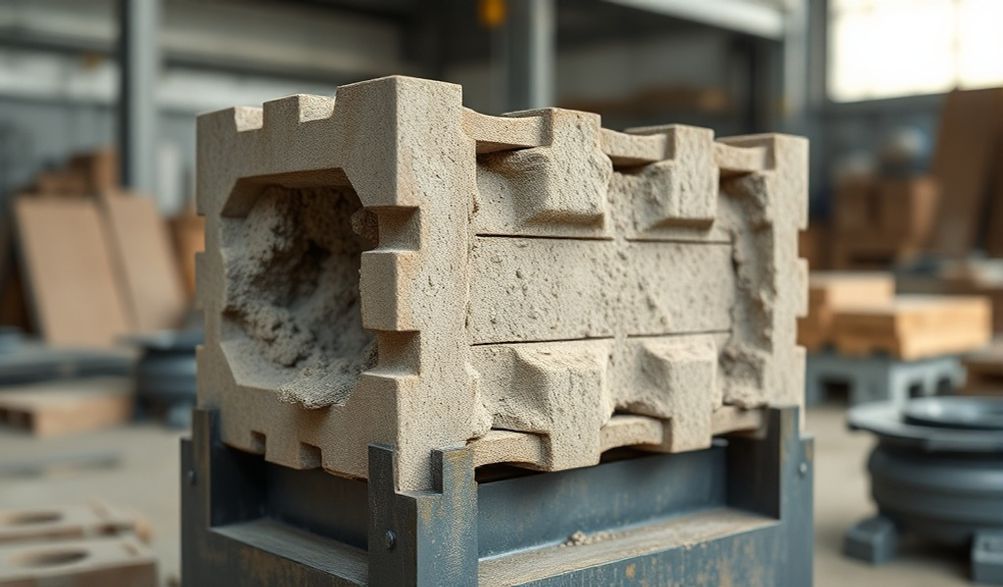
Le Guide Complet des Machines à Briques de Blocage en Ciment : Avantages, Types et Comment Choisir
Introduction
L'industrie mondiale de la construction est à un carrefour. Un rapport de l'ONU-Habitat soulignant la nécessité de 96 000 nouveaux logements abordableschaque jourPour suivre le rythme de la croissance urbaine, la demande de matériaux de construction durables et économiques n'a jamais été aussi forte. Voici la solution moderne et innovante qui transforme rapidement les paysages, des communautés rurales aux développements urbains : la brique de terre compressée emboîtable.
Ce guide se concentre sur le moteur derrière cette révolution silencieuse — leMachine à briques à emboîtement en cimentPlus qu'un simple outil, il incarne une évolution vers une construction plus intelligente et plus résiliente. Cette presse spécialisée transforme un simple mélange de terre locale, de ciment et d'eau en blocs à haute résistance et à géométrie imbriquée, éliminant ainsi le besoin d'une cuisson énergivore au four et d'une application experte de mortier.
En tant que rédacteur de contenu senior avec des années de recherche dans les technologies de construction et les pratiques de bâtiment durable, j'ai compilé ce guide pour qu'il serve de ressource complète et impartiale. Que vous soyez un entrepreneur à la recherche d'efficacité, un chef d'entreprise lançant une activité de fabrication de blocs, ou un bricoleur, les informations présentées ici s'appuient sur des principes d'ingénierie, les spécifications des fabricants et des connaissances issues d'applications pratiques.
À la fin de ce guide, vous comprendrez non seulement le fonctionnement de ces machines, mais aussi comment choisir le bon modèle, l'utiliser efficacement et exploiter pleinement son potentiel pour des bénéfices économiques et environnementaux.
Qu'est-ce qu'une machine à briques à emboîtement en ciment et comment fonctionne-t-elle ?
Une machine à briques d’interverrouillage en ciment est un dispositif de haute précision conçu pour comprimer un mélange humide de terre et de ciment (souvent appelé « terre stabilisée ») sous une pression hydraulique extrême. Le résultat est un bloc de construction dense et durable, doté d’un design breveté d’interverrouillage sur le dessus et les côtés. Ce design permet aux blocs de s’emboîter les uns dans les autres comme des pièces de puzzle, créant ainsi des murs stables sans mortier.
Composants de base et ingénierie
Comprendre l'anatomie de la machine est essentiel pour apprécier ses capacités.
- Système Hydraulique :Le cœur de la machine. Il se compose d'une pompe, d'un moteur, de cylindres et de vannes qui génèrent une pression immense (mesurée en tonnes) pour compacter la matière première.
- Moule/Matrice:Une chambre en acier usinée avec précision qui définit la forme, la taille et, surtout, le profil d'emboîtement du bloc. C'est le composant personnalisé le plus critique.
- Chambre de Compression :Là où le mélange meuble est introduit et soumis à la pression du vérin hydraulique.
- Système d'alimentation :Il peut s'agir d'une simple trémie manuelle ou d'un convoyeur automatisé qui délivre un volume constant de matériau dans le moule.
- Panneau de configuration :S'étend des commandes à levier de base sur les machines manuelles aux automates programmables (PLC) sur les modèles automatiques, gérant le cycle de pressage et l'éjection.
Le processus de production étape par étape
La transformation de la terre en bloc de construction suit un cycle simple mais précis en quatre étapes :
- Préparation des matériaux :La base d'un bon bloc. La terre locale est tamisée pour éliminer les pierres et les matières organiques. Elle est ensuite mélangée avec un faible pourcentage de ciment (généralement 5 à 10 %) et de l'eau pour atteindre une teneur en humidité optimale.
- Alimentation :Le mélange homogène est chargé dans la trémie d'alimentation de la machine.
- Compression :Le vérin hydraulique force le mélange dans le moule sous haute pression, allant de 20 à plus de 100 tonnes. Cette pression compacte les particules, active le ciment et crée une matrice solide.
- Ejection and Curing: The freshly pressed block is ejected onto a pallet. Unlike traditional bricks, it does not go into a kiln. Instead, it undergoes a critical moist-curing process for 14-28 days, where it is kept damp to allow the cement to hydrate fully and achieve its designed strength.
La science derrière le verrouillage
The magic lies in the mold’s engineering. It creates a block with:
* Unprotrusion (male) on the top face.
* A corresponding indentation (female) on the bottom.
When stacked, these features align perfectly, creating shear keys that lock the blocks together horizontally and vertically. This mechanical interlock provides remarkable structural stability, seismic resistance, and eliminates the need for wet mortar joints—a major source of thermal bridging and water ingress.
Key Advantages of Using Interlock Brick Machines
The adoption of this technology brings a compelling array of benefits, verified through countless projects worldwide.
Economic and Operational Benefits
- Efficacité des coûts :
- Matériau : Utilizes up to 95% locally available soil, drastically reducing costs for sand, aggregate, and bricks. Cement use is minimal.
- Travail : Blocks lay 3-5 times faster than conventional bricks. No need for highly skilled masons to apply mortar, reducing labor costs significantly.
- Vitesse de Construction : A single semi-automatic machine can produce 800-1500 blocks in an 8-hour shift. Walls assemble rapidly due to the interlocking system and absence of mortar setting time.
Structural and Environmental Benefits
- Durability & Strength: Properly produced blocks have high compressive strength (often 5-10 MPa or more), suitable for multi-story buildings. They offer excellent thermal mass, regulating indoor temperatures, and provide good sound insulation.
- Sustainability Champion:
- Near-Zero Carbon from Production: No firing means no fossil fuels and no greenhouse gas emissions.
- Matériaux Locaux : Slashes transportation emissions associated with conventional materials.
- Minimal Waste: Excess soil from the site can often be used. Blocks are uniform, reducing construction waste.
Versatility and Design Flexibility
Machines are not limited to one block type. By changing the mold, you can produce:
* Different interlocking patterns (e.g., honeycomb, zig-zag).
* Standard blocks, corner blocks, and half-blocks.
* Even colored blocks by adding mineral oxide pigments to the mix.
Types of Cement Interlock Brick Machines
Choosing the right type is your first major decision. The market caters to every scale of operation.
Machines Manuelles vs. Semi-Automatiques vs. Entièrement Automatiques
- Machines manuelles : Operated entirely by hand with a lever. Low output (200-400 blocks/day), lowest cost, and perfect for very small-scale, community-based, or DIY projects. High labor intensity.
- Machines semi-automatiques : The most popular choice for SMEs. They use a hydraulic system powered by an electric motor or diesel engine. The operator feeds material and initiates the cycle, but compression and ejection are powered. Offers the best balance of output (500-3000 blocks/day), affordability, and reliability.
- Machines entièrement automatiques : Feature automated feeding, compression, and block stacking. Controlled by PLCs, they require minimal labor and offer the highest output (3000-10,000+ blocks/day). They represent a significant investment and are suited for large-scale commercial block yards or major infrastructure projects.
Mobile vs. Stationary Units
- Machines Mobiles : Mounted on a trailer, these can be towed directly to a construction site. This eliminates block transportation costs for large projects like perimeter walls, long buildings, or remote locations.
- Stationary Units: Fixed installations, typically for block-making businesses that supply a local market. They allow for optimized workflow, shelter for curing blocks, and integration with other equipment like mixers and conveyor belts.
Machine Specifications: What Do They Mean for You?
Don’t get lost in the brochure. Here’s what key specs actually mean:
* Temps de cycle : The time to produce one block. A 15-second cycle means 240 blocks/hour in ideal conditions.
* Blocs par heure (BPH) : The theoretical maximum output. Real-world output is typically 70-80% of this figure.
* Pression (Tonnes) : Higher pressure generally produces denser, stronger blocks, but requires a more powerful motor and robust frame.
* Motor Power (kW/HP): Determines the machine’s ability to maintain pressure and cycle speed consistently.
How to Choose the Right Machine for Your Project
This decision will define your project’s success. Follow this structured approach.
Assessing Your Needs: A Pre-Purchase Checklist
Answer these questions honestly:
* Échelle du Projet Are you building a single house, starting a block supply business, or outfitting a large development?
* Daily Output Required: Calculate your peak daily block need, then add a 20% buffer.
* Budget : Include not just the machine price, but shipping, import duties (if applicable), installation, and initial spare parts.
* Local Soil Quality: This is critical. You doit test your soil for clay/silt/sand composition. Not all soils are suitable without adjustment.
* Source d'alimentation : Is reliable three-phase electricity available, or will you need a diesel-powered machine?
Key Selection Criteria
- Build Quality & Durability: Look for machines fabricated from high-grade steel (not cast iron for critical load-bearing parts). The mold should be made from hardened, precision-machined tool steel. A flimsy frame will flex under pressure, reducing block quality and machine life.
- Support après-vente : This is non-negotiable. A reputable supplier must offer:
- Availability of spare parts (rams, seals, mold wear parts).
- Clear operation and maintenance manuals.
- Technical support (via phone/video) and optional on-site training.
- A meaningful warranty (at least 1 year on the main frame and hydraulic system).
- Supplier Reputation: Vet manufacturers thoroughly. Read verified customer reviews, ask for references from past buyers in your region, and check their business history. Be wary of suppliers who only communicate via email with no verifiable physical address.
Cost Analysis: Beyond the Sticker Price
The cheapest machine is often the most expensive in the long run. Consider the Coût Total de Possession:
1. Coût initial : Machine price + shipping + installation.
2. Operational Cost: Electricity/fuel, routine maintenance (oil, filters), and labor.
3. Lifecycle Cost: Cost of replacement parts over 5-10 years. A robust machine may cost 30% more upfront but last twice as long with half the downtime.
Operating, Maintaining, and Succeeding with Your Machine
Owning the machine is just the beginning. Proper operation and care are what deliver ROI.
Best Practices for Optimal Block Production
- Conception du Mélange : This is the most critical factor. While a starting point is 10% cement by volume for sandy soil and 7% for clayey soil, you doit conduct trial batches and simple compressive strength tests. Moisture content should be optimal—a ball of mix should hold its shape without crumbling or sticking to hands.
- Curing Procedure: Do not skip this. Freshly pressed blocks are fragile. Keep them under plastic sheeting or burlap and sprinkle with water 2-3 times daily for at least 14 days. This allows the cement to gain over 90% of its strength.
- Contrôle de la qualité : Regularly test random blocks for dimensional accuracy and, if possible, compressive strength with a simple field test kit.
Essential Maintenance Routine
- Daily: Clean the machine thoroughly at the end of each shift. Check hydraulic oil levels and for any leaks. Lubricate all moving pins and joints.
- Weekly: Inspect the mold for wear or damage. Tighten all bolts and nuts. Check hydraulic hoses for abrasions.
- Monthly: Change hydraulic oil and filters as per the manufacturer’s schedule (often after the first 200 hours, then every 500-1000 hours). Inspect electrical connections.
Troubleshooting Common Issues
- Blocks Breaking Easily: Usually caused by incorrect moisture content (too dry), insufficient cement, or inadequate compression pressure.
- Poor Interlock Fit: Caused by a worn mold, misalignment in the machine, or inconsistent material feed volume.
- Machine Jams or Slow Operation: Often due to over-filling the mold, foreign objects in the mix, or low hydraulic oil/power.
Foire aux Questions (FAQ)
Q1: What is the ideal cement-to-soil ratio for strong interlock bricks?
There is no universal “ideal” ratio; it depends entirely on your soil’s composition. A safe starting point for testing is between 5% and 10% cement by volume. Sandy soils generally require more cement (8-10%), while clayey soils require less (5-7%). Always conduct trial batches and strength tests.
Q2: Can I use any type of soil with a cement interlock brick machine?
No. The soil must be suitable. Ideal soil is a “sandy loam” or “gravelly clay.” Pure sand lacks cohesion, and pure, expansive clay can cause cracking. Soil testing (simple sieve and sedimentation tests) is an essential first step before purchasing a machine.
Q3: How many bricks can a typical machine produce in a day?
This varies enormously. A manual machine may produce 200-400. A semi-automatic machine, with a 2-3 person team, can produce 800-2500. A fully automatic plant can produce 5000+. Always base expectations on the “real-world” output, not the theoretical maximum BPH.
Q4: What is the learning curve for operating these machines?
For semi-automatic machines, a competent operator can be trained to produce consistent, quality blocks within a week. Mastering mix design and troubleshooting takes a few weeks of hands-on experience. Manufacturers should provide training.
Q5: Are buildings made with interlocking bricks safe and legally approved for construction?
Yes. When produced to proper standards (e.g., ASTM C90 or local equivalents), interlocking compressed earth blocks have been used in multi-story schools, hospitals, and housing worldwide, often exceeding the structural performance of fired brick. The key is to have your block mix design and construction plans reviewed and approved by a local structural engineer to ensure compliance with your region’s building codes.
Q6: What is the typical return on investment (ROI) for starting a brick-making business?
ROI can be rapid. A small-scale entrepreneur with a semi-automatic machine can often recoup the initial investment within 12-18 months, depending on local block prices, demand, and operational efficiency. The business model benefits from low material costs and high daily output.
Q7: How do I find a reliable supplier or manufacturer?
Look for companies with a long track record, verifiable customer testimonials (ask for contacts), and active after-sales support. Attend construction expos if possible, and be cautious of deals that seem too good to be true. Established manufacturers often have regional dealers or partners.
Conclusion
The cement interlock brick machine is more than a piece of equipment; it’s a gateway to a more sustainable, efficient, and accessible form of construction. It empowers individuals and communities to build durable, comfortable, and affordable structures using the very earth beneath their feet.
Your success hinges on three pillars: choosing the right machine for your specific scale and soil, sourcing it from a reputable and supportive supplieretcommitting to best practices in material preparation, production, and curing.
Ready to take the next step?
* Primary CTA: Download our free detailed “Project Planning & Machine Specification Checklist” to systematically evaluate your needs and compare suppliers.
* Secondary CTA: Have a specific question about your project? Share your thoughts or challenges in the comments below, or contact our team for further personalized guidance.
Our commitment is to provide accurate, expert-backed information to cut through the noise and empower your decision-making in sustainable construction. The future of building is not only about what we build but how we choose to build it.
<