
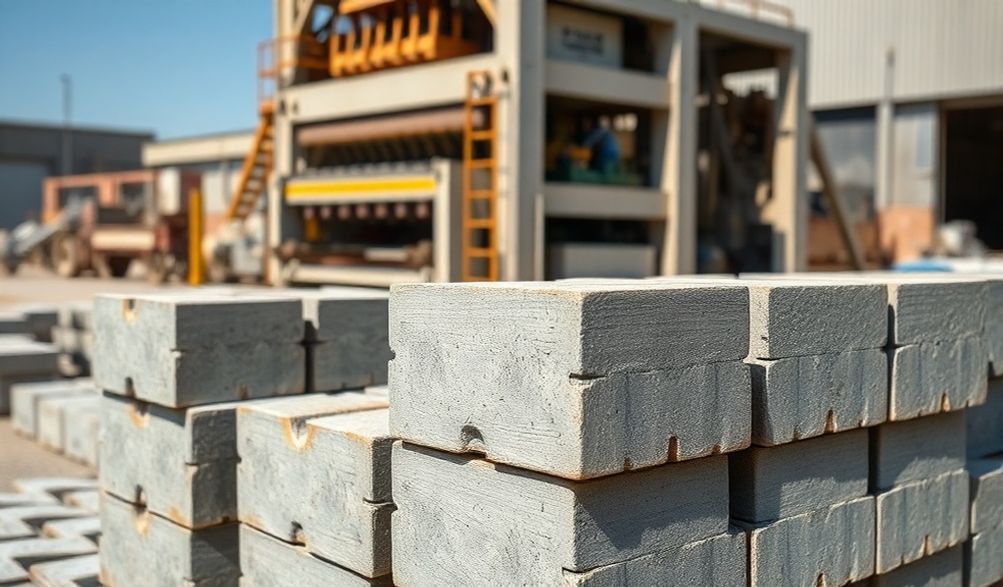
Guide complet sur le coût d'une machine de fabrication de briques en 2024
Introduction
Vous avez identifié un besoin du marché, analysé les chiffres et perçu le potentiel de la production de briques. Que vous soyez un entrepreneur cherchant à maîtriser les coûts des matériaux, un chef d’entreprise lançant une activité de construction, ou un leader communautaire visant une production locale durable, la vision est claire. Votre prochaine étape logique est de rechercher le « coût d’une machine à fabriquer des briques ». Mais c’est là que de nombreux projets ambitieux rencontrent leur premier obstacle critique.
Les résultats de recherche présentent un éventail vertigineux : des prix allant de quelques milliers de dollars à plusieurs centaines de milliers. Choisir uniquement sur la base du prix initial est l'erreur la plus courante – et potentiellement fatale pour une entreprise. Le coût réel d'une machine de fabrication de briques est une équation complexe, où le prix d'achat n'est que la première variable. Sous-estimer les investissements annexes en logistique, électricité, main-d'œuvre et entretien peut transformer un atout prometteur en un passif paralysant.
Ce guide est conçu pour dissiper la confusion. Nous vous offrirons une analyse transparente et experte de chaque facteur de coût impliqué. De la compréhension des fourchettes de prix des différents types de machines au calcul souvent négligé du coût total de possession, cette ressource vous permettra de réaliser un investissement sûr et financièrement judicieux. Notre analyse s’appuie sur des données sectorielles, des spécifications des fabricants et des principes opérationnels, garantissant des informations précises et fiables pour bâtir les fondations de votre entreprise.
Comprendre les types de machines à fabriquer des briques et les fourchettes de prix principales
Le type de machine dont vous avez besoin est le principal déterminant du coût. Votre choix doit être guidé par vos objectifs de production, votre budget et l'échelle de votre opération. Examinons les catégories principales.
Machines manuelles de fabrication de briques (Le point d'entrée le plus abordable)
- Description :Ce sont les formes les plus simples d'équipement de fabrication de briques. Entièrement actionnées par le travail humain – utilisant généralement un levier manuel pour comprimer le matériau dans un moule – elles ont un rendement très faible et sont physiquement exigeantes.
- Fourchette de prix typique : 1 000 $ – 5 000 $
- Idéal pour :Des particuliers réalisant de très petits projets personnels (par exemple, un mur de jardin à la maison), des start-ups ultra-lean testant un marché avec un capital minimal, ou des passionnés de bricolage. Ils ne sont pas adaptés à la génération de revenus commerciaux.
Machines Semi-Automatiques de Fabrication de Briques (Le Choix Équilibré)
- Description :Cette catégorie offre un juste milieu. Le processus implique souvent l'alimentation manuelle des matières premières (mélange de béton) dans une trémie, mais les étapes critiques de compression, vibration et éjection sont actionnées mécaniquement ou hydrauliquement. Cela augmente considérablement le rendement et la régularité tout en réduisant la contrainte physique.
- Fourchette de prix typique : 5 000 $ – 25 000 $.
- Idéal pour : Small to medium-sized businesses with steady, predictable production needs. They are excellent for local suppliers, small construction firms, and entrepreneurs who have moved beyond the pure trial phase.
Fully Automatic Brick Making Machines (The High-Productivity Investment)
- Description : These are industrial-grade production lines. They feature complete automation, from feeding raw materials via conveyor belts and automatic mixers to pressing, curing, and even stacking finished bricks or blocks. They are often controlled by programmable logic controllers (PLC) for precision and efficiency.
- Fourchette de prix typique : $25,000 – $150,000+. High-capacity plants for large-scale infrastructure projects can exceed this range.
- Idéal pour : Large-scale commercial production plants, businesses fulfilling high-volume contracts, and government or industrial projects where output, consistency, and minimal labor costs are paramount.
Usines de briques mobiles vs. usines de briques stationnaires
Une distinction secondaire mais importante est la mobilité.
* Unités de Production de Briques Mobiles : Mounted on a trailer, these allow for on-site production, eliminating transport costs for finished bricks. They are ideal for large, remote construction sites. The added engineering for mobility and a compact design typically comes at a 10-25% premium over a comparable stationary model.
* Plantes Stationnaires : These are set up at a fixed location, like a factory or yard. They often allow for more extensive configurations (like longer curing racks) and can be more cost-effective for pure production capacity if you have a central location.
Key Factors That Determine the Final Machine Cost
Within each machine type, prices vary widely. Here are the key specifications that move the needle on cost.
Capacité de production (blocs par heure)
Output is king, and it’s directly tied to price. Don’t just look at the machine’s maximum theoretical output; consider its sustainable cycle time.
- Exemple : A semi-automatic machine producing 500 solid blocks per hour may cost $12,000. A model from the same brand producing 1,500 blocks per hour could cost $28,000. The cost-per-block-capacity often decreases with scale, but the initial investment rises.
Brick Type & Size Capability
The mold defines the product. More versatility or complexity in brick design increases machine cost.
* Basic Machines: Designed for one standard brick or block size (e.g., 4x8x16 inch hollow block).
* Machines Polyvalentes : Can produce a variety of blocks (solid, hollow, interlocking, paving slabs, curb stones) by changing molds. These require more sophisticated mold-changing systems and stronger, more adaptable frames, commanding a higher price.
* Machines Spécialisées : For unique shapes like permeable grass pavers or architectural blocks, expect custom engineering costs.
Niveau d'Automatisation et Technologie
Every automated feature adds cost but also reduces labor and improves consistency.
* Basic: Manual feeding, manual brick removal.
* Mid-Level: Automatic vibration, hydraulic ejection, simple conveyor for raw material.
* High-Level: Fully automatic feeders, mixers, robotic stackers, pallet dispensers, and PLC touch-screen controls with diagnostic systems. Each addition can add thousands to the final price.
Build Quality & Brand Reputation
This is where long-term value is determined.
* Established Brands: Companies with decades of history (often European or American) use high-grade components like German hydraulics, Japanese bearings, and durable steel frames. You pay a premium of 20-50% or more for this proven durability, reliability, and engineering excellence.
* Value Brands: Many manufacturers, particularly in regions like China and India, offer competitively priced machines. Quality can be excellent, but it requires diligent vetting. The lower initial cost may come with less robust components or thinner steel.
* The Critical Differentiator: After-sales service, technical support, and spare parts availability. A reputable brand includes this in its value proposition, which protects your investment.
Beyond the Sticker Price: The Total Cost of Ownership (TCO)
The intelligent buyer plans for the total cost of owning and operating the machine over 3-5 years. Ignoring these factors is the fastest way to erode profits.
Shipping, Logistics & Installation
The machine price rarely includes delivery to your door.
* Costs to Budget For: Export crating, sea or land freight, insurance, port handling fees, customs duties and taxes (varies greatly by country), inland transportation to your site, and on-site assembly/commissioning by a technician (which can cost $1,000-$5,000 plus travel).
Raw Material Processing Equipment
A brick machine doesn’t work alone. You need to prepare the raw mix.
* Essential Ancillaries: A concrete pan mixer or batching plant ($3,000-$20,000), a conveyor belt to feed the mixer or machine ($1,500-$8,000), and potentially a crusher for aggregate ($5,000-$25,000). A full production line can double your initial equipment budget.
Power & Utility Requirements
Operational energy is a recurring cost.
* Modèles Électriques : Calculate based on the motor’s kW rating, hours of operation, and your local electricity rate. A 15kW machine running 8 hours/day at $0.12/kWh costs about $14.40 per day in power.
* Modèles Diesel : Higher fuel cost but essential for locations without stable grid power. Factor in fuel consumption rates and local diesel prices.
* Water Supply: A consistent water source for mixing is crucial; trucked-in water adds significant cost.
Labor & Operational Costs
Automation directly trades capital expense for operational expense.
* Manual/Semi-Auto: May require 3-6 people for feeding, operating, and removing bricks.
* Entièrement Automatique : May only need 1-2 people for monitoring and maintenance. Over years, the labor savings of an automatic line can justify its higher upfront cost.
Maintenance, Spare Parts, & Downtime
This is non-negotiable for profitability.
* Maintenance Préventive : Budget 2-5% of the machine’s purchase price annually for routine maintenance (lubricants, filter changes, wear part inspection).
* Pièces de rechange : Critical wear parts like molds, liners, and hydraulic seals will need replacement. Genuine OEM parts are more expensive but ensure compatibility and longevity. Generic parts risk causing further damage.
* Coût des temps d'arrêt If your machine breaks and you cannot produce, you still pay fixed costs and lose revenue. A reliable machine with good support has immense hidden value.
How to Budget and Plan Your Investment
Calculating Your ROI (Return on Investment)
A simplified framework:
1. Estimate Daily Output: (Blocks per hour) x (Operating hours).
2. Determine Gross Revenue: (Daily Output) x (Selling Price per Block).
3. Calculate Daily Operational Costs: Raw materials + Labor + Power + Maintenance reserve.
4. Calculate Daily Profit: Gross Revenue – Operational Costs.
5. Estimate Payback Period: (Total Machine + Setup Investment) / (Daily Profit x Operating Days per Month).
Exemple : A $40,000 investment generating a net profit of $200/day has a payback period of 200 days (~6-7 months of operation).
New vs. Used Equipment: A Cost-Benefit Analysis
- Used Machines (Pros): Lower initial purchase price (30-60% of new).
- Used Machines (Cons & Risks): Unknown maintenance history, hidden wear, likely no warranty, obsolete technology, difficulty sourcing spare parts. Recommended only for experts who can thoroughly inspect the equipment.
- New Machines (Pros): Full warranty, latest technology, training, after-sales support, reliability.
- New Machines (Cons): Higher upfront capital requirement.
Financing Options & Supplier Negotiations
Don’t assume you must pay the full amount upfront.
* Financing: Many suppliers partner with financial institutions to offer equipment loans or leasing plans. Leasing can preserve working capital.
* Negotiation Tips:
* Request a complete “CIF” (Cost, Insurance, Freight) or “Delivered” quote.
* Ask for package deals including a mixer, conveyor, and spare parts kit.
* Inquire about discounts for wire transfer payments.
* Use quotations from multiple suppliers as leverage respectfully.
Making a Smart Purchase: A Step-by-Step Checklist
Follow this authoritative process to minimize risk.
Step 1: Precisely Define Your Needs. What brick type/size? What is your required daily/weekly output? What is your realistic budget including ancillaries?
Step 2: Research & Shortlist. Find 3-5 reputable manufacturers with a proven track record (5+ years). Look for companies with detailed websites, technical documentation, and client lists.
Step 3: Request Detailed Quotations. Demand a breakdown that includes machine price, optional accessories, shipping to your port, estimated duties, and installation costs.
Step 4: Conduct Due Diligence. Ask for and actually contact customer references, preferably in your region. If feasible, visit an existing installation to see the machine running.
Step 5: Scrutinize Support Terms. Read the warranty carefully (what’s covered, for how long?). Clarify after-sales service: Is there local technical support? How quickly can spare parts be shipped?
Step 6: Finalize Logistics & Contract. Secure your financing. Ensure all agreed-upon terms—price, delivery timeline, responsibilities—are clearly stated in a formal contract before any payment.
Foire aux Questions (FAQ)
Q: What is the cheapest brick making machine available?
A: Small, manual, single-brick press machines can start as low as $1,000. However, they are suitable only for occasional, very low-output projects and are not viable for commercial business.
Q: Can I get a good automatic brick machine under $20,000?
A: It is challenging. In this price range, you will likely find basic semi-automatic models with modest output (300-800 blocks/hour). A true, fully automatic production line with significant output typically starts above $30,000. Balance your budget against realistic production needs.
Q: How much does it cost to run a brick making machine per day?
A: It varies drastically. For a mid-range semi-automatic machine: Raw materials (cement, aggregate) might be $150, labor for 3 people $120, power $15. A rough daily running cost could be $285+, excluding maintenance and capital costs. Your local costs will determine this.
Q: Are Chinese brick making machines reliable?
A: The market is vast. Many Chinese manufacturers produce reliable, cost-effective machines that power businesses worldwide. The key is due diligence. Focus on suppliers with over a decade of export experience, verifiable customer testimonials, clear quality certifications (like CE), and, crucially, a responsive after-sales service department. Avoid dealing solely with anonymous trading companies.
Q: What is the single most important cost factor to consider?
A: While production capacity is key, the overarching principle is Coût Total de Possession (CTP) and the quality of after-sales service. A slightly cheaper machine with no local support or a poor reliability record will incur massive hidden costs through downtime and expensive emergency repairs, making it far more “expensive” in the long run.
Conclusion
Navigating the “cost of a brick making machine” requires looking beyond a simple price tag. It’s a strategic calculation that intertwines the initial investment in the right machine type with the ongoing operational costs of power, labor, and maintenance. Your goal is not to find the cheapest machine, but the most valuable asset for your specific business context—one that offers the optimal balance of capability, reliability, and support.
Invest the time upfront in meticulous planning and research. Use the checklist provided, calculate your Total Cost of Ownership honestly, and prioritize suppliers who demonstrate true Expérience, Expertise, Autorité et Fiabilité (E-E-A-T) through transparency, robust customer support, and a history of successful installations. The right brick making machine isn’t just an expense; it’s the foundation upon which a profitable, sustainable, and growing business is built. Make your investment count.
<