
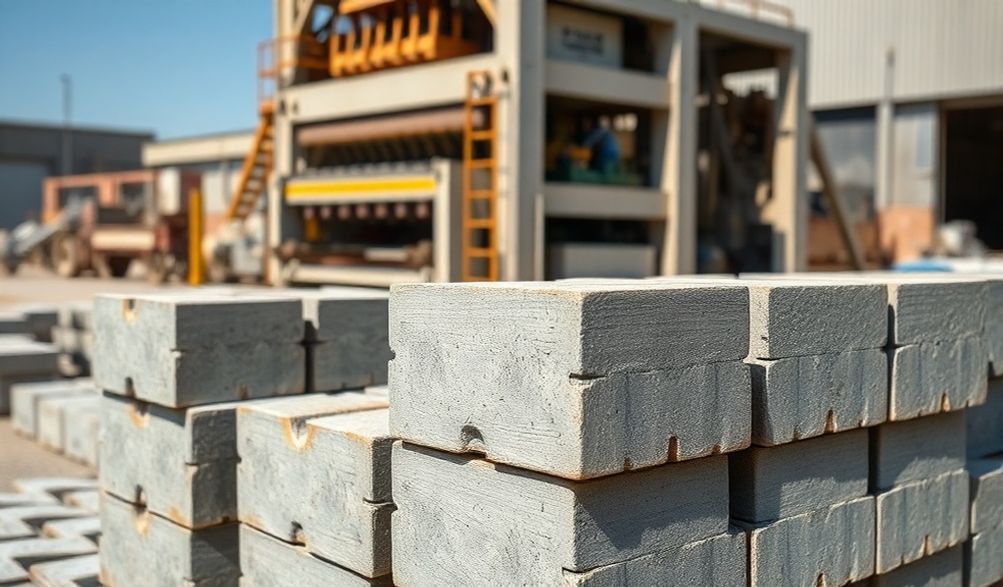
Kumpletong Gabay sa Presyo ng Brick Making Machine sa Taong 2024
Panimula
Natukoy mo na ang pangangailangan sa merkado, sinuri ang mga numero, at nakita ang potensyal sa paggawa ng mga laryo. Kung ikaw man ay isang kontratista na nais kontrolin ang gastos sa materyales, isang negosyanteng nagtatatag ng konstruksiyon, o isang lider ng komunidad na naglalayon ng napapanatiling lokal na produksyon, malinaw ang pananaw. Ang iyong susunod na lohikal na hakbang ay ang maghanap ng "halaga ng makina ng paggawa ng laryo." Ngunit dito nahaharap ang maraming ambisyosong plano sa kanilang unang kritikal na hadlang.
Ang mga resulta ng paghahanap ay nagpapakita ng nakakalitong sari-saring impormasyon: mga presyo mula ilang libong dolyar hanggang ilang daang libo. Ang pagpili batay lamang sa paunang presyo ay ang pinakakaraniwang pagkakamali na maaaring makapagwakas sa iyong negosyo. Ang tunay na halaga ng isang makina ng paggawa ng ladrilyo ay isang komplikadong equation, kung saan ang presyo ng pagbili ay unang variable lamang. Ang pagmamaliit sa mga karagdagang pamumuhunan sa logistik, kuryente, paggawa, at pagpapanatili ay maaaring gawing isang nakakatakot na pananagutan ang isang promising asset.
Ang gabay na ito ay dinisenyo upang alisin ang kalituhan. Bibigyan ka namin ng isang malinaw at ekspertong paghihiwalay ng bawat salik sa gastos. Mula sa pag-unawa sa pangunahing hanay ng presyo ng iba't ibang uri ng makina hanggang sa pagkalkula ng madalas na napapabayang Kabuuang Gastos ng Pagmamay-ari (TCO), ang mapagkukunang ito ay magbibigay-daan sa iyo upang makagawa ng isang tiwala at pinansiyal na matalinong pamumuhunan. Ang aming pagsusuri ay batay sa datos ng industriya, mga detalye ng tagagawa, at mga prinsipyong pang-operasyon, na tinitiyak na makakatanggap ka ng tumpak at mapagkakatiwalaang impormasyon upang maitatag ang pundasyon ng iyong negosyo.
Pag-unawa sa mga Uri ng Makina sa Paggawa ng Tisa at Pangunahing Saklaw ng Presyo
Ang uri ng makina na kailangan mo ang pinakamahalagang salik sa pagtukoy ng gastos. Ang iyong pagpili ay dapat na nakabatay sa iyong mga layunin sa produksyon, badyet, at sukat ng operasyon. Suriin natin ang mga pangunahing kategorya.
Manual na Makina sa Paggawa ng Ladrilyo (Ang Pinaka-accessible na Panimula)
- Paglalarawan:Ito ang pinakasimpleng anyo ng kagamitan sa paggawa ng laryo. Ganap na pinapatakbo ng lakas ng tao—karaniwang gumagamit ng pingga upang pindutin ang materyal sa isang molde—napakababa ng produksyon nito at nangangailangan ng matinding pisikal na lakas.
- Karaniwang Saklaw ng Gastos: $1,000 – $5,000.
- Pinakamainam Para Sa:Ang mga indibidwal na gumagawa ng napakaliit na personal na proyekto (hal., pader ng hardin sa bahay), ultra-lean na startup na sumusubok sa isang merkado na may pinakamaliit na puhunan, o mga DIY na mahihilig. Hindi sila angkop para sa komersyal na pagbuo ng kita.
Semi-Awtomatikong Makina sa Paggawa ng Laryo (Ang Balanseng Pagpili)
- Paglalarawan:Ang kategoryang ito ay nag-aalok ng gitnang landas. Ang proseso ay madalas na nagsasangkot ng manu-manong pagpapakain ng hilaw na materyal (concrete mix) sa isang hopper, ngunit ang mahahalagang hakbang ng compression, vibration, at ejection ay pinapagana nang mekanikal o haydroliko. Ito ay lubos na nagpapataas ng output at pagkakapare-pareho habang binabawasan ang pisikal na pagod.
- Karaniwang Saklaw ng Gastos: $5,000 – $25,000.
- Pinakamainam Para Sa: Small to medium-sized businesses with steady, predictable production needs. They are excellent for local suppliers, small construction firms, and entrepreneurs who have moved beyond the pure trial phase.
Fully Automatic Brick Making Machines (The High-Productivity Investment)
- Paglalarawan: These are industrial-grade production lines. They feature complete automation, from feeding raw materials via conveyor belts and automatic mixers to pressing, curing, and even stacking finished bricks or blocks. They are often controlled by programmable logic controllers (PLC) for precision and efficiency.
- Karaniwang Saklaw ng Gastos: $25,000 – $150,000+. High-capacity plants for large-scale infrastructure projects can exceed this range.
- Pinakamainam Para Sa: Large-scale commercial production plants, businesses fulfilling high-volume contracts, and government or industrial projects where output, consistency, and minimal labor costs are paramount.
Mobile vs. Stationary Brick Plants
A secondary but important distinction is mobility.
* Mga Halaman ng Mobile Brick: Mounted on a trailer, these allow for on-site production, eliminating transport costs for finished bricks. They are ideal for large, remote construction sites. The added engineering for mobility and a compact design typically comes at a 10-25% premium over a comparable stationary model.
* Mga Halaman na Nakatigil: These are set up at a fixed location, like a factory or yard. They often allow for more extensive configurations (like longer curing racks) and can be more cost-effective for pure production capacity if you have a central location.
Key Factors That Determine the Final Machine Cost
Within each machine type, prices vary widely. Here are the key specifications that move the needle on cost.
Kapasidad sa Produksiyon (Bloke Bawat Oras)
Output is king, and it’s directly tied to price. Don’t just look at the machine’s maximum theoretical output; consider its sustainable cycle time.
- Halimbawa: A semi-automatic machine producing 500 solid blocks per hour may cost $12,000. A model from the same brand producing 1,500 blocks per hour could cost $28,000. The cost-per-block-capacity often decreases with scale, but the initial investment rises.
Brick Type & Size Capability
The mold defines the product. More versatility or complexity in brick design increases machine cost.
* Basic Machines: Designed for one standard brick or block size (e.g., 4x8x16 inch hollow block).
* Mga Makinang Maraming Gamit: Can produce a variety of blocks (solid, hollow, interlocking, paving slabs, curb stones) by changing molds. These require more sophisticated mold-changing systems and stronger, more adaptable frames, commanding a higher price.
* Mga Makinang Espesyal: For unique shapes like permeable grass pavers or architectural blocks, expect custom engineering costs.
Antas ng Automasyon at Teknolohiya
Every automated feature adds cost but also reduces labor and improves consistency.
* Basic: Manual feeding, manual brick removal.
* Mid-Level: Automatic vibration, hydraulic ejection, simple conveyor for raw material.
* High-Level: Fully automatic feeders, mixers, robotic stackers, pallet dispensers, and PLC touch-screen controls with diagnostic systems. Each addition can add thousands to the final price.
Kalidad ng Pagkakagawa at Reputasyon ng Brand
This is where long-term value is determined.
* Established Brands: Companies with decades of history (often European or American) use high-grade components like German hydraulics, Japanese bearings, and durable steel frames. You pay a premium of 20-50% or more for this proven durability, reliability, and engineering excellence.
* Value Brands: Many manufacturers, particularly in regions like China and India, offer competitively priced machines. Quality can be excellent, but it requires diligent vetting. The lower initial cost may come with less robust components or thinner steel.
* The Critical Differentiator: After-sales service, technical support, and spare parts availability. A reputable brand includes this in its value proposition, which protects your investment.
Beyond the Sticker Price: The Total Cost of Ownership (TCO)
The intelligent buyer plans for the total cost of owning and operating the machine over 3-5 years. Ignoring these factors is the fastest way to erode profits.
Shipping, Logistics & Installation
The machine price rarely includes delivery to your door.
* Costs to Budget For: Export crating, sea or land freight, insurance, port handling fees, customs duties and taxes (varies greatly by country), inland transportation to your site, and on-site assembly/commissioning by a technician (which can cost $1,000-$5,000 plus travel).
Raw Material Processing Equipment
A brick machine doesn’t work alone. You need to prepare the raw mix.
* Essential Ancillaries: A concrete pan mixer or batching plant ($3,000-$20,000), a conveyor belt to feed the mixer or machine ($1,500-$8,000), and potentially a crusher for aggregate ($5,000-$25,000). A full production line can double your initial equipment budget.
Power & Utility Requirements
Operational energy is a recurring cost.
* Mga Modelong Elektriko: Calculate based on the motor’s kW rating, hours of operation, and your local electricity rate. A 15kW machine running 8 hours/day at $0.12/kWh costs about $14.40 per day in power.
* Mga Modelong Diesel: Higher fuel cost but essential for locations without stable grid power. Factor in fuel consumption rates and local diesel prices.
* Water Supply: A consistent water source for mixing is crucial; trucked-in water adds significant cost.
Labor & Operational Costs
Automation directly trades capital expense for operational expense.
* Manual/Semi-Auto: May require 3-6 people for feeding, operating, and removing bricks.
* Ganap na Awomatiko: May only need 1-2 people for monitoring and maintenance. Over years, the labor savings of an automatic line can justify its higher upfront cost.
Maintenance, Spare Parts, & Downtime
This is non-negotiable for profitability.
* Preventive Maintenance: Budget 2-5% of the machine’s purchase price annually for routine maintenance (lubricants, filter changes, wear part inspection).
* Piesa ng Ekstrang Bahagi: Critical wear parts like molds, liners, and hydraulic seals will need replacement. Genuine OEM parts are more expensive but ensure compatibility and longevity. Generic parts risk causing further damage.
* Downtime Cost: If your machine breaks and you cannot produce, you still pay fixed costs and lose revenue. A reliable machine with good support has immense hidden value.
How to Budget and Plan Your Investment
Calculating Your ROI (Return on Investment)
A simplified framework:
1. Estimate Daily Output: (Blocks per hour) x (Operating hours).
2. Determine Gross Revenue: (Daily Output) x (Selling Price per Block).
3. Calculate Daily Operational Costs: Raw materials + Labor + Power + Maintenance reserve.
4. Calculate Daily Profit: Gross Revenue – Operational Costs.
5. Estimate Payback Period: (Total Machine + Setup Investment) / (Daily Profit x Operating Days per Month).
Halimbawa: A $40,000 investment generating a net profit of $200/day has a payback period of 200 days (~6-7 months of operation).
New vs. Used Equipment: A Cost-Benefit Analysis
- Used Machines (Pros): Lower initial purchase price (30-60% of new).
- Used Machines (Cons & Risks): Unknown maintenance history, hidden wear, likely no warranty, obsolete technology, difficulty sourcing spare parts. Recommended only for experts who can thoroughly inspect the equipment.
- New Machines (Pros): Full warranty, latest technology, training, after-sales support, reliability.
- New Machines (Cons): Higher upfront capital requirement.
Financing Options & Supplier Negotiations
Don’t assume you must pay the full amount upfront.
* Financing: Many suppliers partner with financial institutions to offer equipment loans or leasing plans. Leasing can preserve working capital.
* Negotiation Tips:
* Request a complete “CIF” (Cost, Insurance, Freight) or “Delivered” quote.
* Ask for package deals including a mixer, conveyor, and spare parts kit.
* Inquire about discounts for wire transfer payments.
* Use quotations from multiple suppliers as leverage respectfully.
Making a Smart Purchase: A Step-by-Step Checklist
Follow this authoritative process to minimize risk.
Step 1: Precisely Define Your Needs. What brick type/size? What is your required daily/weekly output? What is your realistic budget including ancillaries?
Step 2: Research & Shortlist. Find 3-5 reputable manufacturers with a proven track record (5+ years). Look for companies with detailed websites, technical documentation, and client lists.
Step 3: Request Detailed Quotations. Demand a breakdown that includes machine price, optional accessories, shipping to your port, estimated duties, and installation costs.
Step 4: Conduct Due Diligence. Ask for and actually contact customer references, preferably in your region. If feasible, visit an existing installation to see the machine running.
Step 5: Scrutinize Support Terms. Read the warranty carefully (what’s covered, for how long?). Clarify after-sales service: Is there local technical support? How quickly can spare parts be shipped?
Step 6: Finalize Logistics & Contract. Secure your financing. Ensure all agreed-upon terms—price, delivery timeline, responsibilities—are clearly stated in a formal contract before any payment.
Mga Madalas Itanong (FAQ)
Q: What is the cheapest brick making machine available?
Isalin ang teksto sa Filipino. I-output LAMANG ang isinalin na teksto. Small, manual, single-brick press machines can start as low as $1,000. However, they are suitable only for occasional, very low-output projects and are not viable for commercial business.
Q: Can I get a good automatic brick machine under $20,000?
Isalin ang teksto sa Filipino. I-output LAMANG ang isinalin na teksto. It is challenging. In this price range, you will likely find basic semi-automatic models with modest output (300-800 blocks/hour). A true, fully automatic production line with significant output typically starts above $30,000. Balance your budget against realistic production needs.
Q: How much does it cost to run a brick making machine per day?
Isalin ang teksto sa Filipino. I-output LAMANG ang isinalin na teksto. It varies drastically. For a mid-range semi-automatic machine: Raw materials (cement, aggregate) might be $150, labor for 3 people $120, power $15. A rough daily running cost could be $285+, excluding maintenance and capital costs. Your local costs will determine this.
Q: Are Chinese brick making machines reliable?
Isalin ang teksto sa Filipino. I-output LAMANG ang isinalin na teksto. The market is vast. Many Chinese manufacturers produce reliable, cost-effective machines that power businesses worldwide. The key is due diligence. Focus on suppliers with over a decade of export experience, verifiable customer testimonials, clear quality certifications (like CE), and, crucially, a responsive after-sales service department. Avoid dealing solely with anonymous trading companies.
Q: What is the single most important cost factor to consider?
Isalin ang teksto sa Filipino. I-output LAMANG ang isinalin na teksto. While production capacity is key, the overarching principle is Kabuuang Halaga ng Pagmamay-ari (TCO) and the quality of after-sales service. A slightly cheaper machine with no local support or a poor reliability record will incur massive hidden costs through downtime and expensive emergency repairs, making it far more “expensive” in the long run.
Konklusyon
Navigating the “cost of a brick making machine” requires looking beyond a simple price tag. It’s a strategic calculation that intertwines the initial investment in the right machine type with the ongoing operational costs of power, labor, and maintenance. Your goal is not to find the cheapest machine, but the most valuable asset for your specific business context—one that offers the optimal balance of capability, reliability, and support.
Invest the time upfront in meticulous planning and research. Use the checklist provided, calculate your Total Cost of Ownership honestly, and prioritize suppliers who demonstrate true Karanasan, Kadalubhasaan, Awtoridad, at Pagkakatiwalaan (K-K-A-P) through transparency, robust customer support, and a history of successful installations. The right brick making machine isn’t just an expense; it’s the foundation upon which a profitable, sustainable, and growing business is built. Make your investment count.
<