
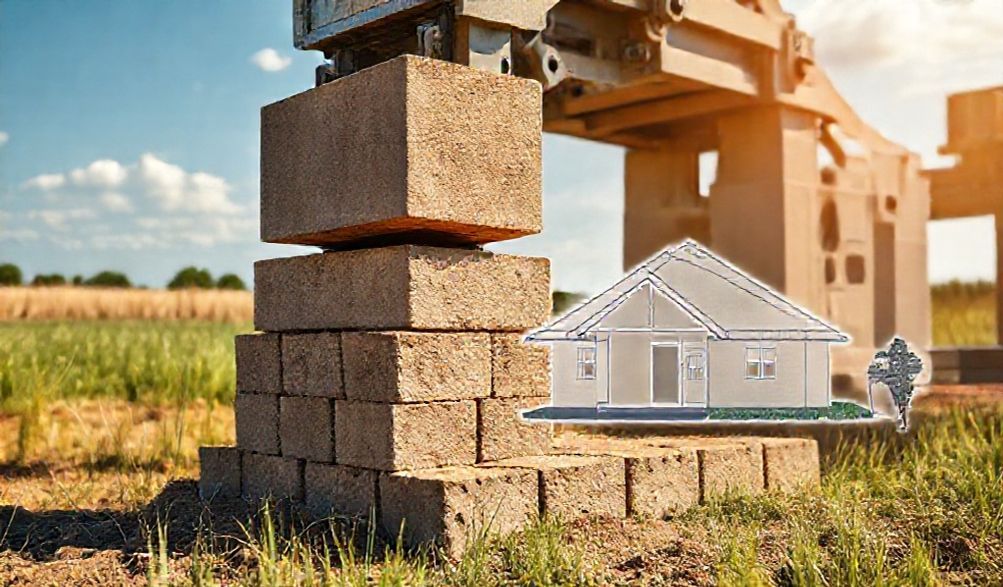
Le Guide Ultime des Machines à Blocs de Terre : Construire un Avenir Durable
Les crises jumelles mondiales du logement abordable et du changement climatique exigent une repensée radicale de la façon dont nous construisons. L'industrie de la construction est un contributeur majeur aux émissions de carbone et à l'épuisement des ressources, tandis que des milliards de personnes n'ont pas accès à un abri sûr et digne. Et si la solution pour construire des structures plus solides, plus saines et plus résilientes se trouvait littéralement sous nos pieds ? Et si nous pouvions transformer le matériau local le plus abondant—la terre—en blocs de construction précis et durables avec une fraction de l'impact environnemental ?
Entrez lemachine à blocs de terreAussi connue sous le nom de presse à blocs de terre comprimée (CEB) ou machine à blocs de sol, cette technologie transformatrice n’est pas une fantaisie futuriste, mais un outil pratique éprouvé qui mécanise l’une des plus anciennes méthodes de construction de l’humanité. Elle permet aux individus, aux communautés et aux promoteurs de créer leurs propres matériaux de construction, de réduire considérablement les coûts et de bâtir un avenir véritablement durable à partir de la base.
Ce guide complet est conçu pour les constructeurs, architectes, bricoleurs visionnaires et éco-entrepreneurs. Nous irons au-delà des discours superficiels en nous appuyant sur des principes d'ingénierie, une expérience concrète de construction et les meilleures pratiques de l'industrie pour fournir des informations fiables et exploitables. Vous apprendrez non seulementquoiunmachine à blocs de terreest, maiscommentpour l’intégrer avec succès dans un projet — du choix du bon équipement et de l’analyse de votre sol à la conception de structures durables et à la compréhension des avantages à long terme. Libérons le potentiel de la terre.
Qu'est-ce qu'une machine à blocs de terre ? La science de la stabilisation du sol
À la base, une machine à blocs de terre est un dispositif qui comprime un sol humide et traité en un bloc dense et régulier. C’est le lien entre la terre brute et la construction moderne, offrant une régularité et une résistance que l’adobe fabriqué à la main ne peut égaler.
De l'adobe ancien à l'ingénierie moderne
L'humanité construit avec la terre depuis des millénaires — de la Grande Muraille de Chine aux imposantes mosquées d'Afrique de l'Ouest. L'adobe traditionnel (briques de boue séchées au soleil) nous a bien servis, mais sa production est intensive en main-d'œuvre et la qualité peut varier. Les XIXe et XXe siècles ont vu l'invention de presses mécaniques pour standardiser ce processus. Aujourd'hui,machines à blocs de terreCes produits sont le fruit de l'évolution de cette ingéniosité, appliquant une force mécanique précise et mesurable pour créer un produit qui répond aux normes de construction contemporaines en matière de résistance, de durabilité et d'uniformité dimensionnelle.
Comment fonctionne une machine à blocs de terre comprimée (CEB) ?
Le processus est élégamment simple, mais repose sur une exécution précise.
- Préparation :Le sol est tamisé, mélangé à une petite quantité d’eau (et souvent à un stabilisant comme la chaux ou le ciment), puis chargé dans la trémie de la machine.
- Compression :Un mécanisme—un levier manuel, un volant mécanique ou un vérin hydraulique—force le sol dans un moule en acier solide (matrice) sous une pression extrême, généralement entre 500 et 1 500 PSI. Cette pression aligne les plaquettes d’argile et élimine les vides.
- Éjection :Le bloc nouvellement formé, très dense, est éjecté du moule, suffisamment stable pour être manipulé immédiatement et empilé pour le durcissement.
Machines generally fall into three categories:
* Presses manuelles : Lever-operated, human-powered. Ideal for small-scale, low-budget projects or community workshops. Production is slower but costs are minimal.
* Presses hydrauliques : Use a hydraulic pump (often diesel or electric) to generate immense, consistent pressure. They are the workhorses for medium to large projects, offering high output and excellent block uniformity.
* Mechanical Presses: Utilize a flywheel and cam system to generate compression. Known for high-speed production in industrial settings.
Composants clés et leurs fonctions
Understanding the machine’s anatomy helps in selection and operation:
* Hopper : The loading bay for the soil mix. A well-designed hopper ensures consistent feed and prevents bridging or clogging.
* Moule/Matrice: The heart of the machine. This hardened steel chamber defines the block’s shape (rectangular, interlocking) and size. Its quality directly impacts block finish and durability.
* Mécanisme de Compression : The source of pressure. Its force (measured in tons or PSI) and consistency determine the final block strength.
* Cadre: The structural skeleton. A robust, welded steel frame is non-negotiable to withstand constant stress and ensure alignment over thousands of cycles.
Why Choose an Earth Block Machine? Tangible Benefits and Impact
Investing in this technology is an investment in a different paradigm of construction. The benefits are environmental, economic, and social.
Unmatched Sustainability and Environmental Credentials
- Énergie intrinsèque ultra-faible : Manufacturing cement and fired bricks is incredibly energy-intensive. CEBs use the sun’s energy for curing and require only the mechanical energy of compression.
- Empreinte carbone minimale : They drastically reduce CO2 emissions associated with material transport (using on-site or local soil) and production.
- Use of Subsoil: Productive topsoil is preserved for agriculture. Machines often use subsurface “resource soil.”
- 100% Recyclable: At end of life, an earth block can be crushed, re-moistened, and repressed into a new block or simply returned to the earth.
Significant Cost Reduction in Construction
- Material Cost: The primary material—soil—is often free or very low cost.
- Transportation: Eliminating the need to ship heavy materials like bricks or concrete blocks over long distances saves massively on fuel and logistics.
- Potentiel d'Auto-Constructeur : Empowers self-build projects, reducing labor costs. It turns building materials from a capital expense into a manageable operational one.
Superior Building Performance and Comfort
- Masse Thermique: Earth blocks absorb heat during the day and release it at night, naturally regulating indoor temperatures and slashing heating/cooling costs.
- Humidity Control: The material is hygroscopic, passively absorbing and releasing moisture to maintain ideal indoor humidity (40-60%).
- Résistance au feu : They are inherently non-combustible, providing excellent fire safety.
- Acoustic Insulation: The mass and density of earth walls provide superb sound insulation.
Empowerment and Local Economic Development
This technology decentralizes production. It enables:
* Self-Reliance: Communities can build their own schools, clinics, and homes.
* Local Enterprise: Small businesses can spring up to produce blocks for their region.
* Développement des compétences : Creates valuable local jobs in machine operation, soil testing, and earth-based construction.
Choosing the Right Earth Block Machine: A Buyer’s Expert Checklist
Selecting a machine is a critical decision. The right choice depends on your project’s specific needs, not just the machine’s price tag.
Assessing Your Project Scale and Output Needs
- Small Home/DIY Project (e.g., < 2,000 blocks): A manual press may be sufficient and cost-effective.
- Multiple Homes/Community Project (e.g., 2,000 – 50,000 blocks): A motorized hydraulic press is likely necessary for efficiency and labor savings.
- Commercial Enterprise/Development: High-output mechanical or hydraulic machines with automation (e.g., auto-feed) are required.
Critical Technical Specifications to Scrutinize
- Force de compression : Measured in tons, PSI, or MPa. Higher force generally means stronger blocks, but must be matched to your soil type.
- Block Dimensions & Shapes: Standard rectangular or interlocking “LEGO-style” blocks that reduce mortar use. Ensure the size fits your design.
- Production Rate: Blocks per hour. Manufacturer rates are often ideal; factor in real-world workflow for a realistic estimate.
- Source d'alimentation : Electric, diesel, or PTO (tractor-powered). Consider your site’s energy access.
Soil Compatibility: The Most Important Factor
This is the cornerstone of success. Not all soil is suitable. The ideal mix is a “rammed earth” blend:
* ~70% Sand and Gravel: Provides the skeletal structure and compressive strength.
* ~30% Silt and Clay: Acts as the natural binder, holding the block together.
Avis d'Expert : You doit conduct a soil test. Simple field tests (ribbon test, jar test) give a rough idea, but professional lab analysis (proctor test, particle size distribution) is a wise investment for any serious project. Based on results, you will determine if and what type of stabilizer is needed:
* Citron vert: Best for clay-rich soils, reacts chemically for a strong, water-resistant bond.
* Cement (3-10%): A common stabilizer for a wide range of soils, providing reliable strength quickly.
* Bitumen or Polymers: For specific applications requiring high water resistance.
Durability, Support, and Total Cost of Ownership
- Qualité de construction : Inspect welds, steel thickness, and component quality. It must endure abrasive soil and constant pressure.
- Spare Parts & Support: Ensure wear parts (molds, rams, seals) are available and the manufacturer offers technical support.
- Warranty & Reputation: Research the manufacturer’s track record. A longer warranty on the frame and compression system is a good sign.
- Total Cost: Factor in shipping, import duties (if applicable), and the cost of any necessary ancillary equipment (e.g., a soil sieve or mixer).
Operating Your Machine: A Step-by-Step Protocol for Success
Owning the machine is just the start. Proper operation is key to producing high-quality blocks.
Phase 1: Comprehensive Soil Testing and Preparation
- Sample: Take soil samples from several spots on your site, from a consistent depth below topsoil.
- Analyze: Perform or commission tests to determine composition.
- Conception du Mélange : Based on results, create a mix recipe: X parts soil, Y% stabilizer, Z% water.
- Prepare: Sieve soil to remove stones and organic matter. Use a mechanical mixer for consistency. Moisture content is critical—aim for “optimum moisture” where the mix holds its shape when squeezed but leaves no excess water on your hand.
Phase 2: Machine Setup and Calibration
- Safety First: Clear the area. Wear gloves and safety glasses. Ensure all guards are in place.
- Assembly & Leveling: Assemble per manual. The machine must be on a solid, level base.
- Test Runs: Run several test blocks with your mix. Adjust moisture up or down in small increments until the ejected block has sharp edges, a smooth surface, and doesn’t crumble.
Phase 3: Efficient Production and Quality Control
- Workflow: Establish a rhythm: loading, compressing, ejecting, stacking. A team of 3-4 people is often ideal.
- Contrôle de la qualité : Regularly check block dimensions and weight. Drop a finished block from waist height onto a hard surface; a good block should not break.
- Guérison : Stack blocks under a breathable cover (plastic sheeting) for at least 14-28 days. Keep them moist (by misting) for the first week if using cement stabilization to ensure proper curing strength.
Phase 4: Maintenance for Longevity
- Daily: Clean all soil residue from the hopper, mold, and ram. Lubricate all moving points as per the manual.
- Weekly: Check for loose bolts, hydraulic leaks, or wear on the mold faces.
Beyond the Machine: Designing and Building with Earth Blocks
The machine makes the block, but knowledge builds the wall.
Architectural Design Principles for Earth Block Walls
- Foundations: A raised, moisture-proof foundation (stone, stabilized earth, or concrete) is essential to protect blocks from ground moisture and splash-back.
- Bond Beams: A reinforced concrete or wooden bond beam at the top of walls is crucial to tie the structure together and support the roof, especially in seismic zones.
- Lintels: Use reinforced concrete, stone, or wood over doors and windows.
- Design for Climate: Wide roof overhangs (60cm+) are critical in rainy climates to shield walls. In all climates, the thermal mass works best when walls are exposed internally.
Mortar, Plastering, and Finishing Techniques
- Mortier : Use a slurry made from the same soil mix as your blocks, or a weak cement-lime-sand mortar. The goal is a bond that is slightly weaker than the block to allow for movement.
- Plaster: Earth blocks are best finished with breathable, earth-based plasters (clay or lime). They allow moisture vapor to pass through, protecting the wall. Cement-based stucco can trap moisture and cause spalling.
Real-World Case Studies and Project Galleries
- The “Miami Earth House,” USA: A modern, code-compliant residence in Florida demonstrating CEB’s viability in a humid climate, featuring passive cooling and dramatically lower energy bills.
- The Auroville Earth Institute, India: A global leader in research and training, their campus features stunning arches, domes, and vaults built with interlocking CEBs, showcasing architectural versatility.
- School Complex in Rwanda: A humanitarian project using locally produced CEBs to build durable, cool, and quiet classrooms at a fraction of the cost of conventional materials, empowering the local community.
Foire aux Questions (FAQ)
Q: What is the typical compressive strength of blocks made with an earth block machine?
A: Unstabilized blocks can achieve 2-4 MPa (approx. 300-600 PSI). With proper soil mix and cement stabilization (5-10%), strengths of 7-10+ MPa (1000-1500+ PSI) are common—surpassing many conventional fired bricks and matching some concrete masonry units.
Q: Can I use any soil from my property with a CEB machine?
A: Not necessarily. While many soils are suitable, some require amendment or stabilization. Simple field tests (like the jar test) can give you an initial idea, but for a building project, professional analysis is strongly recommended to determine the exact mix design.
Q: How does the cost of an earth block structure compare to conventional brick or concrete block?
A: Material costs are often 50-80% lower. The overall project cost depends on labor. For owner-builder projects, total savings can be 30-50%. For contracted projects, savings are still significant, primarily in material costs, though labor for laying earth blocks is comparable.
Q: Are earth block homes suitable for all climates?
A: Yes, with appropriate design. In wet climates, this means large roof overhangs, raised foundations, and breathable, water-shedding plasters. In cold climates, their high thermal mass stores passive solar heat. They excel in hot, arid climates.
Q: Where can I get training or see building codes for earth block construction?
A: Seek training from established institutions like the Auroville Earth Institute (India) or the CalEarth Institute (USA). For codes, refer to ASTM E2392 / E2392M (Standard Guide for Design of Earthen Wall Building Systems) and resources from the International Code Council (ICC) or your local building authority, which may have adopted appendices for earth construction.
Conclusion
Lemachine à blocs de terre is far more than a piece of equipment; it is a key that unlocks a more resilient, affordable, and ecologically sane approach to building. This guide has walked you through the science, the economics, the practical selection criteria, and the operational protocols that transform raw earth into a modern building material.
The technology is proven, the expertise is available, and the authority of earth-based construction is growing within the architectural and engineering communities. Choosing this path is an investment not just in a machine, but in a skill set and a philosophy that places sustainability, self-reliance, and human comfort at the center of the built environment.
Your informed journey begins now. Take the next step: conduct a simple soil test on your land, connect with the global community of earth builders online, or reach out to reputable manufacturers to discuss your specific project vision. The future of building is, quite literally, foundational.
<