
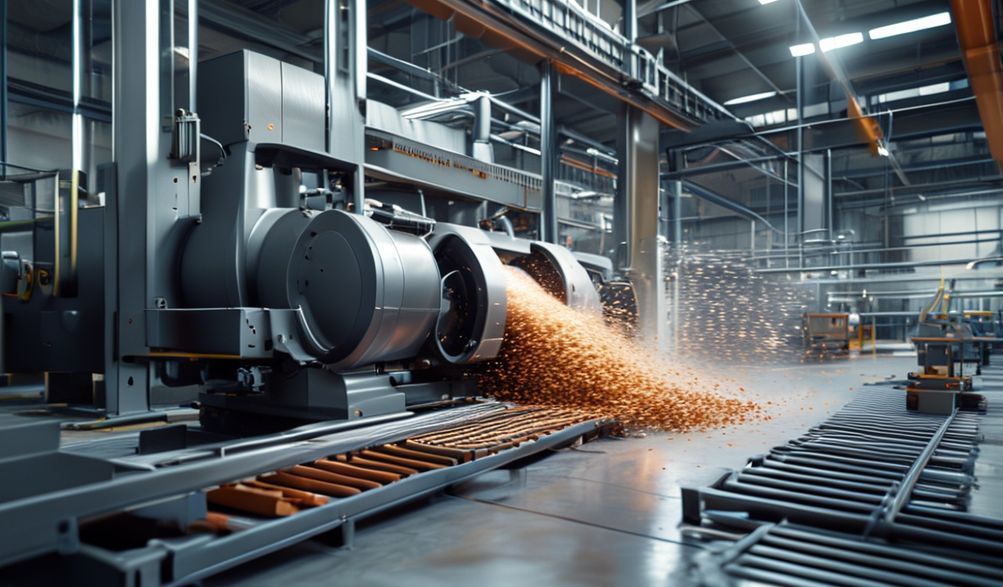
Le Guide Ultime des Machines à Briques de Cendre Volante : À l'Intérieur de l'Usine de Fabrication de Briques FUDA
Dans le paysage actuel de la construction, la quête de durabilité n'est plus une tendance de niche, mais une exigence fondamentale. Constructeurs, promoteurs et entrepreneurs recherchent activement des matériaux alliant robustesse, rentabilité et empreinte environnementale réduite. Les briques de cendres volantes se sont imposées comme une réponse de premier plan à cette demande.
Cependant, le véritable potentiel de ces briques écologiques ne se révèle pas seulement par les matières premières, mais par la précision et la puissance des machines qui les façonnent. La différence entre une opération rentable et de haute qualité et une qui peine à survivre réside souvent dans le choix de l'équipement.
Ce guide complet offre un regard exclusif et expert sur l'univers d'un fabricant de premier plan :Usine de fabrication de briques FUDANous allons dissecter leurmachines à briques de cendres volantesExplorer la technologie, les processus et les perspectives essentielles nécessaires pour réaliser un investissement qui tient ses promesses en matière de durabilité, de pérennité et de rendements solides.
Que sont les briques de cendres volantes et pourquoi sont-elles importantes ?
Les briques de cendres volantes représentent un changement de paradigme dans la maçonnerie. Elles sont un exemple parfait d'économie circulaire, transformant un sous-produit industriel en un matériau de construction haute performance. Comprendre leur composition et leurs avantages est la première étape pour apprécier la machinerie qui les produit.
La Composition et la Science derrière les Briques de Cendres Volantes
Les briques de cendres volantes sont des produits conçus, non pas simplement de la terre cuite. Leur résistance provient d'un mélange précis et d'une réaction chimique.
-
Composants de base :Le mélange principal se compose de :
- Cendres volantes (50-80%) :Un résidu fin et poudreux capturé dans les gaz de combustion des centrales électriques au charbon. C'est le principal déchet qui est revalorisé.
- Ciment (5-15%) :Agit comme le principal agent liant.
- Sable/Poussière de Pierre (10-30%) :Apporte du volume et de la consistance au mélange.
- Eau :Déclenche la réaction de liaison.
-
La Réaction Pozzolanique :Voici la magie derrière la solidité. Les cendres volantes sont un « pouzzolane » – un matériau siliceux qui, en présence d'eau et d'un liant hydraulique (comme le ciment), forme des composés cimentaires stables et insolubles. Cette réaction se poursuit dans le temps, permettant aux briques de gagner en résistance longtemps après leur production.
Principaux avantages par rapport aux briques en terre cuite traditionnelles
Le passage aux briques de cendres volantes est motivé par des avantages tangibles et multidimensionnels.
-
Leadership Environnementale :
- Valorisation des Déchets :Détourne des millions de tonnes de cendres volantes des décharges et des bassins de cendres, résolvant ainsi un problème majeur de déchets industriels.
- Conservation des ressourcesÉlimine le besoin d'extraction de terre végétale, préservant les terres agricoles fertiles.
- Empreinte carbone réduite :La production consomme moins d'énergie que le processus de cuisson des briques en terre cuite et utilise un déchet.
-
Propriétés supérieures des matériaux :
- Résistance à la compression supérieure : Typically ranges from 7.5 MPa to 15 MPa and above, offering greater load-bearing capacity.
- Excellent Dimensional Consistency: Machine-made precision ensures uniform size and shape, reducing mortar use and speeding up construction.
- Faible absorption d'eau Often below 15%, leading to fewer efflorescence problems and better resistance to frost damage.
- Isolation thermique et acoustique améliorée : The fine particles create a denser microstructure with better insulating properties.
-
Efficacité économique :
- Économies de coûts à long terme : Greater durability and fewer repairs offset initial costs.
- Vitesse de construction : Uniform bricks allow for faster, more efficient laying.
- Potential Incentives: Many governments offer tax benefits or subsidies for using green building materials.
Inside the FUDA Brick Making Factory: A Model of Expertise
Choosing a machinery manufacturer is about partnering with a source of knowledge and reliability. FUDA has established itself as an authority in this specialized field.
Who is FUDA? A Legacy in Brick Making Machinery
FUDA is not just a supplier; it is a dedicated engineering firm focused on construction machinery. With a history built on innovation, their core mission revolves around providing robust, efficient, and sustainable solutions for brick and block production.
Their authority is cemented by:
* Certifications Professionnelles : Adherence to international quality and safety standards.
* Global Footprint: A network of clients and successful plant installations across multiple continents.
* Focus R&D : Continuous investment in improving machine automation, energy efficiency, and material versatility.
The FUDA Production Philosophy: Quality and Precision
At the FUDA factory, every machine is built with a clear philosophy: precision engineering ensures consistent output. Their manufacturing process emphasizes:
- Conception Robuste : Use of high-grade steel and components to withstand the intense pressures of brick compaction.
- Quality Control Protocols: Rigorous testing at every assembly stage, from hydraulic systems to control panels.
- Cohérence de la sortie : Machines are designed and calibrated to produce brick after brick with minimal dimensional variation, which is critical for customer trust and construction efficiency.
Demystifying the Fly Ash Bricks Machine: Core Components and Types
A fly ash brick plant is a symphony of interconnected equipment. Understanding the role of each component is key to understanding the investment.
Essential Machinery in a Fly Ash Brick Plant
A complete plant setup involves more than just the brick-making press.
-
Raw Material Processing:
- Silos & Feeders: For storage and controlled discharge of fly ash and cement.
- Conveyors: To transport raw materials between stages.
- Système de mixage : A high-efficiency pan mixer or compulsory mixer is crucial for achieving a homogeneous, consistent blend of all components.
-
The Heart of the Plant: The Brick Making Machine.
This is where the magic happens. Key subsystems include:- Système Hydraulique : The powerhouse. It applies immense, controlled pressure (often 100+ tons) to compact the raw mix into a high-density brick. The quality of the hydraulic pumps, cylinders, and valves directly determines brick strength and machine reliability.
- Moulds and Dies: These are the precision tools that define the brick’s shape. FUDA offers customizable moulds for solid bricks, hollow blocks, pavers, and interlocking blocks.
- Système de Contrôle : Modern machines feature Programmable Logic Controller (PLC) systems. This allows for automated, repeatable operation, precise control over pressure and vibration cycles, and reduced manual error.
-
Équipement auxiliaire :
- Brick Pallets: Steel plates on which fresh bricks are ejected and transported to the curing area.
- Transfer Carts & Stackers: For moving and organizing bricks for curing and storage.
Types of Machines Offered by FUDA
FUDA caters to different scales of operation with a range of machines:
- Fully Automatic Fly Ash Brick Making Machines: These are complete production lines. They feature automatic material feeding, brick pressing, pallet transfer, and stacking. Ideal for large-scale, high-volume production with minimal labor.
- Machines semi-automatiques : A popular choice for medium-scale businesses. The core pressing is automated, but tasks like feeding raw mix or removing finished bricks may involve manual intervention. Offers a great balance between cost and productivity.
- Mobile/Egg Laying Type Machines: These compact machines produce bricks directly on the ground or on a concrete floor. They are highly portable, require less infrastructure, and are perfect for on-site production or small-scale startups.
The Step-by-Step Manufacturing Process with a FUDA Machine
Let’s walk through the journey from raw powder to a cured, ready-to-use brick.
From Raw Material to Cured Brick: A Detailed Walkthrough
-
Dosage & Mélange : Precisely measured quantities of fly ash, cement, sand, and water are fed into the mixer. A consistent, semi-dry mix is critical—too wet, and bricks will deform; too dry, and they won’t bind properly.
-
Alimentation & Compactage : The mixed material is conveyed into the machine’s feed box. The hydraulic system then drives a ram that forces the material into the mould cavity under extreme pressure, often accompanied by vibration to remove air pockets and ensure perfect compaction.
-
Éjection et Palettisation : The freshly pressed, green brick is gently ejected from the mould onto a waiting steel pallet. These pallets are then systematically moved to the curing area, usually via a transfer cart.
-
Guérison : This is not mere drying; it’s a strength-development phase. For fly ash bricks, high-pressure steam curing in an autoclave is common, as it accelerates the pozzolanic reaction, achieving high strength in 24 hours. Water sprinkling and ambient curing over 14-28 days is also an option.
-
Testing & Storage: Sample bricks are tested for compressive strength, water absorption, and dimensional accuracy. Once approved, the cured bricks are stacked and stored for dispatch.
How to Choose the Right Fly Ash Bricks Machine: A Buyer’s Guide
Selecting equipment is a strategic decision. Here’s a framework to guide your choice.
Assessing Your Needs: Key Decision Factors
Posez-vous ces questions :
* Capacité de production : What is your target output per shift or per day (e.g., 10,000 bricks/day vs. 50,000 bricks/day)? This is the primary driver of machine size and automation level.
* Available Space & Layout: Do you have a large, covered shed for a full line, or is space limited? Plant layout must accommodate material flow, production, and curing areas.
* Automation vs. Labor: What is your capital budget versus your operating (labor) budget? Automatic lines require higher upfront investment but lower long-term labor costs.
* Portefeuille de Produits : Will you produce only standard bricks, or do you plan to offer pavers, hollow blocks, or other special shapes? Ensure the machine supplier can provide the necessary moulds.
Evaluating a Machine Supplier: Why FUDA Stands Out
The machine is just part of the package. The supplier’s support is what ensures long-term success.
- Comprehensive After-Sales Service: Does the supplier offer installation supervision, on-site training for your operators, and prompt maintenance support? FUDA typically provides this critical hands-on start-up assistance.
- Reliable Spare Parts Supply: Machine downtime is revenue lost. A trustworthy supplier guarantees the availability of genuine spare parts. Inquire about their parts inventory and delivery timelines.
- Clear Performance Guarantee & Warranty: Understand exactly what is covered under warranty, for how long, and the terms of any performance guarantees related to output or brick quality.
- Historique éprouvé : Request client testimonials and visit existing plant installations if possible. Seeing a machine in operation is the best proof of its capability and the supplier’s credibility.
Foire aux Questions (FAQ)
Q1: What is the average cost of setting up a plant with a FUDA fly ash brick machine?
A: There is no single “average cost,” as it varies dramatically. A small, semi-automatic setup may start in the tens of thousands of dollars, while a large, fully automatic production line can be a significant six-figure investment. The most reliable approach is to share your production goals and site details with FUDA to receive a detailed, customized project quotation.
Q2: What is the typical payback period for this investment?
A: The payback period depends heavily on local market factors: selling price of bricks, cost and availability of raw materials (especially fly ash), production efficiency, and operational costs. In favorable markets with good demand, a well-run plant can see a return on investment within 1.5 to 3 years. A detailed business plan is essential.
Q3: Can FUDA machines use other raw materials, like slag or construction waste?
A: Yes, versatility is a key feature of modern machines. Many FUDA models can be adapted to process other pozzolanic materials such as granulated blast furnace slag or finely processed construction and demolition (C&D) waste. It is crucial to consult with their engineering team to adjust the mix design and machine parameters for optimal results with alternative materials.
Q4: How important is after-sales service, and what does FUDA offer?
A: After-sales service is not just important—it is critical. It directly impacts your plant’s uptime and profitability. A comprehensive service package, like the one from FUDA, should include expert installation supervision, thorough training for your machine operators and maintenance staff, access to remote technical support, and a dependable supply chain for genuine spare parts.
Conclusion
Investing in a fly ash bricks machine is a commitment to a smarter, more sustainable future in construction. It’s a decision that balances economic ambition with environmental responsibility. As we have explored, success in this venture hinges on the machinery at its core.
Manufacturers like the Usine de fabrication de briques FUDA bring the necessary triad to the table: the engineering expertise to build reliable machines, the practical expérience demonstrated through global installations, and the Autoritaire position earned by a commitment to quality and customer support.
Before finalizing any purchase, conduct thorough due diligence. Clearly define your needs, seek out suppliers with transparent processes, and prioritize those who offer a partnership, not just a product. By choosing the right equipment, you are doing more than manufacturing bricks—you are building a foundation for a profitable and eco-conscious enterprise.
Ready to explore your fly ash brick plant project? Contact a reputable supplier with a proven track record to discuss your specific requirements and get a detailed, professional consultation.
<