
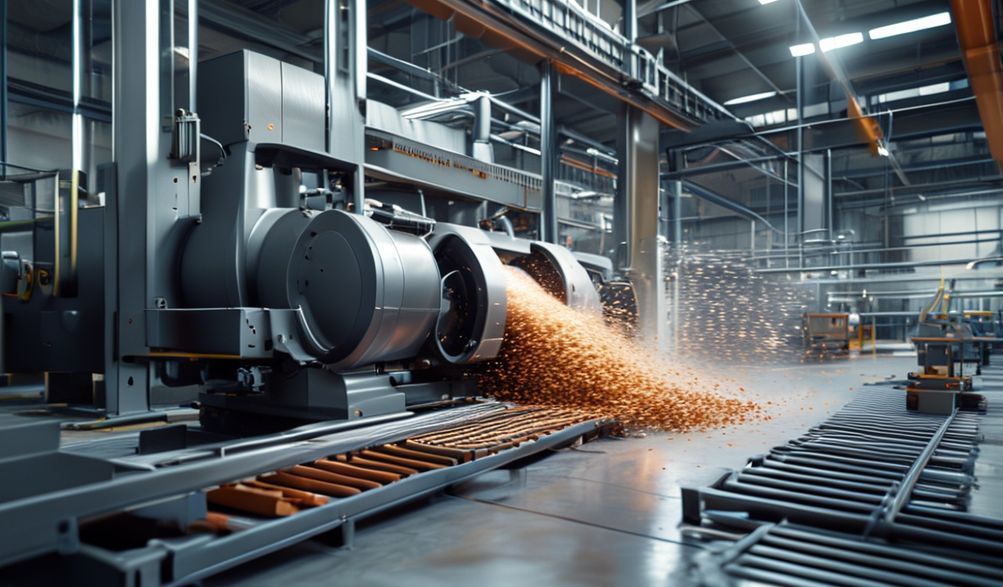
최고의 플라이 애시 벽돌 기계 가이드: 푸다 벽돌 제조 공장 탐방
오늘날 건설 환경에서 지속 가능성에 대한 요구는 더 이상 틈새 트렌드가 아닌 기본 요건이 되었습니다. 건설업자, 개발업자, 기업인들은 강도, 비용 효율성, 그리고 낮은 환경 발자국을 제공하는 재료를 적극적으로 찾고 있습니다. 플라이 애시 벽돌은 이러한 수요에 대한 우수한 해답으로 부상했습니다.
하지만, 이러한 친환경 벽돌의 진정한 잠재력은 원자재뿐만 아니라 그것을 성형하는 기계의 정밀도와 성능에 따라 발휘됩니다. 수익성 높은 고품질 작업과 어려움을 겪는 작업 사이의 차이는 종종 장비 선택에 달려 있습니다.
이 포괄적인 가이드는 선도적인 제조업체의 세계를 전문가의 시각으로 독점적으로 들여다봅니다:푸다 벽돌 제조 공장우리는 그들의플라이 애시 벽돌 기계기술, 공정, 그리고 내구성, 지속가능성, 높은 수익성이라는 약속을 실현하는 투자를 위해 필요한 핵심 통찰력을 탐구합니다.
플라이 애시 벽돌이란 무엇이며 왜 중요한가요?
플라이 애시 벽돌은 벽돌 공법의 패러다임 변화를 나타냅니다. 이는 산업 부산물을 고성능 건축 자재로 전환하는 순환 경제의 대표적인 사례입니다. 그들의 구성과 이점을 이해하는 것은 이들을 생산하는 기계를 제대로 평가하기 위한 첫걸음입니다.
플라이 애시 벽돌의 구성과 과학적 원리
플라이 애시 벽돌은 단순히 구운 흙이 아닌 공학적으로 제작된 제품입니다. 그들의 강도는 정밀한 혼합과 화학 반응에서 비롯됩니다.
-
핵심 구성 요소:주요 혼합물은 다음과 같습니다:
- 플라이 애시 (50-80%):석탄 화력 발전소의 배기가스에서 포집된 미세한 가루 형태의 잔여물입니다. 이것이 재활용되는 핵심 폐기물입니다.
- 시멘트 (5-15%):주요 결합제 역할을 합니다.
- 모래/석분 (10-30%):혼합물에 충전재와 몸체를 제공합니다.
- 물:결합 반응을 시작합니다.
-
포졸란 반응:이것이 강도의 비밀입니다. 플라이 애시는 '포졸란'으로, 물과 시멘트 같은 결합재와 함께 안정적이고 불용성의 시멘트 화합물을 형성하는 규산질 재료입니다. 이 반응은 시간이 지남에 따라 계속되어 벽돌이 제작 후 오랜 시간이 지나도 강도를 유지할 수 있게 합니다.
기존 점토 벽돌 대비 주요 장점
The shift to fly ash bricks is driven by tangible, multifaceted benefits.
-
Environmental Leadership:
- 폐기물 활용: Diverts millions of tons of fly ash from landfills and ash ponds, solving a major industrial waste problem.
- 자원 보전 Eliminates the need for topsoil quarrying, preserving fertile agricultural land.
- 낮은 탄소 발자국: Production consumes less energy than the firing process for clay bricks and utilizes a waste product.
-
우수한 재료 특성:
- 더 높은 압축 강도: Typically ranges from 7.5 MPa to 15 MPa and above, offering greater load-bearing capacity.
- Excellent Dimensional Consistency: Machine-made precision ensures uniform size and shape, reducing mortar use and speeding up construction.
- 낮은 흡수율 Often below 15%, leading to fewer efflorescence problems and better resistance to frost damage.
- 향상된 열 및 음향 단열: The fine particles create a denser microstructure with better insulating properties.
-
경제적 효율성
- 장기적인 비용 절감: Greater durability and fewer repairs offset initial costs.
- 건설 속도 Uniform bricks allow for faster, more efficient laying.
- Potential Incentives: Many governments offer tax benefits or subsidies for using green building materials.
Inside the FUDA Brick Making Factory: A Model of Expertise
Choosing a machinery manufacturer is about partnering with a source of knowledge and reliability. FUDA has established itself as an authority in this specialized field.
Who is FUDA? A Legacy in Brick Making Machinery
FUDA is not just a supplier; it is a dedicated engineering firm focused on construction machinery. With a history built on innovation, their core mission revolves around providing robust, efficient, and sustainable solutions for brick and block production.
Their authority is cemented by:
* Industry Certifications: Adherence to international quality and safety standards.
* Global Footprint: A network of clients and successful plant installations across multiple continents.
* 연구개발 초점: Continuous investment in improving machine automation, energy efficiency, and material versatility.
The FUDA Production Philosophy: Quality and Precision
At the FUDA factory, every machine is built with a clear philosophy: precision engineering ensures consistent output. Their manufacturing process emphasizes:
- 견고한 설계 Use of high-grade steel and components to withstand the intense pressures of brick compaction.
- 품질 관리 프로토콜: Rigorous testing at every assembly stage, from hydraulic systems to control panels.
- 출력 일관성 Machines are designed and calibrated to produce brick after brick with minimal dimensional variation, which is critical for customer trust and construction efficiency.
Demystifying the Fly Ash Bricks Machine: Core Components and Types
A fly ash brick plant is a symphony of interconnected equipment. Understanding the role of each component is key to understanding the investment.
Essential Machinery in a Fly Ash Brick Plant
A complete plant setup involves more than just the brick-making press.
-
Raw Material Processing:
- Silos & Feeders: For storage and controlled discharge of fly ash and cement.
- Conveyors: To transport raw materials between stages.
- 믹싱 시스템: A high-efficiency pan mixer or compulsory mixer is crucial for achieving a homogeneous, consistent blend of all components.
-
The Heart of the Plant: The Brick Making Machine.
This is where the magic happens. Key subsystems include:- 유압 시스템: The powerhouse. It applies immense, controlled pressure (often 100+ tons) to compact the raw mix into a high-density brick. The quality of the hydraulic pumps, cylinders, and valves directly determines brick strength and machine reliability.
- Moulds and Dies: These are the precision tools that define the brick’s shape. FUDA offers customizable moulds for solid bricks, hollow blocks, pavers, and interlocking blocks.
- 제어 시스템 Modern machines feature Programmable Logic Controller (PLC) systems. This allows for automated, repeatable operation, precise control over pressure and vibration cycles, and reduced manual error.
-
보조 장비:
- Brick Pallets: Steel plates on which fresh bricks are ejected and transported to the curing area.
- Transfer Carts & Stackers: For moving and organizing bricks for curing and storage.
Types of Machines Offered by FUDA
FUDA caters to different scales of operation with a range of machines:
- Fully Automatic Fly Ash Brick Making Machines: These are complete production lines. They feature automatic material feeding, brick pressing, pallet transfer, and stacking. Ideal for large-scale, high-volume production with minimal labor.
- 반자동 기계: A popular choice for medium-scale businesses. The core pressing is automated, but tasks like feeding raw mix or removing finished bricks may involve manual intervention. Offers a great balance between cost and productivity.
- Mobile/Egg Laying Type Machines: These compact machines produce bricks directly on the ground or on a concrete floor. They are highly portable, require less infrastructure, and are perfect for on-site production or small-scale startups.
The Step-by-Step Manufacturing Process with a FUDA Machine
Let’s walk through the journey from raw powder to a cured, ready-to-use brick.
From Raw Material to Cured Brick: A Detailed Walkthrough
-
배합 및 혼합 Precisely measured quantities of fly ash, cement, sand, and water are fed into the mixer. A consistent, semi-dry mix is critical—too wet, and bricks will deform; too dry, and they won’t bind properly.
-
급이 및 다짐 The mixed material is conveyed into the machine’s feed box. The hydraulic system then drives a ram that forces the material into the mould cavity under extreme pressure, often accompanied by vibration to remove air pockets and ensure perfect compaction.
-
이젝션 및 팔레타이징 The freshly pressed, green brick is gently ejected from the mould onto a waiting steel pallet. These pallets are then systematically moved to the curing area, usually via a transfer cart.
-
치유: This is not mere drying; it’s a strength-development phase. For fly ash bricks, high-pressure steam curing in an autoclave is common, as it accelerates the pozzolanic reaction, achieving high strength in 24 hours. Water sprinkling and ambient curing over 14-28 days is also an option.
-
Testing & Storage: Sample bricks are tested for compressive strength, water absorption, and dimensional accuracy. Once approved, the cured bricks are stacked and stored for dispatch.
How to Choose the Right Fly Ash Bricks Machine: A Buyer’s Guide
Selecting equipment is a strategic decision. Here’s a framework to guide your choice.
Assessing Your Needs: Key Decision Factors
이 질문들을 스스로에게 던져 보세요:
* 생산 능력 What is your target output per shift or per day (e.g., 10,000 bricks/day vs. 50,000 bricks/day)? This is the primary driver of machine size and automation level.
* Available Space & Layout: Do you have a large, covered shed for a full line, or is space limited? Plant layout must accommodate material flow, production, and curing areas.
* Automation vs. Labor: What is your capital budget versus your operating (labor) budget? Automatic lines require higher upfront investment but lower long-term labor costs.
* 제품 포트폴리오: Will you produce only standard bricks, or do you plan to offer pavers, hollow blocks, or other special shapes? Ensure the machine supplier can provide the necessary moulds.
Evaluating a Machine Supplier: Why FUDA Stands Out
The machine is just part of the package. The supplier’s support is what ensures long-term success.
- 종합적인 애프터 서비스: Does the supplier offer installation supervision, on-site training for your operators, and prompt maintenance support? FUDA typically provides this critical hands-on start-up assistance.
- Reliable Spare Parts Supply: Machine downtime is revenue lost. A trustworthy supplier guarantees the availability of genuine spare parts. Inquire about their parts inventory and delivery timelines.
- Clear Performance Guarantee & Warranty: Understand exactly what is covered under warranty, for how long, and the terms of any performance guarantees related to output or brick quality.
- 검증된 실적: Request client testimonials and visit existing plant installations if possible. Seeing a machine in operation is the best proof of its capability and the supplier’s credibility.
자주 묻는 질문 (FAQ)
Q1: What is the average cost of setting up a plant with a FUDA fly ash brick machine?
A: There is no single “average cost,” as it varies dramatically. A small, semi-automatic setup may start in the tens of thousands of dollars, while a large, fully automatic production line can be a significant six-figure investment. The most reliable approach is to share your production goals and site details with FUDA to receive a detailed, customized project quotation.
Q2: What is the typical payback period for this investment?
A: The payback period depends heavily on local market factors: selling price of bricks, cost and availability of raw materials (especially fly ash), production efficiency, and operational costs. In favorable markets with good demand, a well-run plant can see a return on investment within 1.5 to 3 years. A detailed business plan is essential.
Q3: Can FUDA machines use other raw materials, like slag or construction waste?
A: Yes, versatility is a key feature of modern machines. Many FUDA models can be adapted to process other pozzolanic materials such as granulated blast furnace slag or finely processed construction and demolition (C&D) waste. It is crucial to consult with their engineering team to adjust the mix design and machine parameters for optimal results with alternative materials.
Q4: How important is after-sales service, and what does FUDA offer?
A: After-sales service is not just important—it is critical. It directly impacts your plant’s uptime and profitability. A comprehensive service package, like the one from FUDA, should include expert installation supervision, thorough training for your machine operators and maintenance staff, access to remote technical support, and a dependable supply chain for genuine spare parts.
결론
투자하기fly ash bricks machine is a commitment to a smarter, more sustainable future in construction. It’s a decision that balances economic ambition with environmental responsibility. As we have explored, success in this venture hinges on the machinery at its core.
Manufacturers like the 푸다 벽돌 제조 공장 bring the necessary triad to the table: the engineering 전문성 to build reliable machines, the practical 경험 demonstrated through global installations, and the 권위 있는 position earned by a commitment to quality and customer support.
Before finalizing any purchase, conduct thorough due diligence. Clearly define your needs, seek out suppliers with transparent processes, and prioritize those who offer a partnership, not just a product. By choosing the right equipment, you are doing more than manufacturing bricks—you are building a foundation for a profitable and eco-conscious enterprise.
Ready to explore your fly ash brick plant project? Contact a reputable supplier with a proven track record to discuss your specific requirements and get a detailed, professional consultation.
<