
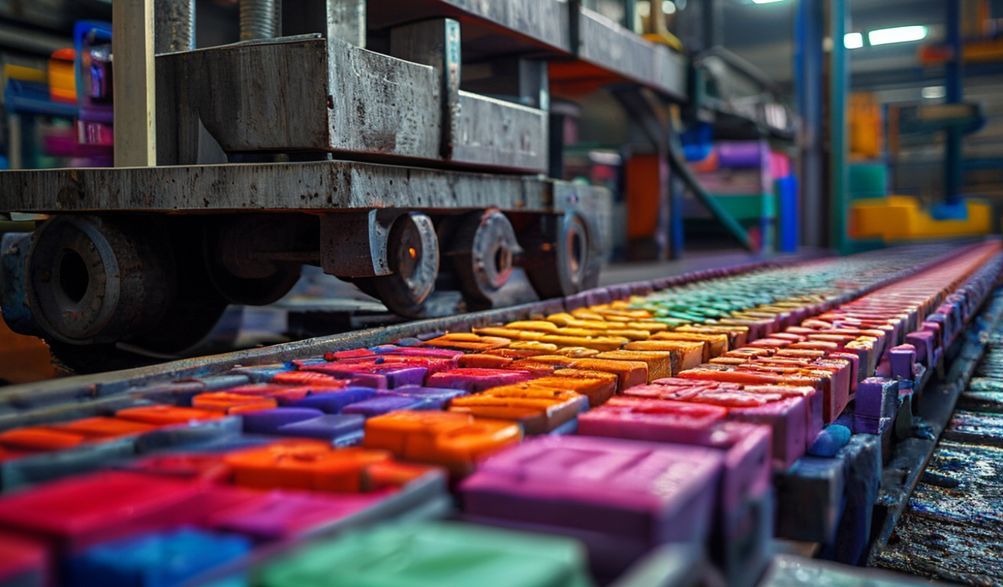
Votre Guide Ultime des Machines à Fabriquer des Blocs de Béton au Gujarat : À l'Intérieur de l'Usine FUDA de Fabrication de Blocs
Le Gujarat s'impose comme la puissance industrielle de l'Inde, un écosystème dynamique où l'excellence manufacturière rencontre une croissance ambitieuse. Cela n'est nulle part plus évident que dans son secteur de la construction et des infrastructures, qui alimente une demande parallèle pour des machines robustes, innovantes et efficaces. Pour les constructeurs, les entrepreneurs et les chefs d'entreprise souhaitant créer ou développer une unité de fabrication de blocs, trouver le bon partenaire de production est une décision cruciale, entachée de défis : problèmes de fiabilité, coûts cachés et la complexité même des spécifications techniques.
La pierre angulaire d'une construction moderne et efficace réside dansmachine à fabriquer des blocs de bétonCes machines transforment les matières premières en véritables éléments constitutifs de nos villes. Et dans le paysage manufacturier prolifique du Gujarat, des usines spécialisées se sont élevées pour répondre à cette demande avec une ingénierie de classe mondiale. Un nom aussi éminent est celui duUsine de Fabrication de Blocs FUDAUn fabricant spécialisé qui s'est taillé une place de choix grâce à une expertise ciblée.
Ce guide constitue votre ressource experte et complète. Nous démystifierons la technologie, explorerons les avantages de s'approvisionner au Gujarat, examinerons en détail ce qu'un fabricant comme FUDA propose et fournirons un cadre clair pour prendre votre décision d'investissement. Notre objectif est de vous doter de connaissances impartiales et détaillées, en nous appuyant sur les informations du secteur pour vous aider à naviguer sur le marché d'unemachine à fabriquer des blocs de béton au Gujarat - usine de fabrication de blocs FUDAet au-delà.
Comprendre les machines de fabrication de blocs en béton : types et technologies
Avant d'investir, il est crucial de comprendre le moteur de votre future entreprise. Une machine à fabriquer des blocs de béton est bien plus qu'une simple presse ; c'est un système conçu pour la précision, la robustesse et l'efficacité.
Comment fonctionne une machine à fabriquer des blocs de béton ?
Le processus, bien que sophistiqué dans son exécution, suit une séquence logique.
- Mélange :Les matières premières—généralement du ciment, du sable, des granulats (comme de la pierre concassée) et de l'eau—sont dosées et mélangées avec précision pour former un mélange de béton homogène et semi-sec. La consistance est cruciale ; elle doit être suffisamment humide pour lier les composants, mais assez sèche pour maintenir sa forme immédiatement après le moulage.
- Moulage :Le mélange est versé dans une boîte à moules ou "moule." Ce moule définit la forme, la taille et le design du bloc (par exemple, creux, plein, emboîtable).
- Compactage et Vibration :C'est le cœur du processus. La machine utilise de puissantes vibrations et une pression hydraulique pour compacter le mélange de manière dense dans chaque coin du moule. Cela élimine les poches d'air et garantit que le bloc atteint une haute résistance à la compression et une finition uniforme et lisse.
- Démoulage/Durcissement :Le bloc vert fraîchement formé est éjecté du moule sur une palette ou le sol. Il entre ensuite dans un processus de durcissement, où il acquiert de la solidité au fil des jours grâce à une humidité et une température contrôlées, souvent dans une chambre de durcissement dédiée ou simplement recouvert et laissé à prendre.
Types de Machines : Du Manuel au Entièrement Automatique
Votre choix ici dicte votre production, vos besoins en main-d'œuvre et votre niveau d'investissement.
- Machines manuelles :Actionné principalement à la main avec un levier mécanique. Production la plus faible (100 à 500 blocs par jour), intensité de main-d'œuvre la plus élevée. Adapté aux projets de très petite envergure, sur site, avec un capital minimal.
- Machines semi-automatiques :Une mise à niveau significative. L'alimentation en matériaux et l'éjection des blocs peuvent être manuelles ou partiellement mécanisées, mais le compactage est motorisé (hydraulique/vibration). La production varie de800 à 2 500 blocs par poste de 8 heuresOffre un excellent équilibre entre prix abordable et productivité pour les petites et moyennes entreprises.
- Machines entièrement automatiques :Le summum de l'efficacité. Ces lignes de production informatisées automatisent l'intégralité du processus : dosage, mélange, convoyage, moulage, durcissement et empilage. La production peut atteindre des niveaux exceptionnels,10,000 to over 30,000 blocks per shift. They require higher investment but offer unmatched consistency, lower labor costs, and large-scale production capability.
- Machines à blocs mobiles (type pondeuse) : Unique machines that produce and deposit blocks directly on the ground at the construction site. They are highly portable, eliminate the need for pallets, and are ideal for large-scale projects like compound walls or pavements where blocks are used immediately.
Composants Clés d'une Machine de Haute Qualité
When evaluating any machine, inspect these core components:
- Cadre et Structure : Must be fabricated from heavy-duty steel plate and profiles to withstand constant vibration and pressure without deformation.
- Système Hydraulique : The powerhouse. Look for reputed brand pumps, valves, and cylinders. A robust system ensures consistent pressure, smooth operation, and longevity.
- Qualité du Moule : The most critical wear part. Molds should be made from high-grade, hardened alloy steel with precise machining. This ensures block accuracy, smooth finish, and long mold life.
- Panneau de commande et Électronique : In semi and fully automatic models, a user-friendly, preferably PLC-based control system ensures easy operation and repeatable cycles. Components should be from reliable brands.
- Système de Vibration : High-frequency, amplitude-adjustable vibration motors are essential for optimal compaction and strength. The system should be balanced to minimize wear on the machine frame.
Why Gujarat is a Hub for Block Machine Manufacturing
Gujarat’s dominance in this sector is no accident. It is the result of a confluence of strategic advantages that create an ideal environment for heavy engineering.
L'Avantage Industriel du Gujarat
- Accès aux matières premières. Proximity to major ports facilitates the import of high-quality steel and specialized components. Locally, a strong network of foundries and forging units supplies essential parts.
- Réservoir de Main-d'œuvre Qualifiée : Decades of industrial culture have fostered a deep bench of skilled welders, fitters, electricians, and engineers specializing in heavy machinery.
- Chaîne d'approvisionnement robuste : A dense ecosystem of ancillary industries—from hydraulic hose suppliers to electrical panel makers—means manufacturers can source components efficiently and at competitive rates.
- Logistics & Connectivity: With ports like Kandla and Mundra, and excellent road and rail networks, shipping machines across India or for export is streamlined.
Quality and Innovation in Gujarati Engineering
Gujarati manufacturers have built a reputation for pragmatic innovation. The focus is on creating machines that are:
* Durable: Built for the demanding Indian operating environment.
* Efficient: Designed to deliver high output with optimal power consumption.
* Cost-Competitive: Offering exceptional value without compromising on core functionality.
Benefits of Sourcing Your Machine from Gujarat
For a buyer, this translates to tangible benefits:
* Proximity for Service & Support: Being closer to the manufacturer simplifies installation supervision, operator training, and quicker resolution of any technical issues.
* Prix Compétitifs : The efficiencies of the local ecosystem often result in more attractive pricing compared to sourcing from distant regions.
* Options de personnalisation : Direct access to engineering teams makes it easier to discuss and implement customizations for specific block designs or production needs.
* Strong After-Sales Networks: Established manufacturers have developed service networks and maintain ready stocks of critical spare parts.
Pleins feux sur l'Usine de Fabrication de Blocs FUDA : Un Aperçu Approfondi
As a representative example of Gujarat’s specialized manufacturing prowess, let’s examine what a focused player like FUDA Block Making Factory brings to the table.
Profil et Héritage de l'Entreprise
FUDA has established itself as a dedicated manufacturer within this competitive space. With years of focused experience, their core philosophy typically revolves around providing robust, reliable, and value-driven solutions to block producers. This longevity in the market speaks to an understanding of customer pain points and the technical demands of block production—a key indicator of ExpérienceetExpertise.
FUDA’s Product Range and Specializations
A manufacturer like FUDA usually caters to a spectrum of customers by offering a range of machines:
* Stationary Semi-Automatic Machines: Their bread and butter, suitable for a wide range of entrepreneurs. Models might vary in output (e.g., 1,000 to 3,000 blocks per shift) and block size capacity.
* Mobile Egg-Laying Machines: A key product for contractors, allowing for on-site production of blocks for pavements, curbs, and landscaping.
* Specialized Production: They often provide machines capable of producing a diverse array of products:
* Hollow & Solid Concrete Blocks
* Pavers & Tiles (in various patterns)
* Fly Ash Bricks (eco-friendly alternative)
* Blocs à emboîtement (pour murs de soutènement)
Engineering and Quality Assurance at FUDA
This is where trust is built. Reputable factories distinguish themselves through their build processes:
* Manufacturing Process: Employing advanced fabrication techniques like CNC cutting and precision welding to ensure machine integrity.
* Sélection des matériaux : Using hardened alloy steel for molds and critical wear parts to guarantee longevity and consistent block quality.
* Testing Protocols: Conducting rigorous run-in tests under load before dispatch to ensure every machine performs to specification.
* Respect des Normes : Following industry-accepted engineering standards for safety and performance. This commitment to quality control is fundamental to establishing AutoritéetFiabilité.
Key Considerations Before Buying a Block Making Machine
Arming yourself with the right questions is half the battle won. This is where due diligence pays lifelong dividends.
Évaluation de vos besoins de production et de votre budget
Start by answering these questions:
* What is my required production quotidienne ou mensuelle in number of blocks?
* What types and sizes of blocks do I need to produce?
* What is my available factory space and power connection (3-phase)?
* What is my total investment capacity, including machine, installation, and working capital?
The Total Cost of Ownership: Beyond the Sticker Price
The machine’s price tag is just the beginning. Consider:
* Machine Cost: Base price of the equipment.
* Installation et Mise en Service : Costs for foundation, electrical work, and technician travel.
* Consommation d'énergie : Fully automatic lines consume more power than semi-automatic ones.
* Maintenance & Pièces de Rechange : Budget for routine maintenance and eventual replacement of wear parts like molds and hydraulic seals.
Essential Features to Look For
Prioritize these aspects during your evaluation:
* Durabilité et qualité de construction : Inspect the welding, plate thickness, and component brands.
* Facilité d'utilisation et de formation : Is the control system intuitive? Does the supplier provide comprehensive training?
* After-Sales Service & Warranty: This is non-negotiable. Clarify warranty terms (typically 1 year on major parts) and the responsiveness of the service team.
* Disponibilité des pièces de rechange : Ensure commonly wearing parts are readily available.
The Importance of Factory Visits and Demos
Industry practice strongly underscores one piece of advice: always visit the factory. Whether it’s FUDA or any other shortlisted manufacturer, a visit allows you to:
* See the machines under actual production conditions.
* Assess the build quality and manufacturing hygiene firsthand.
* Meet the engineering and support team to gauge their expertise.
* See the raw material and component inventory.
This Expérience-based step is invaluable and can prevent costly mistakes.
Maximizing Your Investment: Operation and Maintenance
A great machine is a tool; its output depends on how you use and care for it.
Best Practices for Machine Operation
- Raw Material Mix: Consistency is key. Use a well-graded mix. A common starting ratio is 1 part cement, 3 parts sand, and 6 parts aggregate (by volume), but this must be optimized for local materials and desired block strength.
- Routine Checks: Before starting, check oil levels in the hydraulic tank, ensure all bolts are tight, and inspect the mold for wear or damage.
- Sécurité de l'opérateur : Ensure all safety guards are in place. Operators should be trained to never place hands in the molding area during the cycle.
Routine Maintenance Checklist
- Daily: Clean the machine thoroughly, especially the mold area. Check for hydraulic leaks.
- Weekly: Grease all lubrication points. Inspect vibration motors and electrical connections.
- Monthly: Check hydraulic oil for contamination. Inspect the wear plates and mold for any signs of excessive damage.
Sourcing Quality Raw Materials in Gujarat
Fortunately, Gujarat is rich in resources. You have easy access to:
* Ciment : Major brands have a strong presence across the state.
* Cendres volantes : Abundantly available from thermal power plants, ideal for eco-friendly brick production.
* Aggregates & Sand: Crushed stone and manufactured sand (M-Sand) are widely supplied due to the state’s construction activity.
Foire aux Questions (FAQ)
Q1: What is the approximate price range for a concrete block making machine from a Gujarat-based manufacturer like FUDA?
A: Prices vary dramatically based on automation and capacity. A basic semi-automatic machine can start from ₹ 3-5 lakhs, while a high-output, fully automatic production line can range from ₹ 15 lakhs to over ₹ 1 crore. It is essential to get a detailed quotation based on your specific output and feature requirements.
Q2: Can FUDA or similar factories customize machines for specific block designs?
A: Yes, most reputable manufacturers offer customization. This primarily involves designing and manufacturing a custom mold for your required block size, shape, or interlocking pattern. Machine stroke lengths or pressure settings can also be adjusted accordingly.
Q3: What kind of after-sales support and warranty should I expect?
A: You should expect comprehensive support: installation supervision at your site, thorough training for your operators, a standard warranty (e.g., 12 months on major components against manufacturing defects), and ready availability of spare parts. The local presence of manufacturers in Gujarat is a significant advantage for prompt service.
Q4: How do I calculate the ROI (Return on Investment) for a block making machine?
A: A simplified ROI calculation involves: 1) Estimating your daily production capacity. 2) Determining your average selling price per block. 3) Calculating your daily cost (raw materials + power + labor + overhead). 4) Your daily profit is (Daily Sales – Daily Cost). Divide the total machine investment by the daily profit to estimate the payback period in days.
Q5: Are there government subsidies or schemes for setting up a brick/block manufacturing unit in Gujarat?
A: Government schemes, such as those promoting MSMEs or eco-friendly fly ash brick units, are periodically introduced. However, these policies are subject to change. For the most accurate and trustworthy information, we strongly advise you to check directly with the Gujarat Directorate of Industries or your local District Industries Centre (DIC) for current eligibility and application details.
Conclusion
Choosing the right concrete block making machine is a strategic decision that forms the foundation of a profitable and sustainable business. Gujarat, with its industrial might and engineering acumen, offers a compelling destination for this investment. Specialized manufacturers within this ecosystem, exemplified by factories like FUDA, provide the focused expertise, robust engineering, and localized support necessary for success.
As this guide has outlined, your path forward should be built on thorough research, a clear understanding of your own technical and financial parameters, and a commitment to due diligence. Partnering with an experienced, authoritative, and trustworthy manufacturer is paramount. We encourage you to take the following steps:
- Finalize your specific production requirements (output, block types, budget).
- Shortlist 2-3 reputable manufacturers for detailed discussions, using insights about companies like FUDA as a benchmark for quality and specialization.
- Schedule factory visits to witness the machinery, the manufacturing process, and the company’s operations firsthand.
The growth trajectory of India’s construction sector is undeniable. By making an informed, strategic investment in the right machinery today, you position your block manufacturing business not just to participate, but to thrive and build the future.
<