
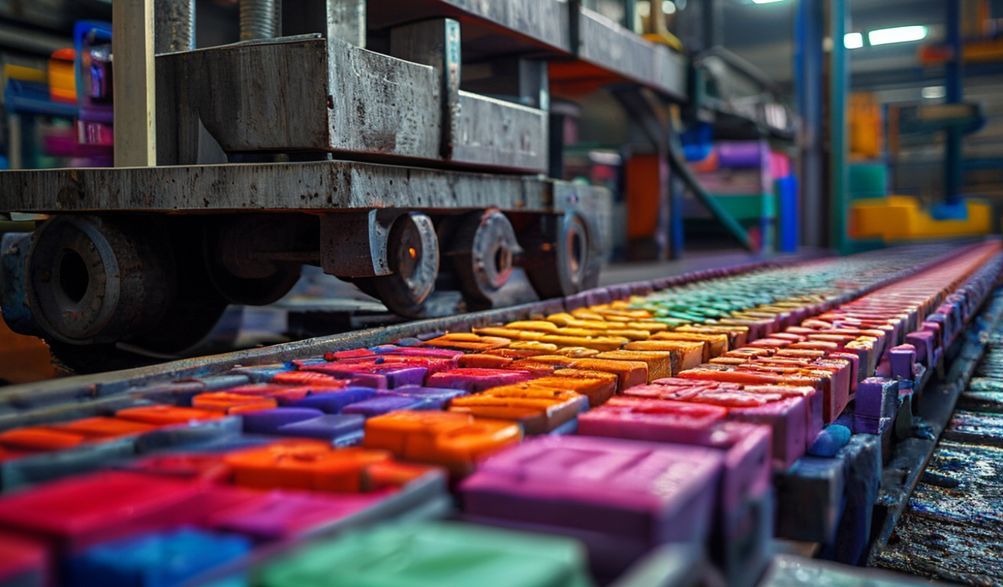
Jagoran Cikakkenku na Injin Yin Tubalin Siminti a Gujarat: Cikin Masana'antar Yin Tubalin FUDA
Gujarat ta tsaya tsayin daka a matsayin cibiyar masana'antu ta Indiya, yanayin rayuwa mai ƙarfi inda ƙwararrun masana'antu suka haɗu da ci gaba mai ƙima. Babu inda wannan ya fi bayyana a fannin gine-gine da ababen more rayuwa, wanda ke haifar da buƙatu mai kama da na ingantattun, sabbin, da ingantattun injuna. Ga magina, kwangila, da 'yan kasuwa da ke neman kafa ko haɓaka rukunin kera tubali, nemo abokin haɗin gwiwar samarwa daidai yanke shawara ne mai mahimmanci mai cike da ƙalubale: damuwa game da dogaro, ɓoyayyun farashi, da sarƙaƙƙiyar ƙayyadaddun fasaha.
Ginshiƙan ginin zamani mai inganci ya ta'allaka ne akanna'urar yin tubalin simintiWaɗannan injunan suna canza albarkatun ƙasa zuwa ainihin ginshiƙan gine-ginen birane. Kuma a cikin yanayin masana'antu mai yawa na Gujarat, an sami ƙwararrun masana'antu don biyan wannan buƙata tare da ƙwararrun injiniyanci na duniya. Ɗaya daga cikin shahararrun sunaye shineMatsarakin Gina Tubalin FUDAmai sana'a na musamman wanda ya sassaka wani yanki na musamman ta hanyar ƙwarewa mai da hankali.
Wannan jagora ta zama cikakkiyar tushen ƙwarewar ku. Za mu bayyana fasahar, mu bincika fa'idodin samun kayan daga Gujarat, mu yi cikakken nazari kan abin da mai kera kamar FUDA ke bayarwa, kuma mu samar da tsari mai haske don yanke shawarar saka kuɗin ku. Manufarmu ita ce mu ba ku cikakken ilimi mara son kai, tare da amfani da fahimtar masana'antu don taimaka muku kewaya kasuwarna'urar yin tubalin siminti a Gujarat - Kamfanin yin tubalin FUDAda sauransu.
Fahimtar Injinan Yin Gina Tubali na Siminti: Nau'oi da Fasahohi
Kafin zuba jari, yana da muhimmanci a fahimci injin kasuwancin ku na gaba. Na'urar yin tubalin siminti ba kawai matsewa ba ce; tsari ne da aka tsara don daidaito, ƙarfi, da inganci.
Yaya Inginar Yin Tubalin Siminti ke Aiki?
Tsarin, ko da yake yana da fasaha a aikace, yana bin tsari mai ma'ana:
- Haɗawa:Kayan aiki na farko—galibin siminti, yashi, gauran gini (kamar dutsen da aka niƙa), da ruwa—ana ƙididdige su daidai kuma a haɗa su don samar da cakuda siminti mai daidaito, mai ɗan bushewa. Daidaitaccen yanayi yana da mahimmanci; dole ne ya zama mai ɗan ɗanɗano don ɗaure amma ya bushe sosai don riƙe siffarsa nan da nan bayan gyare-gyare.
- Gyare-gyare:Ana cusa cakuda a cikin akwatin ƙirar ko "ƙirar." Wannan ƙirar tana ayyana siffar, girman, da ƙira na bulo (misali, rami, mai ƙarfi, mai haɗawa).
- Ƙaddamarwa da Girgiza:Wannan shine jigon tsari. Na'urar tana amfani da ƙarfi mai ƙarfi da matsi na ruwa don matsawa cakuda sosai zuwa kowane kusurwar ƙirar. Wannan yana kawar da iska kuma yana tabbatar da cewa bulo ya sami babban ƙarfin matsi da kuma ƙarewa mai daidaituwa, mai santsi.
- Cirewa/Kauri:Tushen da aka ƙirƙira, koren bulo ana fitar da shi daga ƙirar zuwa kan pallet ko ƙasa. Sa'an nan kuma ya shiga tsarin warkewa, inda yake samun ƙarfi cikin kwanaki ta hanyar sarrafa danshi da zafin jiki, sau da yawa a cikin ɗaki na musamman na warkewa ko kuma kawai a rufe shi kuma a bar shi ya daidaita.
Nau'ikan Injina: Daga Na Hannu zuwa Cikakken Kwarar da kansa
Zaɓin ku a nan yana ƙayyade abin da zaku fitar, buƙatun aiki, da matakin saka hannun jari.
- Na'urorin Hannu:Ana sarrafa shi da hannu da farko tare da injin lever. Mafi ƙarancin yawan aiki (100-500 tubalan kowace rana), mafi girman ƙoƙarin aiki. Ya dace da ƙananan ayyuka, a wurin ginin tare da ƙaramin jari.
- Matsin Injin Mai Ƙaramin Gudanarwa:Ingantacciyar haɓakawa. Ciyar da kayan aiki da fitar da tubalan na iya zama na hannu ko kuma na'ura a wani ɓangare, amma matsawa tana da ƙarfi (na'urar motsa jiki/rawar jiki). Ƙarfafawa yana kewayo daga800 zuwa 2,500 tubalan a kowane tawada na sa'o'i 8Yana ba da ma'auni mai kyau na araha da yawan amfani ga ƙananan da matsakaitan kasuwancin.
- Matsarori Masu Sarrafa Kansu Gabaɗaya:Kololuwar inganci. Waɗannan layukan samarwa da kwamfuta ke sarrafawa suna sarrafa duk tsarin: tattarawa, haɗawa, jigilar kaya, ƙirƙira, gyaran gyare-gyare, da tarawa. Ana iya haɓaka yawan samarwa daga10,000 to over 30,000 blocks per shift. They require higher investment but offer unmatched consistency, lower labor costs, and large-scale production capability.
- Na'urorin Kera Tubali (Irin Na Yin Kwai): Unique machines that produce and deposit blocks directly on the ground at the construction site. They are highly portable, eliminate the need for pallets, and are ideal for large-scale projects like compound walls or pavements where blocks are used immediately.
Abubuwan Da Suka Haɗa Na'urar Mota Mai Inganci
When evaluating any machine, inspect these core components:
- Tsari & Tsarin: Must be fabricated from heavy-duty steel plate and profiles to withstand constant vibration and pressure without deformation.
- Tsarin Hydraulic: The powerhouse. Look for reputed brand pumps, valves, and cylinders. A robust system ensures consistent pressure, smooth operation, and longevity.
- Ingancin Ƙirƙira: The most critical wear part. Molds should be made from high-grade, hardened alloy steel with precise machining. This ensures block accuracy, smooth finish, and long mold life.
- Panel na Sarrafawa & Na'urorin Lantarki: In semi and fully automatic models, a user-friendly, preferably PLC-based control system ensures easy operation and repeatable cycles. Components should be from reliable brands.
- Tsarin Girgiza: High-frequency, amplitude-adjustable vibration motors are essential for optimal compaction and strength. The system should be balanced to minimize wear on the machine frame.
Why Gujarat is a Hub for Block Machine Manufacturing
Gujarat’s dominance in this sector is no accident. It is the result of a confluence of strategic advantages that create an ideal environment for heavy engineering.
Fa'idar Masana'antu ta Gujarat
- Samun Albarkatun Kayan Aiki: Proximity to major ports facilitates the import of high-quality steel and specialized components. Locally, a strong network of foundries and forging units supplies essential parts.
- Ƙwararrun Ma'aikata: Decades of industrial culture have fostered a deep bench of skilled welders, fitters, electricians, and engineers specializing in heavy machinery.
- Robust Supply Chain: A dense ecosystem of ancillary industries—from hydraulic hose suppliers to electrical panel makers—means manufacturers can source components efficiently and at competitive rates.
- Logistics & Connectivity: With ports like Kandla and Mundra, and excellent road and rail networks, shipping machines across India or for export is streamlined.
Quality and Innovation in Gujarati Engineering
Gujarati manufacturers have built a reputation for pragmatic innovation. The focus is on creating machines that are:
* Durable: Built for the demanding Indian operating environment.
* Efficient: Designed to deliver high output with optimal power consumption.
* Cost-Competitive: Offering exceptional value without compromising on core functionality.
Benefits of Sourcing Your Machine from Gujarat
For a buyer, this translates to tangible benefits:
* Proximity for Service & Support: Being closer to the manufacturer simplifies installation supervision, operator training, and quicker resolution of any technical issues.
* Farashin Gasar: The efficiencies of the local ecosystem often result in more attractive pricing compared to sourcing from distant regions.
* Zaɓuɓɓukan Keɓancewa: Direct access to engineering teams makes it easier to discuss and implement customizations for specific block designs or production needs.
* Strong After-Sales Networks: Established manufacturers have developed service networks and maintain ready stocks of critical spare parts.
Haske kan Masana'antar Gina Tubalin FUDA: Cikakken Bincike
As a representative example of Gujarat’s specialized manufacturing prowess, let’s examine what a focused player like FUDA Block Making Factory brings to the table.
Company Profile and Legacy
FUDA has established itself as a dedicated manufacturer within this competitive space. With years of focused experience, their core philosophy typically revolves around providing robust, reliable, and value-driven solutions to block producers. This longevity in the market speaks to an understanding of customer pain points and the technical demands of block production—a key indicator of KwarewakumaƘwarewa.
FUDA’s Product Range and Specializations
A manufacturer like FUDA usually caters to a spectrum of customers by offering a range of machines:
* Stationary Semi-Automatic Machines: Their bread and butter, suitable for a wide range of entrepreneurs. Models might vary in output (e.g., 1,000 to 3,000 blocks per shift) and block size capacity.
* Mobile Egg-Laying Machines: A key product for contractors, allowing for on-site production of blocks for pavements, curbs, and landscaping.
* Specialized Production: They often provide machines capable of producing a diverse array of products:
* Hollow & Solid Concrete Blocks
* Pavers & Tiles (in various patterns)
* Fly Ash Bricks (eco-friendly alternative)
* Interlocking Blocks (for retaining walls)
Engineering and Quality Assurance at FUDA
This is where trust is built. Reputable factories distinguish themselves through their build processes:
* Manufacturing Process: Employing advanced fabrication techniques like CNC cutting and precision welding to ensure machine integrity.
* Zaɓin Kayan Aiki: Using hardened alloy steel for molds and critical wear parts to guarantee longevity and consistent block quality.
* Testing Protocols: Conducting rigorous run-in tests under load before dispatch to ensure every machine performs to specification.
* Bin Ƙa'idodi: Following industry-accepted engineering standards for safety and performance. This commitment to quality control is fundamental to establishing Matsayin IkokumaAminci.
Key Considerations Before Buying a Block Making Machine
Arming yourself with the right questions is half the battle won. This is where due diligence pays lifelong dividends.
Kimanta Bukatun Ku na Samarwa da Kasafin Ku
Start by answering these questions:
* What is my required kullum ko kowane wata in number of blocks?
* What types and sizes of blocks do I need to produce?
* What is my available factory space and power connection (3-phase)?
* What is my total investment capacity, including machine, installation, and working capital?
Jimlar Kuɗin Mallaka: Bayan Farashin Tambari
The machine’s price tag is just the beginning. Consider:
* Machine Cost: Base price of the equipment.
* Shigarwa & Kaddamarwa: Costs for foundation, electrical work, and technician travel.
* Amfani da Wutar Lantarki: Fully automatic lines consume more power than semi-automatic ones.
* Kulawa da Kayayyakin Gyara: Budget for routine maintenance and eventual replacement of wear parts like molds and hydraulic seals.
Essential Features to Look For
Prioritize these aspects during your evaluation:
* Tsawon Rayuwa & Ingancin Gina: Inspect the welding, plate thickness, and component brands.
* Sauƙin Aiki & Horarwa: Is the control system intuitive? Does the supplier provide comprehensive training?
* After-Sales Service & Warranty: This is non-negotiable. Clarify warranty terms (typically 1 year on major parts) and the responsiveness of the service team.
* Samun Sassa na Gyara: Ensure commonly wearing parts are readily available.
The Importance of Factory Visits and Demos
Industry practice strongly underscores one piece of advice: always visit the factory. Whether it’s FUDA or any other shortlisted manufacturer, a visit allows you to:
* See the machines under actual production conditions.
* Assess the build quality and manufacturing hygiene firsthand.
* Meet the engineering and support team to gauge their expertise.
* See the raw material and component inventory.
This Kwarewa-based step is invaluable and can prevent costly mistakes.
Maximizing Your Investment: Operation and Maintenance
A great machine is a tool; its output depends on how you use and care for it.
Best Practices for Machine Operation
- Raw Material Mix: Consistency is key. Use a well-graded mix. A common starting ratio is 1 part cement, 3 parts sand, and 6 parts aggregate (by volume), but this must be optimized for local materials and desired block strength.
- Routine Checks: Before starting, check oil levels in the hydraulic tank, ensure all bolts are tight, and inspect the mold for wear or damage.
- Kula da Lafiyar Ma'aikaci: Ensure all safety guards are in place. Operators should be trained to never place hands in the molding area during the cycle.
Jadawalin Kulawa na Yau da Kullum
- Kullum: Clean the machine thoroughly, especially the mold area. Check for hydraulic leaks.
- Mako-mako: Grease all lubrication points. Inspect vibration motors and electrical connections.
- Kowane wata: Check hydraulic oil for contamination. Inspect the wear plates and mold for any signs of excessive damage.
Sourcing Quality Raw Materials in Gujarat
Fortunately, Gujarat is rich in resources. You have easy access to:
* Siminti: Major brands have a strong presence across the state.
* Kurar Fly Ash: Abundantly available from thermal power plants, ideal for eco-friendly brick production.
* Aggregates & Sand: Crushed stone and manufactured sand (M-Sand) are widely supplied due to the state’s construction activity.
Tambayoyin da ake yawan yi (FAQ)
Q1: What is the approximate price range for a concrete block making machine from a Gujarat-based manufacturer like FUDA?
A: Prices vary dramatically based on automation and capacity. A basic semi-automatic machine can start from ₹ 3-5 lakhs, while a high-output, fully automatic production line can range from ₹ 15 lakhs to over ₹ 1 crore. It is essential to get a detailed quotation based on your specific output and feature requirements.
Q2: Can FUDA or similar factories customize machines for specific block designs?
A: Yes, most reputable manufacturers offer customization. This primarily involves designing and manufacturing a custom mold for your required block size, shape, or interlocking pattern. Machine stroke lengths or pressure settings can also be adjusted accordingly.
Q3: What kind of after-sales support and warranty should I expect?
A: You should expect comprehensive support: installation supervision at your site, thorough training for your operators, a standard warranty (e.g., 12 months on major components against manufacturing defects), and ready availability of spare parts. The local presence of manufacturers in Gujarat is a significant advantage for prompt service.
Q4: How do I calculate the ROI (Return on Investment) for a block making machine?
A: A simplified ROI calculation involves: 1) Estimating your daily production capacity. 2) Determining your average selling price per block. 3) Calculating your daily cost (raw materials + power + labor + overhead). 4) Your daily profit is (Daily Sales – Daily Cost). Divide the total machine investment by the daily profit to estimate the payback period in days.
Q5: Are there government subsidies or schemes for setting up a brick/block manufacturing unit in Gujarat?
A: Government schemes, such as those promoting MSMEs or eco-friendly fly ash brick units, are periodically introduced. However, these policies are subject to change. For the most accurate and trustworthy information, we strongly advise you to check directly with the Gujarat Directorate of Industries or your local District Industries Centre (DIC) for current eligibility and application details.
Ƙarshe
Choosing the right concrete block making machine is a strategic decision that forms the foundation of a profitable and sustainable business. Gujarat, with its industrial might and engineering acumen, offers a compelling destination for this investment. Specialized manufacturers within this ecosystem, exemplified by factories like FUDA, provide the focused expertise, robust engineering, and localized support necessary for success.
As this guide has outlined, your path forward should be built on thorough research, a clear understanding of your own technical and financial parameters, and a commitment to due diligence. Partnering with an experienced, authoritative, and trustworthy manufacturer is paramount. We encourage you to take the following steps:
- Finalize your specific production requirements (output, block types, budget).
- Shortlist 2-3 reputable manufacturers for detailed discussions, using insights about companies like FUDA as a benchmark for quality and specialization.
- Schedule factory visits to witness the machinery, the manufacturing process, and the company’s operations firsthand.
The growth trajectory of India’s construction sector is undeniable. By making an informed, strategic investment in the right machinery today, you position your block manufacturing business not just to participate, but to thrive and build the future.
<