
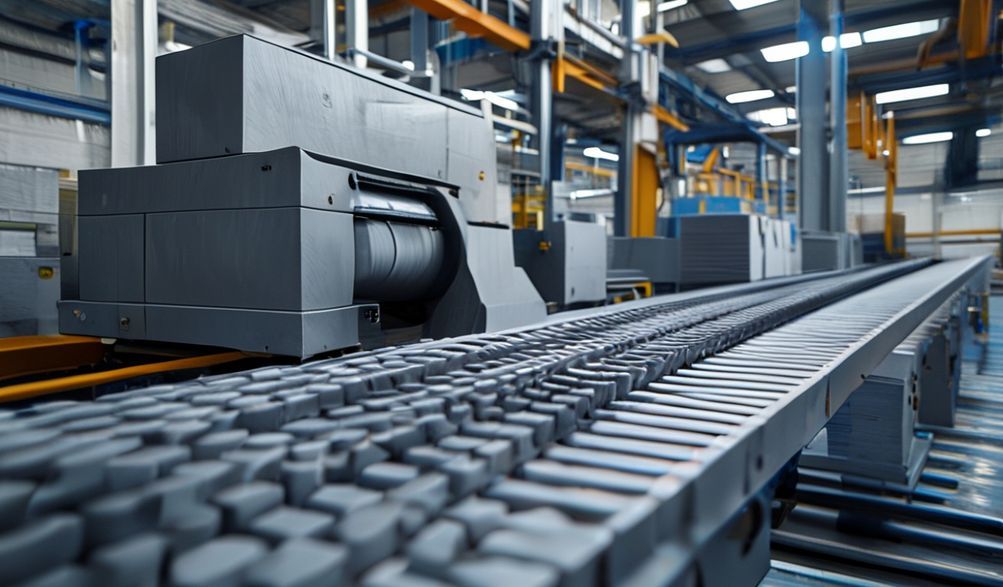
Kewayar Kasuwancin Injinan Yin Tubali: Bincike Mai Zurfi tare da Haske daga Masana'antar Yin Tubali ta FUDA
Gabatarwa
Duniya tana gini. Daga saurin bunƙasar birane a cikin tattalin arzikin ƙasashe masu tasowa zuwa sabunta ababen more rayuwa a cikin ƙasashe masu ci gaba, ayyukan gine-ginen duniya suna cikin wani matakin da ba a taɓa gani ba. A tsakiyar wannan juyin juya halin siminti akwai wani muhimmin sashi, wanda ba a yawan yaba shi ba: ƙananan tubalin siminti. Kuma injinan da ke samar da waɗannan tubalan su ne injinan ci gaba da ba a yaba su ba.
Duk da haka, ga masu siye, masu saka hannun jari, da ƙwararrun gine-gine, kewayakasuwar na'urar yin tubalin simintizai iya zama aiki mai wahala. Yanayin ya cika da matakai daban-daban na inganci, ƙayyadaddun fasaha masu rikitarwa, da masu samarwa waɗanda alkawarinsu ba koyaushe suke dacewa da gaskiya ba. Babban ƙalubalen shine daidaita farashin farko tare da dawowar saka hannun jari na dogon lokaci (ROI) yayin nemo masana'anta wanda ke ba da ba kawai na'ura ba, amma abota mai dogaro.
Nan ne inda gwaninta ke da muhimmanci. Tare da fiye da shekaru ashirin na ƙwararrun masana'antu,Kamfanin Gina Bulogi na FUDAya kafa kanta ba kawai a matsayin mai siyarwa ba, amma a matsayin ƙwararriyar ginshiƙi a fasahar samar da tubalan. Wannan labarin yana amfani da gogewar FUDA ta zahiri da zurfin ilimin fasaha don yanke hayaniyar kasuwa.
Manufarmu shine samar da jagora mai aminci da ilimi. Za mu yi nazari bisa gaskiya game da yanayin kasuwa, mu bincika muhimman abubuwan da ake la'akari da su wajen zaɓar kayan aiki, da kuma bincika abubuwan da za su faru a gaba—duk ta fuskar ingantacciyar aikin masana'antu. Ka ɗauki wannan a matsayin tsarin dabarunka don yanke shawara cikin cikakken bayani da kwarin gwiwa a cikin sarƙaƙƙiyarkasuwar na'urar yin tubalin simintitare da fahimtar wani babban ɗan wasa kamarKAMFANIN YIN BULALO NA FUDA.
Fahimtar Yanayin Kasuwar Injin Yin Tubalin na Duniya
Buƙatar injinan yin bulo tana da alaƙa kai tsaye da yanayin gine-gine a duniya. Kasuwa ce da larura da ƙirƙira ke motsawa, inda fahimtar yanayinta shine matakin farko na sayayya mai hikima.
Girman Kasuwa na Yanzu, Trends, da Abubuwan Haɓaka
Kasuwannin duniya na injinan yin bulo na siminti suna samun ci gaba mai ƙarfi, wanda ke haifar da wasu ƙarfi masu ƙarfi da yawa:
- Ƙauyuka da Buke Gidaje:Yawan ƙaura zuwa birane, musamman a Asiya-Pacific da Afirka, yana haifar da buƙatar gidaje masu araha da ƙarfi da ba ta ƙarewa. Tubalin siminti abu ne da ake fifita wajen gini, wanda ke ƙara tallace-tallace na injinan.
- Ayyukan Kayayyakin More Rayuwa na Gwamnati:Zuba jari a hanyoyi, gadoji, gine-ginen jama'a, da tsarin magudanar ruwa a duniya yana buƙatar adadi mai yawa na kafaffen dutse, duwatsu na bakin hanya, da tubalan ramuka.
- Tsarin Sarrafa Kansa:Akwai bayyanannen sauyi daga aikin hannu mai cike da wahala zuwa na'urori masu sarrafa kansu da cikakken atomatik. Wannan yanayin yana faruwa ne saboda buƙatar samar da ƙarin kayan masarufi, ingantacciyar inganci, da rage farashin aiki na dogon lokaci.
- Wurare masu zafi na Yanki:Yankin Asiya da Pasifik shi ne cibiyar haɓaka mai girma, yayin da Arewacin Amurka da Turai suna wakiltar kasuwanni masu girma waɗanda suka mai da hankali kan haɓaka kayan aikin sarrafa kai da maye gurbin tsofaffin kayan aiki.
Sassa na Kasuwa da Nau'ikan Injina
Zabarin injin da ya dace yana farawa da fahimtar nau'ikan. Kasuwa ta kasu gabaɗaya ta hanyar aiki, nau'in samfur, da sikeli.
Ta Hanyar Aiki:
* Na'urorin Hannu: Low-output, labor-intensive, suitable for very small-scale or start-up projects.
* Matsin Injin Mai Ƙaramin Gudanarwa: A balanced choice for small to medium businesses. Some processes like material feeding or block ejection are automated, offering a good mix of productivity and affordability.
* Matsarori Masu Sarrafa Kansu Gabaɗaya: High-speed, computer-controlled production lines for large-scale plants. They offer maximum output with minimal manual intervention.
* Na'urorin Tura Tubalin na Wayar Hanka: Self-contained units on trailers, ideal for producing blocks directly on large construction sites, eliminating transport costs.
By Product Output:
* Injinoni na Hollow Block: The most common type, producing blocks for walls.
* Na'urorin Gina Tituna da Tubalan Haɗin Kai: For landscaping, driveways, and road surfaces.
* Curbstone Machines: For manufacturing road edging.
* Special Shape Machines: Capable of producing a variety of decorative or structural elements.
By Output Capacity:
* Ƙananan sikelin: Up to 1,000 blocks per 8-hour shift.
* Matsakaicin sikelin: 1,000 to 5,000 blocks per shift.
* Large-scale Industrial Plants: 5,000+ blocks per shift, often fully automated lines.
Challenges Faced by Buyers in the Market
Industry experience shows that buyers commonly face several pitfalls:
* Rashin Daidaituwar Inganci: Machines with inferior steel, weak vibration systems, or poor hydraulic components fail prematurely.
* After-Sales Service Gaps: A lack of responsive technical support, training, and spare parts availability can halt production for weeks.
* Kudin da ba a bayyana ba: The initial price tag is misleading without considering energy consumption, maintenance costs, and the lifespan of wear parts.
* Supplier Reliability: Navigating international trade, verifying manufacturer claims, and ensuring contractual clarity pose significant risks.
The FUDA Brick Making Factory: A Case Study in Expertise and Reliability
In a market rife with challenges, a manufacturer’s pedigree becomes paramount. FUDA Brick Making Factory exemplifies the principles of stability, innovation, and partnership that define a top-tier supplier.
Company Profile: History, Mission, and Manufacturing Philosophy
Founded on the principles of robust engineering and customer success, FUDA has evolved over 20+ years from a specialized workshop into a comprehensive manufacturer. Their mission extends beyond selling machinery; it’s about empowering clients to build sustainable businesses. The core philosophy is partnership—working closely with clients to understand their specific raw materials, production goals, and market demands to recommend the optimal solution. This long-term perspective is a direct reflection of their extensive kwarewa in seeing client projects through from conception to profitable operation.
Core Product Portfolio and Technological Innovation
FUDA’s product range is built around core models known for durability and adaptability. Their flagship fully automatic block making machines, for instance, often feature:
- Programmable Logic Controller (PLC) Systems: For precise, reliable, and repeatable control over every cycle.
- High-Pressure Hydraulic Systems: Ensuring strong compaction for dense, high-strength blocks.
- Multi-Directional Vibration: A key to uniform block density and smooth surface finish, achieved through carefully calibrated vibration tables and frames.
- Sassauciyar Kayan Aiki: Engineered to work efficiently with standard concrete mixes, as well as eco-friendly alternatives like fly ash or crushed recycled aggregate.
This focus on precise engineering demonstrates Ƙwarewa. For example, the choice of a specific vibration frequency isn’t arbitrary; it’s calculated to achieve optimal particle settlement for the target block strength and curing time, a detail that separates professional-grade equipment from cheaper alternatives.
Quality Assurance and Manufacturing Standards
Trust is built on transparency and proven standards. FUDA’s manufacturing process is designed to ensure every machine meets rigorous criteria:
- Zaɓin Kayan Aiki: Use of high-grade steel plates and internationally sourced components (e.g., Schneider electrics, Siemens PLCs) for critical subsystems.
- Structured QC Process: Dimensional checks at every fabrication stage, followed by full assembly testing and a mandatory trial run under load before dispatch.
- Bin Ƙa'idodi: While specific certifications like CE for Europe or local standards are applied per market requirements, the underlying manufacturing discipline focuses on safety, operational reliability, and performance consistency.
This unwavering commitment to quality control is the foundation of their amintacce, giving buyers confidence in the machine’s longevity and performance.
Critical Factors for Choosing a Concrete Block Machine Supplier
Armed with market knowledge and an example of a quality manufacturer, how do you evaluate suppliers? Look beyond the brochure and focus on these critical, often overlooked, factors.
Beyond Price: Evaluating Total Cost of Ownership (TCO)
The cheapest machine is often the most expensive in the long run. A savvy investment analysis considers:
- Zuba Jari na Farko: Purchase price, shipping, and installation.
- Kudin Aiki: Daily energy (electricity) consumption, which varies greatly between efficient and inefficient hydraulic/vibration systems.
- Kulawa & Sanyaya: The cost and availability of wear parts like mold liners, mixer blades, and hydraulic seals. A robust machine needs fewer replacements.
- Output Consistency & Downtime: A reliable machine with high uptime produces more sellable blocks, directly impacting revenue.
- Machine Lifespan: A well-built machine from a supplier like FUDA can operate for 15-20 years with proper maintenance, while a poor-quality machine may need major overhauls in half that time.
Tallafin Fasaha, Horarwa, da Sabis na Bayan Sayarwa
This is where manufacturers truly differentiate themselves. Essential support includes:
- Pre-Sales Engineering Consultation: Helping you select the right model and configuration.
- Cikakken Takardu: Clear, illustrated user and maintenance manuals.
- On-Site or Virtual Training: Ensuring your operators understand safe and efficient machine operation.
- Spare Parts Ecosystem: A readily available inventory of critical spare parts with clear diagrams and part numbers.
- Responsive Technical Support: Access to engineers who can troubleshoot issues remotely or guide on-site technicians.
A manufacturer’s commitment here is a direct indicator of their partnership ethos.
Assessing Production Capacity and Scalability Needs
Mismatched capacity is a common error. To avoid it:
* Yi ƙididdige Bukatar Haƙiƙa: Analyze your current and projected block sales, don’t just guess.
* Understand Shift Patterns: Can the machine run 8, 16, or 24 hours? What output does it deliver per hour at a sustainable pace?
* Shirin Ci Gaba: Does the supplier offer a path to scale? For instance, can a semi-automatic line be upgraded later, or can you add auxiliary equipment (like automatic pallet feeders or cube stackers) to your FUDA machine to increase plant throughput?
The Future of Block Production: Sustainability and Automation
The industry is not static. Forward-thinking buyers are aligning their investments with two dominant megatrends.
Eco-Friendly Practices in Block Manufacturing
Sustainability is becoming a competitive and regulatory advantage. Modern machines and plants support this shift by:
- Utilizing Alternative Materials: Advanced block machines can effectively use industrial by-products like fly ash (from coal plants) or slag, and recycled aggregates from crushed construction waste.
- Reducing Resource Consumption: Incorporating water recycling systems in batching plants and designing machines for optimal material use with minimal waste.
- Kira-kira Mai Rai da Aiki: Newer generation machines feature variable-speed drives and optimized hydraulic cycles that significantly reduce power consumption.
The Rise of Smart and Fully Automated Production Lines
Automation is evolving into “smart” production. The next generation involves:
- IoT-Enabled Monitoring: Sensors on machines can transmit real-time data on production counts, machine health, and maintenance alerts to a manager’s smartphone or central dashboard.
- Kula da Kayan Aiki na Gaba: The system analyzes data to predict component failures before they happen, scheduling maintenance during planned downtime.
- Turnkey Plant Solutions: Fully integrated lines from raw material handling, through automatic mixing and block making, to curing and stacking, all controlled by a central system for maximum efficiency.
Tambayoyin da ake yawan yi (FAQ)
Q1: What is the average starting investment for a semi-automatic concrete block making machine?
A: Prices vary widely based on capacity, configuration, and level of automation. A robust semi-automatic system suitable for a small business can range from approximately $15,000 to $50,000. It’s crucial to consult directly with factories like FUDA for a precise quote based on your specific output requirements and local conditions.
Q2: How do I choose between a stationary and a mobile block making machine?
A: The choice depends entirely on your business model. Choose a mobile machine if your primary work involves large, single-site projects (e.g., building a remote housing complex) where transporting finished blocks is costly. Choose a stationary plant if you supply a local market from a fixed location, aiming for higher, more consistent volume production.
Q3: What kind of after-sales support should I expect from a reputable manufacturer like FUDA?
A: You should expect a comprehensive support package: detailed installation drawings and manuals, the option for supervised installation, thorough operator training (on-site or at the factory), a clear warranty on parts and workmanship, and most importantly, a reliable supply chain for genuine spare parts with technical guidance for their replacement.
Q4: Can your machines produce different block sizes and shapes?
A: Yes, industrial-grade block machines are designed for versatility. They use interchangeable molds. A single FUDA machine can produce hundreds of different block, paver, or curbstone designs by simply changing the mold box. Many manufacturers, including FUDA, also offer custom mold design services for unique products.
Q5: What are the key maintenance routines for ensuring machine longevity?
A: Daily and weekly routines are critical. This includes cleaning excess concrete after every shift, checking and lubricating all moving parts (bearings, guide rods), inspecting hydraulic hoses for leaks, and ensuring vibration motors are securely fastened. Following the manufacturer’s scheduled maintenance plan for greasing, oil changes, and system checks is non-negotiable for maximizing machine life.
Ƙarshe
Navigating the concrete block making machine market successfully hinges on moving beyond a simple price comparison. It requires a strategic focus on Total Cost of Ownership, the quality of technical and after-sales support, and the proven expertise of your chosen partner.
Throughout this exploration, Kamfanin Gina Bulogi na FUDA has been presented as an embodiment of the principles that mitigate market risks: deep kwarewa, technical Ƙwarewa, and a transparent, amintacce partnership approach. They represent the caliber of supplier that turns a capital equipment purchase into a long-term asset for your business.
The future of construction is efficient, sustainable, and smart. Your choice of block production equipment should align with that vision.
Ready to translate this knowledge into action? For a detailed consultation tailored to your specific production goals and a clear analysis of your ROI, reach out to the engineering team at FUDA Brick Making Factory. Let their expertise help you build the foundation for your success.
<