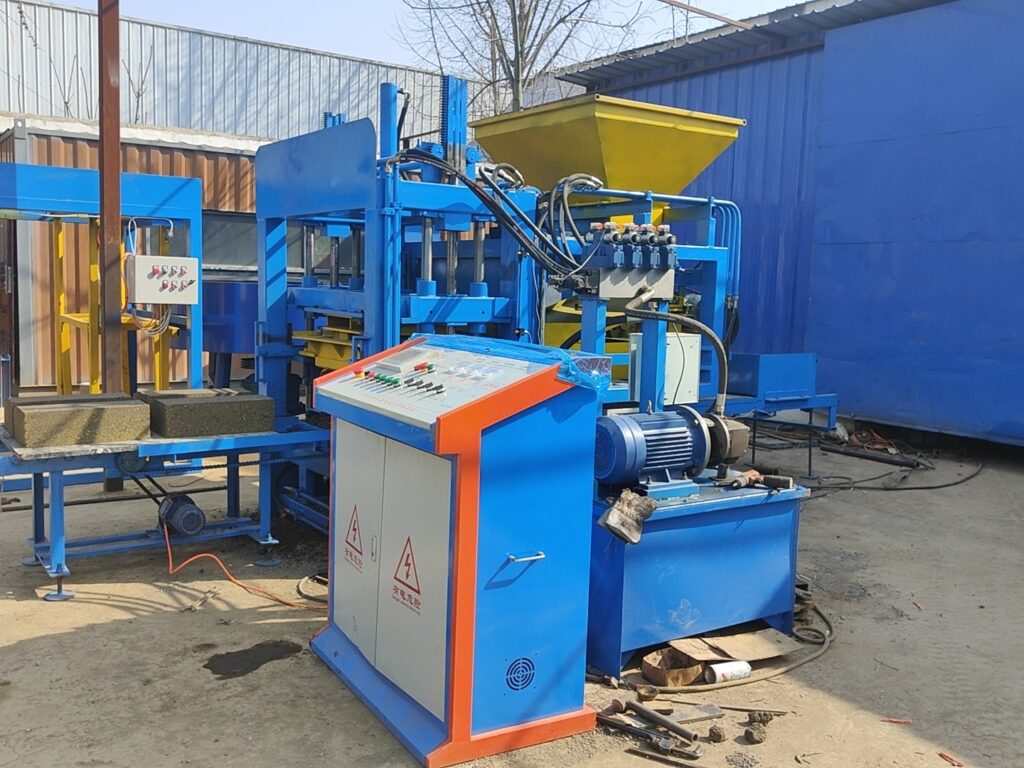
Nazari Mai Cikakken Bayani Game da Abubuwan Farashin Inginan Bulo da Rarrabuwa
1. Tushen Tushe na Farashin Kayan Aikin Kera Bulo
Farashin ƙarshe na na'ura ta ƙunshi abubuwa da yawa na injiniyanci da kasuwa. Fahimtar waɗannan yana ba da damar ilmantar da abokin ciniki yadda ya kamata da kuma ba da hujjar farashin.
- Fasahar Cibiya da Matakin Sarrafa KansaWannan shine babban abin da ke ƙayyade farashi. Ƙwararrun tsarin tuƙi—lever na hannu, girgiza na inji, matsawa na hydraulic, ko tsarin lantarki na hydraulic da aka sarrafa ta kwamfuta—yana da alaƙa kai tsaye da farashi. Kayan aikin atomatik a cikin ciyar da kayan aiki, zagayowar ƙirar, da tarin samfurori suna ƙara yawan farashi amma kuma suna ƙara yawan fitarwa da daidaito sosai.
- Ƙarfin Samarwa da Ƙayyadaddun Abubuwan Samarwa:Farashin tana ƙaruwa da saurin samarwa. Ƙarfin na'ura, wanda aka auna a cikin tubalan a kowace awa (BPH) ko sauye-sauye, ma'auni ne mai mahimmanci. Ƙarin fitarwa yana buƙatar ƙarin motoci masu ƙarfi, firam ɗin girma, abubuwan aiki masu nauyi, da ƙarin tsarin sarrafa kayan aiki, duk suna ƙara farashin masana'antu.
- Ingancin Gina da Samun Kayan Aiki:Ingancin karfe, daidaiton injiniya, da ingancin alamu da karko na silinda na ruwa, famfo, da na'urorin sarrafa wutar lantarki (PLCs, na'urori masu auna firikwensin) suna da muhimmanci. Injinan da aka gina da kayan masana'antu, waɗanda aka samo daga duniya, suna da daraja fiye da waɗanda aka yi amfani da kayan aiki masu sauƙi ko sassan da ba su da aminci.
- Yawan Amfani da Keɓancewa:Na'urar da ke samar da nau'in tubali guda ɗaya tana da arha fiye da na'urar da ke da ikon yin tubalan haɗin gwiwa, fale-falen titi, tubalan ramuka, da duwatsun bakin titi ta hanyar tsarin gyare-gyaren ƙirar ƙira cikin sauri. Keɓancewa don takamaiman albarkatun ƙasa (misali, tokar ƙura, gaurayawan gawayi) kuma yana shafar farashi.
- Tallafi Bayan Siyarwa da Haɗa Garanti:Farashin da aka faɗa sau da yawa ya haɗa da alƙawarin mai siyarwa na ba da sabis. Na'urar da ke da cikakken horo, cikakkun littattafan jagora, ingantaccen kayan gyara, da kuma tsawon lokacin garanti mai yawa za a iya farashinta ya fi na "na'urar kawai". Wannan yana wakiltar ƙaramin farashin mallaka ga abokin ciniki.
2. Rarrabe Rukuni na Farashin: Daga Aiki da Hannu zuwa Cikakken Kwararar Aiki ta Atomatik
Kasuwa za a iya raba ta zuwa matakai daban-daban, kowannensu yana da farashinsa na musamman da kuma tsarin kimar darajarsa.
- Tier 1: Manual and Semi-Manual Presses
- Farashin Farashi: This tier occupies the lowest cost segment, often ranging from a few hundred to a few thousand dollars.
- Technical Profile: Relies on human labor for mixing, feeding, and compression (via levers or small hydraulic jacks). Output is low (typically 100-500 BPH) and dependent on operator skill and endurance.
- Target Market & Value for Resellers: Ideal for micro-enterprises, community projects, and very small-scale start-ups in regions with low labor costs. For distributors, this tier offers a high-volume, entry-level product with fast inventory turnover. It serves as a gateway to build client relationships.
- Mahimman Abubuwan Kudade: Material (steel) quality, mold durability, and the inclusion of basic accessories.
- Tier 2: Static Egg-Laying and Small Vibrator Machines
- Farashin Farashi: This is the mid-range market, with prices scaling from several thousand to tens of thousands of dollars.
- Technical Profile: These are electrically powered machines that use vibration and pressure to compact bricks in a stationary mold (static) or on a pallet that moves (“egg-layer”). They may include simple conveyors or hoppers. Output ranges from 1,000 to 5,000 BPH.
- Target Market & Value for Resellers: The core market for SMEs and growing block yards. These machines offer a significant productivity leap over manual options. They represent a high-margin segment where distributors can provide significant value through technical support and parts supply.
- Mahimman Abubuwan Kudade: Motor power, vibration system quality, level of mechanization in material feeding, and robustness of the frame and mold carriage system.
- Tier 3: Fully Automatic Stationary Production Lines
- Farashin Farashi: This is a premium investment, ranging from tens of thousands to several hundred thousand dollars.
- Technical Profile: These are integrated systems featuring automated batching, mixing, conveying, high-pressure hydraulic compression, curing stackers, and sophisticated control panels. Output can exceed 10,000 BPH with minimal manual intervention.
- Target Market & Value for Resellers: Targeted at established industrial block manufacturers, large construction firms, and government-backed housing initiatives. Selling at this tier transforms the distributor from a parts supplier to a strategic project partner, involving higher stakes but also longer-term, more profitable relationships involving installation and maintenance contracts.
- Mahimman Abubuwan Kudade: Degree of automation, number of robotic elements, sophistication of the control system, and the inclusion of ancillary equipment like automatic pallet feeders and stackers.
3. The Total Cost of Ownership (TCO): A Critical Sales Framework
The most effective sales strategy shifts the conversation from initial purchase price to TCO.
- Initial Investment vs. Long-Term Expense: A cheaper machine may have higher long-term costs due to frequent breakdowns, high energy consumption per block, greater material waste, and significant labor requirements.
- Calculating TCO for the Client: Guide clients to consider: 1) Machine Purchase Price, 2) Installation & Commissioning Costs, 3) Energy Consumption, 4) Labor Costs per Block, 5) Estimated Maintenance & Parts Costs per year, and 6) Expected Lifespan and Residual Value.
- The Productivity Premium: A machine costing 50% more but producing 300% more output with 30% less labor and waste offers a vastly superior TCO. Demonstrating this through simple calculations is a powerful closing tool.
4. Strategic Pricing Communication for Distributors
How price is presented is as important as the price itself.
- Avoiding “Sticker Shock”: Present pricing within the context of the business opportunity. Lead with output capacity and potential ROI, not the dollar figure.
- Tiered Proposal Packages: Create clear packages for each tier (e.g., “Basic Production Package,” “Growth Optimizer Package,” “Industrial Line Package”) that bundle the machine with recommended accessories, initial spare parts, and service plans. This adds value and frames the price as a complete solution.
- Emphasizing Support Value: Clearly articulate how your company’s premium—in terms of local parts stock, technician training, and warranty response—protects the client’s investment and ensures uptime, justifying a price point above that of an import-only vendor.
Conclusion: Price as a Function of Strategic Business Development
The question of cost for a brick making machine is, in its essence, a question about the client’s business future. For the astute distributor, it is an opportunity to engage in strategic consultancy. By mastering the intricate link between a machine’s specifications, its price category, and the total cost of ownership, resellers can do more than just sell equipment; they can enable successful businesses. The goal is to match the technological solution to the market ambition, ensuring that the investment becomes a catalyst for growth, not a burdensome expense. In a competitive marketplace, the distributor who expertly navigates and elucidates the “how much” question by focusing on “how much value” will secure not only sales but also lasting partnerships.
Frequently Asked Questions (FAQ) for Business Clients
Q1: Why is there such a massive price difference between machines that seem to make the same brick?
A: The difference lies in “how” the brick is made and at “what scale.” A manual press requires constant labor for low output. An automatic line uses precision hydraulics, consistent vibration, and robotic handling to produce thousands of identical blocks per hour with minimal labor. The price disparity reflects the investment in engineering, durability, automation technology, and production capacity. It’s the difference between a tool and an industrial manufacturing system.
Q2: What are the typical “hidden costs” our customers should budget for beyond the machine price?
A: A comprehensive budget must include: Foundation and Installation (for larger machines), Power Connection (potential need for transformer or upgraded electrical lines), Raw Material Handling Equipment (e.g., forklifts, loaders, conveyors), Initial Spare Parts Inventory, Operator Training, and Curing Space/Storage infrastructure. Providing clients with a pre-purchase checklist builds trust and prevents project delays.
Q3: How does the choice of raw material (soil, cement, fly ash, etc.) impact the type of machine needed and its price?
A: Material dictates the required compression force and compaction method. A lightweight aggregate block might require different vibration settings than a dense clay-cement mix. Machines optimized for specific material ranges may have specialized feed systems or mold designs. Communicating the intended raw mix to the supplier is crucial for selecting the right machine, ensuring optimal performance and avoiding undue wear, which impacts the long-term effective price.
Q4: Is financing or leasing equipment a common option in this industry, and how does that affect the price discussion?
A: Yes, for mid-to-high-tier equipment, financing is common. This shifts the discussion from total capital outlay to affordable monthly payments based on projected cash flow. It allows clients to invest in a higher-productivity machine sooner. Distributors who can facilitate or partner with financing options make higher-tier equipment more accessible and can structure the “price” as a monthly operating expense linked to production revenue.
Q5: What is the single most important performance metric to correlate with price when comparing machines?
A: While output (blocks/hour) is key, the most correlated metric is “Cost per Produced Block” over the machine’s lifespan. This calculation factors in the purchase price, energy, labor, maintenance, and expected brick yield. A machine with a higher initial price but a lower long-term cost per block due to efficiency, speed, and durability represents the superior economic choice. Guiding clients to this analysis is the hallmark of a value-driven supplier.