
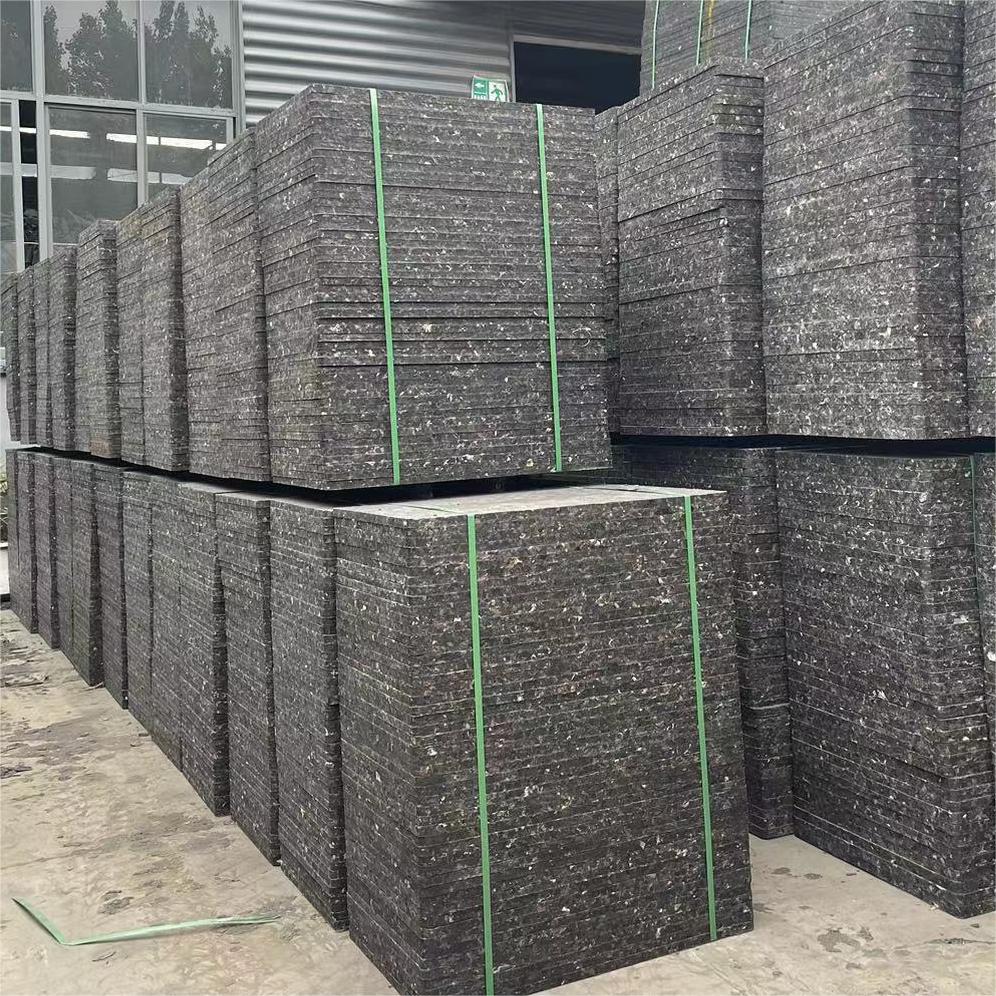
Harkokin Injiniya da Aiki na Pallet ɗin Samarwa
Ayyukan Cibiyar da Haɗin Tsarin
A cikin masana'antar yin tubalin ta atomatik, pallet ɗin yana aiwatar da jerin ayyuka masu mahimmanci da haɗari. Babban aikinsa shi ne ya samar da ƙasan akwatin ƙirar. Dole ne ya ƙirƙiri cikakkiyar rufewa tare da bangon ƙirar don hana zubar da cakuda siminti a lokacin girgizar mitar mai girma da matsi. Bayan an matsa, pallet ɗin, yanzu yana riƙe da sabbin tubalan "kore" masu rauni, ana canza shi zuwa tsarin isar da masana'antar. Daga nan sai ya bi ta cikin ɗakin warkewa ko kuma wurin warkewa na halitta, inda simintin ke samun ƙarfin farko. Duk salon samarwa na masana'antar yana daidaitawa tare da motsin waɗannan pallet ɗin. Pallet guda ɗaya da ya karkace, ya lalace, ko kuma ya fita daga ƙayyadaddun ƙa'idodi na iya haifar da toshewa a cikin tsarin canja wuri, dakatar da duk layin samarwa, ko kuma haifar da ƙirƙirar gabaɗayan rukunin tubalan da ba su da kyau, wanda ke haifar da asarar kuɗi mai yawa.
Abun da ke cikin Kayan da Ci gaban Fasaha
Juyin halittar kayan pallet ya kasance martani kai tsaye ga yanayin tsananin samar da tubalan: tsananin gogayya, ci gaba da tasiri daga hanyoyin canja wuri, fallasa ga danshi da sinadarai na siminti na alkaline, da kuma yanayin zafi mai mahimmanci.
- Pallet ɗin Karfe Masu Zafi da Aka Yi wa Magani na Babban Carbon:Wannan shine zaɓi na al'ada kuma mafi ƙarfi. Ana yin su daga faranti na ƙarfe mai kauri da babban carbon, sannan a yi musu jikin zafi (a taurare da a daɗaɗɗe) don samun daidaito mafi kyau na taurin saman da ƙarfin ciki. Babban fa'idarsu ita ce tsayayyen dorewa da juriya ga nakasa a ƙarƙashin nauyi mai nauyi. Sun dace sosai ga wuraren samarwa masu yawan gaske waɗanda ke kera kayan da suka yi nauyi kamar tubalan ƙwaƙƙwaran ko kayan shimfidawa. Babban lahani shi ne tsadar farashinsu na farko da kuma nauyinsu mai yawa, wanda ke buƙatar ƙarin ƙarfi daga tsarin jigilar kaya.
- Pallet ɗin Polymer-Composite da Filastik Injiniya:Wani sabon ƙirƙira na zamani, ana yin waɗannan pallet ɗin daga ingantattun polymers, sau da yawa ana ƙarfafa su da zaruruwa ko wasu kayan haɗin gwiwa. Babban fa'idodinsu shine raguwar nauyi sosai (rage amfani da makamashi don jigilar kaya) da kuma juriya ga lalata a cikin su. Haka nan suna haifar da ƙarancin amo yayin ayyukan canja wuri. Duk da haka, suna iya samun ƙarancin juriya ga tsananin tasiri kuma suna iya kamuwa da nakasa na dindindin idan an fallasa su ga yanayin zafi fiye da ma'aunin zafinsu, musamman a cikin yanayin gaggawar tururi.
- Hanyoyin Haɗin Karfe da Lulluɓe:Don yin amfani da fa'idodin duniya biyu, wasu pallets suna da ƙarfe na tsaki don ingantaccen tsari tare da haɗaɗɗen polymer ko musamman mai ɗaukar hoto a saman saman. Wannan shafin yana rage juzu'i yayin fitar da toshe, yana rage matsalolin riko tare da wasu gaurayawan siminti, kuma yana ba da ƙarin Layer don hana lalata. Ayyuka da tsawon rayuwar waɗannan pallets sun dogara sosai akan inganci da tsarin aikace-aikacen shafi.
Tasirin Dabarun Kan Ƙarfafa Ingantaccen Samar da Kayayyaki da Jimlar Farashin Mallaka
Ingancin Pallet a matsayin Ma'auni na Ingancin Samfura da Aikin Shuka
Dangantakar kai tsaye tsakanin yanayin pallet da ingancin bulo ba za a iya wuce gona da iri ba. Pallet da ba ta da cikakkiyar lebur za ta samar da bulo masu kauri marasa daidaituwa, wanda hakan zai sa su zama marasa bin ka'idojin gini kuma ba za a iya sayar da su ba. Lacewar saman, ramuka, ko lalata a saman pallet zai canza lahani zuwa saman kowane bulo da aka samar, yana shafar kyawun su, kuma a yanayin duwatsun shimfidawa, halayensu na aikin shimfidawa. Bugu da ƙari, rashin kwanciyar hankali na girma—kamar karkace ko canje-canje a cikin kauri—shine babban dalilin dakatarwar inji. Pallet da ta wuce iyaka za ta iya toshewa a tashar mold, karkace a kan injin jigilar kaya, ko kuma ta kasa yin aiki daidai ta hanyar na'urorin tattarawa da kwance, wanda hakan zai kawo layin samar da kayayyaki na daruruwan dubban daloli zuwa tsayawa gaba ɗaya. Don haka, ƙayyadaddun pallets masu inganci ba yanki ne na rage farashi ba; shine saka hannun kai tsaye cikin amincin samarwa da ingancin fitarwa.
Nazarin Cikakken Farashin Mallakar Pallet
Ga mai kera tubalan, ainihin farashin pallets ya wuce kawai farashin sayan kowane naúrar. Bincike mai zurfi na TCO yana ba da cikakkiyar hoto na kuɗi kuma kayan aiki ne mai mahimmanci ga masu rarrabawa don amfani da abokan cinikinsu.
- Farashin Sayen Farko: The upfront cost of the pallet batch.
- Kudin Aiki: This includes the energy consumption for moving the pallets (heavier steel pallets cost more to convey) and the labor for routine inspection and handling.
- Impact on Production Losses: This is the most significant variable. A low-quality pallet with a short lifespan necessitates more frequent shutdowns for replacement. More critically, pallet-induced jams and product rejections lead to massive production losses that can dwarf any savings from a cheaper initial purchase.
- Replacement Interval and Lifespan: A premium heat-treated steel pallet might last for 500,000 cycles or more, while an inferior alternative may wear out after 150,000 cycles. Calculating the cost per production cycle provides a clear comparison and almost always favors the higher-quality, longer-lasting option.
- Compatibility and Standardization: For a plant running multiple products, using standardized, interchangeable pallets simplifies operations and reduces the spare parts inventory required. A distributor who can provide a universal pallet design that works across a client’s various mold sets adds tremendous operational value.
Procurement and Supply Chain Strategy for Distributors
Technical Specifications and Quality Assurance Benchmarks
When sourcing pallets, either as standalone consumables or as part of a machine supply package, distributors must enforce rigorous technical standards.
- Material Certification: Suppliers should provide mill certificates for steel, verifying its grade and composition. For polymer pallets, data sheets specifying the polymer type, filler materials, and reinforcement percentages are essential.
- Dimensional Tolerances: Specifications must dictate strict tolerances for length, width, thickness, and, most critically, flatness. Flatness should be measured over the entire surface and held to a tolerance of within fractions of a millimeter.
- Hardness and Surface Treatment: For steel pallets, a minimum surface hardness, measured on the Rockwell scale (e.g., HRC 40+), should be required to ensure abrasion resistance. Documentation of the heat-treatment process is necessary. For coated pallets, the coating thickness and bond strength should be specified.
- Sample Testing and Validation: Before placing a bulk order, it is prudent to procure a small sample batch for real-world testing in a client’s plant. This provides invaluable data on actual wear rates, compatibility with the specific block machine, and resistance to the client’s unique concrete mix design.
Building a Resilient and Responsive Supply Program
The pallet is a consumable, and its supply must be managed with the urgency that a production-stopping shortage demands.
- Strategic Inventory Management: Distributors should maintain a calculated inventory of the most common pallet sizes to serve their client base. This allows for rapid response to emergency replacement needs, building immense customer loyalty.
- Reliable Manufacturing Partnerships: The pallet supplier must be a specialized manufacturer with proven expertise in metal fabrication or precision polymer molding. They must have the capacity for consistent quality and the ability to fulfill large and rush orders without compromising on specifications.
- Logistics and Lead Time Management: Given the weight and size of pallet shipments, efficient logistics planning is crucial. Distributors must have clear visibility into production and shipping lead times from their supplier to provide accurate delivery commitments to their end clients, ensuring the continuous operation of block manufacturing plants.
Ƙarshe
In the high-stakes environment of automated block production, the pallet is a component that demands strategic focus from equipment distributors and suppliers. Its role is pivotal, acting as the critical interface between the machine’s dynamic mechanics and the final product’s quality. Viewing pallets as simple, low-value consumables is a profound miscalculation that can jeopardize client relationships and the performance reputation of the entire machinery line. By developing deep expertise in pallet materials, engineering specifications, and lifecycle economics, B2B professionals can transition from being mere parts suppliers to becoming indispensable partners in productivity. Offering a premium, well-specified pallet, backed by a reliable and responsive supply chain, is a powerful strategy for reducing client downtime, enhancing their product quality, and securing a durable and profitable position in the competitive masonry equipment market.
Tambayoyin da ake yawan yi (FAQ)
Q1: How often should a block manufacturing plant inspect and replace its pallets?
A: Inspection should be a daily routine. Operators should visually check for obvious damage and use a straightedge to periodically verify flatness. The replacement interval is not time-based but cycle-based. Premium pallets can last for several years under continuous use. Replacement should occur when consistent wear leads to product quality issues (e.g., thickness variation, poor bottom surface finish) or when dimensional changes cause persistent transfer or jamming problems.
Q2: What are the primary causes of premature pallet failure?
A: The most common causes are:
- Abrasive Concrete Mix: Using aggregates with high abrasive qualities (like some river gravels) without adjusting the mix design will accelerate wear.
- Improper Machine Adjustment: Incorrect vibration settings or a misaligned mold can cause excessive impact and stress on the pallet.
- Handling Damage: Dropping pallets during manual handling or cleaning can cause warping or edge damage.
- Chemical Attack: Highly alkaline cement or aggressive curing agents can corrode steel or degrade certain polymers over time.
Q3: Can warped or slightly damaged pallets be repaired or reconditioned?
A: In some cases, yes. Specialized workshops can re-mill the surface of a steel pallet to restore flatness, but this is only feasible if the pallet has sufficient original thickness to maintain its structural integrity after material removal. Severely warped or cracked pallets cannot be economically repaired and must be replaced for the safety and reliability of the production line.
Q4: Are there different pallet specifications for different block products?
A: Absolutely. While the base material may be the same, the specifications vary. Heavy-duty products like retaining walls require thick, high-strength pallets. For thin, lightweight products, a lighter pallet might be acceptable. The surface finish requirement is also higher for products like exposed aggregate pavers where the bottom face becomes the visible top face.
Q5: What is the typical lead time for a custom-sized or non-standard pallet order?
A: Lead times for custom pallets depend on the manufacturer’s workload and the complexity of the order. For a standard material and a common size, lead time might be 4-6 weeks. For a completely new size requiring new fabrication jigs or a special material treatment, the lead time could extend to 8-12 weeks. It is critical to plan for pallet inventory and replacement well in advance of anticipated needs.

