Fasahar Kera Bulo Mai Arha
Ma'anar Rukunin "Mai Araha"
Kalmar "mai araha" a cikin wannan mahallin ba ta daidaita da ƙarancin inganci ko ƙarancin amfani ba. A maimakon haka, tana nufin wani yanki na kasuwar na'urori da ke ba da fifiko ga ƙirar hikima, ingantattun hanyoyin samarwa, da tattalin arzikin sikelin don samar da ingantaccen ƙima. An ƙera waɗannan injunan don yin ayyuka na asali tare da dogaro sosai, sau da yawa suna daidaita ingantaccen sarrafa kai don goyon bayan ingantaccen aikin rabin-ƙai ko cikakken aikin hannu wanda ke rage rikitarwa da farashi. Suna niyya ga ƴan kasuwa masu ƙanana zuwa matsakaita, ayyukan gine-ginen gida, da kasuwanni inda kuɗin farko na jari ya zama muhimmin abin yanke shawara. Ga mai rarrabawa, wannan yana nufin samfuri mai faɗin tushe, mafi sauƙin isa ga abokan ciniki, da saurin jujjuya kayan ajiya.
Fasahar Cibiyar da Nau'in Injina
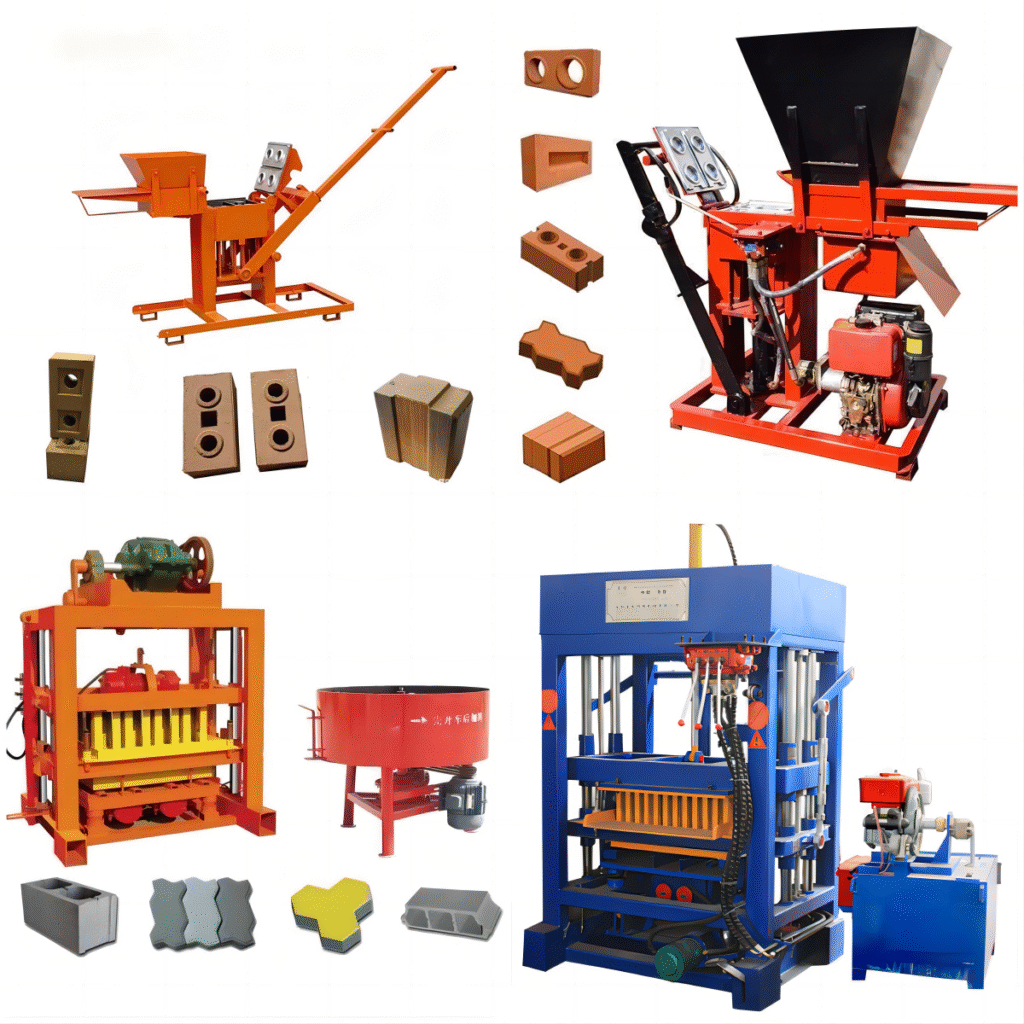
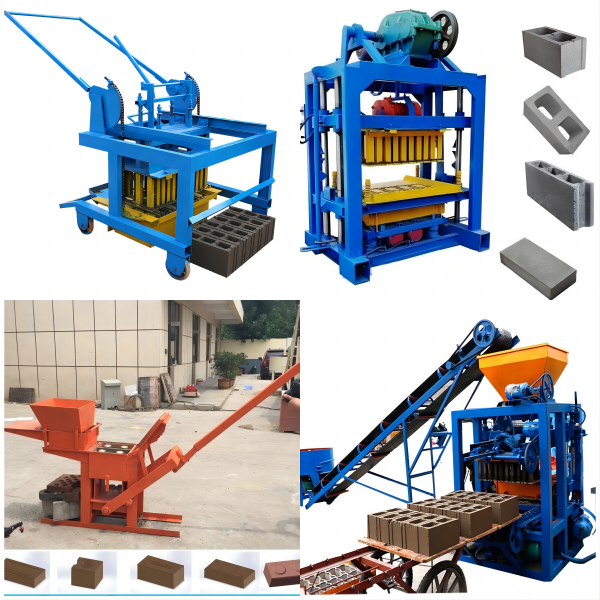
Sashin na'urorin da ake iya biyan su ya ƙunshi nau'ikan fasaha iri-iri, kowannensu ya dace da nau'ikan albarkatu da ma'auni na samarwa daban-daban.
- Matsi na Hannu da Matsi na Rago-da-kai:Waɗannan su ne ginshiƙan shiga cikin masana'antar yin bulo mai arha da kima. Suna buƙatar ƙarin aikin hannu don ciyarwa da saukar da kaya amma suna amfani da injin latsawa mai ƙarfi ko na ruwa don samar da bulo mai yawan ƙima da daidaituwa. Suna da sassauci sosai, suna iya samar da bulo mai ƙarfi, maras zurfi, da kuma haɗin kai daga kayan aiki daban-daban.
- Injin Rike Tsarin Tubalan na Ruwa:Mataki na ci gaba a sarrafa kai, waɗannan injinan suna amfani da matsi mai dorewa na hydraulic don matsawa albarkatun ƙasa zuwa gyare-gyare. Wannan yana haifar da bulo da tubalan da suka fi ƙarfi da daidaito. Samfuran da ba su da tsada a cikin wannan kewayon sau da yawa suna fasalta masu sarrafa dabaru masu shirye-shirye (PLCs) don ayyuka na asali, suna haɓaka fitarwa tare da matsakaicin saka hannun jari.
- Na'urorin Yin Tubalin na Wayar Hannu: A uniquely valuable category, these compact, often trailer-mounted units can be transported directly to construction sites. They utilize locally available soil or other aggregates to produce bricks on-demand, eliminating transport costs for the end-user. This model presents a highly attractive “business-in-a-box” solution for dealers to offer their clients.
- Raw Material Flexibility: A key strength of these machines is their adaptability. They are designed to work with:
- Yumbu Traditional material, often fired in kilns.
- Kankare: A mixture of cement, sand, and aggregate, cured by hydration.
- Kurar Fly Ash: An eco-friendly alternative using industrial by-product, contributing to sustainable construction.
- Compressed Earth: Stabilized with a small amount of cement, ideal for low-cost housing.
Strategic Advantages for Distributors and Procurement Agents
High Margin Potential with Competitive Pricing
The primary advantage is the significant margin structure enabled by competitive factory pricing. Sourcing directly from manufacturers allows intermediaries to maintain healthy profits while still offering market-beating prices to their downstream clients. This price advantage is a powerful tool for market penetration and competition.
Addressing a Massive and Growing Market Demand
Urbanization, infrastructure development, and the need for affordable housing across emerging economies create an insatiable demand for basic building materials. Affordable machinery empowers local entrepreneurs to meet this demand, creating a virtuous cycle. As a distributor, you are supplying the very tool that fuels this sector.
Low Barrier to Entry for End-Clients, Expanding Your Customer Base
By offering machinery that requires a manageable initial investment, you effectively expand your potential clientele from large industrial players to include individual entrepreneurs, community cooperatives, and small construction firms. This diversification mitigates business risk.
After-Sales Services as a Revenue Stream
The machinery relationship does not end at the sale. Providing spare parts, wear parts (like molds and pallets), technical support, and maintenance contracts creates a recurring revenue stream and strengthens client loyalty. Building a reputation for reliable after-sales support is a critical differentiator.
Navigating the Procurement Process: A Guide for B2B Buyers
Identifying Reputable Manufacturers
Due diligence is crucial. Beyond online portals, consider visiting major industrial exhibitions in China focused on construction machinery. Verify business licenses, inspect factory audit reports, and prioritize manufacturers with a track record of exporting to your target regions. Request and contact references from existing international clients.
Critical Technical and Commercial Evaluation Points
- Ƙarfin Samarwa & Lokacin Zagayowar Understand output in bricks per hour/day under standard conditions.
- Bukatar Wutar Lantarki: Ensure the machine’s specifications match the common voltage and phase in your target market.
- Build Quality & Key Components: Inspect the quality of steel, the robustness of the hydraulic system, and the brand reputation of critical components like pumps and PLCs, even in affordable models.
- Mold Customization: The ability to supply or customize molds for different block sizes and designs adds tremendous value to your offering.
- Packaging for Export: Ensure the supplier has experience in export-standard packaging (wooden crates, seaworthy) to prevent transit damage.
- Payment Terms and Minimum Order Quantity (MOQ): Negotiate terms that balance risk and cash flow. Start with smaller orders to validate quality before scaling up.
The Importance of Comprehensive Supplier Agreements
A clear contract should cover technical specifications, delivery timelines (Incoterms), payment schedules, warranty terms (typically 12-18 months for core parts), and protocols for handling defective goods. Intellectual property rights for any custom designs should also be clarified.
Ƙarshe
The sector of affordably priced brick manufacturing machinery from China presents a formidable and timely opportunity for distributors, dealers, and global procurement agents. It is a segment defined not by compromise, but by strategic value engineering, delivering the essential reliability and productivity needed to activate small and medium enterprises worldwide. By understanding the technology spectrum, recognizing the vast addressable market, and mastering the intricacies of selective sourcing and partnership building, intermediaries can build a highly profitable and impactful business line. Success in this field hinges on moving beyond a simple import-export model to becoming a value-added partner, providing not just equipment, but complete solutions encompassing machine selection, technical support, and parts supply. In doing so, you position your business at the forefront of empowering local construction industries and contributing to global infrastructure development.
FAQ
Q1: What is the typical price range for an affordable brick-making machine from China?
Prices vary significantly based on type, automation level, and output. Small manual machines can start from a few thousand dollars, semi-automatic hydraulic presses may range from $10,000 to $30,000, and more advanced stationary hydraulic lines can be $40,000 to $80,000. Accurate pricing requires specifying output capacity and configuration.
Q2: How do I ensure the machine quality without a physical pre-shipment inspection?
Always request a Factory Acceptance Test (FAT) conducted via live video stream. Reputable suppliers will demonstrate the machine’s operation, test its functions, and allow you to verify the production of sample bricks remotely. Third-party inspection services are also a valuable option for larger orders.
Q3: What are the common challenges with installation and commissioning, and how are they addressed?
Challenges can include incorrect assembly, electrical connection issues, or parameter setting errors. Reliable suppliers provide detailed installation manuals, video guides, and remote video support via platforms like Zoom or WhatsApp. For complex lines, on-site technician dispatch can be negotiated, though it adds to cost.
Q4: What is the lead time for orders, and what shipping methods are used?
Lead times range from 15-30 days for standard models to 45-90 days for customized or high-capacity lines. Shipping is typically via sea freight (LCL or FCL) for the machine and air freight for urgent spare parts. The supplier should handle export formalities and provide all necessary shipping documents.
Q5: How vital is mold availability and customization?
Molds are consumable parts and a critical source of recurring revenue. Partnering with a supplier who can quickly provide high-quality, durable replacement molds and offer customization for local block specifications is a major competitive advantage. Ensure they have in-house mold design and manufacturing capability.
Q6: What after-sales support should I expect from the manufacturer?
Minimum support includes comprehensive operation and maintenance manuals, electrical diagrams, and a parts catalog. Expect a warranty (e.g., 12 months for core components) and access to technical support for troubleshooting. Clarify response times for support queries and the availability of a readily accessible spare parts inventory.