Iqtisodiy G'isht Tayyorlash Mashinalari Landshafti
"Arzon" segmentini aniqlash
Ushbu kontekstda "arzon" atamasi past sifat yoki cheklangan foydalanishni anglatmaydi. Buning o'rniga, u aqlli dizayn, samarali ishlab chiqarish jarayonlari va masshtab iqtisodiyotini ustuvor qo'yib, ajoyib qimmatni taklif qiladigan mashina bozorining bir segmentini bildiradi. Ushbu mashinalar asosiy funktsiyalarni yuqori ishonchlilik bilan bajarish uchun yaratilgan bo'lib, ko'pincha murakkablik va xarajatlarni kamaytirish uchun ilg'av avtomatlashtirish o'rniga mustahkam yarim avtomatik yoki to'liq qo'lda boshqaruvni soddalashtiradi. Ular kichik va o'rta biznes vakillari, mahalliy qurilish loyihalari va boshlang'ich kapital qo'yilimi hal qiluvchi omil bo'lgan bozorlarni nishonlaydi. Diler uchun bu kengroq va kirish imkoniyati yuqori bo'lgan mijozlar bazasi va tezroq tovar aylanmasiga ega mahsulotni anglatadi.
Asosiy Texnologiyalar va Mashina Tipologiyalari
Arzon mashinalar segmenti turli xom ashyolar va ishlab chiqarish hajmlariga mos keladigan keng texnologiyalar turlarini o'z ichiga oladi.
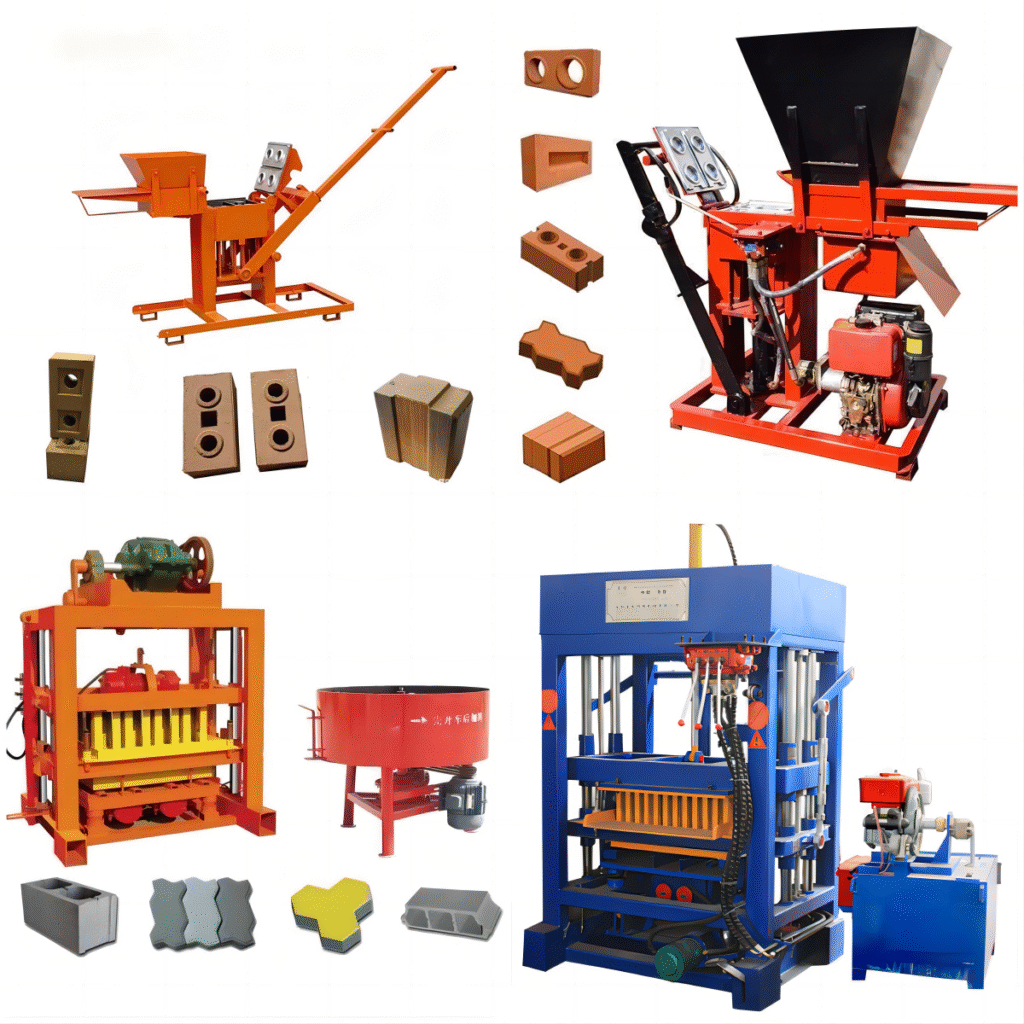
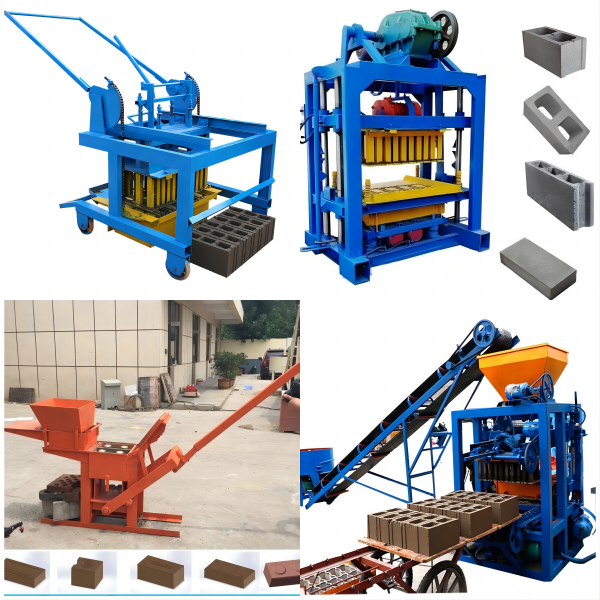
- Qo'lda va Yarim Avtomat Presslar:Ular g'isht ishlab chiqarishga arzon va yuqori qiymatli kirishning asosidir. Ular yuklash va tushirishda ko'proq qo'l mehnatini talab qiladi, lekin yuqori zichlik va bir xillikdagi g'ishtlarni shakllantirish uchun kuchli mexanik yoki gidravlik pressdan foydalanadi. Ular juda ko'p qirrali bo'lib, turli materiallardan qattiq, ichi bo'sh va o'zaro bog'lanadigan g'ishtlarni ishlab chiqara oladi.
- Gidravlik blok shakllantirish mashinalari:Avtomatlashtirishda bir qadam yuqoriga, bu mashinalar xom ashyani qoliplarga siqish uchun doimiy gidravlik bosimdan foydalanadi. Bu kuch va izchillik jihatidan yuqori sifatli g'isht va bloklarni beradi. Ushbu diapazondagi arzon modellar ko'pincha asosiy operatsiyalar uchun dasturlanadigan mantiqiy kontrollerlar (PLC) bilan jihozlangan bo'lib, o'rtacha investitsiya bilan mahsulotni oshiradi.
- Mobil G'isht Tayyorlash Mashinalari:Ushbu noyob qimmatli toifadagi ixcham, ko'pincha treylerlarga o'rnatilgan qurilmalar to'g'ridan-to'g'ri qurilish maydonchalariga olib borilishi mumkin. Ular mahalliy mavjud tuproq yoki boshqa agregatlardan foydalangan holda g'ishtlarni talabga asosan ishlab chiqaradi, bu esa yakuniy foydalanuvchi uchun tashish xarajatlarini yo'q qiladi. Ushbu model dilerlar o'z mijozlariga taklif qilishlari uchun juda jozibador "qutidagi biznes" yechimini taqdim etadi.
- Xom ashyo moslashuvchanligi:Ushbu mashinalarning asosiy kuchi ularning moslashuvchanligidadir. Ular quyidagilar bilan ishlash uchun mo'ljallangan:
- LoyAn'anaviy material, ko'pincha pechlarda pishiriladi.
- Beton: A mixture of cement, sand, and aggregate, cured by hydration.
- Uchgan kul: An eco-friendly alternative using industrial by-product, contributing to sustainable construction.
- Compressed Earth: Stabilized with a small amount of cement, ideal for low-cost housing.
Strategic Advantages for Distributors and Procurement Agents
High Margin Potential with Competitive Pricing
The primary advantage is the significant margin structure enabled by competitive factory pricing. Sourcing directly from manufacturers allows intermediaries to maintain healthy profits while still offering market-beating prices to their downstream clients. This price advantage is a powerful tool for market penetration and competition.
Addressing a Massive and Growing Market Demand
Urbanization, infrastructure development, and the need for affordable housing across emerging economies create an insatiable demand for basic building materials. Affordable machinery empowers local entrepreneurs to meet this demand, creating a virtuous cycle. As a distributor, you are supplying the very tool that fuels this sector.
Low Barrier to Entry for End-Clients, Expanding Your Customer Base
By offering machinery that requires a manageable initial investment, you effectively expand your potential clientele from large industrial players to include individual entrepreneurs, community cooperatives, and small construction firms. This diversification mitigates business risk.
After-Sales Services as a Revenue Stream
The machinery relationship does not end at the sale. Providing spare parts, wear parts (like molds and pallets), technical support, and maintenance contracts creates a recurring revenue stream and strengthens client loyalty. Building a reputation for reliable after-sales support is a critical differentiator.
Navigating the Procurement Process: A Guide for B2B Buyers
Identifying Reputable Manufacturers
Due diligence is crucial. Beyond online portals, consider visiting major industrial exhibitions in China focused on construction machinery. Verify business licenses, inspect factory audit reports, and prioritize manufacturers with a track record of exporting to your target regions. Request and contact references from existing international clients.
Critical Technical and Commercial Evaluation Points
- Ishlab chiqarish quvvati va tsikl vaqti: Understand output in bricks per hour/day under standard conditions.
- Quvvat talablari: Ensure the machine’s specifications match the common voltage and phase in your target market.
- Build Quality & Key Components: Inspect the quality of steel, the robustness of the hydraulic system, and the brand reputation of critical components like pumps and PLCs, even in affordable models.
- Qoliplarni moslashtirish: The ability to supply or customize molds for different block sizes and designs adds tremendous value to your offering.
- Packaging for Export: Ensure the supplier has experience in export-standard packaging (wooden crates, seaworthy) to prevent transit damage.
- Payment Terms and Minimum Order Quantity (MOQ): Negotiate terms that balance risk and cash flow. Start with smaller orders to validate quality before scaling up.
The Importance of Comprehensive Supplier Agreements
A clear contract should cover technical specifications, delivery timelines (Incoterms), payment schedules, warranty terms (typically 12-18 months for core parts), and protocols for handling defective goods. Intellectual property rights for any custom designs should also be clarified.
Xulosa
The sector of affordably priced brick manufacturing machinery from China presents a formidable and timely opportunity for distributors, dealers, and global procurement agents. It is a segment defined not by compromise, but by strategic value engineering, delivering the essential reliability and productivity needed to activate small and medium enterprises worldwide. By understanding the technology spectrum, recognizing the vast addressable market, and mastering the intricacies of selective sourcing and partnership building, intermediaries can build a highly profitable and impactful business line. Success in this field hinges on moving beyond a simple import-export model to becoming a value-added partner, providing not just equipment, but complete solutions encompassing machine selection, technical support, and parts supply. In doing so, you position your business at the forefront of empowering local construction industries and contributing to global infrastructure development.
FAQ
Q1: What is the typical price range for an affordable brick-making machine from China?
Prices vary significantly based on type, automation level, and output. Small manual machines can start from a few thousand dollars, semi-automatic hydraulic presses may range from $10,000 to $30,000, and more advanced stationary hydraulic lines can be $40,000 to $80,000. Accurate pricing requires specifying output capacity and configuration.
Q2: How do I ensure the machine quality without a physical pre-shipment inspection?
Always request a Factory Acceptance Test (FAT) conducted via live video stream. Reputable suppliers will demonstrate the machine’s operation, test its functions, and allow you to verify the production of sample bricks remotely. Third-party inspection services are also a valuable option for larger orders.
Q3: What are the common challenges with installation and commissioning, and how are they addressed?
Challenges can include incorrect assembly, electrical connection issues, or parameter setting errors. Reliable suppliers provide detailed installation manuals, video guides, and remote video support via platforms like Zoom or WhatsApp. For complex lines, on-site technician dispatch can be negotiated, though it adds to cost.
Q4: What is the lead time for orders, and what shipping methods are used?
Lead times range from 15-30 days for standard models to 45-90 days for customized or high-capacity lines. Shipping is typically via sea freight (LCL or FCL) for the machine and air freight for urgent spare parts. The supplier should handle export formalities and provide all necessary shipping documents.
Q5: How vital is mold availability and customization?
Molds are consumable parts and a critical source of recurring revenue. Partnering with a supplier who can quickly provide high-quality, durable replacement molds and offer customization for local block specifications is a major competitive advantage. Ensure they have in-house mold design and manufacturing capability.
Q6: What after-sales support should I expect from the manufacturer?
Minimum support includes comprehensive operation and maintenance manuals, electrical diagrams, and a parts catalog. Expect a warranty (e.g., 12 months for core components) and access to technical support for troubleshooting. Clarify response times for support queries and the availability of a readily accessible spare parts inventory.