
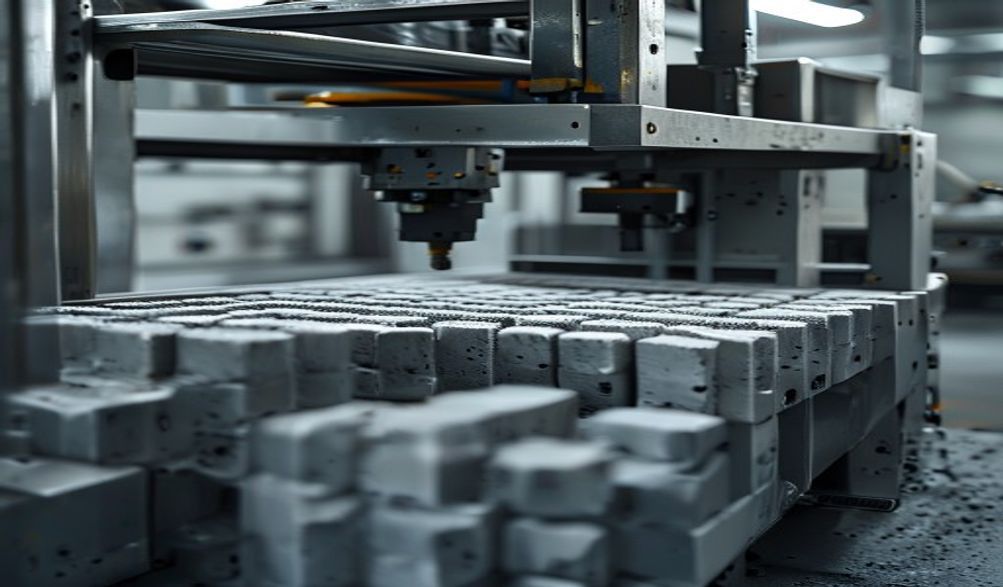
Yadda ake Zaɓar Injin Kera Bulogi da Tubali: Jagorar Mai Siyan Masana na 2026
Gabatarwa
Zabin na’urar keɓaɓɓiyar tubali da bulo ba siyayya ce kawai ba; babban saka hannun jari ne a gaban kasuwancin gine-ginenku ko ayyukanku. Na’urar da ta dace ta zama injin ribarku, tana tabbatar da ingancin samfur, ingancin aiki, da ikon ku na biyan buƙatun abokan hulɗa. Amma zaɓin mara kyau na iya haifar da raguwar aiki mai ta’azzara, samfur mara daidaito, da cin gajiyar arziƙi mai ɓata rai.
Fahimtar wannan shawarar na iya zama abin rudani. Tsakanin kalmomin fasaha, nau'ikan samfura masu yawa, da farashin da ya kai daga 'yan dubunnan zuwa dubunnan daruruwan daloli, yana da sauƙi ka rasa hanya. Wannan jagorar ta rage wannan rikitarwa. An tattara shi daga ƙwarewar masana'antu na tsawon shekaru, fahimtar injiniyanci, da nazarin kasuwa na yanzu, manufarmu ita ce samar muku da shawarwari masu amintattu da aiki.
Za mu bayyana tsarin, tare da rarraba shi.yadda za a zabi injin yin tubalin buloa cikin matakai masu bayyanawa da ma'ana. A ƙarshen, za ku sami tsari mai ɗaukar hoto don tantance buƙatun ku, kwatanta zaɓuɓɓuka, kuma zaɓi injin da zai ba da amfani na dogon lokaci kuma ya haɓaka nasarar ku na shekaru masu zuwa.
Fahimtar Bukatun Ku Na Asali: Tushen Zabin Ku
Kafin ka duba ko da takardar bayanin na'ura guda ɗaya, dole ne ka duba ciki. Kayayyakin da kake da su na musamman sune tushen da ba za a iya sasantawa ba don wannan yanke shawara. Tsallake wannan mataki shine kuskuren da ya fi yawa kuma mai tsada da masu siye ke yi.
Girman Aikin & Bukatun Samar da Aiki Kullum
Bukatar abin da kake son samarwa yana ƙayyade girman na'urar da farashinta. Ka kasance mai gaskiya da tsauri.
- Ɗauki Fitowar Da Ake BukataKada ku yi zato. Nawa ne bulo ko tubalan da kuke buƙata a kowace rana don cika umarninku ko tsarin aikin ku? Ƙididdige wani rufe don ci gaba.
- Fassara Matsayin Aikinka:
- Ƙananan Sikelin / Farawa:Har zuwa guda 1,000 na bulo a kowace rana. Sau da yawa na’ura mai sarrafa kanta ko kuma wani wuri na hannu.
- Kasuwancin Matsakaici / Kasuwancin Ci Gaba:Kayan gini 1,000 zuwa 10,000 a kowace rana. Galibi na'urorin da ke aiki da rabin sarrafa kai ko kuma cikakkiyar sarrafa kai.
- Masana'antu Maɗaukaki: 10,000+ blocks per day. Requires high-end, fully automatic production lines with palletizing systems.
Types of Blocks & Bricks You Plan to Produce
The product defines the process. Machine capabilities vary widely.
- Nau'ikan Samfura na Gama Gari: Solid concrete blocks, hollow blocks (varying cavity percentages), interlocking blocks (for dry-stack construction), paving slabs, fly ash bricks, and compressed earth blocks (CEB).
- Critical Specifications: Know your required final dimensions, compressive strength (density), and surface finish quality. A machine perfect for rough hollow blocks may be unsuitable for smooth-faced paving stones.
Kayan Aiki Masu Samuwa
Your local materials are a key design constraint. The machine must be engineered to handle them effectively.
- Material Types: Portland cement, aggregates (crushed stone, gravel), sand, industrial by-products (fly ash, slag), or soil (for CEB machines).
- Machine-Material Fit: The properties of your mix—particle size, moisture content, cohesiveness—directly influence the required machine technology. For example:
- A stiff, low-slump concrete mix needs high vibration frequency and pressure.
- Soil for CEB requires immense static compression with little to no vibration.
Types of Block Making Machines: Mechanisms and Applications
Now, with your needs defined, we explore the solutions. Understanding these categories demonstrates the core technologies available.
Na'ura ta Hannu, Na'ura Mai Sarrafa Kansa, da Na'ura Mai Sarrafa Kansa Gabaɗaya
This spectrum balances capital investment with labor costs and output.
- Na'urorin Hannu: Operated entirely by hand (filling, compacting, ejecting). Very low cost but low output and labor-intensive. Ideal for micro-enterprises or very remote locations with no power.
- Matsin Injin Mai Ƙaramin Gudanarwa: The sweet spot for many. Key processes like vibration and compression are powered, but mold filling and block removal may be manual. Offers excellent balance of output (500-3,000 blocks/day), affordability, and flexibility.
- Matsarori Masu Sarrafa Kansu Gabaɗaya: Entire process is automated via PLC controls. High output (5,000-20,000+ blocks/day), consistent quality, and minimal labor. Highest upfront cost and requires stable power and more technical oversight.
Matsar da Injin Kera Tubali (Stationary vs. Mobile Block Making Machines)
This is about the location of your production.
- Injinon Ƙayyadaddun Wuri: Installed in a fixed factory setting. They require a solid foundation and are part of a production line (mixer, conveyor, curing area). They offer the highest stability, precision, and output for centralized production.
- Mobile Block Machines (e.g., “Egg-Laying” Types): These machines produce blocks directly on the ground at the construction site, moving as they go. They eliminate block transportation costs. Ideal for large, on-site projects like housing developments or perimeter walls. Output is generally lower than high-end stationary models.
Key Operating Principles: Vibration & Compression
These are the core physics that form a strong block.
- Girgiza: High-frequency vibration tables are used to consolidate the concrete mix, removing air pockets and ensuring the mold is completely filled. This is critical for density and strength.
- Matsawa. Hydraulic rams apply immense pressure (measured in tons or kN) to the mix, further compacting it. In some machines (like CEB presses), compression is the primary forming force. The combination of optimal vibration and pressure is what creates a high-quality, dimensionally accurate block.
Mahimman Ƙayyadaddun Fasaha Don Bincika
With a shortlist of machine types, you must now scrutinize the technical details. This is where authoritative knowledge separates good buys from bad ones.
Cycle Time and Production Capacity
Beware of optimistic “blocks per hour” claims.
- Lokacin Zagayowar: This is the total time to fill, compact, mold, and eject one batch of blocks. A shorter cycle time means higher potential output.
- Realistic Capacity: Manufacturer claims often assume perfect conditions. Deduct 15-20% for real-world factors like mold changes, maintenance breaks, and material handling. Always ask for the proven, sustainable daily output.
Mold Customization and Changeover Flexibility
Your ability to adapt to market demands hinges on this.
- Matsalolin da ake iya musanya: Ensure the machine supports easy mold changes to produce different block types (e.g., switching from a 4″ hollow block mold to a paving stone mold).
- Changeover Time: How long does it take? A complex, 4-hour process kills productivity. Look for systems with quick-clamp or bolt-on mold designs.
- Ingancin Ƙirƙira: Molds are wear items. Check the steel grade and hardening process. Cheap molds wear quickly, leading to out-of-spec blocks.
Machine Power and Energy Consumption
Understand the long-term operational costs.
- Tushen Wutar Lantarki: Electric motors are cleaner and quieter for fixed plants. Diesel engines offer independence from the grid for mobile or remote operations.
- Total Connected Load: Calculate the total kW requirement of the machine, mixer, and conveyors. Ensure your site’s electrical infrastructure can support it.
- Ingantaccen Amfani da Makamashi: A machine with a well-designed hydraulic system will use less power per block, saving significant money over its lifetime.
Key Components Quality
The brand and quality of core components are a proxy for machine longevity.
- Tsari & Tsarin: Look for heavy-duty, welded steel construction, not bolted light-gauge metal.
- Tsarin Hydraulic: Reputable pump, valve, and cylinder brands (e.g., Bosch Rexroth, Parker, Yuken) are a good sign. Ask about hydraulic oil cooling.
- Tsarin Girgiza: Enclosed, oil-bath vibrator motors last longer than exposed ones. Check the bearing quality.
- Tsarin Gudanarwa: For automatic machines, a user-friendly PLC (Programmable Logic Controller) from a known brand (Siemens, Mitsubishi, Allen-Bradley) ensures reliability and easier troubleshooting.
Beyond the Machine: Total Cost of Ownership & Supplier Viability
The cheapest machine can become the most expensive. True trustworthiness comes from planning for the entire machine lifecycle.
Analyzing Initial Cost vs. Long-Term Value
The purchase price is just the entry ticket.
- Hidden Initial Costs: Factor in shipping, import duties (if applicable), installation, commissioning, and operator training.
- Operational & Maintenance Costs: Budget for spare parts (molds, springs, hydraulic seals), regular lubrication, and preventive maintenance. A machine with 30% lower parts costs over 5 years is a better value than a slightly cheaper competitor.
The Importance of After-Sales Service & Technical Support
When the machine stops, your business stops. Support is not an add-on; it’s a core part of the purchase.
- Availability: Are there service engineers in your region? What is the average response time?
- Documentation: Clear operation and maintenance manuals in your language are essential.
- Horarwa: Does the supplier offer comprehensive training for your operators and maintenance staff?
- Warranty: Scrutinize the terms. What is covered (parts, labor)? For how long? What voids it?
Verifying Supplier & Manufacturer Credentials
Do your due diligence on the company behind the machine.
- Tarihin Kamfani How long have they been in business? A long track record generally indicates stability.
- Client Portfolio & References: Ask for contact information for past clients in a similar situation to yours. Call them.
- Factory Visit or Live Demo: If possible, visit the factory to see build quality. At minimum, insist on a live video demonstration of the exact model you’re considering, producing blocks from raw material.
A Step-by-Step Decision Framework
Let’s synthesize everything into a practical, actionable plan. Follow these steps methodically.
- Define: Document your core requirements from Section 1: production volume, product types, and raw materials.
- Shortlist: Based on your definition, identify 2-3 suitable machine types (e.g., semi-automatic stationary, fully automatic mobile) from Section 2.
- Compare: Obtain technical specs for specific models from different suppliers. Compare them head-to-head using the criteria in Section 3 (cycle time, mold system, component brands).
- Request: Get detailed, written quotes from at least three shortlisted suppliers. Ensure they include ALL costs: machine, shipping, installation, and initial spare parts kit.
- Evaluate: Vet the suppliers as outlined in Section 4. Check references, review warranty and support contracts, and negotiate final terms.
- Make: Finalize your decision based on the best total value, not just the lowest price. Proceed with confidence.
Tambayoyin da ake yawan yi (FAQ)
Q: What is the average cost of a block making machine?
A: There is no single “average.” Prices range from around $3,000 for a basic manual machine to over $300,000 for a high-capacity, fully automatic production line. The right question is: “What is the long-term value and return on investment for a machine that meets my specific needs?”
Q: Can one machine produce different types of blocks and bricks?
A: Yes, most machines can, but with a crucial caveat: you need interchangeable molds. The ease and speed of changing molds varies greatly. Semi-automatic machines may take 30 minutes, while advanced automatics might change over in 5-10 minutes.
Q: How much space and what foundation is needed for the machine?
A: It varies by size. A small semi-automatic machine might need a 10m x 10m covered area with a 150mm thick reinforced concrete floor. Large stationary lines require a full factory building with a very strong, perfectly level foundation (often 300mm+ thick concrete). Always follow the manufacturer’s foundation drawing precisely.
Q: What are the most common maintenance issues?
A: Wear and tear on consumable parts is most common: mold liners wearing out, hydraulic hose or seal failures, springs losing tension, and vibrator motor bearings failing. The #1 prevention is diligent daily cleaning and lubrication as per the manual.
Q: Is it better to buy a new or used block making machine?
A: For most buyers, new is safer. You get the latest technology, a full warranty, and manufacturer support. Buying used can offer savings but carries risks: hidden wear, obsolete controls, and no support. Only consider used equipment if you are mechanically expert or can hire an independent technician for a thorough inspection.
Ƙarshe
Choosing the right block making machine is a strategic decision that balances your unique production needs, financial constraints, and a partnership with a reliable supplier. It’s an investment that deserves careful due diligence.
We encourage you to use the framework and insights in this guide as your roadmap. Take your time, ask detailed questions, and verify every claim. The effort you put into research now will pay dividends for years to come.
Your logical next step is to begin applying this knowledge. Define your requirements clearly, then reach out to reputable suppliers with those specifics in hand. Request detailed catalogs and quotations for comparison.
Making a well-informed choice leads to a powerful outcome: an efficient, profitable production line that consistently delivers high-quality blocks, building the foundation for your success, one brick at a time.
<