
Endikatè Ekonomik ak Modèl Kwasans Konstriksyon
Sektè konstriksyon Kenya te kenbe yon to kwasans anyèl mwayèn 6-8% pandan senk dènye ane yo, ki depase konsiderableman ekspansyon ekonomik jeneral la. Trajektwa kwasans sa a baze sou plizyè faktè kle, tankou kwasans popilasyon ki depase 2% chak ane, to ibanizasyon ki monte pi wo pase 4% chak ane, ak envestisman gouvènman an kontinye nan devlopman enfrastrikti. Pwogram lojman abòdab la, yon poto nan Aganda Kat Gwo Pwen Kenya, vize bay plis pase 500,000 inite lojman, sa ki kreye yon demann konsiderab pou materyèl konstriksyon estanda. An menm tan, pwojè enfrastrikti transpò, ki gen ladan Nairobi Expressway, ekstansyon Standard Gauge Railway, ak anpil inisyativ pou amelyore wout, mande pou apwovizyone regilye nan blòk kalite ak materyèl pou pave. Devlopman makwo nivo sa yo kreye yon anviwònman favorab pou founisè ekipman masonri, byenke penetrasyon mache siksè mande pou konprann varyasyon rejyonal nuanse ak segmentasyon kliyan yo.
Anviwònman Regilasyon ak Egzijans Konfòmite
Mache Kenya a ap fonksyone nan yon kad règleman de pli zan pli estriktire ki enfliyanse anpil spesifikasyon ekipman yo ak operasyon biznis yo. Otorite Nasyonal Konstriksyon an (NCA) oblige enskripsyon ak klasifikasyon pwofesyonèl konstriksyon yo ak antrepriz yo, sa ki kreye estanda kalite ki desann jiska founisè materyèl yo. Biwo Estanda Kenya a (KEBS) aplike sètifikasyon pwodwi atravè mak estandadizasyon, sitou pou materyèl yo itilize nan pwojè gouvènman an. Règleman anviwònman yo, ki administre pa Otorite Jesyon Anviwònman Nasyonal la (NEMA), de pli zan pli restriksyon metòd tradisyonèl pwodiksyon brik ajil yo, ankouraje adopsyon teknoloji altènatif ki itilize materyèl dirab tankou sann vole ak pousyè wòch. Dènye amandman nan kòd bilding yo mete aksan sou rezistans tranblemanntè nan sèten rejyon, ki egzije dimansyon blòk presi ak fòs konpresif konsistan ke sèlman ekipman bon jan kalite ka garanti. Konprann faktè règleman sa yo esansyèl pou pozisyone ekipman ki pèmèt konfòmite ak aksè nan mache a.
Espesifikasyon Teknik ak Konsiderasyon Operasyonèl
Sistèm Pouvwa ak Adaptasyon Enèji
Enfrastrikti pouvwa divès Kenya a mande yon konsiderasyon atansyon pou kondisyon enèji ekipman yo atravè diferan kontèks operasyonèl. Pandan ke gwo vil tankou Nairobi ak Mombasa benefisye de yon pouvwa rezo relativman estab, zòn riral ak periferik yo sibi souvan fluktuasyon ak koup kouran. Konfigirasyon ekipman ki reyisi yo anjeneral enkli plizyè opsyon pouvwa, tankou:
- Kapasite koneksyon rezo twa faz (400V/50Hz)
- Konpatibilite jeneratè entegre ak switch transfè otomatik
- Desen ki ekonomize enèji ki prezante kondwi frekans varyab
- Opsyon ibrid solè pou operasyon aleka
Machin ki konsome ant 15 ak 75 kWh montre yon ekonomi operasyonèl optimal, ki balanse kapasite pwodiksyon ak depans enèji ki mwayèn ant 15 ak 20 KES pou chak kWh pou konsomatè endistriyèl. Ekipman ki gen faktè koreksyon pouvwa ak sistèm pwoteksyon kont chòk elektrik gen pi ba to echèk ak depans antretyen.
Kapasite Pwodiksyon ak Optimizasyon Pwodiksyon
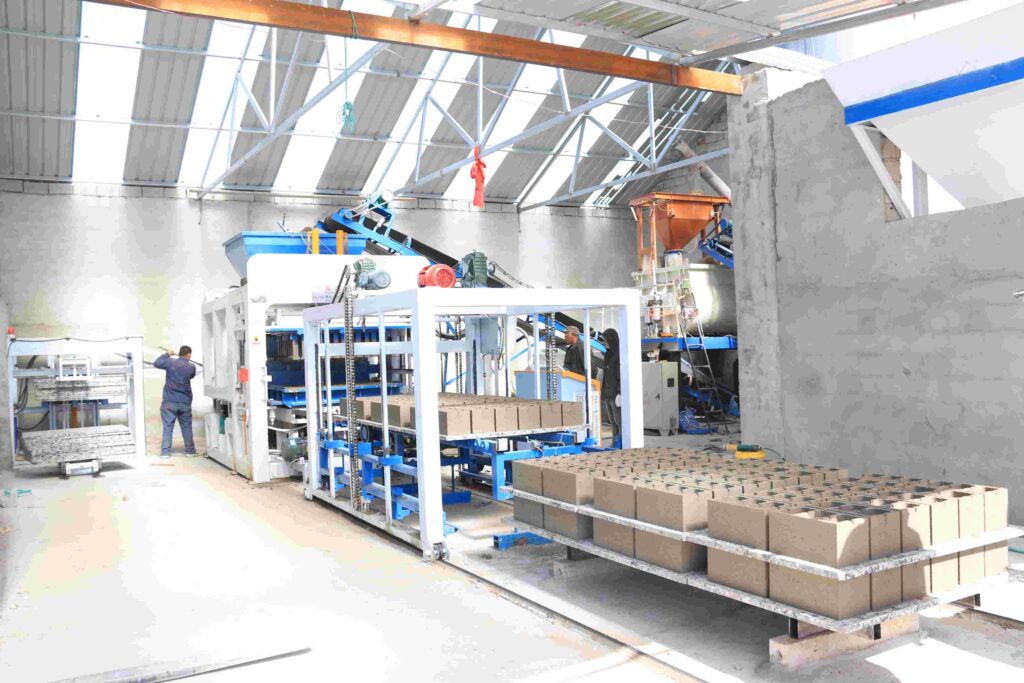
Analiz mache a revele diferan nivo pwodiksyon ki koresponn ak diferan modèl biznis ak nivo envestisman. Machin manchèl ak semi-otomatik pou debitan, ki pwodui ant 800 ak 3,000 blok pa jou, sèvi ti kontraktè ak antreprenè endividyèl, anjeneral ki bezwen ant 3 ak 6 operatè. Ekipman otomatik mwayen, ki pwodui ant 3,000 ak 12,000 blok chak jou, vize pou chantye blok etabli ak konpayi konstriksyon ki ap apwovizyone plizyè pwojè, souvan opere ak ant 2 ak 4 moun. Plant gran kapasite konplètman otomatik ki depase 12,000 blok pa ekip vize pou pwodiktè endistriyèl ki sèvi gwo pwojè enfrastrikti ak mache ekspòtasyon, souvan enkòpore manyen robotik ak kontwòl kalite konputerize. Founisè ekipman ki gen plis siksè ofri konsepsyon modilè ki pèmèt ogmantasyon kapasite pandan biznis yo ap grandi, sa ki pwoteje envestisman inisyal yo pandan y ap sipòte wout kwasans yo.
Devlopman Rezo Distribisyon ak Penetrasyon sou Mache
Channel Partner Selection and Management
Building effective distribution channels requires systematic evaluation of potential partners across multiple criteria. Successful market entrants typically implement a phased approach beginning with strategic partners in Nairobi and Mombasa before expanding to secondary markets in Kisumu, Nakuru, and Eldoret. Key selection parameters include:
- Demonstrated technical capability and workshop facilities
- Financial stability and creditworthiness
- Existing customer relationships and market reputation
- Service delivery capacity and spare parts management
- Alignment with supplier quality standards and business ethics
Structured partner agreements should clearly define performance expectations, territorial rights, support responsibilities, and exit clauses while allowing flexibility for local market adaptations.
After-Sales Service Infrastructure and Support Systems
The development of robust after-sales support capabilities represents a critical competitive differentiator in the Kenyan market. Service network planning must account for geographic challenges and infrastructure limitations, with strategic placement of service centers within 4-8 hours of major customer concentrations. Comprehensive support systems typically include:
- Central spare parts depot in Nairobi with regional satellite inventories
- Mobile service units equipped for on-site repairs and maintenance
- Technical hotline with multilingual support capacity
- Preventive maintenance contracts with guaranteed response times
- Operator training programs conducted quarterly
Implementation of digital platforms for service request management, parts ordering, and technician dispatch significantly improves service efficiency and customer satisfaction metrics.
Strategic Market Positioning and Competitive Analysis
Value Proposition Development and Customer Education
Successful market positioning requires translating technical specifications into tangible customer benefits aligned with local business priorities. Equipment reliability must be demonstrated through performance guarantees backed by local reference cases showing minimum 85% operational availability. Return on investment calculations should incorporate local cost structures including labor rates (KES 500-1,200 daily), material costs (KES 4,000-8,000 per cubic meter of aggregate), and energy expenses. Customer education initiatives prove particularly effective when combining technical training with business development guidance, covering topics like production costing, quality management, and market identification. Demonstration centers in strategic locations provide powerful platforms for building customer confidence through hands-on experience and visible performance validation.
Financing Solutions and Market Expansion
Addressing the financing challenge dramatically expands the addressable market beyond cash purchasers. Successful suppliers typically develop multiple financing pathways including:
- Partnerships with local banks for equipment loans with 30-40% down payment
- Supplier-supported installment plans with 6-24 month terms
- Leasing arrangements through specialized financial institutions
- Microfinance linkages for small-scale entrepreneurs
- Government program alignments for affordable housing suppliers
Collaboration with development institutions like the Kenya Industrial Estates and Youth Enterprise Development Fund creates additional channels for reaching underserved market segments while supporting social development objectives.
Konklizyon
The Kenyan brick and block making machinery market presents substantial opportunities for suppliers who combine quality equipment with deep market understanding and sustainable business practices. Success requires balancing technical excellence with practical adaptability, addressing both immediate production needs and long-term business growth requirements. The convergence of infrastructure development, urbanization trends, and regulatory evolution creates favorable market conditions that will likely persist through the medium term. Equipment suppliers who invest in developing strong local partnerships, robust support infrastructure, and flexible business models will be best positioned to capitalize on these opportunities. The market’s ongoing maturation towards higher quality standards and more sophisticated production methods ensures continued demand progression from basic equipment to comprehensive production solutions. Strategic market entry and systematic expansion, guided by local intelligence and customer-centric approaches, will yield sustainable growth in this promising East African market.
Kesyon yo poze souvan (FAQ)
Q1: What are the typical installation and commissioning requirements for block making machines in Kenya?
A: Professional installation requires a level concrete foundation of specified thickness (usually 150-300mm), adequate power connection with proper earthing, and compressed air supply where applicable. Commissioning typically takes 3-5 days including machine assembly, power connection, test runs, and operator training. Suppliers generally provide detailed site preparation guidelines and conduct pre-installation inspections. Most reputable suppliers include basic installation in equipment pricing while complex foundations and special power requirements may incur additional costs.
Q2: How does equipment performance vary with Kenya’s diverse raw material qualities?
A: Equipment performance is significantly influenced by raw material characteristics including aggregate hardness, moisture content, and particle size distribution. Machines with adjustable vibration frequency (40-70 Hz) and pressure settings (100-300 kN) handle material variations most effectively. Successful operations typically implement strict material screening and consistent mix proportions. Equipment with wear-resistant components and easy adjustment mechanisms maintains better performance with variable material qualities. Most suppliers offer material testing and machine calibration services during commissioning.
Q3: What warranty and service level agreements are typical in the Kenyan market?
A: Standard warranties typically cover manufacturing defects for 12 months from commissioning, excluding wear parts and damage from improper operation. Comprehensive service agreements usually guarantee 48-hour response times for major breakdowns and include quarterly preventive maintenance visits. Emergency support contracts with 24-hour response commitments are available in major urban centers. Many suppliers offer extended warranty options covering specific components for up to 36 months, with pricing typically ranging 5-15% of equipment value annually.
Q4: How does Kenyan climate and altitude affect equipment operation and maintenance?
A: High altitude locations (1,500-2,500 meters above sea level) may require adjustments to combustion engines and compression ratios. Coastal regions with high humidity necessitate enhanced corrosion protection, particularly for electrical components and hydraulic systems. Dusty conditions in arid areas demand improved filtration systems for hydraulics and enhanced bearing protection. Equipment designed with tropicalized components, UV-resistant materials, and adequate cooling capacity demonstrates superior performance across Kenya’s diverse climatic conditions.
Q5: What training and knowledge transfer do successful equipment suppliers provide?
A: Comprehensive training programs typically include 5-7 days of initial training covering operation, routine maintenance, basic troubleshooting, and safety procedures. Advanced technical training for maintenance staff extends 10-14 days focusing on hydraulic systems, electrical controls, and mechanical adjustments. Many suppliers now offer mobile-based learning modules for ongoing skill development. Successful knowledge transfer programs combine theoretical understanding with practical hands-on experience using actual production materials, with competency assessment and certification upon completion.
