
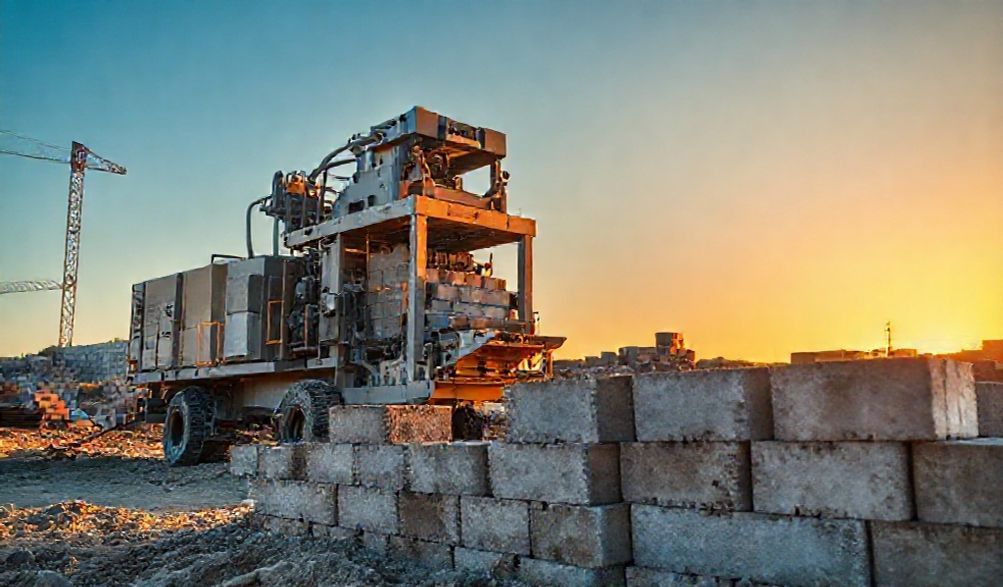
Gid Definitif pou Machin Fè Brik Mobil: Efikasite sou Teren ak Ekonomi nan Depans
Imajine w ap jere yon pwojè konstriksyon nan yon zòn izole. Bidjè a sere, delè a pi sere toujou, epi w fèk resevwa yon estimasyon pri masiv pou livrezon brik. Depans yo pa sèlman pou brik yo menm, men pou gaz la, transpò espesyalize a, ak risk pou reta ki soti nan yon chèn apwovizyònman frajil. Kounye a, imajine yon senaryo diferan. E si w te kapab pwodwi brik pwofesyonèl dwat sou sit ou a, lè l sèvi avèk materyèl lokal yo, a yon fraksyon nan pri an ak tan an? Sa a se pa yon ipotetik—se pouvwa pratik, transfòmatif yon machin mobil pou fè brik.
Pou kontraktè, bòs mason, devlopè, ak antreprenè, teknoloji sa a reprezante yon chanjman fondamantal soti nan depandans rive nan otonomi. Gid konplè sa a fèt pou sèvi kòm resous definitif ou. Nou pral eksplwate ekspètiz endistri a pou eksplore kijan plant pòtab inovatè sa yo fonksyone, dekonpoze benefis finansye ak operasyonèl endeniab yo, dekri kritè seleksyon enpòtan, epi ofri pratik pi bon aksyonab. Objektif nou se bay ou konesans pou pran yon desizyon ki enfòme ak pwofitab pou pwochè pwojè ou.
Kisa yon Machin pou Fè Brik Mobil? Redefini Pwodiksyon Sou Sit la
Nan nwayo li, yon machin pou fè brik mobil se yon plant pwodiksyon entegre, konpak ki gen wou. Li fèt pou yo ka trene oswa kondwi dirèkteman nan yon sit konstriksyon, kote li konbine pwosesis pou bay materyo anvan, melanje, moule, epi pafwa premye sechaj nan yon sèl inite mobil efikas. Kontrèman ak fason tradisyonèl pou fè brik, ki santralize ak byen lwen, teknoloji sa a pote faktori a nan materyo anvan yo ak nan pwen konsomasyon an.
Definisyon Debaz ak Mekanis
Yon machin pou fè brik mobil se yon sistèm pwodiksyon otonòm ak pòtab ki fèt pou pwodwi blòk beton, dal, oswa brik tè stabilize. Objektif prensipal li se elimine entèmedyè lojistik nan konstriksyon. Lè li mobil, li transfore nenpòt sit ki prepare ak bon materyo an yon brikri rapid, ki disponib selon bezwen. Mekanis la se yon mèvèy nan jeni pratik, ki entegre plizyè fonksyon plant fiks nan yon ankadreman ki efikas nan espas epi ki konfòme ak règleman sou wout yo.
Eleman Kle ak Kijan Yo Travay Ansanm
Konprann konpozan machin nan demistifye operasyon li. Men yon deskripsyon pati kle yo ak koule pwodiksyon an:
- Hopper:Sa se pwen antre pou materyo premyè tankou sab, agrega, ak siman.
- Miksè:Entegre oswa adjasan ak tremye a, li melanje materyòl ki sèk yo anvan yo ajoute dlo pou kreye yon melanj beton omojèn ak konsistan.
- Sistèm TranspòtèTranspòte beton melanje a soti nan melanjè a ale nan chanm moulaj la. Nan modèl ki pi senp, sa ka yon pwosesis manyèl.
- Sistèm Moulaj (Kè a):Sa se yon prez idwolik oswa mekanik ki konpakte melanj mouye a nan yon mwazi (kal) ak presyon ekstrèm. Fòm mwazi a defini brik final la (pa egzanp, solid, kre, antreloke).
- Panno Kontwòl:Entèfas operatè a pou kontwole tan melanj, vibwasyon, presyon idwolik, ak sik fòme. Nivo otomatizasyon yo varye la a.
- Inite Pouvwa:Anjeneral, se yon motè dyezèl oswa yon motè elektrik ki fè fonksyone sistèm idwolik yo ak lòt sistèm mekanik yo.
- Kad Mobilite:Yon chasi solid ak yon atach remòk ak wou solid oswa yon sistèm tras/wou ki pwòp tèt li.
Flò Pwodiksyon an nan Tèks:
Matyè premyè (Hopper) -> Melanje -> Transpòte -> Moule/Konpakte -> Ejeksyon -> Kire (sou palèt oswa atè a)
Konparezon: Plant Brik Mobil kont Estasyonè
Choosing between mobile and stationary setups depends entirely on your business model and project scope. Here’s a clear comparison:
| Feature | Mobile Brick Making Machine | Stationary Brick Plant |
| :— | :— | :— |
| Setup Time & Infrastructure | Minimal. Can be operational on a level site within hours. | Extensive. Requires permanent foundation, shelter, and utility connections. |
| Initial Capital Investment | Significantly lower. Accessible for SMEs and individual contractors. | Very high, often prohibitive for small-scale operators. |
| Operational Flexibility | Excellent. Can be moved between project sites with ease. | None. Production is fixed to a single location. |
| Ideal Project Scale | Small to medium-scale projects, remote locations, multiple sites. | Large-scale, continuous production for a wide market area. |
| Logistical Cost | Eliminates brick transport costs; may incur machine relocation cost. | High, as all finished bricks must be transported to construction sites. |
| Material Sourcing | Can use on-site or locally sourced materials, reducing cost. | Typically requires materials to be transported nan the plant. |
Top Advantages of Using a Mobile Brick Making Machine
The benefits of adopting this technology are tangible and directly impact your bottom line and project management capabilities.
Dramatic Reduction in Logistics and Transportation Costs
This is the most compelling advantage. Transporting heavy, bulky bricks over distance is expensive. Costs include:
* Fuel: For multiple heavy truckloads.
* Vehicle Wear & Tear: Increased maintenance.
* Travay Loading, unloading, and driving.
* Breakage: A percentage of bricks are often damaged in transit.
A mobile machine eliminates over 90% of these costs. You transport one machine once, instead of hundreds of truckloads of bricks.
Unmatched Flexibility and Project Adaptability
Your business is no longer geographically limited. You can:
* Accept projects in remote or underserved areas where brick supply is scarce or non-existent.
* Move the machine from a completed site to a new one, maximizing asset utilization.
* Adjust production runs daily based on immediate site needs, reducing waste and storage requirements.
Faster Project Timelines and On-Demand Production
Time is money, and delays are costly. With on-site production:
* No Supply Wait Times: You are not at the mercy of a supplier’s production schedule or delivery delays.
* Prevents Project Stalls: Continuous brick supply means masonry work never has to stop waiting for materials.
* Just-in-Time Manufacturing: Produce exactly what is needed for the next few days, minimizing on-site inventory and handling.
Cost-Effectiveness and Improved ROI for Small to Medium Projects
For many businesses, a stationary plant is not financially viable. A mobile machine offers:
* Lower Entry Barrier: The capital outlay is a fraction of a fixed factory.
* Faster Break-Even Point: Reduced overheads (no factory rent, lower transport costs) mean profits start accruing sooner.
* Project-Specific Financing: The machine’s cost can often be directly billed into a single large project.
Utilization of Local Materials and Sustainability Benefits
This advantage is both economic and environmental.
* Material Cost Savings: Using on-site subsoil or locally quarried sand/aggregate slashes material costs.
* Rediksyon Emisyon Kabòn: Eliminating hundreds of kilometers of brick transport significantly cuts the project’s CO2 emissions.
* Less Waste: Local, non-standardized materials can often be used, which might be rejected by a central plant.
Critical Factors to Consider Before Buying
A mobile brick machine is a significant investment. Informed purchasing decisions are built on a clear assessment of your needs.
Evalye Kondisyon Pwodiksyon Ou
Start by asking:
* Output Needed: Calculate bricks per day required to keep your project on schedule. Machines range from ~800 to 5,000+ bricks per 8-hour shift.
* Kalite brik ak gwosè: What are you making? Standard hollow blocks, solid pavers, or interlocking soil blocks? Ensure the machine has the appropriate molds.
* Project Duration: Is this for a single 6-month project, or will it be a core part of your business for years? This affects your budget and needed durability.
Power Source: Diesel, Electric, or Hybrid?
- Dizèl: Ideal for remote sites with no grid power. Offers complete independence but has higher fuel costs and requires ventilation.
- Elektrik More cost-efficient to run and quieter, with less maintenance. Requires reliable three-phase grid power or a large generator.
- Ibrid: Offers the flexibility to switch between power sources, providing a good balance but at a higher initial cost.
Key Machine Specifications and Features
Look beyond the price tag. Focus on:
* Nivo Otomatizasyon: Manual (labor-intensive), Semi-Automatic (best balance of cost and output), or Fully Automatic (highest output, highest price).
* Kapasite Pweson: Measured in tons or MPa. Higher pressure produces denser, stronger blocks suitable for load-bearing walls.
* Mobilite: Check tow hitch rating, tire quality, and overall road-worthiness if frequent moving is planned.
* Kalite Konstriksyon: Inspect the thickness of steel plates, the quality of hydraulic cylinders, and the reputation of the brand.
Raw Material Compatibility and Preparation
The machine is only as good as the materials you feed it.
* Compatibility: Confirm the machine can handle your local soil/sand/aggregate mix. Some are designed for cement-stabilized earth, others for standard concrete.
* Preparation: Material must be sieved to remove stones and organic matter. Consistent mixing ratios (e.g., 1 part cement to 6 parts aggregate) are critical for quality.
* Konsèy Pwofesyonèl: Always conduct small test batches with your local materials before full-scale production.
Budgeting: Initial Investment vs. Operational Costs
Adopt a Total Cost of Ownership (TCO) view:
* Envestisman Inisyal: Machine price, shipping, import duties (if applicable), and initial spare parts kit.
* Depans Operasyonèl: Fuel/electricity, routine maintenance, operator wages, raw materials, and mold wear/tear.
* Depans Kache: Factor in operator training time and potential downtime for repairs.
Operational Best Practices for Maximum Efficiency
Owning the machine is step one. Operating it correctly is what delivers the promised return.
Site Preparation and Machine Setup
A proper setup prevents countless operational headaches.
* Foundation: Prepare a level, compacted, and stable ground (often a simple concrete slab or well-compacted gravel).
* Access: Ensure easy access for delivery trucks (raw materials) and for moving the machine onto/off the site.
* Utilities: Have a reliable power source (generator/grid) and clean water supply ready.
* Material Storage: Designate covered, organized areas for cement (must be dry) and aggregates.
Daily Operation and Maintenance Checklist
Consistency is key. Implement a daily routine:
* Pre-Start: Check hydraulic oil levels, lubricate all moving parts (bearings, pivots), inspect for loose bolts.
* During Operation: Listen for unusual noises, monitor hydraulic pressure gauges, ensure the mix consistency remains uniform.
* Post-Shift: Thoroughly clean the mixer, mold, and conveyor of all concrete residue. Perform a visual inspection.
Achieving Consistent Brick Quality
Quality problems usually trace back to a few variables:
* Kontni Imidite Too wet = deformation; too dry = weak, crumbly bricks. The mix should hold its shape when squeezed.
* Mixing Time: Ensure thorough, consistent mixing for every batch.
* Compaction Pressure: Do not alter preset pressure settings arbitrarily.
* Gerizon: This is critical for final strength. Keep freshly made bricks moist (by spraying with water and covering with plastic sheeting) for at least 7 days.
Safety Protocols for Operators
Never compromise on safety.
* PPE is Mandatory: Safety glasses, gloves, steel-toe boots, and hearing protection.
* Lock-Out/Tag-Out: Always disconnect and lock the power source before performing any maintenance or clearing a jam.
* Fòmasyon: Ensure all operators understand the machine’s functions and dangers, especially around hydraulic systems and moving parts.
Troubleshooting Common Issues
- Cracked Bricks: Usually caused by incorrect moisture content (too dry), excessive vibration, or improper curing.
- Poor Demolding (Blocks sticking): Likely due to a worn mold, insufficient release agent, or a poorly balanced mix.
- Pwodiksyon ki ba: Check for mechanical issues (low hydraulic pressure), operator inefficiency, or poorly prepared raw materials slowing the cycle.
Frequently Asked Questions (FAQ) About Mobile Brick Making Machines
Q: What is the average production capacity of a mobile brick machine?
A: Capacities vary widely from 800 to 5,000+ bricks per 8-hour shift, depending on the model and automation level. A popular semi-automatic model typically produces 1,500-2,500 bricks in a day with a small crew.
Q: Can I use only soil to make bricks with these machines?
A: For durable, load-bearing construction bricks, “only soil” is generally not sufficient. Most machines require a stabilized mix. This often means local soil combined with a small percentage (5-10%) of a binder like Portland cement or lime to create Stabilized Compressed Earth Blocks (SCEBs).
Q: How many operators are needed to run the machine?
A: Efficient operation typically requires 2-4 people. One feeds materials, one operates the controls and monitors the process, and 1-2 others handle the freshly ejected bricks for palletizing and moving to the curing area.
Q: What is the typical lead time for delivery and setup?
A: After order confirmation, delivery can take anywhere from 4 to 12 weeks, heavily dependent on the manufacturer’s location and any customizations. Physical setup on a properly prepared site is usually accomplished within a single day.
Q: Are there financing options available for these machines?
A: Yes. Many established manufacturers and their dealers offer financing or leasing plans. It is also highly recommended to inquire about equipment loans or grants from local banks, agricultural co-ops, or international development agencies that support small and medium-sized enterprises (SMEs) in construction and manufacturing.
Konklizyon
The mobile brick making machine is more than a piece of equipment; it is a strategic investment in autonomy, efficiency, and resilience. It directly addresses the core challenges of cost, time, and logistical complexity that plague modern construction, particularly for projects off the beaten path. By bringing production to the point of consumption, it grants builders and entrepreneurs unprecedented control.
As you consider integrating this transformative technology, let this guide serve as your foundation. Prioritize thorough research, honestly assess your specific needs against the critical factors outlined here, and diligently choose a partner—a manufacturer or supplier—known for quality machinery and robust after-sales support. Taking this informed step can fundamentally position your business for greater profitability and success in a competitive market.
Ready to explore specific models or get a personalized quote? We recommend consulting with established industry associations or requesting detailed specifications, performance data, and customer references from multiple reputable manufacturers. This due diligence is the final, crucial step to finding the perfect mobile solution for your operational goals.
<