
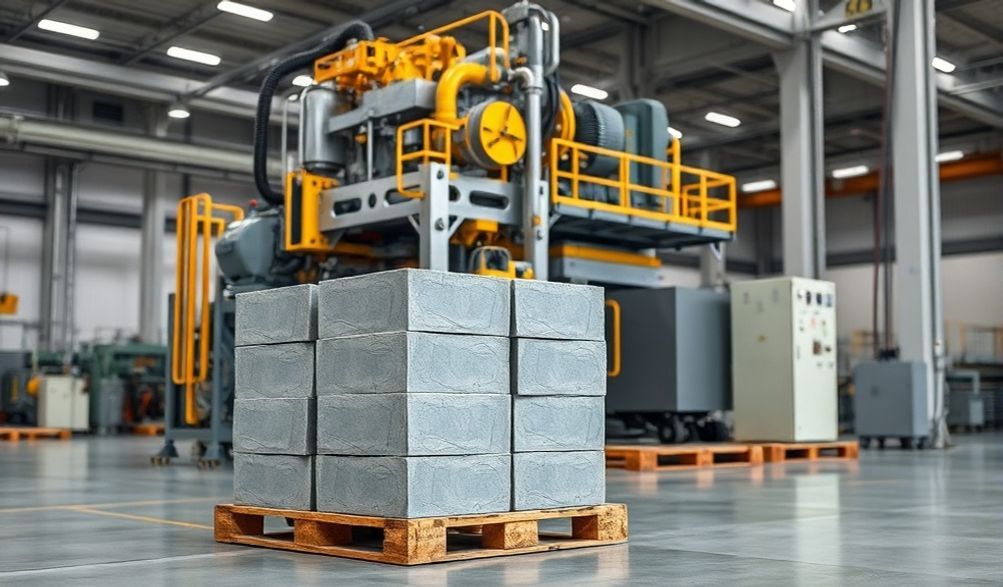
Jwenn Pi Bon Kalite Machin Pou Fè Blòk Siman: Yon Gid Pou Achtè 2026
Kisa ki separe yon biznis fabrikasyon blòk ki genyen pwofi epi k ap grandi ak yon lòt ki plen ak arè nan pwodiksyon ak plent kliyan? Byenke konpetans operasyonèl enpòtan anpil, detèminan kle a souvan se kalite ak fyabite machin nan atelye a. Chwazi bon machin fabrikasyon blòk siman an se youn nan pi gwo envestisman kapital yon antreprenè konstriksyon oswa manifakti pral fè. Men, desizyon enpòtan an pa sèlman sou espesifikasyon machin nan—li soufaktoriki konstwi li.
Daprè ane nan evalyasyon endistri, analiz teknik, ak angajman dirèk ak manifaktirè mondyal yo, gid sa a sèvi kòm konsiltan estratejik ou. Risk pou fè patenarya ak yon faktori ki pa bon anpil: li tradui dirèkteman nan pwoblèm antretyen, kalite blòk ki pa konsistan, ak revni pèdi. Gid 2026 sa a ale pi lwen pase brochi sifas ak etikèt pri. Nou bay yon kad ki klè epi ki aksyonab pou idantifye faktori ki gen prensip debaz yo seekselans nan jeni, entegrite nan fabrikasyon, ak patenarya alontèmSi w se yon kontraktè sivil k ap ogmante operasyon yo, yon manadjè pwokirèman pou yon gwo konpayi, oswa yon antreprenè k ap antre nan sektè fabrikasyon blòk, sa a se plan ou pou pran yon desizyon ki enfòme ak konfyans.
Poukwa Chwa Faktori a Enpòtan Plis Pase Jis Machin Nan
Li tante pou konsantre sèlman sou kapasite pwodiksyon machin nan oswa pri li. Sepandan, sa se yon apwòch ki manke prevwayans. Eta dèspri, kapasite, ak pwosesis faktori a entegre nan chak soude, chak sikwi, ak chak engrenaj nan machin ou achte yo. Konprann sa se premye etap nan direksyon yon envestisman ki gen bon konprann.
Lyen Dirèk ant Kalite Faktori ak Longevite Machin
Yon machin sèlman dire tankou pi fèb pati li ak presizyon avèk li te monte. De faktori ka pwodui machin ak pwodiksyon deklare menm jan, men dire fonksyònman yo ka diferan pa plizyè ane.
- Fabrication presizyonYon faktori ki itilize machin Computer Numerical Control (CNC) pou pyès enpòtan yo asire tolerans yo mezire an mikron. Presizyon sa a mennen nan yon aliyman pi bon, redwi usure ak chire, ak yon operasyon pi lis. Kontrèman, travay manyèl la entwodui varyasyon ki akselere echèk konpozan yo.
- Apwovizyone Materyèl: Orijin plak asye a enpòtan. Faktori ki nan pi wo nivo yo itilize asye ki gen bon kalite, tankou asye ki soulaje estrès (tankou ST52 oswa ekivalan), pou kad machin nan reziste gwo chaj ciklil nan pwodiksyon blòk yo.
- Pwosesis Asanblaj laYon liy asanbyaj pwòp ak òganize, ak spesifikasyon tòk ak pwosedi soude ki dokimante, se yon mak kalite. Nou wè machin kote yon move rantre soude sou yon ankadreman tab vibrasyon te lakòz yon echèk katastwofik nan kèk mwa—yon rezilta dirèk pwotokòl asanbyaj ki pa sere.
Pri Total nan Posesyon (TCO): Gade pi lwen pase pri etikèt la.
Pri a fakti se sèlman frè antre-a. Vrè pri a parèt sou 5-10 ane operasyon.
- Depans pou Antretyen: A machine built with off-brand hydraulics or electrical components may have a lower upfront cost but will incur frequent, expensive repairs. Factories that integrate components from reputed brands (e.g., Bosch Rexroth for hydraulics, Siemens for PLCs) are investing in your machine’s uptime.
- Efikasite enèji: Advanced engineering extends to optimized hydraulic circuits and vibration systems that deliver the required compaction force using less power. An inefficient machine is a constant drain on profitability.
- Productivity & Downtime: The most expensive machine is the one that’s not running. A robust machine from a quality factory maintains consistent output with minimal stoppages. The lost production from a single day’s downtime can eclipse years of perceived savings from a cheaper model.
The Ripple Effect: Machine Quality on Final Block Quality & Business Reputation
Your machine is the heart of your product quality. Inconsistent blocks don’t just waste material; they damage your reputation with builders and contractors.
- Dimensional Stability: Precise mold machining and a stable, powerful vibration system are non-negotiable for producing blocks with consistent length, height, and width. Variations as small as 1-2mm can complicate bricklaying and increase mortar use for your clients.
- Fòs Konpresif: Achieving the target MPa (e.g., 7MPa, 15MPa) reliably requires a machine that delivers consistent vibration frequency and pressure. Fluctuations here mean some pallets of blocks may not meet the required strength standards, posing a structural risk.
- Fini Sifas: A smooth, uniform finish is a mark of quality. It stems from well-machined mold faces, consistent concrete feed, and stable ejection. Poor machine performance leads to rough, chipped, or “honeycombed” blocks that are harder to sell.
Key Hallmarks of a Top-Tier Cement Block Machine Factory
Identifying a superior factory requires evaluating specific, tangible criteria. Look for these hallmarks that separate industry leaders from mere assemblers.
Kapasite Enjenieri ak Rèchèch ak Devlopman
A factory that merely copies old designs is a red flag. The best invest in the future.
- Ekip konsepsyon entèn yo: They should have dedicated engineers for mechanical, hydraulic, and electrical/control systems. This allows for integrated design, not just pieced-together components.
- Active R&D Investment: Ask about recent innovations. Are they developing more efficient vibration systems (e.g., polygonal or planetary vibrators)? Are they integrating IoT sensors for predictive maintenance? This shows a commitment to progress.
- Customization Ability: A strong engineering team can credibly discuss modifying standard models to suit your specific raw material (e.g., fly ash, aggregate size) or product mix (adding a splitter for producing kerbstones).
Manufacturing Standards and Quality Control Protocols
This is where promises are turned into steel and circuitry.
- Sètifikasyon yo: While not a guarantee, ISO 9001 certification indicates a documented quality management system. It’s a baseline expectation for serious manufacturers.
- Production Technology: Look for evidence of modern manufacturing: CNC laser/plasma cutters, CNC machining centers, and robotic welding cells for critical joints. These ensure repeatable quality.
- Tès Rigoureux: Inquire about their testing protocol. It should include:
- Dye-penetrant or ultrasonic testing for critical welds.
- Pressure testing of hydraulic cylinders and lines.
- Full-load test runs of every machine before shipment, producing sample blocks.
Material Sourcing and Component Integrity
The brand of components tells a story about the factory’s priorities.
- Aciè Estriktirèl: Specify the grade used for the main frame and vibration chamber. High-tensile, abrasion-resistant steel is essential.
- Eleman Debaz: Reputable factories are transparent about their suppliers. Expect to see names like:
- Idrolik: Bosch Rexroth, Parker, Eaton.
- PLC ak Kontwòl: Siemens, Mitsubishi, Allen-Bradley.
- Bearings: SKF, FAG, NSK.
- Elektrik: Schneider, ABB.
- Mold Steel: Molds should be made from hardened, high-chrome steel (e.g., DIN 1.2379) for longevity and excellent block release.
Technical Support and After-Sales Service Structure
The relationship begins at delivery, not ends there.
- Documentation: Comprehensive, well-translated operation and maintenance manuals, electrical and hydraulic diagrams are a must.
- Fòmasyon: Do they offer on-site training for your operators and maintenance staff? This is crucial for optimal machine use.
- Pye De Rechanj: A reliable factory maintains a strategic inventory of wear parts and critical components. Ask about their parts logistics and typical delivery times for your region.
- Enjenyè Sèvis yo: They should have a network of trained engineers or provide remote diagnostic support via video call to troubleshoot issues quickly.
A Step-by-Step Factory Evaluation Framework
Turn these hallmarks into action with this phased approach. Rushing this process is the most common and costly mistake buyers make.
Phase 1: Desktop Research & Shortlisting
Begin with a broad net and quickly narrow it down.
- Analyze Digital Footprints: Scrutinize factory websites. Do they show detailed photos/videos of the production process, not just finished machines? Is their technical literature specific (e.g., vibration force in kN, motor power in kW)?
- Review Portfolios: Look for a diversity of successful installations, preferably in environments similar to your own (climate, raw materials). A factory with many machines running in your region is a strong positive indicator.
- Identify Red Flags:
- Vague or missing technical specifications.
- Stock photos only, no genuine factory or machine operation shots.
- No verifiable contact information or physical address.
- Unrealistic claims (“lowest price guaranteed” as a primary tagline).
Phase 2: Deep-Dive Inquiry: The Questions You Must Ask
When you contact a shortlisted factory, be prepared. Their answers (and how they provide them) are highly revealing.
- “Can you provide the detailed technical drawing and bill of materials for the [Model XYZ]?”
- “What is the expected production output in blocks per 8-hour shift with standard 400x200x200mm hollow blocks, using local aggregates?”
- “What is the exact warranty coverage? Which components are excluded? What is the process for a warranty claim?”
- “Can you connect me with 2-3 reference clients in [Your Country/Region]?”
- “What is your lead time from order to shipment, and what are the standard payment terms?”
Phase 3: The Virtual or On-Site Factory Audit
If possible, visit. If not, insist on a comprehensive virtual tour.
- What to Look For:
- Cleanliness & Organization: A well-maintained factory floor reflects pride in workmanship.
- Workflow: Observe the logical flow from raw material (steel plate) to cutting, machining, welding, assembly, painting, and testing.
- Quality Checkpoints: Are there inspection stations with gauges and checklists at different stages?
- Material Storage: Are raw materials (steel, components) stored properly and protected from the elements?
- Key Request: Ask to see machines in various stages of assembly and, crucially, under final testing. Witnessing a machine perform a full cycle under load is invaluable.
Global Hotspots: Understanding Key Manufacturing Regions
Geography offers clues, but within each region, quality spans a vast spectrum.
The German & European Standard: Precision Engineering
- Pwofil: Synonymous with ultra-high-end, fully automated production lines. The focus is on innovation, precision engineering, and extensive automation (robotic pallet handling, curing systems).
- Avantaj: Unparalleled build quality, technological leadership, exceptional longevity, and high resale value.
- Desavantaj: Command a significant price premium. Often best suited for large-scale, high-volume producers where maximum automation and uptime are critical.
The Turkish Hub: Balance of Quality and Value
- Pwofil: Turkey has emerged as a global powerhouse, particularly for semi-automatic and fully automatic machines. Factories here have mastered the balance between robust engineering and competitive pricing.
- Avantaj: Excellent build quality with a strong focus on durable design, good component sourcing, and generally strong after-sales support for export markets. Often offer the best “value-for-money” for mid-to-large scale operations.
- Desavantaj: The market is also diverse; due diligence is still required to identify the top-tier manufacturers from the smaller workshops.
The Chinese Market: Spectrum from Budget to High-End
- Pwofil: This is the most nuanced market. It contains everything from low-cost “assemblers” using inferior parts to world-class, export-focused “Tier-1” manufacturers whose standards rival European ones.
- Kouman pou Distenge:
- Tier-1 Manufacturers: Have modern factories, own foundries and machining facilities, use international brand components, hold international certifications, and participate in major global trade fairs like BAUMA.
- Low-Cost Assemblers: Source generic parts locally, have limited R&D, provide minimal documentation and after-sales support.
- Konsèy Kle: Never buy based on price alone from China. Your research and audit process must be exceptionally thorough.
Emerging and Local Manufacturers
- Konsiderasyon: Regional suppliers in your own country or continent can offer advantages.
- Avantaj: Faster delivery and logistics, potentially lower shipping costs, easier communication, and more responsive local service.
- Desavantaj: May have limitations in scale, technological sophistication, or the breadth of their machine range compared to established global exporters.
Red Flags and Green Lights in Your Factory Search
Trust your instincts during the evaluation process. Here are clear signals to watch for.
Major Red Flags to Immediately Heed
- Unwillingness to Provide References: A factory with happy clients is eager to showcase them.
- Lack of Clear, Timely Communication: If they are unresponsive during the sales process, support will be worse.
- No Comprehensive, Written Warranty: A vague verbal promise is worthless.
- Prices Significantly Below Market Average: This almost always indicates corners cut in materials, components, or engineering.
- Pressure to Make a Quick Decision or Large Deposit: Reputable factories understand this is a major decision.
Positive Indicators (Green Lights) of a Reliable Partner
- Proactive and Transparent: They volunteer information, technical data, and videos without repeated requests.
- Offers Structured Support Plans: They discuss training, spare parts packages, and service contracts upfront.
- Has a Documented History: They can show you case studies, project reports, or years of exhibition participation.
- Realistic About Capabilities: They will advise against a machine that isn’t suited to your needs, even if it means a smaller sale. This builds immense trust.
- Encourages an Audit: The classic sign of a quality-focused operation: “Please, come and see our factory.”
Kesyon yo poze souvan (FAQ)
Q1: What is the most important factor when choosing a cement block machine factory?
A: While engineering is critical, the single most important factor is a proven, robust after-sales service and support structure. A brilliantly engineered machine is a costly paperweight if you can’t get timely technical help or spare parts. Prioritize factories that view the sale as the start of a 10-year partnership.
Q2: Are more expensive machines from European factories always better?
A: Not universally. They are typically superior in terms of cutting-edge automation, precision, and long-term engineering pedigree. However, “better” must align with your needs. For many businesses, a high-quality machine from a leading Turkish or top-tier Chinese factory provides the optimal balance of performance, durability, and cost, offering a better return on investment.
Q3: How can I verify a factory’s claims without visiting in person?
A: Leverage technology. Insist on a live video call for a real-time virtual factory tour guided by an engineer. Request specific videos: the assembly line, weld shops, a machine under test running for 30 minutes, and the packing process for shipment. Most importantly, get independent client references and speak to them directly.
Q4: What should a standard warranty cover for a block making machine?
A: A comprehensive warranty should cover at least 12 months from commissioning against defects in materials and workmanship. It should include parts and labor. The document must clearly state exclusions (standard wear parts like mold liners, misuse, lack of maintenance) and outline the exact process for logging a claim and receiving support.
Q5: Is it advisable to buy a used machine from a factory?
A: Yes, but with a key condition. Some reputable factories offer fully refurbished machines from trade-ins or demonstrations. These are dismantled, inspected, worn parts replaced, repainted, and tested to near-new standards, often with a new warranty. This can be exceptional value. Avoid buying a used machine “as-is” without factory-backed refurbishment and warranty.
Konklizyon
Selecting a cement block making machine is a pivotal business decision, but the true strategic choice lies in selecting the faktori behind it. This partnership will influence your productivity, product quality, and profitability for a decade or more. It is a decision where thorough due diligence pays exponential dividends.
Use the framework in this guide as your disciplined checklist. Invest the time in desktop research, ask the hard questions, and demand transparency. View the process not as purchasing a piece of equipment, but as vetting a long-term operational partner. The right factory is one whose engineering standards, manufacturing integrity, and commitment to service align perfectly with your ambition for growth and quality. In the competitive construction market, that partnership isn’t just an advantage—it’s the foundation of your success.
<