
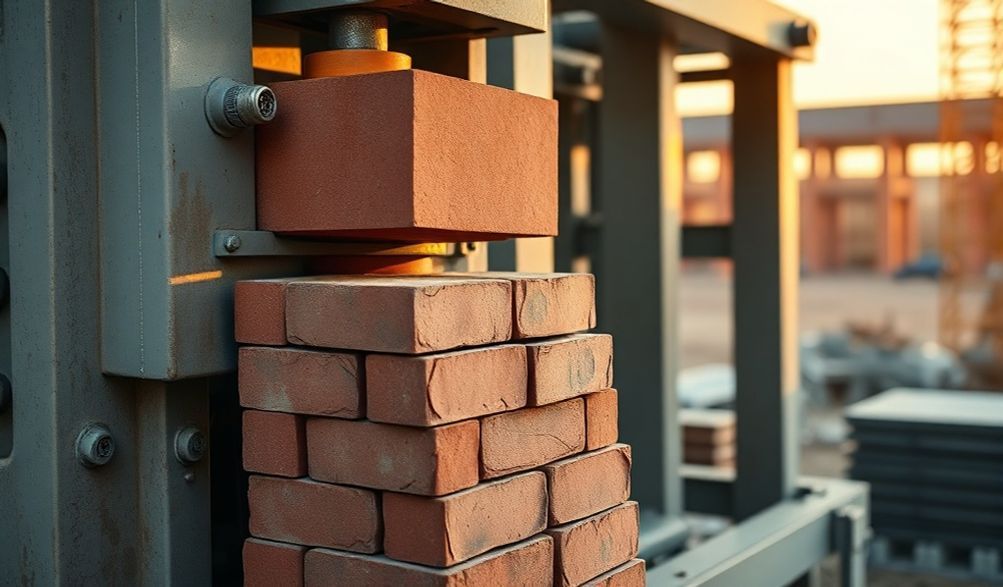
Gid Definitif pou Machin Brik Antrebloke: Kalite, Avantaj & Kijan Pou Chwazi
Entwodiksyon
Imajine yon teknoloji konstriksyon ki ka koupe depans materyèl yo jiska 50%, diminye tan konstriksyon yo pa yon tyè, epi siyifikativman bese enpresyon anviwònman chak bilding. Sa a se pa yon konsèp futuristik—se reyalite ke machin brik entèlokan an ofri, yon inovasyon ki ap chanje fason konstriksyon fèt atravè mond lan.
Pandan plizyè deseni, mason yo te fè fas ak limit brik tradisyonèl ki soti nan ajil kwit: pwodiksyon yo mande anpil enèji, epi yo lage anpil emisyon CO2; pri yo varye anpil; epi konstriksyon yo dousman, ki mande travayè ki gen ladrès ak gwo kantite mòtye. Defi lojistik pou transpòte materyèl lou ak frajil yo sèlman ajoute plis chay sou yo.
Antre nan machin brik entèbloke a—yon teknoloji revolisyonè men elegantman senp ki bay antreprenè, kontraktè, menm koperativ kominotè yo pouvwa. Li transfòme tè lokal ki disponib, sab, ak yon ti kantite siman an blòk konstriksyon ekstrèmman solid ki pa bezwen mòtye. Gid sa a te fèt ak yon analiz pwofondi nan endistri a, espesifikasyon teknik, ak apèsi sou aplikasyon nan mond reyèl la. Objektif nou se ale pi lwen pase anpil anpil pale epi ba ou konesans konplè nesesè pou pran yon desizyon konfyan ak byen enfòme.
Nan fen atik sa a, w ap konprann egzakteman ki jan machin sa yo fonksyone, benefis konkè yo, diferan kalite ki disponib yo, ak yon kad klè, etap pa etap pou chwazi modèl pafè pou pwojè oswa antrepriz ou.
Kisa yon Machin Brik Entèloke?
Nan nwayo li, yon machin brik entèbloke se yon aparèy ki konprese yon melanj imid materyo prensipal an yon brik jeyometrik presizyon ak yon karakteristik konsepsyon inik: rid ak ran sou tèt li ak bò li yo.
Fonksyon ak Prensip Debaz
Prensip la se youn nan konpakte gwo presyon, pa kwit. Yon melanj prepare yo mete nan yon chanm mwazi. Yon belye pwisan—ki kondwi manyèlman, elektrikman, oswa idwolik—soumet melanj la a yon presyon entans, konpakte li byen sere. Brik ki rezilta a ekspilsyon ak yon konsepsyon entèbloke espesifik, ki pi souvan yon modèl "bouton ak ra" oswa "zigzag".
Karakteristik "entèbloke" sa a se sa ki chanje tout bagay. Lè yo anpile, brik sa yo tache ansanm tankou moso devinèt twa dimansyon, kreye yon estrikti mi ki estab ak inifye. Lyen mekanik sa a diminye anpil oswa, nan anpil ka, elimine nesesite pou mòtye tradisyonèl toutbon, sa ki mennen nan gwo ekonomi ak vitès.
Matyè Premye: Kisa Ou Ka Itilize?
Versatilite materyo prensipal yo se yon fòs kle. Melanj ki pi komen yo gen ladan:
- Sòl-Siman:Yon melanj tè anba sòl lokal (tipikman 85-90%) ak siman Pòtlann (10-15%). Tè a dwe rezonabman estab, ak kontni òganik ki ba.
- Laterit-Siman: Nan rejyon twopikal, tè laterit ki rich an fè se yon materyèl ekselan ki fasil pou jwenn.
- Wòch Kraze/Sab avèk Siman:Pou fòs maksimòm, yo itilize yon melanj pousyè kariyè byen kraze oswa sab ak siman.
Critical Note: Material testing is non-negotiable. Simple on-site tests for particle size distribution and moisture content, and lab tests for compressive strength, are essential to calibrate your mix for optimal, code-compliant results. This sustainable model often uses on-site or locally quarried materials, slashing transportation costs and environmental impact.
Avantaj Kle nan Itilize yon Machin Brik Entèbloke
The advantages of this technology cascade from the production yard directly to the finished building, offering compelling practical and economic benefits.
Significant Cost Reduction
The financial savings are multi-layered:
- Material Costs: Drastically less cement is used compared to concrete blocks. The elimination of mortar saves further on cement and sand.
- Depans pou Travay: Dry-stacking is faster and can be done with semi-skilled labor, reducing dependency on highly paid master masons.
- Depans Lojistik: Producing bricks on or near the construction site eliminates multiple middlemen and long-distance transport of fragile fired bricks.
- Overall Project Cost: Studies and real-world projects consistently show total wall cost reductions of 30-50% compared to conventional methods.
Unmatched Construction Speed & Simplicity
Think of it as Lego-like construction for real-world buildings. Without the need to wait for mortar to set between courses, walls rise with remarkable speed. The interlocking system is intuitive, making construction simpler and reducing errors. This speed translates directly into faster project completion and return on investment.
Superior Strength and Durability
Don’t let the simplicity fool you. The high-pressure compaction (often achieving 5-10 MPa or more) creates a dense, robust brick.
- Fòs Konpresif: Properly made interlocking bricks easily meet and often exceed the strength requirements for single and multi-story residential buildings.
- Seismic Resistance: The interlocking design creates a monolithic wall structure that can flex and dissipate energy, offering superior performance in earthquake-prone zones compared to rigid, mortar-bound walls.
- Rezistans kont move tan: When properly capped and plastered (if desired), these walls are highly durable against rain and wind.
Anviwònman Dirab
This is a cornerstone benefit for the eco-conscious builder:
- Zero Firing: No kilns means no coal consumption and no associated greenhouse gas or particulate emissions.
- Minimal Cement Use: Cement production is a major global CO2 source. Reducing its use is a direct environmental win.
- Local Materials: Utilizing on-site soil minimizes landscape scarring from quarries and reduces the carbon footprint of transportation.
- Waste Potential: Some machines can incorporate certain industrial by-products (like fly ash) into the mix, promoting a circular economy.
Kalite Machin Brik Antrebloke
Choosing the right class of machine is your first major decision. They fall into three broad categories, defined by their power source and level of automation.
Manch / Machin ki opere ak men
- Pi bon pou: Individual homeowners, small-scale DIY projects, community-led housing initiatives, NGOs, and entrepreneurs testing the market with minimal capital.
- Avantaj:
- Envestisman inisyal ki ekstrèmman ba.
- Completely portable—no need for electricity.
- Simple to understand, operate, and maintain.
- Desavantaj:
- Low production output (typically 100-500 bricks per 8-hour day).
- Physically demanding labor.
- Brick quality can vary more with operator fatigue.
Semi-Automatic Electric/Hydraulic Machines
- Pi bon pou: Small to medium-sized businesses, contractors undertaking multiple projects, and production yards with a steady demand.
- Avantaj:
- Excellent balance between output, cost, and automation.
- Higher and more consistent production (500-2,000 bricks per day).
- Significantly less physically demanding than manual machines.
- Delivers uniform, high-quality bricks due to consistent hydraulic pressure.
- Desavantaj:
- Requires a reliable electricity connection (or a generator).
- Higher upfront cost than manual models.
- Requires basic technical knowledge for maintenance.
Fully Automatic Hydraulic Press Machines
- Pi bon pou: Large-scale commercial production plants, government housing projects, and businesses supplying bricks to a wide market.
- Avantaj:
- Very high output (2,000+ bricks per day).
- Fully automated cycle: auto-feeding, pressing, and ejection.
- Ultimate consistency in brick quality and dimensions.
- Maximizes labor efficiency.
- Desavantaj:
- Substantial capital investment.
- Requires a robust electrical setup and more space.
- More complex maintenance requiring specialized technical skills.
How to Choose the Right Machine for Your Needs
Navigating the market requires a clear assessment of your goals and a sharp eye for key details.
Assess Your Project Scale & Business Goals
Start by asking:
* What is my daily/weekly brick requirement? (Based on project size or sales forecasts).
* What is my available startup budget?
* Do I have a reliable power source on site?
* Am I looking for a one-off project solution or a long-term business asset?
A simple matrix can guide you:
* < 500 bricks/day + Tight Budget = Manual Machine.
* 500 – 2,000 bricks/day + Business Focus = Semi-Automatic Machine.
* > 2,000 bricks/day + Industrial Production = Fully Automatic Machine.
Critical Technical Specifications to Compare
When comparing models, look beyond the price tag:
- Kapasite Pwodiksyon: Never rely on the “theoretical maximum.” Ask for realistic, sustained output per hour with a standard crew.
- Brick Size & Mold Options: Ensure the machine produces a brick size suitable for your region’s standards. Check if the manufacturer offers different mold designs (standard, curved for arches, etc.).
- Motor Power & Operating Pressure: This directly correlates to final brick strength (measured in PSI or MPa). A machine with higher hydraulic pressure can compact a wider variety of materials into stronger bricks.
- Build Quality & After-Sales Support: This is paramount. Inspect the frame thickness, welding quality, and cylinder brand. Crucially, evaluate:
- Warranty length and terms.
- Availability of spare parts locally or via swift shipping.
- Whether installation and operator training are included.
- The manufacturer’s reputation and responsiveness.
Budgeting and Calculating ROI
Your total investment includes:
* Machine Cost + Shipping & Customs.
* Foundation/Setup for the machine.
* Raw material processing tools (sieve, mixer, wheelbarrows).
* Initial stock of cement and other materials.
Kad Ranmase sou Envestisman (ROI)
1. Calculate your cost per brick (materials + labor + machine depreciation).
2. Research the selling price of comparable bricks (fired clay or concrete) in your local market.
3. Estimate your daily production volume.
4. Your simple payback period = (Total Investment) / ((Price per Brick – Cost per Brick) * Bricks Sold per Day).
A well-run operation with a semi-automatic machine often sees a payback period of 6-18 months.
Step-by-Step: Operating and Maintaining Your Machine
Proper operation and maintenance are what separate a profitable, long-term asset from a broken-down piece of equipment.
Site and Material Preparation
- Tè: Sieve to remove stones, roots, and organic matter. The ideal is a mix of sand, silt, and a small amount of clay.
- Mixing Ratio: Start with a standard mix (e.g., 10% cement, 90% soil) and conduct test batches. Adjust for your soil’s properties.
- Kontni Imidite This is critical. The mixture must be damp enough to bind but not wet. The “hand-squeeze” test should result in a ball that holds its shape without crumbling or dripping water.
Basic Operational Cycle
- Pre-check: Lubricate moving parts and ensure the machine is clean.
- Manje: Place the uniformly mixed material into the machine’s hopper or feeding chamber.
- Konpaksyon: Activate the lever or switch to engage the ram and compress the material.
- Ejeksyon: Release the brick onto a pallet or curing area.
- Gerizon: Immediately move bricks to a shaded area, keep them moist by sprinkling water 2-3 times a day, and cover with plastic sheeting for 14-28 days. Proper curing is essential for achieving full strength.
Essential Maintenance Checklist
- Daily: Clean the machine thoroughly after use. Check for loose bolts and nuts. Lubricate all pivot points.
- Weekly: Inspect hydraulic hoses for leaks. Check electrical connections on automatic models. Clean the mold cavity with a wire brush if any material buildup occurs.
- Monthly: Check hydraulic oil level and quality. Inspect the wear plates on the mold and ram. Tighten all major structural bolts.
Troubleshooting Common Issues:
* Bricks sticking in mold: Likely due to over-wet mix or a worn/dirty mold. Adjust moisture and clean thoroughly.
* Bricks breaking easily: Usually caused by incorrect mix (too sandy, not enough cement/binder), insufficient compaction pressure, or improper curing.
* Machine losing pressure: Check for hydraulic oil leaks, a faulty pump, or a worn seal.
Kesyon yo poze souvan (FAQ)
Q1: How strong are interlocking bricks compared to fired clay bricks?
A: A well-produced interlocking brick can achieve a compressive strength of 5-10 MPa (700-1450 PSI), which is comparable to or exceeds many standard fired clay bricks (typically 3-5 MPa). They are more than adequate for load-bearing walls in 1-3 story buildings. Always have your bricks tested and consult your local building codes for specific requirements.
Q2: Can I start an interlocking brick business with a small budget?
A: Absolutely. Many successful businesses start with a single manual or semi-automatic machine. Begin by supplying bricks for small local projects (homes, fences, garden walls) to prove the concept and build capital. Reinvest profits to scale up to a higher-output machine—this is a proven, low-risk growth path.
Q3: Do interlocking brick buildings require plastering?
A: It is optional but recommended. The bricks can be left exposed for a rustic, modern look, but a plaster coat provides an extra layer of weatherproofing and a smooth finish for painting. The key advantage is that plastering requires less material and effort because the brick surfaces are already flat and even.
Q4: What is the curing process, and how long does it take?
A: Curing is the process of keeping the bricks moist to allow the cement to hydrate fully and gain strength. It involves sprinkling water on the stacked bricks 2-3 times a day and covering them with plastic to retain moisture. Full strength is typically gained in 28 days, though bricks can often be used in construction after 7-14 days of careful curing.
Q5: Where can I get training on using these machines?
A: Reputable manufacturers should provide comprehensive hands-on training as part of the purchase package. This is a major red flag if it’s not offered. Additionally, seek out construction NGOs, technical institutes, or online video tutorials from established industry experts to supplement your knowledge. Nothing replaces hands-on, manufacturer-specific training.
Konklizyon
The interlocking brick machine represents more than just a piece of equipment; it embodies a shift towards more rational, sustainable, and accessible construction. It democratizes the ability to build quality housing and infrastructure by slashing costs, accelerating timelines, and leveraging local resources.
Your journey starts with a clear definition of your needs. Prioritize build quality, proven performance, and—above all—comprehensive after-sales support from your manufacturer over the allure of the lowest price. This technology is an investment that, when chosen wisely, pays dividends for years to come.
Ready to move from research to action? [Download our free comparison checklist of the top 10 interlocking brick machine specifications] to systematically evaluate your options.
Have a specific project or business plan in mind? [Contact our expert team for a personalized consultation] to match you with the ideal solution.
By embracing this innovative technology, you’re not just building structures; you’re contributing to a future of smarter, greener, and more affordable construction for communities worldwide.
<