
Ultima Ductor ad Machinas Laterum Intertextorum: Genera, Commoda, et Quomodo Eligere
Introductio
Cogita technologiam aedificationis quae sumptus materiae usque ad 50% rescindere, tempora aedificandi tertia parte minuere, et vestigium environmental omnis aedificii insigniter imminuere potest. Haec non est notio futuristica—ea est realitas ab machina laterum inter se coniunctorum praebita, innovatione quae orbem terrarum aedificantem denuo format.
Per decennia, structores angustiis laterum coctorum traditionalium luctati sunt: eorum productio energiae intensiva est, emissiones CO2 notabiles emittens; pretium instabile est; et constructio tarda est, peritos artifices magnasque calcis copias requirens. Provocationes logisticae gravium fragiliumque materiarum transportandarum onus tantummodo augent.
Intra machinam laterum intertextorum ingredere – technologiam novam ac tamen eleganter simplicem, quae negotiatoribus, redemptoribus, atque etiam communitatum cooperativis vires tribuit. Humum localem, harenam, et modicum caementum in lateres incredibiliter firmos, sine calce, convertit. Hoc ductorium ex altiore industriae analysi, specificationibus technicis, et perspicuis ex usu reali elaboratum est. Propositum nostrum est ultra clamores progredi et tibi comprehensivam scientiam praebere, quae ad certam et informata consilia capienda requiritur.
Hoc articulo finito, prorsus intelleges quomodo haec machinamenta operentur, eorum commoda solida, genera praesto, et rationem apertam ac gradatim ordinatam ad exemplar perfectum pro tuo incepto vel negotio eligendum.
Quid est Machina Laterum Implicatorum?
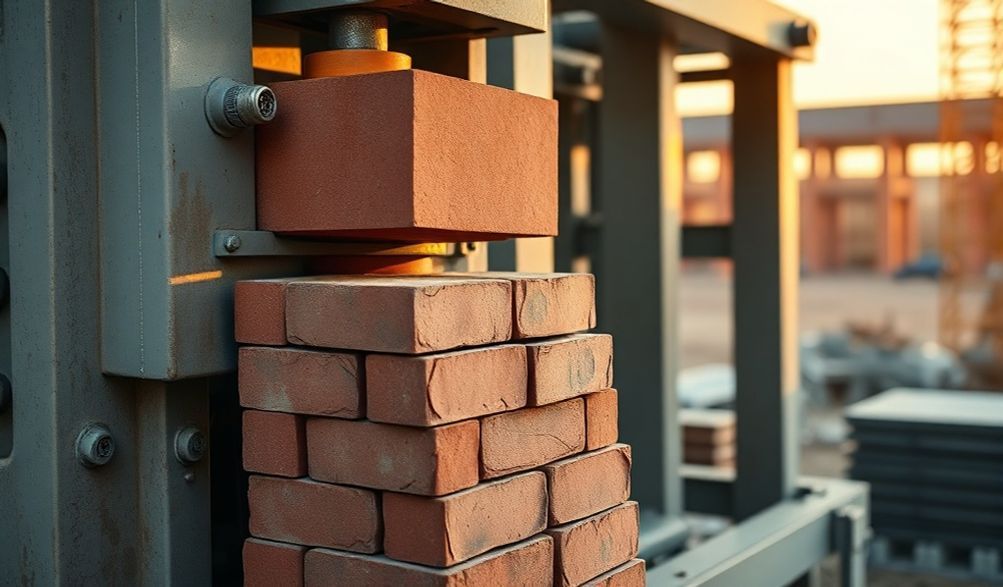
In ipsa sua essentia, machina laterum intertextorum est instrumentum quod umidam materiarum rudium mixturam in laterem geometricum et accuratum comprimit, cum nota singulari: iugis et canalibus in summo et lateribus eius.
Munus Principale et Ratio
Principium est compactionis altae pressionis, non coctionis. Mixtura praeparata in thalamum formae immittitur. Aries validus—manu, electricitate, vel hydraulice actus—mixturam pressurae intensae subicit, eam dense comprimens. Later inde emittitur cum designatione specifica interclusiva, plerumque figura "nodi et canalis" vel "serrati."
Haec "interclusura" proprietas est ludi mutator. Cum congestae sunt, hae lateres sese intercludunt ut segmenta anaglypta tria dimensionum, structuram muri stabilem et unitam creantes. Hoc vinculum mechanicum usum traditi calcis umidae magnopere minuit vel, in multis casibus, omnino tollit, ad ingentes compendia celeritatemque ducens.
The Raw Materials: What Can You Use?
The versatility of raw materials is a key strength. The most common mixes include:
- Terra-Caementum: A blend of locally sourced subsoil (typically 85-90%) and Portland cement (10-15%). The soil must be reasonably stable, with low organic content.
- Laterite-Cement: In tropical regions, iron-rich laterite soil is an excellent, readily available material.
- Crushed Stone/Sand with Cement: For maximum strength, a mix of finely crushed quarry dust or sand with cement is used.
Critical Note: Material testing is non-negotiable. Simple on-site tests for particle size distribution and moisture content, and lab tests for compressive strength, are essential to calibrate your mix for optimal, code-compliant results. This sustainable model often uses on-site or locally quarried materials, slashing transportation costs and environmental impact.
Key Benefits of Using an Interlocking Brick Machine
The advantages of this technology cascade from the production yard directly to the finished building, offering compelling practical and economic benefits.
Magnus Impendii Deminutio
The financial savings are multi-layered:
- Material Costs: Drastically less cement is used compared to concrete blocks. The elimination of mortar saves further on cement and sand.
- Laboris Impendia: Dry-stacking is faster and can be done with semi-skilled labor, reducing dependency on highly paid master masons.
- Sumptus Logistice: Producing bricks on or near the construction site eliminates multiple middlemen and long-distance transport of fragile fired bricks.
- Overall Project Cost: Studies and real-world projects consistently show total wall cost reductions of 30-50% compared to conventional methods.
Unmatched Construction Speed & Simplicity
Think of it as Lego-like construction for real-world buildings. Without the need to wait for mortar to set between courses, walls rise with remarkable speed. The interlocking system is intuitive, making construction simpler and reducing errors. This speed translates directly into faster project completion and return on investment.
Superior Strength and Durability
Don’t let the simplicity fool you. The high-pressure compaction (often achieving 5-10 MPa or more) creates a dense, robust brick.
- Vis Compressiva: Properly made interlocking bricks easily meet and often exceed the strength requirements for single and multi-story residential buildings.
- Seismic Resistance: The interlocking design creates a monolithic wall structure that can flex and dissipate energy, offering superior performance in earthquake-prone zones compared to rigid, mortar-bound walls.
- Resistentia Tempestatum When properly capped and plastered (if desired), these walls are highly durable against rain and wind.
Sustentabilitas Environmentalis
This is a cornerstone benefit for the eco-conscious builder:
- Zero Firing: No kilns means no coal consumption and no associated greenhouse gas or particulate emissions.
- Minimal Cement Use: Cement production is a major global CO2 source. Reducing its use is a direct environmental win.
- Materiae Locales: Utilizing on-site soil minimizes landscape scarring from quarries and reduces the carbon footprint of transportation.
- Waste Potential: Some machines can incorporate certain industrial by-products (like fly ash) into the mix, promoting a circular economy.
Genera Machinarum Laterum Intertextorum
Choosing the right class of machine is your first major decision. They fall into three broad categories, defined by their power source and level of automation.
Machinae Manuales
- Optimum ad: Individual homeowners, small-scale DIY projects, community-led housing initiatives, NGOs, and entrepreneurs testing the market with minimal capital.
- Pros:
- Summa humilis pecuniae initium.
- Completely portable—no need for electricity.
- Simple to understand, operate, and maintain.
- Incommodis:
- Low production output (typically 100-500 bricks per 8-hour day).
- Physically demanding labor.
- Qualitas laterum magis variare potest cum lassitudine operantis.
Semi-Automatic Electric/Hydraulic Machines
- Optimum ad: Small to medium-sized businesses, contractors undertaking multiple projects, and production yards with a steady demand.
- Pros:
- Excellent balance between output, cost, and automation.
- Higher and more consistent production (500-2,000 bricks per day).
- Significantly less physically demanding than manual machines.
- Delivers uniform, high-quality bricks due to consistent hydraulic pressure.
- Incommodis:
- Requires a reliable electricity connection (or a generator).
- Higher upfront cost than manual models.
- Requires basic technical knowledge for maintenance.
Fully Automatic Hydraulic Press Machines
- Optimum ad: Large-scale commercial production plants, government housing projects, and businesses supplying bricks to a wide market.
- Pros:
- Very high output (2,000+ bricks per day).
- Fully automated cycle: auto-feeding, pressing, and ejection.
- Ultimate consistency in brick quality and dimensions.
- Maximizes labor efficiency.
- Incommodis:
- Magnus capitalis collocatio.
- Requires a robust electrical setup and more space.
- More complex maintenance requiring specialized technical skills.
How to Choose the Right Machine for Your Needs
Navigating the market requires a clear assessment of your goals and a sharp eye for key details.
Assess Your Project Scale & Business Goals
Start by asking:
* What is my daily/weekly brick requirement? (Based on project size or sales forecasts).
* What is my available startup budget?
* Do I have a reliable power source on site?
* Am I looking for a one-off project solution or a long-term business asset?
A simple matrix can guide you:
* < 500 bricks/day + Tight Budget = Manual Machine.
* 500 – 2,000 bricks/day + Business Focus = Semi-Automatic Machine.
* > 2,000 bricks/day + Industrial Production = Fully Automatic Machine.
Critical Technical Specifications to Compare
When comparing models, look beyond the price tag:
- Productio Capacitas: Never rely on the “theoretical maximum.” Ask for realistic, sustained output per hour with a standard crew.
- Lateris Magnitudo ac Formae Optiones: Ensure the machine produces a brick size suitable for your region’s standards. Check if the manufacturer offers different mold designs (standard, curved for arches, etc.).
- Motor Power & Operating Pressure: This directly correlates to final brick strength (measured in PSI or MPa). A machine with higher hydraulic pressure can compact a wider variety of materials into stronger bricks.
- Build Quality & After-Sales Support: This is paramount. Inspect the frame thickness, welding quality, and cylinder brand. Crucially, evaluate:
- Warranty length and terms.
- Availability of spare parts locally or via swift shipping.
- Whether installation and operator training are included.
- The manufacturer’s reputation and responsiveness.
Budgeting and Calculating ROI
Your total investment includes:
* Machine Cost + Shipping & Customs.
* Foundation/Setup for the machine.
* Raw material processing tools (sieve, mixer, wheelbarrows).
* Initial stock of cement and other materials.
Ratio Reditus Forma:
1. Calculate your cost per brick (materials + labor + machine depreciation).
2. Research the selling price of comparable bricks (fired clay or concrete) in your local market.
3. Estimate your daily production volume.
4. Your simple payback period = (Total Investment) / ((Price per Brick – Cost per Brick) * Bricks Sold per Day).
A well-run operation with a semi-automatic machine often sees a payback period of 6-18 months.
Step-by-Step: Operating and Maintaining Your Machine
Proper operation and maintenance are what separate a profitable, long-term asset from a broken-down piece of equipment.
Site and Material Preparation
- Solum: Sieve to remove stones, roots, and organic matter. The ideal is a mix of sand, silt, and a small amount of clay.
- Mixing Ratio: Start with a standard mix (e.g., 10% cement, 90% soil) and conduct test batches. Adjust for your soil’s properties.
- Humiditas Contentus: This is critical. The mixture must be damp enough to bind but not wet. The “hand-squeeze” test should result in a ball that holds its shape without crumbling or dripping water.
Basic Operational Cycle
- Pre-check: Lubricate moving parts and ensure the machine is clean.
- Alimentatio: Place the uniformly mixed material into the machine’s hopper or feeding chamber.
- Compressio: Activate the lever or switch to engage the ram and compress the material.
- Eiectio: Release the brick onto a pallet or curing area.
- Sanatio: Immediately move bricks to a shaded area, keep them moist by sprinkling water 2-3 times a day, and cover with plastic sheeting for 14-28 days. Proper curing is essential for achieving full strength.
Essential Maintenance Checklist
- Daily: Clean the machine thoroughly after use. Check for loose bolts and nuts. Lubricate all pivot points.
- Weekly: Inspect hydraulic hoses for leaks. Check electrical connections on automatic models. Clean the mold cavity with a wire brush if any material buildup occurs.
- Monthly: Check hydraulic oil level and quality. Inspect the wear plates on the mold and ram. Tighten all major structural bolts.
Troubleshooting Common Issues:
* Bricks sticking in mold: Likely due to over-wet mix or a worn/dirty mold. Adjust moisture and clean thoroughly.
* Bricks breaking easily: Usually caused by incorrect mix (too sandy, not enough cement/binder), insufficient compaction pressure, or improper curing.
* Machine losing pressure: Check for hydraulic oil leaks, a faulty pump, or a worn seal.
Interrogationes Saepius Petitae (ISP)
Q1: How strong are interlocking bricks compared to fired clay bricks?
A: A well-produced interlocking brick can achieve a compressive strength of 5-10 MPa (700-1450 PSI), which is comparable to or exceeds many standard fired clay bricks (typically 3-5 MPa). They are more than adequate for load-bearing walls in 1-3 story buildings. Always have your bricks tested and consult your local building codes for specific requirements.
Q2: Can I start an interlocking brick business with a small budget?
A: Absolutely. Many successful businesses start with a single manual or semi-automatic machine. Begin by supplying bricks for small local projects (homes, fences, garden walls) to prove the concept and build capital. Reinvest profits to scale up to a higher-output machine—this is a proven, low-risk growth path.
Q3: Do interlocking brick buildings require plastering?
A: It is optional but recommended. The bricks can be left exposed for a rustic, modern look, but a plaster coat provides an extra layer of weatherproofing and a smooth finish for painting. The key advantage is that plastering requires less material and effort because the brick surfaces are already flat and even.
Q4: What is the curing process, and how long does it take?
A: Curing is the process of keeping the bricks moist to allow the cement to hydrate fully and gain strength. It involves sprinkling water on the stacked bricks 2-3 times a day and covering them with plastic to retain moisture. Full strength is typically gained in 28 days, though bricks can often be used in construction after 7-14 days of careful curing.
Q5: Where can I get training on using these machines?
A: Reputable manufacturers should provide comprehensive hands-on training as part of the purchase package. This is a major red flag if it’s not offered. Additionally, seek out construction NGOs, technical institutes, or online video tutorials from established industry experts to supplement your knowledge. Nothing replaces hands-on, manufacturer-specific training.
Conclusio.
The interlocking brick machine represents more than just a piece of equipment; it embodies a shift towards more rational, sustainable, and accessible construction. It democratizes the ability to build quality housing and infrastructure by slashing costs, accelerating timelines, and leveraging local resources.
Your journey starts with a clear definition of your needs. Prioritize build quality, proven performance, and—above all—comprehensive after-sales support from your manufacturer over the allure of the lowest price. This technology is an investment that, when chosen wisely, pays dividends for years to come.
Ready to move from research to action? [Download our free comparison checklist of the top 10 interlocking brick machine specifications] to systematically evaluate your options.
Have a specific project or business plan in mind? [Contact our expert team for a personalized consultation] to match you with the ideal solution.
By embracing this innovative technology, you’re not just building structures; you’re contributing to a future of smarter, greener, and more affordable construction for communities worldwide.
<