
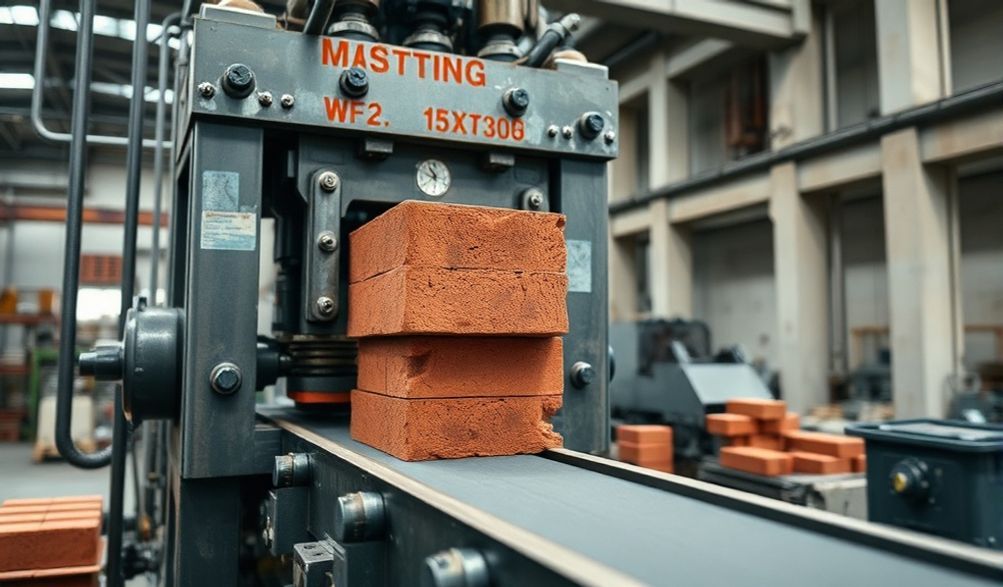
Machin FTL510 pou brik tè kwit: Yon Gid Konplè pou Pwodiksyon Brik Modèn
Nan yon epòk ki defini pa ibanizasyon rapid ak yon pi gwo anfaz sou konstriksyon dirab, demann pou materyèl konstriksyon ki dirab, serye, ak zanmitay anviwònman an pa janm te pi wo. Brik tè, yon materyèl ki pase tan ak milenè pèfòmans pwouve, rete nan premye liy. Sepandan, metòd pwodiksyon li yo te sibi yon transfòmasyon revolisyonè. Antre nanMachin brik ajil FTL510yon pyès teknoloji esansyèl ki fèt pou satisfè egzijans strik fabrikasyon brik modèn ak gwo kantite. Machin sa a reprezante pon kritik ant ajil natirèl an eta brit ak brik yo ki fèt ak presizyon pou konstwi mond nou an.
Pou plizyè deseni, fabrikasyon brik tradisyonèl te konn fè fas ak anpil defi: pwosesis ki mande anpil main d'ouvè, kalite pwodwi ki pa konstan, gwo depans operasyonèl, ak gwo enpak sou anviwònman an akòz itilizasyon enèji ak dechè. Inefikasite sa yo anpeche pwofi ak posiblite pou ogmante pwodiksyon. Solisyon an se otomatizasyon avanse ak jeni. Machin brik ajil FTL510 a se yon gwo sote teknolojik, ki fèt pou amelyore pwodiktivite, garanti yon konsistans san parèy, ak optimize tout operasyon pwodiksyon an depi matyè premyè rive nan pale fini.
Gid sa a sèvi kòm yon resous otorite, ekspè. Nou pral diseke FTL510 a, ale pi lwen pase brochi vann yo pou bay manadjè plant, ofisye pwokirasyon, ak enjenyè yon konpreyansyon pwofon, pratik sou kapasite li yo, aplikasyon li yo, ak pwopozisyon valè total li yo. Analiz nou an baze sou espesifikasyon teknik, pi bon pratik endistri yo, ak yon vizyon klè sou sa ki nesesè pou entegre yon machin konsa avèk siksè nan operasyon ou an.
Kisa FTL510 Clay Brick Machine ye? Teknoloji Debaz Eksplike
FTL510 a pa senpleman yon machin; se yon sistèm ki fèt pou pwodiksyon ki serye ak gwo kapasite. Li klase kòm yon prez idwolik mwayen-a-gwo kapasite, fonksyon prensipal li se transfòme melanj ajwa ki byen prepare an brik ki konpakte ak fòm presize, avèk efikasite remakab. Se kò a nan yon plant brik modèn, kote konsistans ak pwodiksyon anpil enpòtan.
Apèsi Machin ak Filozofi Konsepsyon
Filosofi konsepsyon dèyè FTL510 la baze sou pèfòmans solid, senplisite operasyonèl, ak dire lavi. Li bati pou sik pwodiksyon kontinyèl ak egzijan. Kontrèman ak machin manyèl oswa ti echèl, FTL510 la opere ak yon wo nivo otomatizasyon, ki diminye anpil entèvansyon imen dirèk nan sik presyon an. Konsepsyon li konsantre sou kreye yon platfòm ki estab ak pwisan, kote gwo presyon idwolik aplike avèk presizyon pou asire chak brik satisfè espesifikasyon yo.
Espesifikasyon Teknik Kle ak Konpozan
Konprann espesifikasyon yo se kle pou evalye si yon machin apwopriye. Byenke nimewo egzak yo ka varye selon manifakti a, yon machin tipik nan klas FTL510 pral genyen:
- Kapasite Pweson:Yon karakteristik definisyon, souvan ki soti nan 510 a 600 tòn fòs presyon. Gwo presyon sa a esansyèl pou pwodwi brik ki gen gwo dansite ak ki ka sipòte chaj.
- Pwodiksyon Pwodiksyon:Kapab pwodwi2,000 to 3,500 standard bricks per hour, depending on brick type and cycle time optimization.
- Pouvwa Motè: Powered by a substantial electric motor, typically in the range of 45-55 kW, to drive the hydraulic system.
- Dimansyon ak Pwa: A heavy-duty machine requiring a solid foundation, often weighing over 10 tons and needing significant floor space for operation and maintenance access.
Decomposition Konpo Debaz:
- Kadwo Solid: The machine’s backbone, constructed from high-strength steel to withstand constant high-pressure stresses without deformation.
- Sistèm Idwolik: The heart of the machine. Comprising pumps, valves, cylinders, and accumulators, it delivers the smooth, controllable force required for compaction.
- Mold & Die System: The tooling that defines the brick’s shape. Made from hardened, wear-resistant steel, these interchangeable molds allow production of different brick types.
- Advanced Control Panel: Often featuring a Programmable Logic Controller (PLC) and human-machine interface (HMI) for setting pressure, cycle times, and monitoring machine status.
- Feeding & Ejection System: Integrated mechanisms for automated material feeding and orderly ejection of pressed bricks onto conveyor belts or pallets.
The Production Process: From Clay to Finished Brick
The operation is a continuous, cyclic process:
- Manje: The prepared, tempered clay mixture is automatically fed into the mold box cavity.
- Konpaksyon: The hydraulic ram descends with immense, controlled force, compressing the clay to its final shape and density. This stage may involve multiple pressure profiles for optimal results.
- Ejeksyon: The mold opens, and the newly formed, “green” brick is gently pushed out onto a conveyor or pallet.
- Palletizing/Conveying: The brick is transferred for the next stages: drying and firing.
This automated cycle repeats with precise timing, maximizing output and minimizing variation.
Advantages of Using the FTL510 Brick Making Machine
Investing in an FTL510 translates into tangible competitive advantages for your brick manufacturing business.
Efikasite San Parèy ak Pwodiksyon Segondè
The machine’s automation and rapid cycle times are game-changers.
* It operates continuously with minimal pauses, producing thousands of bricks per shift.
* It drastically reduces dependency on large manual labor crews for the pressing operation, reallocating human resources to supervision, quality control, and logistics.
* The consistent cycle time allows for accurate production forecasting and planning.
Superior Brick Quality and Consistency
This is where engineering excellence shines.
* The high tonnage pressure creates bricks with exceptional density and low porosity, leading to superior compressive strength, frost resistance, and durability.
* Precision-engineered molds and guided movements ensure every brick has identical dimensions, simplifying bricklaying and improving structural aesthetics.
* This consistency builds your brand’s reputation for reliability in the market.
Durability and Low Maintenance Design
Built for the long haul, the FTL510 emphasizes reliability.
* Critical wear parts like molds and liners are made from specially hardened steels to extend service life.
* The design often incorporates centralized lubrication points and easily accessible service panels to simplify routine maintenance.
* A robust construction minimizes breakdowns, ensuring higher uptime and productivity.
Cost-Effectiveness and ROI
While the initial investment is significant, the total cost of ownership tells a compelling story.
* Ekonomi nan Travay: Automation significantly reduces direct wage costs per brick produced.
* Efikasite Materyèl: Precise compaction and consistent output reduce waste from off-spec products.
* Energy per Unit: Modern hydraulic and drive systems are designed to be more energy-efficient per brick than older, less controlled machines.
* A clear ROI timeline, often between 1.5 to 3 years depending on scale and market, can be established based on increased output and reduced operational costs.
Key Applications and Brick Types Produced
The versatility of the FTL510 makes it a valuable asset for a wide range of production goals.
Versatile Product Range
Through quick-change mold systems, the FTL510 can produce an extensive array of clay products:
* Brik solid: For general construction and load-bearing walls.
* Perforated Bricks: Lighter weight with excellent thermal and acoustic insulation properties.
* Blòk vid: Larger format blocks for faster construction, often used in partitions.
* Paving Bricks (Clay Pavers): Dense, durable bricks for driveways, walkways, and patios.
* Special Shapes: Custom molds can produce bricks for landscaping, edging, or architectural features.
Ideal For Which Industries and Projects?
The FTL510 is perfectly suited for:
* Medium to Large-Scale Brick Manufacturing Plants: Looking to upgrade capacity, quality, and automation.
* Construction Material Suppliers & Distributors: Aiming to control their supply chain and product quality.
* Pwojè Enfrastrikti Majè: Requiring a dedicated, on-site supply of specific bricks (e.g., for a large housing development or industrial complex).
* Government and Industrial Development Corporations: Establishing modern brick plants to support regional construction needs.
Critical Considerations Before Purchasing an FTL510
A successful investment requires thorough due diligence. Here are the key factors to evaluate.
Assessing Your Production Needs and Raw Materials
- Sòti: Calculate your required daily/monthly output to ensure the FTL510’s capacity matches your business plan.
- Clay Quality: The machine requires properly prepared clay with consistent moisture content and particle size distribution. Test your raw materials.
- Melanj Pwodwi: Define the types of bricks you will produce most frequently to discuss the optimal mold portfolio with your supplier.
Factory Space, Power, and Utility Requirements
- Espas: You need ample space not just for the machine, but for material handling, pallet storage, and maintenance access. A strong, level concrete foundation is non-negotiable.
- Pouvwa Ensure your facility can supply the required 3-phase electrical power (e.g., 380V/50Hz or 440V/60Hz) with adequate amperage.
- Ancillary Equipment: Budget for and plan the integration of necessary supporting equipment: clay crushers, mixers, conveyors, and de-airing extruders if needed.
Supplier Evaluation: Ensuring Quality and Support
Your choice of manufacturer is as critical as the machine itself. Use this checklist:
* Company History & Reputation: How long have they been building such machinery? Research their track record.
* Sètifikasyon yo: Look for international quality and safety certifications like ISO and CE marking.
* Sipò Teknik: Is 24/7 remote support available? What is the structure for on-site service?
* Founiti pou pyès ranplasman: Is there a guaranteed inventory of critical spare parts? What is the typical delivery time?
* Client Portfolio & Testimonials: Ask for references and, if possible, visit an existing installation.
Understanding the Total Cost of Ownership
Look beyond the sticker price. The true cost includes:
* Machine Price & Shipping
* Installation & Commissioning Fees
* Operator & Maintenance Training
* Cost of Initial Spare Parts Kit
* Ongoing Energy Consumption
* Annual Maintenance Contract Costs
Operational Guide and Maintenance Best Practices
Proper operation and care are essential to realizing the machine’s full lifespan and potential.
Safe Installation and Setup Procedures
- Professional Installation: Always use factory-trained or approved technicians for installation and initial calibration.
- Foundation: Follow the manufacturer’s exact specifications for the concrete foundation to prevent vibration and misalignment.
- Initial Calibration: Precisely set hydraulic pressures, cycle timers, and sensor positions before commencing production.
Daily Operation and Optimization Tips
- Consistent Feed Material: Ensure the clay mix has uniform moisture and consistency to prevent jams and ensure quality.
- Monitor Gauges: Regularly check hydraulic pressure and system temperature during operation.
- Keep it Clean: Implement a “clean as you go” policy to prevent clay buildup on moving parts and sensors.
Essential Maintenance Schedule for Longevity
Adhere to a strict preventive maintenance schedule:
* Daily: Clean the machine, check fluid levels, inspect for leaks, and lubricate guide rails.
* Weekly: Tighten critical bolts and fittings, inspect hydraulic hoses for wear, and check mold alignment.
* Monthly/Annually: Perform more in-depth checks as per the manual, including hydraulic fluid analysis, valve servicing, and comprehensive system inspection by a qualified technician.
FTL510 vs. Other Brick Making Machines
Comparison with Manual and Smaller Semi-Automatic Machines
The FTL510 operates in a different league. Manual and small semi-automatic machines are low-capital-cost options but are severely limited by:
* Sòti: They produce a fraction of the bricks per hour.
* Travay They are highly labor-dependent and physically demanding.
* Konsistans: Product quality varies significantly with operator skill and fatigue.
The FTL510 is for scaling a business; smaller machines are for artisanal or very small-scale production.
Comparison with Other Automatic Models in its Class
When comparing similar-capacity automatic presses, focus on:
* Pressure Control: The sophistication of the hydraulic system for smooth, adjustable pressure.
* Efikasite enèji: Designs with variable-speed drives or accumulator systems can reduce power consumption.
* Nivo Otomatizasyon: Features like automatic mold changing, advanced fault diagnostics, and data logging for production analysis.
* Service & Support: The supplier’s local presence and commitment to after-sales service often become the deciding factor.
Kesyon yo poze souvan (FAQ)
Q1: What is the approximate production capacity of the FTL510 clay brick machine per hour?
A: The FTL510 typically produces between 2,000 to 3,500 standard solid bricks per hour, depending on the specific brick type and the optimized cycle time settings.
Q2: What types of clay or raw materials are suitable for the FTL510?
A: It works best with properly prepared clay that has a consistent moisture content (typically between 15-20%) and a well-graded particle size. It can handle a mix of clay, shale, and certain industrial by-products like fly ash, provided they are correctly processed before pressing.
Q3: Does the machine come with a warranty, and what does it cover?
A: Reputable manufacturers offer a warranty, usually for 12-18 months for major components like the frame and hydraulic system, covering defects in materials and workmanship. Wear parts like molds may have a shorter warranty. Always get the warranty terms in writing.
Q4: What is the lead time for delivery and installation after ordering?
A: Lead times vary but generally range from 60 to 120 days from order confirmation, depending on manufacturer workload, customization, and shipping logistics to your destination port.
Q5: Can you provide training for our operators, and is technical support available remotely?
A: Yes, comprehensive on-site training for operators and maintenance staff should be part of the purchase. Most suppliers also offer ongoing technical support via phone, email, and video call for troubleshooting.
Q6: How energy-efficient is the FTL510 compared to older models?
A: Modern FTL510 models incorporate energy-saving features like more efficient hydraulic pumps and PLC-controlled cycles that reduce idle time, making them significantly more energy-efficient per brick produced than older generation presses.
Q7: Are spare parts readily available, and how do we order them?
A: Established manufacturers maintain a spare parts inventory. You should receive a parts manual and be able to order directly through your supplier’s service department. Confirm the availability of a critical spare parts kit with your initial order.
Konklizyon
AMachin brik ajil FTL510 stands as a robust, efficient, and quality-centric solution engineered for the demands of modern brick production. It successfully addresses the core challenges of traditional manufacturing by delivering high output, unwavering consistency, and a strong return on investment. By automating the most critical stage of production, it allows businesses to scale reliably, reduce operational variability, and build a reputation for superior product quality.
Making an investment of this scale requires informed decision-making. We encourage you to conduct thorough due diligence: request detailed technical datasheets, ask for client references, and, if possible, arrange a virtual or in-person factory tour to see the machine in action. A reputable, experienced manufacturer will be your partner in this process, providing the transparency and support you need.
Ready to transform your brick production capabilities? Contact our team of engineering specialists today to discuss your specific project requirements, receive a detailed quotation for the FTL510, and schedule a consultation to see how this powerful machine can drive the future growth of your business.
<