
Kòman Chwazi yon Machin pou Fè Brik Entèloke ak De Kavite: Yon Gid Ekspè pou Achtè nan Ane 2026
Entwodiksyon
Peyizaj konstriksyon mondyal la ap chanje. Ak ogmante demann pou lojman abòdab, materyèl dirab, ak delè pwojè pi rapid, mason ak antreprenè yo ap vire nan solisyon inovatè. Nan premye liy revolisyon silansye sa a se brik entèloken an—yon blòk bilding ki dirab, san mòtye, ki koupe tan ak depans konstriksyon. Men, motè vrè dèyè mouvman sa a se machin ki pwodui yo. Chwazi bon an se pa sèlman yon acha; se yon desizyon biznis esansyèl ki ka defini siksè oswa echèk antrepriz ou a.
Apre plis pase 15 an eksperyans nan ekipe, enstale ak sèvi machin pou fè brik atravè twa kontinan, ekip nou an te temwen siksè ak echèk yo dirèkteman. Nou te wè operasyon fleri ak ekipman apwopriye a, epi tou bloke akòz chwa ki chè ak mal enfòme. Pwoblèm debaz la? Mache a debòde ak espesifikasyon ki sanble lang etranje pou moun ki pa inisye. Nivo presyon, tan sik, pouvwa motè—ki jan ou tradui sa yo nan yon bon envestisman pou bezwen espesifik ou yo?
Gid sa a fèt pou se bousòl definitif ou. Nou pral depase katalòg klere ak diskou vann pou ofri yon kad pratik, etap pa etap pou chwazi bon machin pou fè brik doub kavite entèbloke. Nou pral tradui langaj teknik konplike an pwen desizyon klè, pou asire w ap envesti nan yon machin ki bay bon jan kalite, pwodiktivite ak pwofi.
Si ou se yon pwopriyetè antrepriz ti a mwayen (ETP), yon fondatè start-up konstriksyon, yon manadjè pwojè, oswa yon ofisye pwokirasyon k ap chache etabli oswa amelyore liy pwodiksyon brik ou, gid ekspè achtè sa a se pou ou.
Konprann Avantaj Doub Kavite: Èske Li Bon pou Pwojè Ou?
Anvan nou plonje nan espesifikasyon yo, li enpòtan pou konprann sa w ap achte epi si li aliyen ak objektif operasyonèl ou yo.
Kisa yon machin brik bloke doub kavite ye?
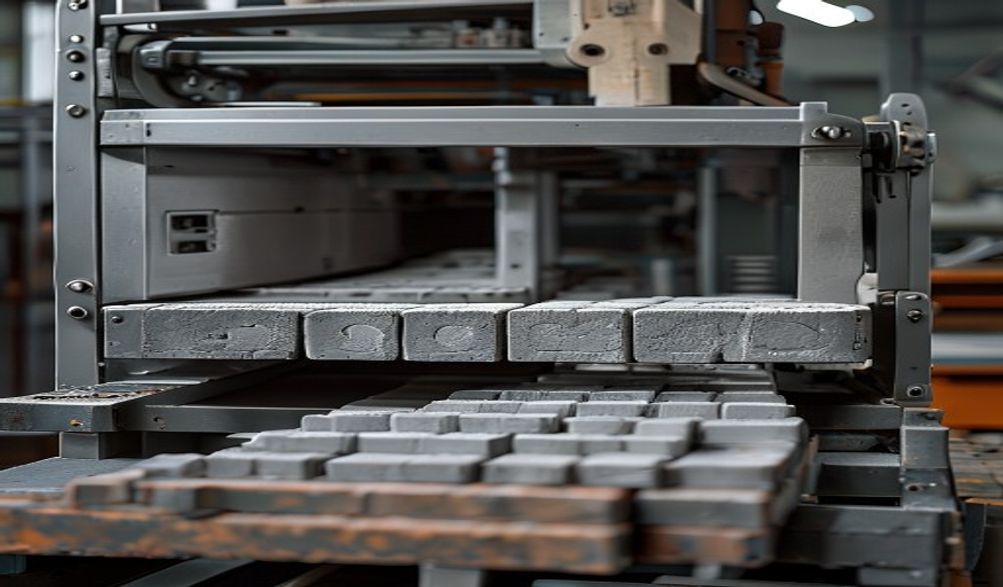
Yon machin pou fè brik an konblann ak de kavite se yon près estatik oswa mobil ki fèt pou konpakte matyè premyè (tankou tè-siman oswa sann vòl) an de brik an konblann ansanm ak chak sik konpresyon. Imajine yon ankadreman asye solid ki loje yon sistèm idwolik pwisan. Nan kè li, gen yon blòk mwazi ak de kavite presi, chak fòme pou kreye pati gason ak fi ki konblann brik yo. Yo mete yon kantite matyè premyè ki mezire nan kavite sa yo, epi yon pis presyon wo desann, konpakte melanj la an blòk dans ak inifòm. Apre sa, yo degaje brik yo, pare pou geri.
Pwofit kle pase modèl ki gen yon sèl kavite
- Pwodiksyon Pi WoSa a se avantaj prensipal la. Pandan ke yon machin ki gen yon sèl kavite ka pwodui 400-500 brik pa èdtan, yon modèl ki gen de kavite ki konparab ka pwodui 800-1000+ brik nan menm peryòd tan an, efektivman double revni potansyèl ou san yo pa double fòs travay ou.
- Siperyè Espas ak Efikasite Enèji:Ou pa pral enstale de machin apa. Yon inite doub-kavite konbine pwodiksyon an nan yon sèl anprint epi li itilize yon sèl sous enèji pi efikas pou pwodui de brik. Sa vle di pi gwo pwodiksyon pou chak mèt kare nan atelye ou ak pi bon itilizasyon enèji pou chak brik pwodui.
- Bon Plasman pou Demann Mwayen Echèl Based on our field observations, the double-cavity machine is the optimal workhorse for businesses supplying a steady housing project, a local retail market, or municipal developments. It balances significant output with a manageable initial investment and operational complexity.
Limitations to Consider
- Higher Initial Investment: The upfront cost is naturally higher than a single-cavity machine, requiring more capital.
- Increased Infrastructure Needs: It often demands a more robust, leveled concrete foundation to handle its weight and vibration, and may require a higher-capacity electrical connection (typically three-phase).
- Less Flexibility for Micro-Batches: If your need is for sporadic, tiny batches or constant design experimentation, the setup and material requirements for a double-cavity machine may be less economical than a smaller, more flexible option.
Core Technical Specifications: The Heart of Your Decision
These are the non-negotiable numbers that determine your machine’s capability. Don’t just read them; understand what they mean for your business.
Production Capacity: Beyond “Bricks Per Hour”
A spec sheet might proudly state “1000 bricks per hour.” This is the theoretical cycle rate under perfect conditions. Real-world capacity depends on:
* Tan Sik The time for one complete compression and ejection cycle. A faster cycle (e.g., 15-20 seconds) means higher potential output.
* Human & Process Factors: Time for loading raw material, removing finished bricks, and managing the curing area. A semi-automatic machine will rely more on operator speed than a fully automatic one.
* Realistic Calculation: For planning, calculate a sustainable 6-7 hours of effective production in an 8-hour shift. A machine rated for 1000 bricks/hour might yield a very healthy 6,000-7,000 bricks per day in skilled hands.
Konsèy Aksyon: Match the machine’s realistic daily output to your sales projections. Can you consistently sell 5,000 bricks a day? If not, you may be over-investing.
Pressure Rating (Tonnes): The Key to Brick Strength
This is arguably the most critical specification for brick quality. The compression force (measured in tonnes or kN) directly correlates to the brick’s final compressive strength (measured in MPa).
* Poukisa Li Enpòtan: Higher pressure compacts the raw material more densely, eliminating voids and creating a brick with superior load-bearing capacity, water resistance, and durability. For standard residential walls, a machine producing bricks with a minimum of 7-10 MPa is essential. For commercial or heavy-duty applications, aim higher.
* Our Recommendation: Look for a double-cavity machine with a minimum pressure rating of 80 to 120 tonnes. This range reliably produces bricks suitable for most load-bearing construction applications.
Motor Power & Energy Consumption
The motor is the machine’s heart, and its type defines your operational costs.
* Electric vs. Diesel/Hydraulic: Electric motors (typically 7.5KW to 15KW for this class) are cleaner, quieter, and cheaper to run in areas with stable grid power. Diesel/hydraulic systems offer mobility and independence from the electrical grid, crucial for remote sites, but have higher fuel and maintenance costs.
* Voltage is Critical: Most industrial-grade double-cavity machines require a 380V, 3-phase electrical supply. Confirm your site’s capability before purchasing.
Mold Specifications & Customization
The mold defines your product. Its quality defines your machine’s lifespan.
* Materyèl: Insist on molds made from high-carbon, hardened steel. They resist wear and abrasion from raw materials, ensuring consistent brick dimensions for thousands of cycles.
* Pèsonalizasyon: Reputable manufacturers can often create custom mold designs. Do you want a different interlocking pattern, a special texture, or a specific brick size? Discuss this upfront.
* Changing Mechanism: A well-designed mold-changing system (using bolts or a clamping mechanism) allows you to switch brick designs with minimal downtime, adding versatility to your business.
Critical Machine Features for Durability & Ease of Use
Technical specs get you in the door, but these features determine how long you’ll stay in business.
Build Quality & Frame Construction
The frame must withstand constant, high-vibration pressure cycles. A flimsy frame will warp, leading to misalignment, poor brick quality, and breakdowns.
* Look for a frame constructed from heavy-duty, reinforced steel channels and plates. Welds should be clean, continuous, and robust. In our workshop, we’ve seen machines with inferior frames fail within the first year, while those with solid construction run for a decade.
Control System: Manual, Semi-Automatic, or Fully Automatic?
This choice balances cost, labor, and consistency.
* Manyèl: Operator controls every step (filling, compression, ejection). Lowest cost, highest labor intensity, variable output quality.
* Semi-Automatic (Recommended for SMEs): The operator feeds material and initiates the cycle, but the compression and ejection are automated. This is the sweet spot, offering excellent consistency, good output, and a manageable skill requirement.
* Otomatik Konplè: Integrated with automatic feeders and conveyors. Maximizes output and minimizes labor but comes at a premium cost and complexity. Best for large-scale, continuous production.
Mixer & Feeder System Integration
Consistent brick quality starts with a consistent raw material mix.
* Yonpan mixeroswaforced-action mixer is often recommended or sold as part of a package. It ensures the soil, sand, cement, and water are homogeneously blended before being fed into the machine’s hopper. Inconsistent mix leads to weak or crumbling bricks.
Safety Features & Ease of Maintenance
A safe machine is a productive machine. A maintainable machine is a profitable one.
* Sekirite: Essential features include fixed safety guards over moving parts, an emergency stop button within easy reach, and clear safety signage.
* Maintenance: Look for easily accessible grease nipples on all bearings and pivot points. Ask for a detailed maintenance schedule and manual. Most importantly, confirm the availability of common spare parts (like seals, hoses, and mold liners) from the supplier.
The Raw Material Factor: What Will You Be Compressing?
The machine is only half the equation. The raw material is the other.
Compatible Raw Materials
These machines are versatile but have limits. Common compatible materials include:
* Soil/Sand: The primary aggregate. Should be free of organic matter, stones, and clay lumps.
* Siman: (5-10%) acts as the stabilizer.
* Sann volkanik: An excellent, sustainable industrial by-product.
* Crushed Stone/Quarry Dust: Can enhance strength.
The ideal mix ratio depends on your local materials and desired brick strength. A mix that is too sandy may not bind; too much clay can cause cracking.
Moisture Content & Mix Preparation
Moisture is the catalyst for compaction. From servicing hundreds of machines, the most common operational issue is incorrect moisture.
* The mix should be damp, not wet or sloppy. A good test: squeeze a handful—it should form a ball that holds its shape but crumbles when poked. Typically, this is between 8-12% moisture content. Too little moisture leads to poor compaction and weak bricks; too much can cause bricks to stick in the mold.
Testing Your Local Soil/Materials
This is our strongest, non-negotiable recommendation: Test your materials before you buy.
* Source soil samples from your intended quarry or site.
* A reputable supplier should offer to test these samples, often running them through a lab or a trial machine to determine the optimal mix ratio and confirm the brick strength achievable. This step alone can prevent a catastrophic mismatch between your machine and your local resources.
Supplier Selection & Post-Purchase Support
Your relationship with the supplier is as important as the machine itself. This is where trust is paramount.
Evaluating Manufacturer Reputation & Experience
- Manufacturer vs. Trader: Prioritize dealing directly with a manifaktirè. They have deeper technical knowledge, control over quality, and direct access to parts. Traders often act as middlemen, which can complicate support.
- Check Credentials: Ask for company history, client references (and contact them!), and relevant industry certifications. Look for a track record of at least 5-10 years.
The Non-Negotiables: Warranty, Training, and Support
- Garanti: A comprehensive warranty should cover defects in materials and workmanship for at least 12 months on the main frame and hydraulic system. Understand what’s included (parts, labor) and what’s excluded (wear items like molds).
- Fòmasyon: On-site installation and operator training are essential. Your team must be taught how to operate, maintain, and troubleshoot the machine safely.
- Sipò Teknik: Ensure access to post-sales support via phone, email, or remote diagnostics. Know the protocol for urgent technical issues.
Logistics, Installation, and Foundation Preparation
- Shipping Terms: Clarify Incoterms (e.g., FOB, CIF) to understand who is responsible for shipping costs, insurance, and port clearance.
- Site Preparation: You will likely need to prepare a leveled, reinforced concrete foundation. The supplier should provide detailed foundation drawings with bolt positions and load specifications. A typical foundation for a mid-sized machine might be 1.5m x 1.5m x 0.3m thick, with M20 grade concrete.
Financial Considerations & ROI Calculation
View this purchase through the lens of Total Cost of Ownership (TCO) and Return on Investment (ROI).
Understanding the Total Cost of Ownership
The machine’s price tag is just the beginning. Budget for:
* Machine Cost
* Shipping, Insurance, and Customs Duties
* Site Preparation & Foundation
* Electrical Hook-up (possible transformer upgrade)
* Raw Material Inventory (initial stockpile)
* Labor (operators and maintenance)
* Ongoing Power/Fuel Consumption
* Spare Parts Fund
Calculating Your Potential Return on Investment (ROI)
Use a simplified framework to model profitability:
(Estimated Annual Revenue from Brick Sales - Annual Operational Costs) / Total Initial Investment = ROI Timeframe
Example Scenario:
* Envestisman Inisyal: $25,000 (machine, shipping, setup)
* Daily Production: 6,000 bricks (realistic output)
* Selling Price: $0.30 per brick
* Operational Cost per Brick: $0.15 (materials, labor, power)
* Daily Profit: 6,000 bricks * ($0.30 – $0.15) = $900
* Annual Profit (300 days): $270,000
* Simple Payback Period: $25,000 / $900/day ≈ 28 days of production to cover the machine cost.
Note: This is a simplified example. Your local brick price, material costs, and sales consistency will drastically affect your actual ROI.
Kesyon yo poze souvan (FAQ)
Q1: What is the average production output of a standard double cavity machine per 8-hour shift?
A: While theoretical rates are higher, a well-operated semi-automatic machine can realistically produce between 4,500 to 7,000 high-quality bricks in an 8-hour shift, accounting for setup, breaks, and material handling.
Q2: Can I use this machine to produce different types of pavers or just interlocking bricks?
A: Yes, absolutely. By changing the mold, the same machine can typically produce interlocking bricks, solid blocks, hollow blocks, and various styles of paving stones. This versatility is a key business advantage.
Q3: What is the typical lead time from order to delivery and installation?
A: For a standard model, expect 30 to 60 days from confirmed order to installation at your site. This includes manufacturing, sea freight, customs clearance, and scheduling of installation engineers. Custom molds or designs will extend this timeline.
Q4: How much workshop space and what kind of electrical connection do I need?
A: You need a clear, covered area of at least 10m x 10m for the machine, raw material storage, brick curing, and movement. Electrically, you will almost certainly need a 380V, 3-phase, 50Hz industrial power supply with adequate amperage (consult the machine’s spec sheet).
Q5: What are the most common maintenance tasks, and how often should they be performed?
A: Daily: Clean the machine and check for loose bolts. Weekly: Lubricate all moving points with grease. Monthly: Check hydraulic oil level and hose condition. Annually: Replace hydraulic filters and conduct a full system check. Always follow the manufacturer’s specific schedule.
Q6: How does the brick quality from a double cavity machine compare to traditional fired bricks?
A: When produced correctly with the right mix and pressure, compressed interlocking bricks meet or exceed the compressive strength of many fired clay bricks. They offer superior thermal and acoustic insulation, are more uniform in size, and have a drastically lower carbon footprint as they require no burning.
Konklizyon
Choosing the right double cavity interlocking brick making machine is a multi-faceted decision that hinges on five core pillars: Technical Specifications that match your market, Build Quality that ensures longevity, Raw Material compatibility confirmed through testing, Supplier Trust backed by robust support, and sound Financial Planning for a healthy ROI.
Our final, most crucial recommendation is this: prioritize long-term reliability and comprehensive post-purchase support over the allure of the lowest upfront price. The cheapest machine often becomes the most expensive when it leads to downtime, poor quality, and a lack of technical help. Your brick making machine is not just a piece of equipment; it’s the foundational partner in your construction business’s growth.
Ready to take the next step with confidence? Contact our team of experts today for a personalized consultation tailored to your project needs and local conditions. We can provide a detailed quote and even analyze your soil sample in our lab for a free, no-obligation assessment. Let’s build a sustainable future, one brick at a time.
<