
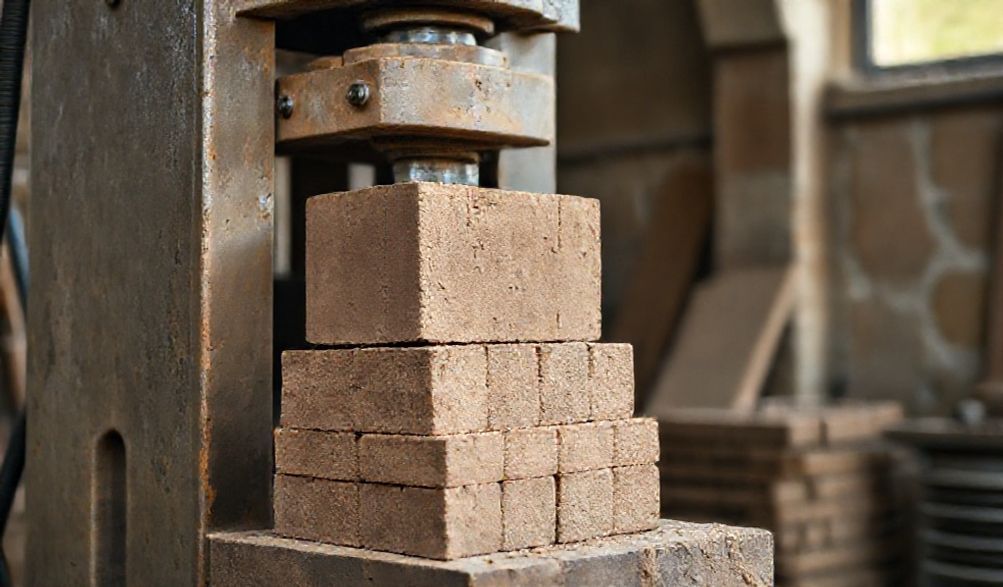
Gid Definitif pou Chwazi Pi Bon Ti Machin pou Fè Brik Tè Kwit
Nan yon epòk kote pri konstriksyon ap monte ak yon dezi pou viv dirab ak otonòm ap grandi, yon revolisyon trankil ap pran fòm—literalman, yon brik nan yon moman. Soti nan moun ki gen kay eko-konsyan ak antreprenè anbisye, rive nan pwojè devlopman ki dirije pa kominote a, plis moun ap vire tèt yo nan pwodiksyon lokal, ti echèl materyèl konstriksyon. Nan kè mouvman sa a, gen yon zouti ki gen anpil pouvwa:ti machin pou brik ajilfè
Pandan ke vizyon pou kreye brik dirab ak bèl pa ou menm ka atiran, reyalite metòd manyèl ak labou ak mòd yo souvan fatigan, ralanti ak enkonsistan. Sou lòt bout la, plant endistriyèl brik yo reprezante yon envestisman byen lwen pòv yon ti antrepriz. Twou vid ki genyen ant efò fè-sa-pou-tèt ou ak echèl endistriyèl la se egzakteman kote ti machin brik ajil la klere. Li ofri yon chemen mitan fèzab ak efikas.
Gid sa a definitif la fèt ak yon sentèz ant espesifikasyon teknik yo, eksperyans itilizatè reyèl yo, ak pratik endistri etabli yo. Objektif nou se pou ba ou yon resous konplè ak serye pou ede w pran desizyon ou. N ap esplike diferan kalite machin ki disponib yo, n ap mete aksan sou karakteristik enpòtan pou w obsève, n ap gide w nan tout pwosesis pwodiksyon an, epi n ap ba ou konesans pratik pou w kòmanse pwòp operasyon piti ou. Ann bati yon fondasyon solid pou pwojè w la.
Kompwann Machin Ti Brik an Agil: Kalite ak Aplikasyon yo
Pa tout machin brik ti gwosè yo fèt menm jan. Chwa ou pral fondamantalman afekte kapasite pwodiksyon ou, bezwen travay, ak envestisman inisyal ou. Konprann twa kategori prensipal sa yo se premye etap nan yon acha entelijan.
Machin Pouze Manyèl (Chwa pou Nivo Kòmansman)
Deskripsyon:Sa yo se tip ki pi senp ak pi abòdab nan ti machin brik yo. Yo konte nèt sou fòs imen, lè l sèvi avèk yon levye oswa yon mekanis vis pou aplike fòs konpresyon sou ajil ki mete nan yon mòl.
Pi Bon Pou:
* Moun oswa fanmi ki ap antreprann yon pwojè konstriksyon DIY (pa egzanp, yon mi jaden, yon ti kay, oswa yon ti kay).
* Sant fòmasyon pwofesyonèl ak pwogram edikasyon.
* Pwojè kominotè nan zòn ki pa gen aksè rezo elektrik.
* Tès dlo nan pwodiksyon brik ak risk finansye minim.
Avantaj ak Dezavantaj:
* Avantaj:Pri trè ba; zewo depans enèji pou opere; pòtab epi fasil pou antretyen; pafè pou aprann baz konpozisyon tè ak konpresyon.
* Desavantaj:Entènse nan travay ak dousman; pwodiksyon an depann anpil sou rezistans operatè a; dansite ak kalite brik yo ka varye; pa apwopriye pou nenpòt pwodiksyon nan echèl komèsyal.
Machin Semi-Otomatik (Pèfòmè ki Balanse)
Deskripsyon:Kategori sa a bay yon balans optimal pou anpil ti biznis. Machin sa yo anjeneral enplike nan manuelman mete melanj ajil ki prepare a nan yon tremye oswa yon chanm, men konpresyon an reyalize atravè yon volan mekanik oswa yon sistèm idwolik ki mache ak yon motè elektrik oswa motè dyezèl. Gen kèk ki ka gen yon konvèyè pou ekspilsyon brik yo.
Pi Bon Pou:
* Ti ak mwayen antrepriz (TMA) ki vize pou yon pwodiksyon komèsyal ki konstan.
* Konpayi konstriksyon k ap chèche pwodwi brik pou pwojè espesifik.
* Antrepriz sosyal ak koperativ kominotè yo.
* Nenpòt moun ki bezwen yon pwodiksyon pi wo, pi serye pase yon pres manuel ka bay.
Avantaj ak Dezavantaj:
* Avantaj:Pwodiksyon pi wo ak pi regilye pase prese manyèl; pwodui brik inifòm ak dansite wo; diminye fòs fizik travay la; bon retou sou envestisman pou antrepriz serye.
* Desavantaj: Higher upfront cost; requires a power source (electricity or fuel); more complex than a manual press; requires basic operational training.
Fully Automatic Small Machines (The Efficiency Expert)
Deskripsyon: These are the pinnacle of small-scale efficiency. They integrate automated systems for feeding the raw material, compressing it, and ejecting the finished brick—often onto a pallet or conveyor. Operation may only require one or two persons to monitor the process and handle raw materials/pallets.
Pi Bon Pou:
* Established small-to-medium enterprises (SMEs) with strong market demand.
* Businesses focused on maximizing daily output with a minimal workforce.
* Operations where brick quality and dimensional consistency are paramount.
Avantaj ak Dezavantaj:
* Avantaj: Highest output potential for the “small machine” category; exceptional consistency and quality; maximizes labor efficiency; often includes advanced features like programmable logic controllers (PLCs).
* Desavantaj: Substantial capital investment; requires a reliable and powerful energy source; more complex maintenance requiring potential specialist knowledge; less flexibility for remote, off-grid sites.
| Machine Type | Pi Bon Pou | Key Advantage | Primary Limitation |
| :— | :— | :— | :— |
| Manual Press | DIY, Training, Ultra-Low Budget | Low Cost & No Power Needed | Low, Labor-Intensive Output |
| Semi-Otomatik | Small Businesses, Consistent Production | Balance of Output, Cost & Quality | Requires Power & Higher Investment |
| Otomatik Konplè | High-Output SMEs, Efficiency Focus | Maximum Output & Labor Savings | High Cost & Complex Operation |
Key Features to Evaluate When Buying Your Machine
Once you’ve identified the suitable machine type, drilling down into these specific features will ensure you select a model that delivers long-term value and meets your precise needs.
Kapasite Pwodiksyon (Sòti pou chak È/Jou)
Don’t just look at the “maximum” theoretical output in promotional material. Consider sustainable, real-world output.
* Match to Your Goals: Are you supplying bricks for a single 6-month home build, or do you aim to serve a local market? Calculate your weekly brick requirement and choose a machine that can meet 70-80% of that with one shift, allowing room for maintenance and material preparation.
* Understand the Metrics: Capacity is usually given in “bricks per hour” or “cycles per hour.” Remember, a cycle might produce 2, 4, or even 6 bricks at once (depending on the mold). A machine rated for 500 cycles/hour with a 4-brick mold has a potential output of 2000 bricks/hour.
Brick Size and Mold Versatility
The mold defines your product. This is where your machine’s flexibility pays off.
* Moules Entèchanjab: Ensure the supplier offers a range of standard mold sizes (e.g., standard rectangular, hollow blocks for insulation, interlocking bricks for mortar-less construction). The ability to swap molds allows you to diversify your product line to meet different customer needs.
* Moulaj Pèsonalize: Some manufacturers will create custom molds for unique brick designs or special projects, though this adds to the cost. Discuss this possibility upfront if you have a specific architectural vision.
Power Source and Requirements
Your location and utility access will heavily influence this decision.
* Motè Elektrik: Common for semi- and fully-automatic machines in areas with stable grid power. They are cleaner, quieter, and have lower per-hour operating costs. Check the voltage (e.g., 220V/380V) and phase (single or three-phase) requirements carefully.
* Motè Dizèl: Provide independence from the electrical grid, making them ideal for remote sites. They are more rugged but are noisier, produce emissions, and have higher fuel and maintenance costs.
* Manyèl: As discussed, for entry-level, off-grid applications only.
Build Quality and Durability: The Trust Factor
This is where the true cost of a machine is revealed over time. Prioritizing build quality is a non-negotiable aspect of a trustworthy investment.
* Materials Matter: The frame and critical components should be made from high-grade steel. Ask about the thickness of the steel plates and the quality of the hydraulic cylinder (if applicable). A machine made from mild steel will not withstand the constant stress of compression.
* Konstriksyon: Look for clean, robust welding. Poor welds are a primary point of failure under constant vibration and pressure.
* Brand Reputation: Research the manufacturer’s history. How long have they been in business? Do they specialize in brick machinery? A company with a long track record is more likely to be producing reliable equipment and will likely still be around if you need support later.
After-Sales Support: The Deal-Breaker
A machine is a long-term asset. The supplier’s support is part of the product you’re buying.
* Disponiblite Pyès Depo: Inquire about the availability and cost of common wear-and-tear parts: mold liners, compression plates, seals, and hydraulic hoses. If parts must be shipped from overseas with a 3-month lead time, a single broken seal can halt your entire operation.
* Documentation and Training: A clear, illustrated operation and maintenance manual in your language is essential. Many reputable suppliers offer installation guidance videos or even video call support for initial setup.
* Sipò Teknik: Can you call or email someone with questions? The responsiveness of a supplier before you buy is often a good indicator of their support after the sale.
The Clay Brick Making Process: From Soil to Solid Brick
Owning the machine is only one part of the equation. Success hinges on your mastery of the entire process. Here is the end-to-end workflow you’ll need to manage.
Step 1: Clay Preparation and Soil Testing
Expertise Display: Not all dirt is suitable. The ideal soil is a blend of approximately:
* Clay (20-30%): Provides plasticity and binding strength.
* Silt (10-20%): Fills voids.
* Sand (50-70%): Reduces shrinkage and cracking during drying.
Simple Field Tests:
* Ribbon Test: Moisten a handful of soil and roll it into a ribbon. If it forms a ribbon 1-2 inches long before breaking, it has sufficient clay.
* Shrink Test: Make a small ball of wet soil, let it dry completely. If it cracks significantly, it has too much clay; if it crumbles easily, it has too much sand/silt.
Step 2: Mixing and Tempering
This step ensures uniformity. The clay soil is mixed with the correct amount of water (typically 10-15% by weight) to reach an optimal, malleable consistency—like stiff dough. This can be done with a simple hoe and pit, a paddle mixer, or a pan mixer for larger volumes. At this stage, stabilizers like 5-10% cement or lime can be added to improve strength and water resistance, especially for soils with less-than-ideal composition.
Step 3: Molding and Compression
The tempered clay is fed into the machine’s mold chamber. The machine’s core function—applying high pressure (measured in PSI or MPa)—compacts the clay, forcing out air pockets and creating a dense, coherent brick (known as a “green brick”). The pressure is what gives the brick its structural integrity.
Step 4: Curing and Drying
The most critical phase for final strength. The green bricks are carefully stacked in a well-ventilated, shaded area (direct sun causes uneven drying and cracking). They must air-dry for a minimum of 7-14 days. For cement-stabilized bricks, keeping them moist (by sprinkling water) for the first week actually increases final strength through a process called hydration. Full strength is achieved after 4-6 weeks.
mermaid

graph TD

    A[Test & Source Clay Soil] --> B[Mix with Water <br> (Optional: Add Stabilizer)];

    B --> C[Load into Machine & Compress];

    C --> D[Eject & Handle Green Bricks];

    D --> E[Cure & Dry for 2-6 Weeks];

    E --> F[Solid, Ready-to-Use Brick];
Practical Considerations for Your Small Brick-Making Venture
Turning machine operation into a viable project or business requires planning beyond the equipment itself.
Cost Analysis: Machine Investment vs. Return
Create a basic framework:
* Capital Costs: Machine price, delivery, customs duties, mold extras, basic tools (shovels, mixer), and site preparation.
* Depans Operasyonèl: Raw materials (clay, stabilizer), labor, utilities (power/fuel), maintenance, and transportation.
* Revenue Potential: Research the local price per brick. Even a small semi-automatic machine producing 1,500 bricks per day can generate significant volume. Your profit margin will be the difference between your cost-per-brick and your selling price.
Space and Workspace Setup
You need a logical workflow area:
1. Raw Material Storage: For your clay pile and stabilizers.
2. Estasyon Mélange: Where soil and water are combined.
3. Production Shed: To house the machine and protect operations from rain.
4. Drying Yard: A large, level, well-drained area for stacking and curing bricks. This is often the largest space requirement.
Sourcing Raw Materials Locally
The “sustainable” advantage is key. Test soils from local construction sites, farms (with permission), or natural deposits. Using on-site or locally sourced clay drastically reduces material costs and the environmental footprint of your bricks, a strong selling point.
Market and Applications for Your Bricks
Identify your customers:
* Eco-Homes & Owner-Builders: Individuals seeking sustainable, natural building materials.
* Landscaping & Garden Design: For paths, retaining walls, patios, and outdoor kitchens.
* Local Contractors: Small builders working on residential extensions, boundary walls, or rural structures.
* Community Projects: Schools, clinics, or community centers often prioritize locally made materials.
Kesyon yo poze souvan (FAQ)
Q1: What is the approximate price range for a good small clay brick machine?
A: Prices vary dramatically based on type and automation. A basic manual press can start from $500 to $1,500. A quality semi-automatic machine typically ranges from $3,000 to $12,000. Small, fully automatic systems can begin around $15,000 and go upwards of $40,000+. Always get detailed quotes from multiple suppliers, ensuring they include shipping, duties, and standard molds.
Q2: Can I use any type of soil with these machines?
A: No. Using pure sand or silt will result in bricks that crumble. The soil must have sufficient clay content (20-30%) to bind the material together under pressure. As outlined in the process section, simple field tests can determine suitability, and soils can often be modified by blending or adding stabilizers like cement.
Q3: How many bricks can a small machine produce in a day?
A: This depends entirely on the machine type and operational efficiency. Here are realistic 8-hour shift estimates:
* Manual Press: 200 – 500 bricks
* Semi-Otomatik: 800 – 2,500 bricks
* Fully Automatic (Small): 3,000 – 6,000+ bricks
Remember, these figures assume a steady workflow with prepared materials and do not include curing/drying time.
Q4: Is a small brick-making business profitable?
A: It can be a profitable venture, but it is not a “get-rich-quick” scheme. Success hinges on key factors: proven local demand for your brick type, tight control of your production costs (especially raw materials and labor), consistent product qualityakeffective local marketing to builders and homeowners.
Q5: Where can I find reliable suppliers or manufacturers?
A: Start by researching online on B2B platforms like Alibaba, Made-in-China, or industry-specific directories. Attend construction or manufacturing trade fairs if possible. The most critical stepsedue diligence: always request customer references, search for independent reviews or videos of their machines in operation, and verify their company history. A trustworthy supplier will be transparent and encourage this.
Konklizyon
Choosing the right ti machin pou brik ajil production is a journey that blends practical needs with entrepreneurial vision. We’ve explored the spectrum from simple manual presses to efficient automatic systems, highlighting that the “best” machine is the one that aligns with your output goals, budget, and context. We’ve underscored the non-negotiable importance of build quality and after-sales support—factors that ensure your investment pays off for years to come.
Remember, the machine is a tool. Your success will equally depend on your understanding of the complete process, from soil testing to patient curing, and on the sound planning of your workspace and business model. This guide serves as your foundational checklist.
Your next steps: Clearly define your project scope or business goals. Use the criteria here to shortlist 3-4 potential machine models and suppliers. Reach out to them with informed, specific questions. If feasible, request to see a machine operating—either in person or via a live video call. By prioritizing research and quality, you’re not just buying a piece of equipment; you’re investing in the foundation of your sustainable building dream.
<