
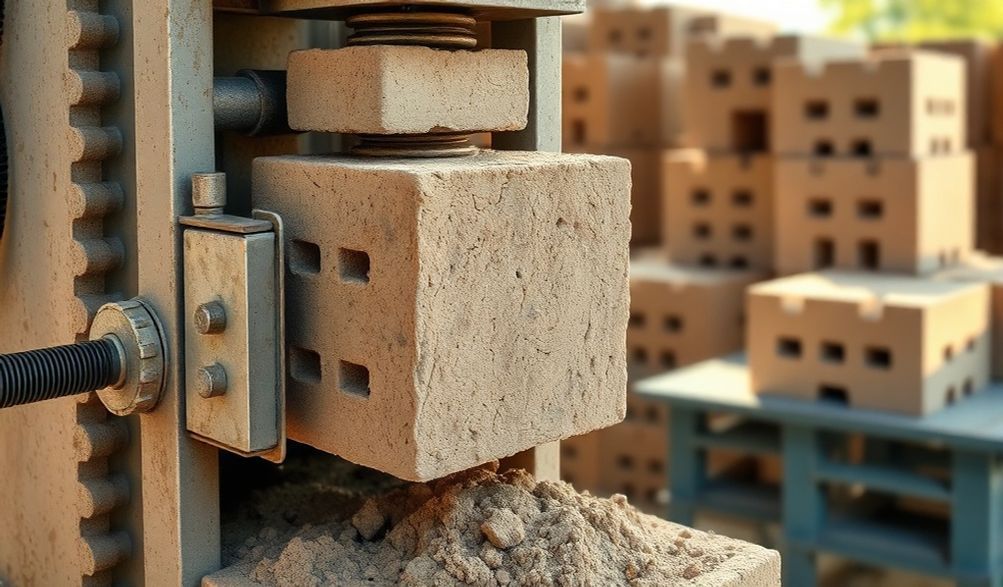
Gid Definitif pou Pwès Blòk Tè Konprese: Bati sou Fondasyon Dirab
Imajine yon mond kote kle pou jwenn kay ki abòdab, ki solid, ak bèl pa soti nan yon faktori byen lwen, men nan tè ki anba pye nou. Avèk ijans ki ap grandi pou konstriksyon dirab ak defi mondyal pri materyo yo, yon revolisyon trankil ap pran fòs. E si ou te kapab konstwi estrikti solid ak ekolojik lè w sèvi ak tè ki soti nan zòn ou ye a? Sa pa yon retounen nan ajoupa primitif, men yon metòd konstriksyon sofistike ki mache ak yon machin enpòtan:pèz blòk tè konprese.
Aparèy esansyèl sa a transfòme tè anba sòl an blòk konstriksyon egzat ak pèfòmans. Gid final sa a sèvi kòm resous konplè ak ekspè ou. Kit ou se yon amatè brikoleur, yon pwofesyonèl nan konstriksyon, yon achitèk ki ap konsepsyon pou rezistans, oswa yon defansè dirabilite, nou pral demistifye pwosesis la. Nou pral eksplore kalite pre yo, benefis pwofon yo, ki jan pou chwazi bon machin nan, ak pi bon pratik operasyonèl yo pou asire siksè ou—tout baze sou konesans pratik ak prensip jeni eprouve.
Kisa se yon Pwès Blòk Latè Konprese? Motè Konstriksyon an Latè
Nan nwayo li, yon prens blòk tè konprese (CEB) se yon machin senp men pwisan ki fèt pou kreye materyèl konstriksyon inifòm soti nan tè. Li reprezante fizyon ansyen konesans ak jeni modèn, ki pèmèt konstriksyon an tè efikas ak adaptab.
Fonksyon Prensipal ak Mekanik Debaz
Prensip la elegantman senp. Yon prens CEB aplike gwo presyon mekanik—souvan soti nan plizyè santèn a plis pase 2,000 PSI—sou yon melanj tè ki mouye ki mete andedan yon moul asye oswa "pocho."
- The Input: A prepared mix of soil, sand, and often a small percentage of stabilizer like cement or lime.
- Pwosesis la: The mixture is compressed, either by a manual lever or a hydraulic ram, which densely packs the particles, eliminating air voids and creating strong interlocking bonds.
- Pwodiksyon an: The machine ejects a solid, consistently sized block that is stable enough to be handled immediately and cured for building.
This process creates a block that is fundamentally different from sun-dried adobe; compression yields far greater density, strength, and dimensional regularity.
A Brief History and Modern Relevance
Building with earth is humanity’s oldest construction technique, seen in rammed earth walls and adobe bricks across millennia. The modern CEB press, however, is a 20th-century innovation. Engineers and appropriate technology pioneers like the Auroville Earth Institute in India and later, various commercial manufacturers, developed machines to mechanize and standardize earthen block production.
Today, this technology is experiencing a powerful resurgence. Driven by the sustainability movement, rising costs of conventional materials, and a desire for healthy, natural buildings, the CEB press has evolved from a niche tool to a viable solution for projects ranging from single-family homes to schools and commercial structures worldwide.
Key Benefits of Building with a CEB Press
Choosing to build with a CEB press isn’t just a construction decision; it’s an investment in a building philosophy that offers multifaceted advantages.
Unmatched Sustainability and Low Environmental Impact
The environmental credentials of CEBs are exceptional, addressing the critical issue of embodied energy—the total energy consumed by a material’s lifecycle.
- Locally Sourced Materials: The primary ingredient is often available directly on or near the build site, slashing transportation emissions and costs.
- Minimal Processing: Unlike fired bricks or concrete, CEBs require no high-temperature kilns, resulting in drastically lower carbon footprint.
- Non-Toxic & Recyclable: The blocks are made of natural earth, creating healthy indoor air quality. At end-of-life, they can simply return to the earth or be crushed and reused.
- Pèfòmans Tèmik: The high thermal mass of earth walls naturally regulates indoor temperatures, absorbing heat during the day and releasing it at night, which reduces reliance on mechanical heating and cooling.
Durabilité ak Pèfòmans Eksepsyonèl
Don’t let the “earth” fool you. Properly made compressed earth blocks are high-performance building components.
- Fòs Konpresif: When stabilized and properly compacted, CEBs can easily meet or exceed the compressive strength requirements for load-bearing walls in residential construction (often achieving 600+ PSI). Standards like ASTM D1633 provide testing frameworks.
- Rezistans nan Dife: Earth does not burn. CEB walls provide a superior fire rating, a critical safety benefit.
- Pest and Mold Resistance: The density and mineral composition deter insects and rodents, and the blocks are resistant to mold growth when properly detailed.
- Longevity: Historical examples of earthen structures standing for centuries are a testament to the material’s inherent durability when protected from direct weathering.
Significant Cost-Effectiveness
The economic model for CEB construction is unique, shifting costs from ongoing material purchases to a one-time equipment investment.
- Low Material Cost: Soil is typically the lowest-cost construction material imaginable. Stabilizer (cement/lime) is the primary purchased input, often comprising only 5-10% of the mix.
- Rediksyon Travay: While pressing blocks requires labor, the simplicity of the system and the large block size can lead to faster wall assembly compared to smaller units like conventional bricks.
- Eparg al tèm long: The energy efficiency gained from the thermal mass translates to decades of lower utility bills, a powerful financial advantage over the life of the building.
Types of Compressed Earth Block Presses: Choosing the Right Machine
Not all CEB presses are created equal. Your project’s scale, budget, and context will determine the ideal machine type.
Manual / Lever Presses
These are human-powered machines, using a long lever to generate the necessary compression force.
- Avantaj: Lowest upfront cost, complete independence from power sources, highly portable, and excellent for educational or community-building settings.
- Desavantaj: Physically demanding, with a relatively low production rate (often 50-100 blocks per person, per day).
- Pi bon pou: DIY owner-builders, small projects (garden walls, sheds, tiny homes), workshops, and remote off-grid locations.
Mechanical / Hydraulic Presses
These motorized presses use a hydraulic system—powered by an electric motor, gasoline engine, or tractor PTO—to generate consistent, high pressure.
- Avantaj: High, consistent production (hundreds to over a thousand blocks per day), superior block uniformity, reduced operator fatigue, and greater pressure control.
- Desavantaj: Significant increase in cost, requires a power source, heavier and less portable.
- Pi bon pou: Commercial block production, larger home builds, community housing projects, and any operation where volume and efficiency are priorities.
Mobile vs. Stationary Presses
A key consideration is mobility. Some hydraulic presses are mounted on trailers (mobile presses) to be towed directly to the building site, pressing blocks exactly where they will be used. Stationary presses are set up in a central yard, requiring block transportation to the site. Mobile setups eliminate double-handling of materials, a major logistical advantage.
Critical Specifications to Compare
When evaluating machines, look beyond the type and scrutinize these key specs:
- Pressure Output (PSI/MPa): The core determinant of block strength. Higher pressure generally yields stronger, denser blocks.
- Block Dimensions: The size and shape of the block the mold produces. Interlocking block designs can speed up construction and reduce mortar use.
- Production Rate: Often listed as blocks per hour. Remember, this is a maximum under ideal conditions; real-world rates are slower.
- Power Source & Requirements: Electric (single or three-phase), gasoline/diesel engine, or manual.
- Kalite Konstriksyon: The robustness of the frame, the quality of the hydraulic components, and the thickness of the steel mold are direct indicators of longevity.
The Complete Process: From Soil to Solid Block
Success with a CEB press hinges on a disciplined process. Skipping steps, especially the first one, is the most common cause of project failure.
Step 1: Soil Testing and Mix Design
This is the non-negotiable foundation. Not all dirt is suitable. The ideal soil for CEBs is often called a “sandy clay” or “clayey sand,” containing a balanced mix of clay (the binder), silt, and sand (the aggregate).
- Expertise in Action: Perform simple soil suitability field tests first:
- The Jar Test: Place soil in a clear jar with water, shake, and let it settle into distinct layers of sand, silt, and clay to estimate mix proportions.
- The Ribbon Test: Moisten soil and try to roll it into a thin ribbon. How long it holds indicates clay content.
- Professional Analysis: For any serious project, send soil samples to a lab for a sieve analysis and Atterberg limits test. This data is invaluable for creating a reliable, repeatable mix design.
Step 2: Material Preparation and Mixing
Once your soil recipe is determined, preparation is key.
1. Screening: Remove stones, roots, and organic matter.
2. Batching: Precisely measure soil, sand, and stabilizer (e.g., 85% soil, 10% sand, 5% Portland cement).
3. Melanj: Use a pugmill mixer or a rotary drum mixer to achieve a homogeneous blend. Uniform moisture content is critical—the mix should hold its shape when squeezed without dripping water.
Step 3: Pressing and Curing
- Pese: Load the mix into the press’s chamber, activate the press, and eject the finished block. Operators quickly develop a rhythm for optimal production.
- Gerizon: This is where blocks gain their strength. Stack them in a shaded, well-ventilated area and keep them damp (by misting or covering with plastic) for 7-14 days for cement-stabilized blocks. This slow curing process is essential for the chemical reactions that create long-term durability. Protect blocks from rain and direct sun during this period.
How to Select the Best CEB Press for Your Project
Making the right choice requires honest assessment of your needs and resources.
Assessing Your Project Scope and Scale
Use this simple matrix as a starting point:
* Project: Garden Wall, Small Workshop, Tiny Home (< 500 sq ft)
* Recommended Press: Manual/Lever Press.
* Project: Family Home, Small Commercial Building (500 – 2000 sq ft)
* Recommended Press: Mid-range Hydraulic Press (mobile or stationary).
* Project: Multiple Homes, Large Commercial Project, Block Production Business
* Recommended Press: High-output Industrial Hydraulic Press.
Budget Considerations: Initial Investment vs. Total Cost
Factor in the total project cost. A manual press may have a low ticket price, but the significant labor cost for a large home may justify the higher initial investment in a hydraulic machine that completes the job in a fraction of the time.
Evaluating Machine Quality and Supplier Reputation
Your press is a long-term asset. Investigate thoroughly:
* Durabilite Machin: Look for thick steel plate construction, reputable hydraulic components (e.g., Prince, John Deere), and hardened steel wear parts.
* Supplier Trustworthiness: Choose manufacturers or distributors known for technical support. Do they offer clear manuals, instructional videos, and readily available spare parts?
* Community Proof: Seek out user testimonials, ask suppliers for references, and connect with past customers. A company’s willingness to connect you with its user community is a strong positive signal.
Frequently Asked Questions (FAQ) About CEB Presses
Q1: What kind of soil do I need for a compressed earth block press?
A: You generally need a blend of clay, silt, and sand. Pure clay will crack, and pure sand won’t bind. The “ideal” is often 15-30% clay, with the remainder being a mix of sand and silt. Always start with soil testing.
Q2: Do compressed earth blocks need to be stabilized with cement?
A: Not always, but it is highly recommended for most climates. Cement or lime estabilizasyon (5-10% by volume) dramatically increases weather resistance, durability, and compressive strength, especially in areas with freeze-thaw cycles or high rainfall. Unstabilized blocks can be used in arid climates but require protective plasters.
Q3: How many blocks can a typical press produce per day?
A: This varies massively. A dedicated individual with a manual press might produce 80-150 blocks in a day. A two-person team with a hydraulic press can produce 500-800+ blocks in a day. Remember, site preparation, mixing, and curing are the real time factors, not just pressing speed.
Q4: Are buildings made with CEBs up to code?
A: Building codes are increasingly recognizing earthen construction. The International Residential Code (IRC) includes appendix AU for “Earthen Building Construction.” The key is to work with a local engineer and building official early in the process. Providing them with data from your soil tests and block strength tests is essential for obtaining approval.
Q5: What is the maintenance like for a CEB press?
A: Maintenance is straightforward but vital. For hydraulic presses: regularly check and change hydraulic fluid, clean the machine after use to prevent soil buildup, and grease all moving pins and bearings. Inspect the mold and ram for wear. Manual presses require similar cleaning and lubrication of pivot points.
Conclusion: Building a Sustainable Future, One Block at a Time
Apèz blòk tè konprese is more than a piece of machinery; it is a tool of empowerment. It enables the creation of affordable, ecological, and profoundly durable buildings that connect us to our local environment and heritage.
As you embark on this journey, ground yourself in ekspètiz: begin with soil science, understand the engineering principles, and seek quality training. Leverage the collective eksperyans of the global natural building community. And invest in fiable equipment and knowledge.
Your Next Step:
* For the Researcher: Download our detailed guide to simple soil testing methods.
* For the Ready-to-Buy Builder: Contact our specialist team for a personalized equipment recommendation based on your project plans.
* For the Learner: Explore our curated directory of hands-on CEB workshops and training programs worldwide.
By choosing to build with earth, you are not just constructing a wall. You are laying the foundation for a more resilient, sustainable, and equitable future—one solid, beautiful block at a time.
<