
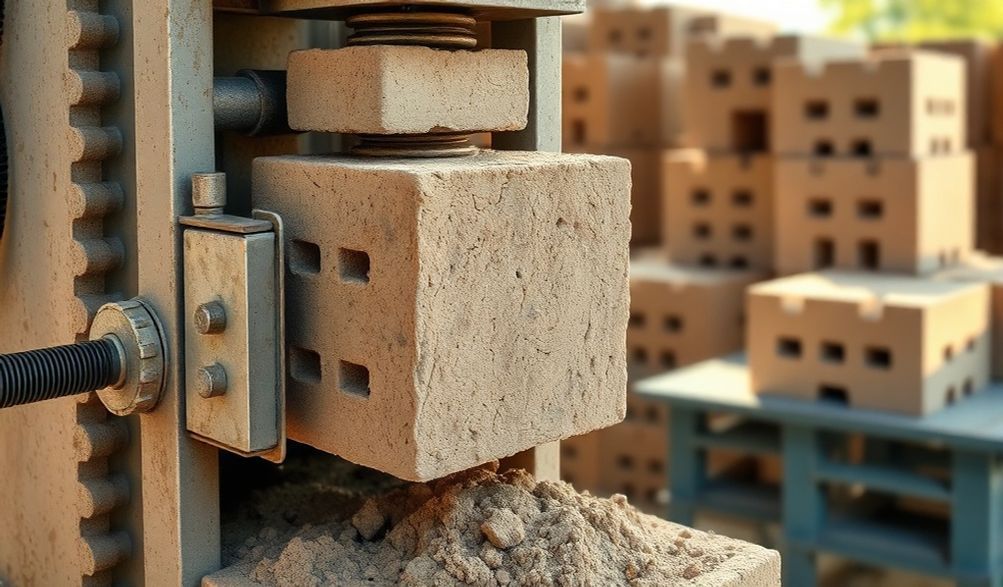
Qisqargan Tuproq Blok Presslarining Yakuniy Qo‘llanmasi: Barqaror Qurilishni Asosdan Boshlash
Tasavvur qiling, arzon, mustahkam va go'zal uy-joyning kaliti uzoq bir fabrikada emas, balki oyoq ostimizdagi tuproqda yashiringan bo'lsa. Barqaror qurilishga bo'lgan ehtiyojning ortishi va global material narxlarining oshishi bilan birga, sekin, ammo kuchli bir inqilob yuz bermoqda. Agar mahalliy tuproqdan kuchli va ekologik toza inshootlar qura olsangiz-chi? Bu ibtidoiy loy kulbalarga qaytish emas, balki muhim bir mashina yordamida amalga oshiriladigan zamonaviy qurilish usuli:siqilgan loy blok pressi.
Ushbu muhim qurilma xom, tuproq ostidagi materialni aniq, yuqori samarali qurilish bloklariga aylantiradi. Ushbu yakuniy qo'llanma sizning keng qamrovli, mutaxassis manbayingiz bo'lib xizmat qiladi. Siz amaliyotchi DIY ishqibozi, professional quruvchi, bardoshli loyihalar yaratadigan me'mor yoki barqarorlik tarafdori bo'ling, biz jarayonni soddalashtiramiz. Biz press turlarini, ularning chuqur afzalliklarini, to'g'ri mashinani qanday tanlashni va muvaffaqiyatingizni ta'minlash uchun operatsion eng yaxshi amaliyotlarni o'rganamiz — bularning barchasi amaliy bilim va isbotlangan muhandislik tamoyillariga asoslanadi.
Siqilgan Tuproq Blok Pressi nima? Tuproq Qurilishining Dvigateli
Uning mohiyatida, siqilgan tuproq blok (STB) pressi tuproqdan bir xil qurilish materiallarini yaratish uchun mo'ljallangan oddiy, lekin kuchli mashinadir. U qadimiy donolik va zamonaviy muhandislikning uyg'unlashuvini ifodalayib, samarali va o'lchovli loy qurilishini ta'minlaydi.
Asosiy Funktsiya va Asosiy Mexanikalar
Prinsip juda sodda va nafis. CEB pressi po'lat qoli yoki "qolip" ichiga joylashtirilgan nam tuproq aralashmasiga yuqori mexanik bosimni—odatda bir necha yuzdan 2000 PSI dan oshiqgacha bo'lgan oralig'da—tatbiq etadi.
- Kirish:Tayyorlangan tuproq, qum va ko'pincha sement yoki ohak kabi kichik foizli stabilizator aralashmasi.
- Jarayon:Aralashma qo'lda dastak yoki gidravlik press yordamida siqiladi, bu esa zarralarni zich joylashtirib, havo bo'shliqlarini yo'q qiladi va kuchli o'zaro bog'lanishlar hosil qiladi.
- Chiqish:Mashina qattiq, bir xil o‘lchamdagi blokni chiqaradi, u darhol qayta ishlash va qurilish uchun mustahkamlash uchun yetarlicha barqarordir.
Bu jarayon quyoshda quritilgan adobe g'ishtidan tubdan farq qiladigan blokni yaratadi; siqish ancha yuqori zichlik, mustahkamlik va o'lchovli muntazamlikni ta'minlaydi.
Qisqacha Tarix va Zamonaviy Ahamiyat
Loyqa bilan qurish insoniyatning eng qadimgi qurilish texnikasi bo‘lib, ming yillar davomida paxsa devorlar va xom g‘ishtlarda ko‘rinadi. Biroq, zamonaviy siqilgan loy blok (CEB) pressi 20-asr innovatsiyasidir. Hindistondagi Auroville Loyqa Instituti kabi muhandislar va mos texnologiya kashshoflari, keyinchalik esa turli tijorat ishlab chiqaruvchilari, loy bloklar ishlab chiqarishni mexanizatsiyalash va standartlashtirish uchun mashinalar yaratdilar.
Bugun bu texnologiya kuchli qayta tiklanishni boshdan kechirmoqda. Barqarorlik harakati, an'anaviy materiallarning narxining oshishi va sog'lom, tabiiy binolarga bo'lgan istaklar tufayli, CEB pressi tor doiradagi vositalardan butun dunyo bo'ylab yakka tartibdagi uylardan tortib maktab va tijorat binolarigacha bo'lgan loyihalar uchun amaliy yechimga aylandi.
CEB Press bilan qurilishning asosiy afzalliklari
CEB press bilan qurishni tanlash, nafaqat qurilish qarori, balki ko'p qirrali afzalliklar taqdim etadigan qurilish falsafasiga sarmoya kiritishdir.
Nobatdosh Barqarorlik va Past Ekologik Ta'sir
CEB-larning ekologik ko'rsatkichlari juda yuqori bo'lib, ular muhim ekologik muammolarni hal qiladi.moddiy energiyamaterialning hayotiy tsikli davomida iste'mol qilingan umumiy energiya.
- Mahalliy Materiallar:Asosiy tarkibiy qism ko'pincha qurilish maydonchasi ustida yoki unga yaqin joyda mavjud bo'lib, bu transport chiqindilari va xarajatlarini keskin kamaytiradi.
- Minimal Processing: Unlike fired bricks or concrete, CEBs require no high-temperature kilns, resulting in drastically lower carbon footprint.
- Non-Toxic & Recyclable: The blocks are made of natural earth, creating healthy indoor air quality. At end-of-life, they can simply return to the earth or be crushed and reused.
- Thermal Performance: The high thermal mass of earth walls naturally regulates indoor temperatures, absorbing heat during the day and releasing it at night, which reduces reliance on mechanical heating and cooling.
Exceptional Durability and Performance
Don’t let the “earth” fool you. Properly made compressed earth blocks are high-performance building components.
- Siqilish kuchi: When stabilized and properly compacted, CEBs can easily meet or exceed the compressive strength requirements for load-bearing walls in residential construction (often achieving 600+ PSI). Standards like ASTM D1633 provide testing frameworks.
- Yongʻin qarshiligi: Earth does not burn. CEB walls provide a superior fire rating, a critical safety benefit.
- Pest and Mold Resistance: The density and mineral composition deter insects and rodents, and the blocks are resistant to mold growth when properly detailed.
- Longevity: Historical examples of earthen structures standing for centuries are a testament to the material’s inherent durability when protected from direct weathering.
Significant Cost-Effectiveness
The economic model for CEB construction is unique, shifting costs from ongoing material purchases to a one-time equipment investment.
- Low Material Cost: Soil is typically the lowest-cost construction material imaginable. Stabilizer (cement/lime) is the primary purchased input, often comprising only 5-10% of the mix.
- Mehnatni kamaytirish: While pressing blocks requires labor, the simplicity of the system and the large block size can lead to faster wall assembly compared to smaller units like conventional bricks.
- Uzoq muddatli jamg'arma: The energy efficiency gained from the thermal mass translates to decades of lower utility bills, a powerful financial advantage over the life of the building.
Types of Compressed Earth Block Presses: Choosing the Right Machine
Not all CEB presses are created equal. Your project’s scale, budget, and context will determine the ideal machine type.
Manual / Lever Presses
These are human-powered machines, using a long lever to generate the necessary compression force.
- Afzalliklari: Lowest upfront cost, complete independence from power sources, highly portable, and excellent for educational or community-building settings.
- Kamchiliklari: Physically demanding, with a relatively low production rate (often 50-100 blocks per person, per day).
- Eng yaxshisi: DIY owner-builders, small projects (garden walls, sheds, tiny homes), workshops, and remote off-grid locations.
Mechanical / Hydraulic Presses
These motorized presses use a hydraulic system—powered by an electric motor, gasoline engine, or tractor PTO—to generate consistent, high pressure.
- Afzalliklari: High, consistent production (hundreds to over a thousand blocks per day), superior block uniformity, reduced operator fatigue, and greater pressure control.
- Kamchiliklari: Significant increase in cost, requires a power source, heavier and less portable.
- Eng yaxshisi: Commercial block production, larger home builds, community housing projects, and any operation where volume and efficiency are priorities.
Mobile vs. Stationary Presses
A key consideration is mobility. Some hydraulic presses are mounted on trailers (mobile presses) to be towed directly to the building site, pressing blocks exactly where they will be used. Stationary presses are set up in a central yard, requiring block transportation to the site. Mobile setups eliminate double-handling of materials, a major logistical advantage.
Critical Specifications to Compare
When evaluating machines, look beyond the type and scrutinize these key specs:
- Pressure Output (PSI/MPa): The core determinant of block strength. Higher pressure generally yields stronger, denser blocks.
- Block Dimensions: The size and shape of the block the mold produces. Interlocking block designs can speed up construction and reduce mortar use.
- Production Rate: Often listed as blocks per hour. Remember, this is a maximum under ideal conditions; real-world rates are slower.
- Power Source & Requirements: Electric (single or three-phase), gasoline/diesel engine, or manual.
- Qurilish Sifati: The robustness of the frame, the quality of the hydraulic components, and the thickness of the steel mold are direct indicators of longevity.
The Complete Process: From Soil to Solid Block
Success with a CEB press hinges on a disciplined process. Skipping steps, especially the first one, is the most common cause of project failure.
Step 1: Soil Testing and Mix Design
This is the non-negotiable foundation. Not all dirt is suitable. The ideal soil for CEBs is often called a “sandy clay” or “clayey sand,” containing a balanced mix of clay (the binder), silt, and sand (the aggregate).
- Expertise in Action: Perform simple soil suitability field tests first:
- The Jar Test: Place soil in a clear jar with water, shake, and let it settle into distinct layers of sand, silt, and clay to estimate mix proportions.
- The Ribbon Test: Moisten soil and try to roll it into a thin ribbon. How long it holds indicates clay content.
- Professional Analysis: For any serious project, send soil samples to a lab for a sieve analysis and Atterberg limits test. This data is invaluable for creating a reliable, repeatable mix design.
Step 2: Material Preparation and Mixing
Once your soil recipe is determined, preparation is key.
1. Screening: Remove stones, roots, and organic matter.
2. Batching: Precisely measure soil, sand, and stabilizer (e.g., 85% soil, 10% sand, 5% Portland cement).
3. Aralash: Use a pugmill mixer or a rotary drum mixer to achieve a homogeneous blend. Uniform moisture content is critical—the mix should hold its shape when squeezed without dripping water.
Step 3: Pressing and Curing
- Pressing: Load the mix into the press’s chamber, activate the press, and eject the finished block. Operators quickly develop a rhythm for optimal production.
- Davolash: This is where blocks gain their strength. Stack them in a shaded, well-ventilated area and keep them damp (by misting or covering with plastic) for 7-14 days for cement-stabilized blocks. This slow curing process is essential for the chemical reactions that create long-term durability. Protect blocks from rain and direct sun during this period.
How to Select the Best CEB Press for Your Project
Making the right choice requires honest assessment of your needs and resources.
Assessing Your Project Scope and Scale
Use this simple matrix as a starting point:
* Project: Garden Wall, Small Workshop, Tiny Home (< 500 sq ft)
* Recommended Press: Manual/Lever Press.
* Project: Family Home, Small Commercial Building (500 – 2000 sq ft)
* Recommended Press: Mid-range Hydraulic Press (mobile or stationary).
* Project: Multiple Homes, Large Commercial Project, Block Production Business
* Recommended Press: High-output Industrial Hydraulic Press.
Budget Considerations: Initial Investment vs. Total Cost
Factor in the total project cost. A manual press may have a low ticket price, but the significant labor cost for a large home may justify the higher initial investment in a hydraulic machine that completes the job in a fraction of the time.
Evaluating Machine Quality and Supplier Reputation
Your press is a long-term asset. Investigate thoroughly:
* Machine Durability: Look for thick steel plate construction, reputable hydraulic components (e.g., Prince, John Deere), and hardened steel wear parts.
* Supplier Trustworthiness: Choose manufacturers or distributors known for technical support. Do they offer clear manuals, instructional videos, and readily available spare parts?
* Community Proof: Seek out user testimonials, ask suppliers for references, and connect with past customers. A company’s willingness to connect you with its user community is a strong positive signal.
Frequently Asked Questions (FAQ) About CEB Presses
Q1: What kind of soil do I need for a compressed earth block press?
A: You generally need a blend of clay, silt, and sand. Pure clay will crack, and pure sand won’t bind. The “ideal” is often 15-30% clay, with the remainder being a mix of sand and silt. Always start with soil testing.
Q2: Do compressed earth blocks need to be stabilized with cement?
A: Not always, but it is highly recommended for most climates. Cement or lime stabilization (5-10% by volume) dramatically increases weather resistance, durability, and compressive strength, especially in areas with freeze-thaw cycles or high rainfall. Unstabilized blocks can be used in arid climates but require protective plasters.
Q3: How many blocks can a typical press produce per day?
A: This varies massively. A dedicated individual with a manual press might produce 80-150 blocks in a day. A two-person team with a hydraulic press can produce 500-800+ blocks in a day. Remember, site preparation, mixing, and curing are the real time factors, not just pressing speed.
Q4: Are buildings made with CEBs up to code?
A: Building codes are increasingly recognizing earthen construction. The International Residential Code (IRC) includes appendix AU for “Earthen Building Construction.” The key is to work with a local engineer and building official early in the process. Providing them with data from your soil tests and block strength tests is essential for obtaining approval.
Q5: What is the maintenance like for a CEB press?
A: Maintenance is straightforward but vital. For hydraulic presses: regularly check and change hydraulic fluid, clean the machine after use to prevent soil buildup, and grease all moving pins and bearings. Inspect the mold and ram for wear. Manual presses require similar cleaning and lubrication of pivot points.
Conclusion: Building a Sustainable Future, One Block at a Time
Thesiqilgan loy blok pressi is more than a piece of machinery; it is a tool of empowerment. It enables the creation of affordable, ecological, and profoundly durable buildings that connect us to our local environment and heritage.
As you embark on this journey, ground yourself in mutaxassislik: begin with soil science, understand the engineering principles, and seek quality training. Leverage the collective tajriba of the global natural building community. And invest in ishonchli equipment and knowledge.
Your Next Step:
* For the Researcher: Download our detailed guide to simple soil testing methods.
* For the Ready-to-Buy Builder: Contact our specialist team for a personalized equipment recommendation based on your project plans.
* For the Learner: Explore our curated directory of hands-on CEB workshops and training programs worldwide.
By choosing to build with earth, you are not just constructing a wall. You are laying the foundation for a more resilient, sustainable, and equitable future—one solid, beautiful block at a time.
<