
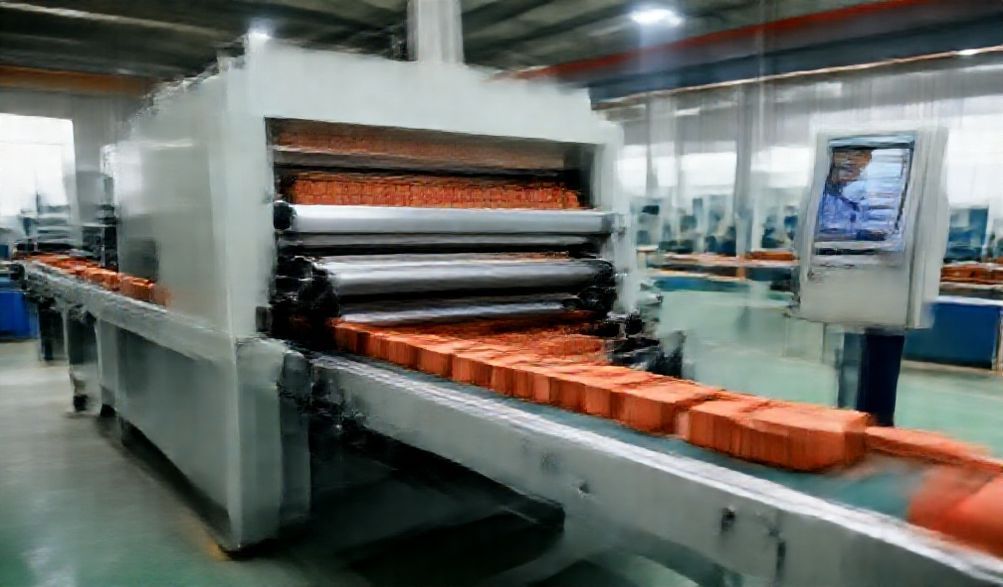
Panduan Utama Anda untuk Mencari Mesin Pembuat Batu Bata Liat China: Pemasok, Penjualan & Pemilihan
Di era urbanisasi yang cepat dan semakin pentingnya konstruksi berkelanjutan, batu bata tanah liat tetap menjadi bukti abadi akan daya tahan dan ramah lingkungan. Seiring melonjaknya permintaan global akan bahan bangunan yang andal, mesin-mesin penghasil batu bata ini menjadi tulang punggung industri. China telah menegaskan posisinya sebagai pusat manufaktur global untuk peralatan penting ini, menawarkan beragam mesin pembuat batu bata tanah liat yang tak tertandingi untuk dijual.
Namun, menavigasi lanskap pemasok yang luas dan kompleks ini dari luar negeri bisa menjadi hal yang menakutkan. Bagaimana cara membedakan mitra yang terpercaya dari sekian banyak daftar daring? Bagaimana cara memverifikasi kualitas mesin, memahami spesifikasi teknis yang rumit, dan mendapatkan dukungan purna jual yang andal di berbagai benua?
Panduan komprehensif ini adalah sumber daya strategis Anda. Dibangun berdasarkan keahlian industri dan praktik terbaik perdagangan internasional, panduan ini dirancang untuk mengungkap proses pengadaan secara jelas. Kami akan membekali Anda dengan pengetahuan untuk melakukan investasi yang terinformasi, percaya diri, dan aman dalam mesin pembuat batu bata tanah liat China, mengubah usaha yang menantang menjadi peluang pertumbuhan bisnis yang sukses.
Memahami Mesin Pembuat Batu Bata Tanah Liat: Jenis dan Teknologi
Sebelum menghubungi pemasok, pemahaman yang mendalam tentang mesin itu sendiri sangat penting. Pilihan yang tepat bergantung pada skala produksi, anggaran, dan kebutuhan teknis Anda.
Jenis Mesin Inti: Dari Manual hingga Sepenuhnya Otomatis
Tingkat otomatisasi menentukan keluaran mesin, kebutuhan tenaga kerja, dan investasi.
- Mesin Manual dan Semi-Otomatis:Ideal untuk pengusaha, startup skala kecil, atau proyek komunitas.
- Panduan: Operated primarily by hand for molding and feeding. Lowest cost, very low output.
- Semi-Otomatis: Incorporates a mechanical or hydraulic press for molding but may require manual feeding and brick removal. Offers a balance of affordability and improved production.
- Lini Produksi Sepenuhnya Otomatis: The solution for large-scale, commercial brick manufacturing plants.
- These are integrated systems where raw clay is automatically fed, mixed, extruded or pressed, cut, and stacked.
- They feature high-speed operation with minimal manual intervention, ensuring consistent quality and high volume output (thousands to tens of thousands of bricks per hour).
- Mesin Pembuat Batu Bata Seluler: A versatile option for on-site production.
- Mounted on a trailer, these machines can be transported directly to construction sites, eliminating brick transportation costs.
- They are typically diesel-powered and semi-automatic, perfect for remote projects or localized production.
Komponen Teknologi Kunci Dijelaskan
Understanding these core systems will help you evaluate supplier specifications and ask the right questions.
- Sistem Cetakan: Jantung Mesin
- Hydraulic Molding: Uses hydraulic pressure to compress clay into molds. It offers greater pressure control, produces denser and stronger bricks, and allows for more complex shapes. It is the standard for high-quality automatic machines.
- Mechanical/Vibration Molding: Uses a vibrating table to compact clay in a mold. Often more cost-effective and suitable for standard hollow or solid bricks, but may not achieve the same compressive strength as hydraulic systems.
- The Mixing and Feeding System: Consistency is key.
- A robust mixer (often a double-shaft or planetary mixer) ensures the clay and additives (like sand or fly ash) are homogeneously blended to the correct moisture content.
- An automated feeding system (conveyor belts or feeders) supplies the mixer and transfers the prepared material to the molding system without interruption.
- Sistem Kendali: Otak dari Operasi
- PLC (Programmable Logic Controller) System: Found in automatic lines. It allows for programmable operation, precise control over pressure, time, and sequences, and often includes a touch-screen interface for easy monitoring and adjustment.
- Manual Control: Involves physical switches and levers. Common in semi-automatic and manual machines, requiring more operator skill and attention.
Why Source from China? Analyzing the Supplier Market
China’s dominance in this sector is no accident. Sourcing from China presents distinct advantages, but a savvy buyer must also be aware of the challenges.
The Competitive Advantages of Chinese Manufacturers
- Cost-Effectiveness and Scale: Leveraging massive production scales and efficient supply chains, Chinese manufacturers offer significantly competitive pricing without necessarily sacrificing capability.
- Unmatched Range and Customization: Whether you need a simple manual press or a fully automated palletized plant, the variety is immense. Most reputable suppliers also have in-house R&D to modify molds and machine parameters for custom brick designs.
- Mature Industrial Ecosystem: A deep, localized network of component suppliers (for hydraulics, motors, PLCs, steel) means easier maintenance, faster spare parts sourcing, and continuous technological iteration.
Recognizing Potential Challenges and How to Mitigate Them
- Language and Communication Barriers: Misunderstandings can lead to costly errors.
- Mitigation: Insist on communication with a fluent English-speaking technical sales engineer. Use detailed drawings, videos, and specifications. Confirm all agreements in writing.
- Varying Levels of Quality: The market has both top-tier manufacturers and lower-quality workshops.
- Mitigation: This is where rigorous vetting (detailed in the next section) is non-negotiable. Never base a decision on price alone.
- Logistics and Shipping Complexities: International freight, customs clearance, and port duties require planning.
- Mitigation: Work with suppliers experienced in export. Understand Incoterms (like FOB or CIF) clearly. Consider using a freight forwarder.
How to Identify and Vet a Reliable Supplier in China
This is the most critical step in your journey. Due diligence separates successful partnerships from regrettable purchases.
Kredensial Pemasok Esensial yang Perlu Diverifikasi
- Business License & Verification: Use B2B platform tools (like Alibaba’s “Verified Supplier” or “Trade Assurance”) as a starting filter, but don’t stop there.
- Factory Audit Reports and Certifications: Request recent audit reports from independent third parties like SGS, Bureau Veritas, or TÜV. ISO 9001 certification for quality management is a strong positive indicator.
- Evidence of Real Manufacturing: Ask for:
- Photos and videos of the factory floor, not just stock images.
- Proof of a dedicated R&D and quality control department.
- Details of their welding, machining, and assembly workshops.
Due Diligence Checklist for Buyers
- Request Comprehensive Documentation: Ask for detailed technical specification sheets, electrical diagrams, and parts catalogs—not just glossy brochures.
- Demand Customer References: A trustworthy supplier will provide contactable references from previous international clients in a similar region or industry. Follow up on these.
- Analyze Digital Footprint: Scrutinize their company website, LinkedIn profile, and YouTube channel for professionalism. Read both positive and negative B2B platform reviews critically.
- Test Communication: Gauge their responsiveness and technical depth during your inquiries. Do they ask insightful questions about your clay properties and production goals?
The Procurement Process: From Inquiry to Delivery
Understanding the standard workflow helps manage expectations and ensures a smooth transaction.
Step-by-Step Guide to Placing Your Order
- Initial Inquiry & Quotation: Provide a detailed request including desired output, brick type/size, clay characteristics, and degree of automation. A serious supplier will respond with a tailored quotation, not a generic price list.
- Negotiation & Contract: Discuss final price, payment terms (typically 30% T/T deposit, 70% before shipment), warranty period (usually 12-18 months), and delivery timeline. Ensure everything is captured in a formal Proforma Invoice (PI) or sales contract.
- Pre-Shipment Inspection (PSI): This is your primary quality control. Hire a third-party inspector or plan to visit the factory yourself to test the machine’s assembly and run production samples before it is crated. Never skip this step.
- Shipping & Customs: The supplier will handle packaging and delivery to the port. Based on your agreed Incoterms, you or your agent will manage sea/air freight, insurance, and customs clearance in your country.
Navigating After-Sales Support and Service
The relationship with your supplier should not end at delivery.
- Garansi: Clarify exactly what is covered (parts, labor, shipping for defective parts) and what is considered wear-and-tear.
- Pemasangan & Pelatihan: Most suppliers provide detailed installation manuals, foundation drawings, and video guides. For complex lines, you can negotiate for an engineer to supervise installation (costs for flight, visa, and per diem apply).
- Spare Parts & Ongoing Support: Confirm the long-term availability of spare parts. Establish clear communication channels (e.g., WhatsApp, email) for technical support. A good supplier will offer remote troubleshooting via video call.
Key Considerations Before You Buy: Matching Machine to Need
Avoid the common pitfall of buying an over- or under-specified machine.
Menilai Kebutuhan Produksi Anda
- Kapasitas Output: Calculate your real needs in bricks per hour or 8-hour shift. Factor in future growth.
- Spesifikasi Bata: Precisely define the type (solid, hollow, interlocking), size, and desired compressive strength.
- Raw Material Analysis: The properties of your local clay (plasticity, shrinkage, moisture content, abrasiveness) are crucial. Share samples with your supplier so they can recommend the appropriate mixing and molding technology.
Analisis Total Biaya Kepemilikan
Look beyond the sticker price.
- Biaya Operasional: Calculate energy consumption (powerful motors and hydraulic systems), labor costs (automatic vs. manual), and consumables (mold wear parts).
- Efisiensi Energi: Modern machines with efficient motors and well-designed hydraulic systems will save significant money over years of operation.
- Durability & Maintenance: A machine built with thicker steel, branded PLCs (e.g., Siemens, Mitsubishi), and quality hydraulic components (e.g., Rexroth, Yuken) will have less downtime and a longer lifespan, offering a better return on investment.
Pertanyaan yang Sering Diajukan (FAQ)
Q1: What is the average price range for a clay brick making machine from China?
A: Prices vary dramatically based on automation and output. A small manual machine can start from $3.000 – $8.000. A robust semi-automatic machine may range from $15.000 – $50.000. A fully automatic production line can cost anywhere from $70,000 to over $300,000. Always obtain detailed, itemized quotes.
Q2: Can suppliers provide customized machines for specific brick designs?
A: Yes, most reputable manufacturers offer customization. This primarily involves creating new molds for the desired brick shape and size. For major design changes, their R&D team can assess feasibility. Always provide clear drawings, samples, or 3D models to ensure accuracy.
Q3: How do I handle machine installation and operator training?
A: Suppliers provide foundational drawings and manuals. For complex lines, it is highly advisable to budget for a technician from the supplier to supervise installation and conduct on-site training for 1-2 weeks. This upfront cost prevents costly operational errors.
Q4: What are the most trusted B2B platforms to find suppliers?
A: Platforms like Alibaba.com, Made-in-China.comdanGlobalSources.com are common starting points. Use their verification filters, but remember: a platform profile is just an advertisement. The vetting process outlined in this guide must be applied independently.
Kesimpulan
Sourcing a clay brick making machine from China is a strategic process that blends technical understanding with diligent partnership building. It begins with comprehending the machinery that fits your vision, leverages the competitive advantages of the Chinese market, and culminates in the meticulous vetting of a supplier who will act as a long-term partner for your business.
Remember, the goal is not merely to find the lowest price, but to secure the highest value—a reliable machine backed by dependable service that will produce quality bricks for years to come. Use the checklist and insights in this guide as your roadmap.
Ready to start your search? Systematically evaluate potential suppliers using the criteria in Section 3, ask detailed, technical questions, and never underestimate the importance of a pre-shipment inspection. Your informed approach is the foundation of a successful investment.
<