
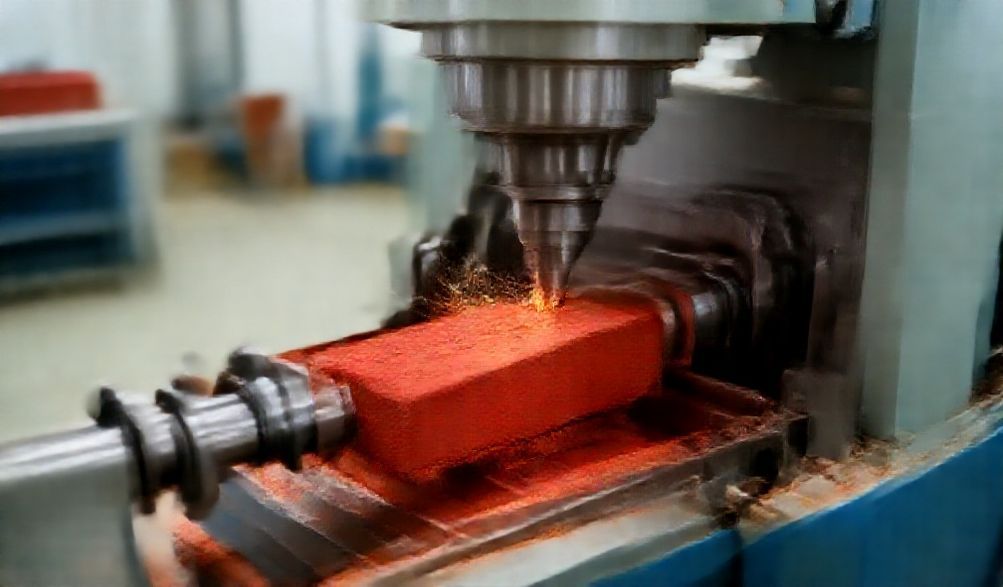
Harga Mesin Pembuat Batu Bata Tanah Liat: Panduan 2026 dari Pabrik Pembuat Blok FUDA
Pengantar
Menemukan mesin pembuat batu bata tanah liat yang andal dengan harga wajar yang menjamin profitabilitas jangka panjang bisa menjadi tugas yang menantang. Pasar dipenuhi berbagai pilihan, dan harga awal yang tertera bisa menyesatkan. Biaya awal yang rendah mungkin mengakibatkan biaya operasional tinggi, sementara mesin premium memerlukan investasi yang signifikan. Bagaimana cara menavigasi hal ini untuk membuat pilihan yang membangun bisnis Anda, bukan membebaninya?
Sebagai produsen terkemuka dengan pengalaman lebih dari dua dekade dalam rekayasa mesin pembuat blok, FUDA Factory menyediakan panduan transparan ini. Tujuan kami adalah membantu Anda menavigasi pasar yang kompleks, memahami faktor-faktor sebenarnya di balikHarga mesin pembuat bata tanah liatdan membuat investasi yang terinformasi yang memberikan pengembalian yang kuat.
Postingan ini akan mengungkap struktur harga, menjelaskan elemen-elemen kritis yang memengaruhi biaya—mulai dari tingkat otomatisasi hingga kualitas pembangunan—dan menunjukkan cara menilai nilai total sebuah mesin jauh melampaui penawaran awal. Baik Anda seorang pengusaha pemula yang membandingkan harga, firma konstruksi yang merencanakan anggaran, atau manajer proyek yang mencari pemasok tepercaya, panduan ini menawarkan wawasan yang dapat diterapkan untuk tahun 2026 dan seterusnya.
Memahami Mesin Pembuat Batu Bata Tanah Liat: Jenis & Kemampuan
Sebelum menganalisis harga, penting untuk memahami apa yang Anda beli. Mesin pembuat batu bata tanah liat bukan hanya alat tekan; itu adalah sistem produksi yang mengubah tanah liat mentah menjadi balok bangunan standar dan berkekuatan tinggi. Mesin yang tepat meningkatkan efisiensi, menjamin kualitas yang konsisten, dan menjadi tulang punggung operasi yang menguntungkan.
Perbedaan inti antara model-model terletak pada tingkat otomatisasinya, yang secara langsung menentukan keluaran, kebutuhan tenaga kerja, dan pada akhirnya, harga.
Mesin Manual vs. Semi-Otomatis vs. Otomatis Penuh
-
Mesin Manual:Ini adalah mesin cetak paling dasar yang dioperasikan secara manual. Operator memasukkan material secara manual, mengoperasikan tuas, dan mengeluarkan batu bata yang sudah jadi.
- Keluaran:Rendah (100-500 bata per shift 8 jam).
- Tenaga Kerja:Tinggi, intensif secara fisik, dan bergantung pada keterampilan.
- Ideal Untuk:Proyek berskala sangat kecil, daerah pedesaan dengan biaya tenaga kerja rendah, atau produksi khusus yang bersifat kerajinan tangan.
-
Mesin Semi-Otomatis:Kategori ini mewakili titik ideal bagi banyak usaha kecil hingga menengah. Mereka menggunakan sistem mekanis atau hidraulik yang digerakkan oleh listrik, tetapi memerlukan pengumpanan bahan baku atau pengeluaran batu bata secara manual.
- Keluaran:Sedang (1.000 – 3.000 bata per jam).
- Tenaga Kerja:Sedang, membutuhkan 2-4 operator untuk pemberian pakan dan penanganan.
- Ideal Untuk:Lahan pembangunan yang berkembang, perusahaan konstruksi yang memasok proyek mereka sendiri, dan pengusaha dengan permintaan pasar yang stabil.
-
Mesin Sepenuhnya Otomatis:Ini adalah lini produksi industri. Mereka mengintegrasikan pengumpanan material otomatis, pengepresan, pematangan, dan penumpukan, yang sering dikendalikan oleh Programmable Logic Controller (PLC).
- Keluaran:Tinggi (3.000 – 10.000+ bata per jam).
- Tenaga Kerja:Rendah, terutama untuk pengawasan dan perawatan.
- Ideal Untuk:Pabrik bata komersial skala besar, proyek infrastruktur pemerintah, dan bisnis ekspor volume tinggi.
| Jenis | Kapasitas Output (Perkiraan) | Tenaga Kerja Dibutuhkan | Ideal Untuk |
| :— | :— | :— | :— |
| Manual100-500 bata/shift | Tinggi (2-3 pekerja terampil) | Bengkel kerajinan, proyek mikro
| Semi-Otomatis1.000 – 3.000 bata/jam | Sedang (2-4 operator) | UKM, perusahaan konstruksi, halaman blok
| Sepenuhnya Otomatis3.000 – 10.000+ bata/jam | Rendah (1-2 penyelia) | Pabrik besar, produksi industri
Komponen Utama Mesin yang Mempengaruhi Kinerja
Harga dan performa tertanam dalam komponen mesin. Berikut yang perlu diperiksa:
- Kualitas & Desain Cetakan:Jantung mesin. Cetakan berpresisi tinggi dengan kandungan kromium tinggi menghasilkan bata dengan tepian tajam dan dimensi konsisten. Cetakan murah cepat aus, mengakibatkan produk cacat.
- Sistem Hidrolik:Ototnya. Pompa dan silinder hidrolik bermerek yang andal memastikan tekanan konsisten untuk kepadatan dan kekuatan bata yang seragam. Kebocoran atau kegagalan pada sistem murah menyebabkan waktu henti yang besar.
- Motor Getar:Penting untuk memadatkan tanah liat. Motor yang kuat dan seimbang memastikan bata padat dan bebas rongga, yang krusial untuk kekuatan tekan.
- Sistem Kontrol:Otak. Dari panel relay sederhana hingga PLC layar sentuh canggih, ini menentukan kemudahan operasi, presisi, dan kemampuan diagnostik.
- Bingkai & Struktur:Kerangka. Rangka baja yang kokoh dan terlas menahan getaran dan tekanan konstan. Rangka yang rapuh akan melengkung, menyebabkan ketidaksejajaran dan kerusakan.
Apa yang Menentukan Harga Mesin Pembuatan Bata Tanah Liat?
TheHarga mesin pembuat bata tanah liattidak sembarangan. Ini merupakan cerminan langsung dari kemampuan mesin, daya tahan, serta dukungan di baliknya. Memahami faktor-faktor ini memungkinkan Anda untuk membandingkan hal yang setara.
Tingkat Otomatisasi (Faktor Biaya Terbesar)
As outlined above, automation is the primary price determinant. A manual press is a simple tool. A fully automatic line is a factory in itself, with conveyors, mixers, and robotic stackers. Each step towards full automation adds complexity, more components, and sophisticated software, increasing the cost exponentially.
Kapasitas Produksi dan Spesifikasi Keluaran
A machine rated for 2,000 bricks per hour will cost less than one rated for 5,000 bricks per hour, even within the same automation category. Furthermore, versatility commands a premium. A machine that can produce multiple brick sizes (solid, hollow, paving) by quickly changing molds is more valuable than a single-purpose model.
Build Quality and Material Durability
This is where hidden value—or cost—resides. Consider:
* Bingkai: Standard steel vs. reinforced, stress-relieved steel.
* Hidrolika: Generic parts vs. reputed brands like Rexroth or Parker.
* Electricals: Off-the-shelf components vs. industrial-grade Siemens or Schneider systems.
The latter in each pair costs more upfront but drastically reduces lifetime maintenance costs and downtime.
Brand Reputation and After-Sales Service
An established brand like FUDA invests in R&D, quality control, and support infrastructure. Our pricing reflects not just the physical machine, but also the peace of mind that comes with a comprehensive warranty, readily available spare parts, and access to technical support. A cheaper, no-name machine often comes with no safety net, turning a minor fault into a catastrophic business stoppage.
Price Ranges: What to Expect in 2026
To set realistic budgeting expectations, here are general price brackets for new equipment. Critical Note: These are indicative ranges for the machine itself. Final prices vary significantly based on specific configuration, optional features, shipping, duties, and local market conditions. Always contact us for a detailed, no-obligation quote.
Entry-Level (Manual/Small Semi-Auto) Machines
- Kisaran Harga: $3,000 – $20,000
- Specs & Projects: Ideal for starting a small block yard or supplying bricks for localized construction. Output is suitable for meeting the demand of a few housing projects or commercial builds annually.
Mid-Range (Semi-Automatic & Standard Automatic) Machines
- Kisaran Harga: $25,000 – $80,000
- Specs & Projects: The workhorse for serious businesses. These machines offer a balance of output and investment, capable of supplying multiple projects or establishing a strong regional supply presence. Often include better vibration systems and more durable components.
High-Capacity (Fully Automatic Production Lines)
- Kisaran Harga: $100,000 – $500,000+
- Specs & Projects: These are custom-engineered solutions. The price includes integrated systems: automatic clay mixers and feeders, high-pressure multi-cavity presses, conveyor systems, and automated pallet stackers. Designed for 24/7 industrial production to supply large-scale urban development or export markets.
Why Choose FUDA as Your Block Making Machine Factory?
As you evaluate Harga mesin pembuat bata tanah liat, the supplier’s credibility is as important as the spec sheet. Here’s why partnering with FUDA is a strategic investment.
Our Manufacturing Expertise & Experience
With a history spanning 20+ years, FUDA has evolved from a local workshop to an international exporter, shipping to over 40 countries across Africa, Southeast Asia, and South America. Our dedicated R&D team continuously refines designs based on real-world feedback from diverse clay types and climates.
Quality Assurance and Machine Longevity
Every FUDA machine undergoes a rigorous 72-hour production test before leaving our factory. We use CNC cutting for precision parts, stress-relieved steel for frames, and source key components from certified suppliers. The result is a machine built not just to work, but to endure for a decade or more.
Comprehensive After-Sales Support
We sell partnerships, not just products. Our support package includes:
* Detailed installation manuals and video guides.
* Optional on-site installation and commissioning by our engineers.
* Comprehensive operator and maintenance training.
* A clear warranty policy and a readily available inventory of spare parts.
* Remote troubleshooting support via video call.
Customizable Solutions for Your Needs
We understand that one size does not fit all. Whether you’re working with laterite soil, shale, or mixed clay, our engineers can recommend the optimal moisture content, pressure, and vibration settings. We tailor the machine configuration to your specific raw materials, budget constraints, and production goals.
Calculating Your True Investment: Beyond the Sticker Price
A savvy investor looks at Total Cost of Ownership (TCO). The machine price is just the entry ticket.
Analyzing Return on Investment (ROI)
Use this simplified framework:
ROI = (Annual Profit from Brick Sales - Annual Operational Costs) / Total Machine Investment
A higher-priced, efficient machine with low operational costs can have a faster ROI than a cheap, problematic one.
Factoring in Operational Costs
- Konsumsi Energi: Fully automatic lines are more energy-efficient per brick produced than running multiple manual presses.
- Pemeliharaan: Scheduled maintenance with quality parts prevents costly breakdowns.
- Tenaga Kerja: Calculate the wage cost per thousand bricks. Automatic machines dramatically reduce this figure.
- Suku Cadang: Consider the availability and cost of wear parts like molds and hydraulic seals.
The Hidden Cost of a “Cheap” Machine
The true expense of a low-quality machine reveals itself over time:
* Sering Rusak: Unplanned downtime means missed orders and reputational damage.
* Kualitas Bata yang Buruk: Inconsistent size or low strength leads to rejected batches and lost customers.
* Support Void: No technical help means paying high fees for local mechanics to reverse-engineer fixes.
* Short Lifespan: Replacing a machine in 3-5 years doubles your effective investment.
Frequently Asked Questions About Clay Brick Machine Prices
Q1: What is the cheapest type of clay brick making machine?
A1: Manual machines have the lowest upfront cost. However, their high labor requirement and low output mean the cost per brick can be high. For most businesses, a semi-automatic machine offers a better balance of initial investment and long-term productivity.
Q2: Does the price include installation and training?
A2: At FUDA, our base machine quote includes comprehensive digital resources: detailed installation manuals, wiring diagrams, and step-by-step video guides. On-site installation, commissioning, and hands-on training are available as part of a premium service package, which we can tailor to your needs and budget.
Q3: How long does a typical machine last, and what affects its lifespan?
A3: A well-maintained FUDA machine is engineered to last 10-15 years or more. Lifespan is directly tied to build quality, adherence to the maintenance schedule, the abrasiveness of the raw materials used, and proper operator training.
Q4: Can I get a machine that uses different raw materials (like fly ash or concrete)?
A4: Absolutely. Many of our block making machines are designed for versatility. We offer machines optimized for clay, concrete, fly ash, or even interlocking compressed earth blocks. Discuss your primary raw materials with our sales engineers to configure the perfect machine for your application.
Q5: How do I get an exact price quote from FUDA?
A5: Simply contact our team via email, phone, or our website contact form. Please provide your required output capacity (bricks per hour/day), desired level of automation, and the specific type/size of bricks you wish to produce. We will then prepare a detailed, customized proposal with a transparent price breakdown.
Kesimpulan
Navigating the Harga mesin pembuat bata tanah liat landscape requires looking at the complete picture. The final number is a synthesis of automation level, production capacity, uncompromising build quality, and the invaluable support of a reputable manufacturer. It’s an investment in your business’s productive capacity for the next decade.
At FUDA Block Making Factory, we combine decades of manufacturing expertise with a client-focused approach. We believe in building lasting partnerships by providing machinery that delivers genuine value and profitability, not just a one-time transaction.
Ready to Get a Precise Quote Tailored to Your Project?
Contact the FUDA engineering team today for a free, no-obligation consultation. Let’s discuss your needs and build a detailed proposal that maps the path to your success.
Want to explore our full range first?
Download our detailed specification catalog to compare all our clay brick and block making machine models at your own pace.