
1. Pendahuluan
Batu bata berlubang telah menjadi landasan konstruksi modern, dihargai karena desainnya yang ringan, sifat insulasi termal, efisiensi material, dan fleksibilitas struktural. Digunakan dalam dinding penahan beban, partisi non-struktural, dan struktur industri, batu bata ini memenuhi kebutuhan utama industri: mengurangi waktu konstruksi, menurunkan biaya material, dan meningkatkan efisiensi energi bangunan. Seiring melonjaknya permintaan global akan bahan konstruksi yang berkelanjutan dan hemat biaya, mesin batu bata berlubang otomatis telah muncul sebagai investasi penting bagi produsen—memungkinkan produksi volume tinggi, kualitas konsisten, dan kepatuhan terhadap standar internasional.
2. Tubuh
2.1 Memahami Mesin Bata Berongga Otomatis: Kemampuan Inti & Nilai Pasar
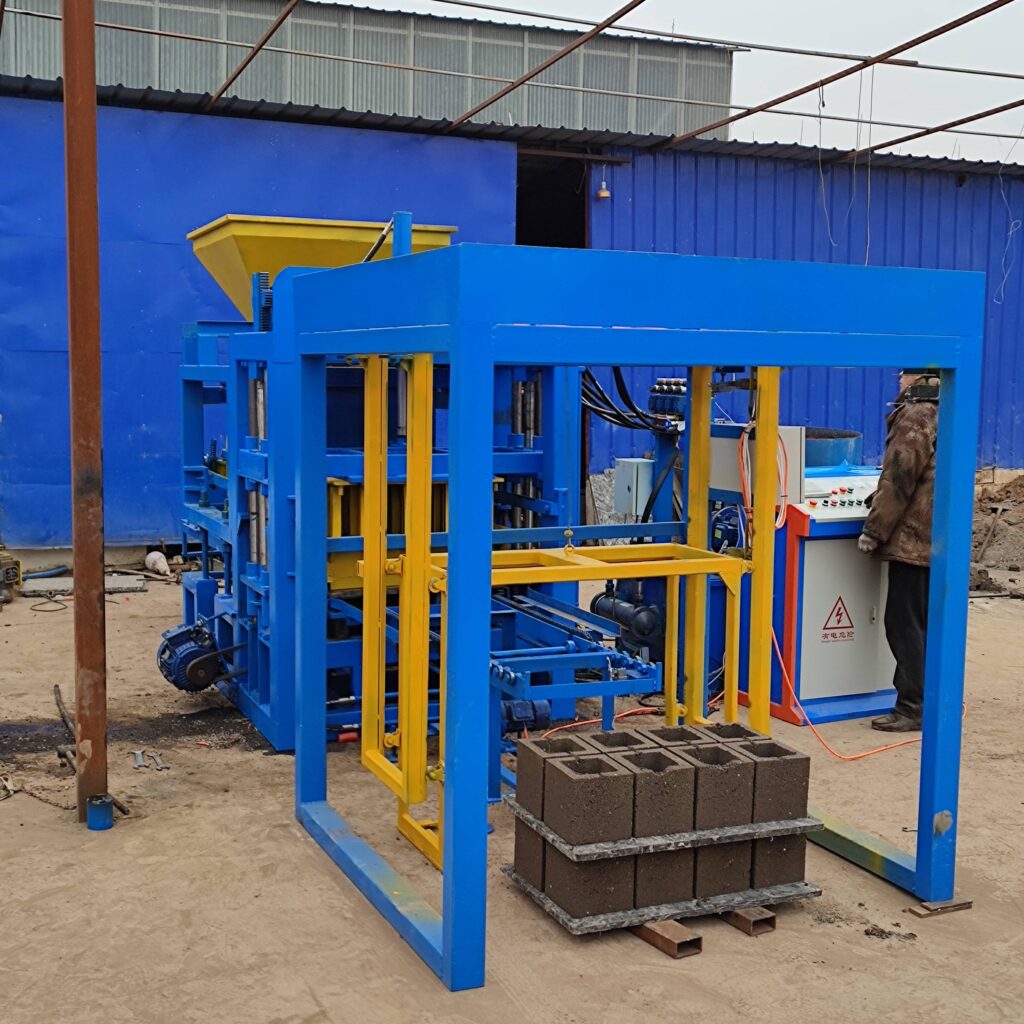
Mesin bata berongga otomatis adalah peralatan khusus yang dirancang untuk memproduksi bata berongga melalui proses otomatis—mulai dari pencampuran bahan baku, pencetakan, pengawetan, hingga penumpukan. Nilai intinya terletak pada penyelesaian keterbatasan produksi manual atau semi-otomatis: kualitas tidak konsisten, hasil rendah, biaya tenaga kerja tinggi, dan pemborosan material. Bagi distributor, mengartikulasikan proposisi nilai ini adalah kunci untuk membenarkan harga mesin dan membedakan penawaran di pasar yang kompetitif.
2.1.1 Kemampuan Teknis Utama
Mesin bata berongga otomatis didefinisikan oleh empat kemampuan kritis yang secara langsung memengaruhi harganya dan daya tarik pasarnya.
- Kapasitas ProduksiBerkisar antara 2.000 hingga 15.000 bata per jam, dengan mesin berkapasitas lebih tinggi memiliki harga premium. Kapasitas ditentukan oleh desain cetakan, tenaga hidrolik/getaran, dan tingkat otomatisasi.
- Fleksibilitas Desain Inti BeronggaMesin yang menghasilkan bata dengan konfigurasi inti berongga variabel (misalnya, 2-inti, 4-inti, 6-inti) lebih berharga, karena persentase inti berongga (biasanya 25–40%) mempengaruhi insulasi termal dan efisiensi material.
- Kompatibilitas MaterialKemampuan untuk mengolah berbagai bahan baku (beton, abu terbang, terak, agregat daur ulang) menambah nilai, terutama di wilayah dengan akses terbatas terhadap bahan tradisional.
- Integrasi OtomatisasiMesin-mesin otomatis penuh mengintegrasikan penanganan bahan baku, pencampuran, pencetakan, pematangan, dan penumpukan—mengurangi kebutuhan tenaga kerja sebesar 80–90% dibandingkan dengan produksi manual.
Kemampuan-kemampuan ini menjadikan mesin bata berongga otomatis ideal untuk berbagai aplikasi: konstruksi perumahan (perumahan terjangkau, apartemen mewah), bangunan komersial (perkantoran, mal), struktur industri (pabrik, gudang), dan proyek infrastruktur (dinding penahan, pembagi jalan). Keberagaman kegunaan bata berongga—yang dipadukan dengan produksi otomatis—menciptakan permintaan pasar yang kuat di seluruh ekonomi maju dan berkembang.
2.1.2 Faktor Pendorong Pasar untuk Mesin Bata Hollow Otomatis
Tiga tren utama mendorong permintaan global untuk mesin bata berongga otomatis, yang secara langsung memengaruhi keputusan penetapan harga dan investasi:
- Mandat Konstruksi BerkelanjutanPemerintah di seluruh dunia memberlakukan standar bangunan hijau (misalnya, LEED, BREEAM, GRIHA India) yang mengutamakan bahan dengan jejak karbon rendah. Bata berongga menggunakan 20–30% lebih sedikit bahan baku dibandingkan bata padat, mengurangi konsumsi sumber daya dan emisi. Mesin otomatis semakin meningkatkan keberlanjutan dengan meminimalkan limbah (hingga 3–5% dibandingkan 15–20% untuk produksi manual).
- Urbanisasi dan Pertumbuhan InfrastrukturUrbanisasi cepat di ekonomi negara berkembang (Cina, India, Brasil, Nigeria) mendorong permintaan akan perumahan terjangkau dan infrastruktur, menciptakan kebutuhan produksi bata berongga dalam volume tinggi. Sebagai contoh, program Pradhan Mantri Awas Yojana di India bertujuan membangun 20 juta rumah terjangkau pada 2025, yang masing-masing memerlukan ribuan bata berongga.
- Optimalisasi Biaya dalam KonstruksiBata berongga mengurangi biaya transportasi (15–20% lebih ringan daripada bata padat) dan waktu konstruksi (pemasangan lebih cepat karena bobot lebih ringan). Mesin otomatis menurunkan biaya produksi dengan mengurangi tenaga kerja dan limbah material, menjadikan bata berongga alternatif yang hemat biaya dibandingkan bata tanah liat tradisional.
Bagi distributor, tren ini berarti permintaan yang kuat di semua segmen pasar—mulai dari produsen lokal skala kecil hingga eksportir skala besar—dengan harga yang bervariasi berdasarkan kebutuhan regional dan daya beli.
2.2 Faktor-Faktor yang Membentuk Harga Mesin Bata Ringan Otomatis
Harga mesin bata berongga otomatis berkisar antara $15.000 hingga lebih dari $150.000, yang mencerminkan interaksi kompleks antara faktor teknis, operasional, dan pasar. Distributor dan pembeli harus memahami penentu-penentu ini untuk menilai nilai, membandingkan penawaran, dan bernegosiasi secara efektif.
2.2.1 Kapasitas dan Skala Produksi
Kapasitas produksi adalah penggerak harga utama, dengan mesin dikategorikan ke dalam tiga tingkatan:
- Mesin Tingkat Pemula (2.000–5.000 bata/jam):
- Kisaran Harga: $15.000–$35.000.
- Fitur Utama: Semi-otomatis hingga otomatis penuh, pencetakan dengan getaran atau tekanan hidrolik rendah, kontrol PLC dasar, dan konsumsi daya 10–25 kW.
- Ideal Untuk: Produsen skala kecil, distributor lokal, dan startup yang melayani pasar regional.
- Penggerak Harga: Jumlah cetakan (1–2 set termasuk), penumpukan manual vs. otomatis, dan jenis sistem pematangan (alami vs. semi-otomatis).
- Mesin Menengah (5.000–10.000 bata/jam):
- Kisaran Harga: $35.000–$75.000.
- Fitur Utama: Cetakan hidrolik tekanan tinggi sepenuhnya otomatis (100–200 ton), kontrol PLC canggih, ruang curing terintegrasi, dan konsumsi daya 25–50 kW.
- Ideal Untuk: Produsen skala menengah, distributor regional, dan eksportir yang melayani pasar nasional/internasional.
- Penggerak Harga: Kecepatan produksi, kompatibilitas cetakan (termasuk 3–5 set), penumpukan robotik, dan teknologi penghemat energi (penggerak frekuensi variabel).
- Mesin Kelas Atas (10.000–15.000+ bata/jam):
- Kisaran Harga: $75.000–$150.000+.
- Fitur Utama: Jalur produksi sepenuhnya otomatis, pencetakan multi-stasiun, integrasi IoT untuk pemantauan jarak jauh, sistem pengerjaan khusus, dan konsumsi daya 50–100 kW.
- Ideal Untuk: Produsen industri skala besar, eksportir global, dan kontraktor pemerintah.
- Penggerak Harga: Kapasitas produksi, sistem pengendalian mutu canggih (pengujian dimensi/kekuatan otomatis), desain modular untuk skalabilitas, dan kepatuhan terhadap standar internasional (ASTM C90, EN 771-3).
2.2.2 Teknologi Pencetakan
Dua teknologi pencetakan utama memengaruhi harga dan kinerja mesin:
- Pembentukan Getaran:
- Kisaran Harga: $15.000–$50.000 (tingkat pemula hingga menengah).
- Operasi: Menggunakan getaran frekuensi tinggi (3.000–5.000 getaran/menit) untuk memadatkan bahan baku ke dalam cetakan.
- Kelebihan: Biaya lebih rendah, efisiensi energi, dan cocok untuk bata berongga standar (kekuatan tekan: 10–20 MPa).
- Kekurangan: Terbatas pada desain inti berongga dasar; kurang presisi dibandingkan pencetakan hidrolik.
- Pencetakan Hidrolik:
- Kisaran Harga: $35.000–$150.000+ (menengah hingga tinggi).
- Operasi: Menggunakan sistem hidrolik bertekanan tinggi (100–300 ton) untuk mengompres bahan baku, memastikan kepadatan seragam dan dimensi yang presisi.
- Kelebihan: Menghasilkan bata berongga berkekuatan tinggi (20–40 MPa), mendukung desain inti berongga yang kompleks, dan menjamin kualitas yang konsisten untuk ekspor.
- Cons: Higher upfront cost and energy consumption.
Hydraulic molding machines command a 30–50% price premium over vibration molding machines, but their ability to produce high-quality, export-grade bricks justifies the investment for manufacturers targeting premium markets.
2.2.3 Material Compatibility and Waste Reduction
Machines that process a wide range of raw materials (concrete, fly ash, slag, recycled aggregates) are more expensive ($5,000–$20,000 premium) but offer greater market flexibility. Key features driving price:
- Precision Dosing Systems: Ensure accurate raw material ratios, reducing waste and improving brick quality.
- Recycled Material Processing: Adaptations for handling recycled aggregates (e.g., crushed concrete, construction waste) align with sustainability trends and qualify for government subsidies.
- Waste Recovery Systems: Some high-end machines include waste recycling loops, further reducing material costs and environmental impact.
For distributors operating in regions with abundant industrial byproducts (e.g., fly ash in India, slag in China), highlighting material compatibility is a key selling point—justifying higher machine prices by lowering clients’ raw material expenses.
2.2.4 Regional Market Dynamics
Automatic hollow bricks machine prices vary significantly by region due to manufacturing costs, import duties, logistics, and demand:
- Asia-Pacific (China, India, Vietnam):
- Price Range: $15,000–$100,000.
- Drivers: Local manufacturing hubs, low labor costs, and high demand for affordable housing. Import duties are minimal (5–15%) for intra-Asia trade.
- Key Market: India (largest demand for entry-level/mid-range machines) and China (largest producer and exporter of high-end machines).
- Europe (Germany, Italy, Poland):
- Price Range: $40,000–$150,000+.
- Drivers: Strict quality standards (EN 771-3), energy efficiency requirements, and high labor costs. Import duties for non-EU machines: 10–20%.
- Key Market: Germany (high-end machines for industrial construction) and Eastern Europe (mid-range machines for residential projects).
- North America (U.S., Canada):
- Price Range: $50,000–$120,000+.
- Drivers: Compliance with ASTM C90 standards, sustainability mandates (LEED), and demand for energy-efficient building materials. Import duties: 2.5–10% for machines from Asia.
- Key Market: U.S. (mid-range/high-end machines for commercial and industrial construction).
- Africa (Nigeria, South Africa, Kenya):
- Price Range: $20,000–$80,000.
- Drivers: Urbanization, infrastructure investment, and demand for affordable housing. Prices are higher in landlocked nations due to logistics costs.
- Key Market: Nigeria (entry-level/mid-range machines) and South Africa (mid-range/high-end machines for commercial projects).
- South America (Brazil, Argentina, Colombia):
- Price Range: $25,000–$90,000.
- Drivers: Residential construction boom and government infrastructure projects. Import duties: 10–25% for most countries.
- Key Market: Brazil (largest demand for mid-range machines).
2.2.5 After-Sales Support and Warranty
A machine’s price often includes after-sales services, which can add 5–15% to the total cost. Key services impacting price:
- Garansi: 1-year warranty (standard) vs. 2–3-year warranty (adds $2,000–$8,000).
- Installation and Training: On-site installation (adds $1,000–$5,000) and operator training (adds $500–$2,000).
- Spare Parts Supply: Inclusion of essential spare parts (molds, hydraulic pumps, vibration motors) adds $1,000–$4,000.
- Technical Support: 24/7 remote support (adds $1,500–$5,000) or on-site support (adds $3,000–$10,000) for high-end machines.
For distributors, after-sales support is a critical differentiator—clients in emerging markets often prioritize reliable service to minimize downtime, even if it means paying a premium.
2.3 Total Cost of Ownership (TCO): Beyond Upfront Price
For distributors and purchasers, focusing solely on upfront price is a strategic mistake—total cost of ownership (TCO) provides a more accurate measure of a machine’s true value. TCO includes upfront price, operational costs (labor, energy, raw materials), maintenance costs, and downtime costs. Below is a TCO analysis for three machine tiers, based on global average costs:
2.3.1 Entry-Level Machine (3,000 bricks/hour)
- Upfront Price: $25,000 (semi-automatic, vibration molding).
- Operational Costs (Annual):
- Labor: 2 operators × $10,000/year = $20,000.
- Energy: 15 kW × 8 hours/day × 25 days/month × 12 months × $0.10/kWh = $3,600.
- Raw Materials: $0.10/brick × 3,000 × 8 × 25 × 12 = $720,000.
- Maintenance: 6% of upfront price = $1,500.
- Downtime Costs (Annual): 8 days × $800/day (lost production) = $6,400.
- Total TCO (5-Year): $25,000 + ($20,000+$3,600+$720,000+$1,500)×5 + $6,400×5 = $3,810,500.
- Cost per Brick: $3,810,500 ÷ (3,000×8×25×12×5) = $0.847/brick.
2.3.2 Mid-Range Machine (7,000 bricks/hour)
- Upfront Price: $50,000 (fully automatic, hydraulic molding).
- Operational Costs (Annual):
- Labor: 1 operator × $15,000/year = $15,000.
- Energy: 35 kW × 8 hours/day × 25 days/month × 12 months × $0.09/kWh = $7,560.
- Raw Materials: $0.08/brick (bulk discount) × 7,000×8×25×12 = $1,344,000.
- Maintenance: 4% of upfront price = $2,000.
- Downtime Costs (Annual): 4 days × $2,000/day = $8,000.
- Total TCO (5-Year): $50,000 + ($15,000+$7,560+$1,344,000+$2,000)×5 + $8,000×5 = $6,992,800.
- Cost per Brick: $6,992,800 ÷ (7,000×8×25×12×5) = $0.666/brick.
2.3.3 High-End Machine (12,000 bricks/hour)
- Upfront Price: $100,000 (fully automatic, multi-station hydraulic molding).
- Operational Costs (Annual):
- Labor: 2 operators × $18,000/year = $36,000.
- Energy: 60 kW × 8 hours/day × 25 days/month × 12 months × $0.08/kWh = $11,520.
- Raw Materials: $0.07/brick (bulk discount) × 12,000×8×25×12 = $2,016,000.
- Maintenance: 3% of upfront price = $3,000.
- Downtime Costs (Annual): 2 days × $4,000/day = $8,000.
- Total TCO (5-Year): $100,000 + ($36,000+$11,520+$2,016,000+$3,000)×5 + $8,000×5 = $10,432,600.
- Cost per Brick: $10,432,600 ÷ (12,000×8×25×12×5) = $0.580/brick.
Key TCO Insights:
- High-End Machines Deliver Lower Cost per Brick: Despite higher upfront prices, high-capacity machines reduce TCO due to economies of scale (lower raw material and labor costs per brick).
- Mid-Range Machines Offer Balanced Value: For most regional distributors and medium-scale manufacturers, mid-range machines provide the best balance of upfront cost and TCO savings.
- Entry-Level Machines Are Ideal for Small-Scale Operations: For manufacturers producing <3 million bricks/year, entry-level machines avoid overinvestment while delivering basic automation benefits.
For distributors, communicating TCO—rather than just upfront price—helps clients see the long-term value of higher-priced machines, increasing closing rates and customer satisfaction.
2.4 Market Segmentation and Price Sensitivity
Automatic hollow bricks machine price sensitivity varies by client segment, with distributors needing to tailor their offerings to meet unique budget and value expectations:
2.4.1 Price-Sensitive Small-Scale Manufacturers
- Profile: Rural manufacturers, local builders, and startups with limited capital.
- Budget Range: $15,000–$35,000 (entry-level machines).
- Price Drivers: Lowest possible upfront cost, easy operation, and compatibility with local raw materials.
- Value Expectations: Basic functionality (produce standard hollow bricks), minimal maintenance, and quick ROI (6–12 months).
- Target Markets: Rural Africa, South Asia, Southeast Asia, and parts of Latin America.
Distributor Strategy:
- Offer entry-level vibration molding machines with manual stacking (lower cost).
- Provide flexible payment terms (installments, down payment + balance on delivery).
- Partner with local suppliers for spare parts to reduce maintenance costs.
- Emphasize low operational costs (energy and labor) to offset upfront investment.
2.4.2 Value-Focused Medium-Scale Manufacturers
- Profile: Regional distributors, mid-sized brick makers, and small exporters.
- Budget Range: $35,000–$75,000 (mid-range machines).
- Price Drivers: Production capacity, automation level, and mold compatibility.
- Value Expectations: Consistent quality, reduced labor costs, and the ability to produce multiple hollow brick designs (standard, interlocking, decorative).
- Target Markets: Urban Asia, Eastern Europe, Southern Africa, and parts of North America.
Distributor Strategy:
- Highlight TCO savings (lower labor and material costs vs. entry-level machines).
- Offer machines with modular features (e.g., add curing chambers or additional molds later).
- Provide training and after-sales support to maximize uptime.
- Showcase case studies of similar manufacturers achieving ROI within 12–18 months.
2.4.3 Premium Large-Scale Manufacturers
- Profile: National distributors, global exporters, and industrial producers.
- Budget Range: $75,000–$150,000+ (high-end machines).
- Price Drivers: Advanced technology (PLC control, IoT integration), high production capacity, and compliance with international standards.
- Value Expectations: Maximum efficiency, minimal downtime, premium product quality (high-strength bricks), and scalability for large orders.
- Target Markets: Europe, North America, Australia, and large Asian economies (China, India, Japan).
Distributor Strategy:
- Emphasize compliance with global standards (ASTM C90, EN 771-3) to support export sales.
- Provide comprehensive after-sales support (24/7 technical support, on-site maintenance).
- Highlight scalability (modular design allows expanding production capacity by 50–100% with upgrades).
- Quantify productivity gains (e.g., “12,000 bricks/hour = 3x more output than mid-range machines”).
2.4.4 Sustainable-Focused Manufacturers
- Profile: Green builders, eco-friendly construction firms, and government contractors.
- Budget Range: $40,000–$90,000 (mid-range/high-end machines with sustainable features).
- Price Drivers: Energy efficiency, recycled material compatibility, and low carbon emissions.
- Value Expectations: Compliance with green building certifications, access to government subsidies, and reduced environmental impact.
- Target Markets: Europe, North America, Australia, and urban Asia (China, Singapore, South Korea).
Distributor Strategy:
- Highlight eco-friendly features (energy-saving motors, recycled material processing, waste reduction systems).
- Assist clients in accessing government subsidies (e.g., 20–30% subsidies for sustainable equipment in India and Europe).
- Provide documentation of environmental benefits (e.g., “reduces carbon emissions by 35% vs. traditional machines”).
- Partner with certification bodies to verify machine compliance with green standards.
2.5 Procurement and Negotiation Strategies for Distributors
To secure the best possible prices while ensuring quality and reliability, distributors should adopt a strategic procurement approach:
2.5.1 Source from Reputable Manufacturers
- Local vs. International Sourcing:
- Local Manufacturers: Offer lower logistics costs, faster delivery, and easier after-sales support. Ideal for entry-level and mid-range machines.
- International Manufacturers: Provide access to high-end technology (e.g., Chinese, German, Italian manufacturers) but require careful vetting. Use platforms like Alibaba, Made-in-China, or industry trade shows (e.g., Bauma, ConExpo) to connect with suppliers.
- Supplier Vetting Criteria:
- Experience: 5+ years in manufacturing automatic hollow bricks machines.
- Certifications: ISO, CE, ASTM, or regional quality certifications.
- Client References: Request case studies or references from clients in similar markets.
- Production Capacity: Ensure the supplier can meet your order volume (critical for bulk purchases).
2.5.2 Negotiate Effectively
- Bulk Purchase Discounts: Ordering 5+ machines can secure 10–15% discounts. For example, a mid-range machine priced at $50,000 may cost $42,500 when ordering 10 units.
- Customization vs. Cost: Waive non-essential features (e.g., IoT integration, custom packaging) to reduce prices. Focus on core features that add value for your target segment.
- Payment Terms: Negotiate flexible terms (e.g., 30% advance, 50% on delivery, 20% after installation) to improve cash flow. Some suppliers offer 2–3% discounts for upfront payments.
- After-Sales Inclusions: Negotiate to include installation, training, and a 2-year warranty in the base price—avoiding additional costs later.
2.5.3 Leverage Government Subsidies and Incentives
Many governments offer subsidies for automatic hollow bricks machines, particularly those with sustainable features:
- India: 20–30% subsidy under the Ministry of New and Renewable Energy (MNRE) for machines using fly ash or recycled aggregates.
- Eropa: Grants up to €60,000 under Horizon Europe for sustainable manufacturing equipment.
- Tiongkok: Subsidies of 15–20% for machines with energy efficiency ratings above national standards.
- U.S.: Tax credits of 10–15% for equipment that reduces carbon emissions.
Distributors should research regional subsidies and assist clients in navigating the application process—this adds value and justifies higher machine prices.
2.5.4 Mitigate Risks
- Quality Assurance: Request a pre-shipment inspection (PSI) to verify machine performance and compliance with specifications. Use third-party inspectors (e.g., SGS, Bureau Veritas) for international orders.
- Logistics Planning: For international purchases, calculate shipping costs, insurance, and import duties upfront. Use Incoterms (e.g., FOB, CIF) to clarify responsibility for shipping and risk.
- Spare Parts Inventory: Stock essential spare parts (molds, hydraulic pumps, vibration motors) to reduce downtime for clients. Partner with local suppliers for quick access to parts.
2.6 Emerging Trends Impacting Prices and Demand
The automatic hollow bricks machine market is evolving, with three key trends shaping future pricing and investment opportunities:
2.6.1 Technological Advancements
- IoT and AI Integration: High-end machines are incorporating IoT sensors and AI-powered control systems for real-time monitoring, predictive maintenance, and process optimization. This adds $10,000–$30,000 to machine prices but reduces downtime by 30–40%.
- Energy Efficiency: Next-generation machines use solar power, heat recovery systems, and low-power motors—increasing upfront prices by 5–10% but reducing energy costs by 25–35%.
- 3D Printing for Molds: Custom molds can now be 3D-printed, reducing mold production time from weeks to days. This allows manufacturers to offer specialized hollow brick designs at a lower cost, increasing demand for mid-range machines.
2.6.2 Sustainable Materials and Circular Economy
- Waste-to-Material Processing: Machines that process industrial waste (e.g., rice husk ash, coal ash) and construction waste are gaining popularity. These machines command a 10–15% price premium but qualify for additional subsidies and tap into growing demand for circular economy solutions.
- Biodegradable Raw Materials: Research into biodegradable binders for hollow bricks is driving demand for machines that can process these materials. This emerging segment offers high-margin opportunities for distributors targeting eco-conscious markets.
2.6.3 Urbanization and Infrastructure Investment
- Affordable Housing Projects: Governments in emerging economies are investing heavily in affordable housing, driving demand for entry-level and mid-range machines. For example, Nigeria’s National Housing Programme aims to build 1 million homes by 2027, creating strong demand for low-cost automatic hollow bricks machines.
- Smart City Development: Smart cities require energy-efficient buildings, increasing demand for hollow bricks with enhanced thermal insulation. Machines that produce bricks with variable hollow core designs (optimized for insulation) are commanding premium prices in these markets.
3. Conclusion
Automatic hollow bricks machines represent a high-growth investment for distributors, distributors, and purchasers—driven by global trends in sustainable construction, urbanization, and cost optimization. Their prices are shaped by production capacity, molding technology, material compatibility, regional dynamics, and after-sales support, with a clear correlation between price and value: higher-priced machines deliver lower total cost of ownership, better quality, and greater scalability.
For distributors, success lies in understanding market segmentation and price sensitivity—tailoring offerings to price-sensitive small-scale manufacturers, value-focused medium-scale producers, and premium large-scale exporters. By emphasizing total cost of ownership (not just upfront price), leveraging government subsidies, and providing comprehensive after-sales support, distributors can differentiate their offerings and build long-term client relationships.
As the market evolves, technological advancements (IoT, AI, energy efficiency) and sustainable material processing will drive price increases for high-end machines, while demand for entry-level machines will remain strong in emerging economies. Distributors who adapt to these trends—by offering a range of machines, staying informed about regional subsidies, and investing in technical expertise—will be well-positioned to capitalize on the growing demand for automatic hollow bricks machines.
Ultimately, automatic hollow bricks machines are more than just production equipment—they are a catalyst for sustainable, efficient, and affordable construction. By navigating the pricing landscape strategically, distributors and purchasers can unlock significant profitability while contributing to a more sustainable built environment.
4. FAQ
4.1 What is the average price range for automatic hollow bricks machines?
Automatic hollow bricks machine prices vary by scale:
- Entry-level (2,000–5,000 bricks/hour): $15,000–$35,000 (semi-automatic, vibration molding).
- Mid-range (5,000–10,000 bricks/hour): $35,000–$75,000 (fully automatic, hydraulic molding).
- High-end (10,000–15,000+ bricks/hour): $75,000–$150,000+ (fully automatic, advanced features).
4.2 What is the difference between vibration and hydraulic molding machines in terms of price and performance?
- Vibration Molding: Lower price ($15k–$50k), energy-efficient, suitable for standard hollow bricks (10–20 MPa strength). Ideal for small-scale manufacturers.
- Hydraulic Molding: Higher price ($35k–$150k+), produces high-strength bricks (20–40 MPa), supports complex hollow core designs. Ideal for medium/large-scale manufacturers and exporters.
4.3 What additional costs should I consider beyond the upfront machine price?
Additional costs include:
- Installation and training ($1k–$5k).
- Spare parts ($1k–$4k/year).
- Maintenance ($1.5k–$8k/year, depending on scale).
- Energy and labor costs (varies by region).
- Import duties and shipping (5–25% of machine price for international orders).
- Downtime costs (lost production during maintenance or repairs).
4.4 Are there government subsidies available for automatic hollow bricks machines?
Yes, many governments offer subsidies for sustainable and energy-efficient machines:
- India: 20–30% subsidy under MNRE for fly ash/recycled material machines.
- Europe: Grants up to €60k under Horizon Europe.
- China: 15–20% subsidy for energy-efficient machines.
- U.S.: 10–15% tax credits for low-carbon equipment.
4.5 What is the typical ROI for an automatic hollow bricks machine?
ROI varies by machine scale:
- Entry-level: 6–12 months (small-scale manufacturers).
- Mid-range: 12–18 months (medium-scale manufacturers).
- High-end: 18–24 months (large-scale manufacturers/exporters).ROI is faster in regions with high demand for hollow bricks and low labor costs.
4.6 Can automatic hollow bricks machines produce different types of hollow bricks?
Yes, most mid-range and high-end machines support mold interchangeability, allowing production of:
- Standard hollow bricks (2-core, 4-core, 6-core).
- Interlocking hollow bricks.
- Decorative hollow bricks.
- High-strength hollow bricks for load-bearing structures.Mold sets typically cost $500–$2,000 each, depending on design complexity.
4.7 How do regional factors impact machine prices?
Regional prices are influenced by:
- Manufacturing costs (labor, raw materials): Lower in Asia-Pacific, higher in Europe/North America.
- Import duties: 5–25% for international orders.
- Logistics costs: Higher in landlocked regions (e.g., Ethiopia, Bolivia).
- Demand: Higher demand in urbanized regions drives competitive pricing.
4.8 What after-sales support should I expect from suppliers?
Reliable suppliers offer:
- 1–3 year warranty (parts and labor).
- On-site installation and operator training.
- 24/7 technical support (phone, email, video call).
- Spare parts supply (fast delivery for critical components).
- Optional maintenance contracts (annual or biennial).Always confirm support availability in your target region before purchasing.
