
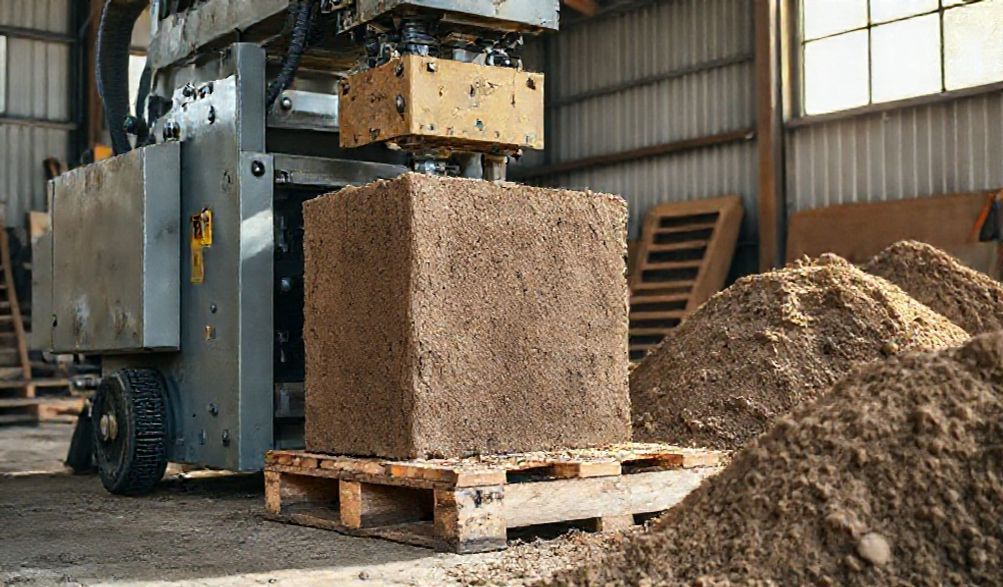
Panduan Lengkap Anda untuk Menemukan Mesin CEB Terbaik yang Dijual
Pengantar
Pencarian metode konstruksi yang berkelanjutan, terjangkau, dan tahan lama kini semakin mendesak. Di tengah naiknya biaya material dan keprihatinan lingkungan, sebuah teknik berusia berabad-abad sedang mengalami kebangkitan modern: membangun dengan Bata Tanah Padat (Compressed Earth Blocks/CEBs). Bata-bata yang kokoh dan elegan ini menawarkan jalan untuk membangun struktur yang indah, efisien, dan tangguh. Namun katalis sejati bagi revolusi konstruksi berkelanjutan ini bukan hanya materialnya—melainkan mesin yang membuatnya terwujud.
Bagi calon pembangun pemilik, pengembang yang sadar lingkungan, dan wirausahawan, menavigasi pasar untuk mesin CEB yang dijual bisa jadi menakutkan. Dengan pilihan mulai dari mesin cetak manual sederhana hingga sistem komersial yang sepenuhnya otomatis, bagaimana Anda memilih yang tepat? Panduan komprehensif ini dibangun berdasarkan penelitian mendalam industri, analisis langsung spesifikasi pabrikan, dan wawasan praktis yang disaring dari lapangan. Tujuan kami adalah membekali Anda dengan pengetahuan untuk membuat pembelian yang percaya diri dan terinformasi, yang selaras dengan skala, anggaran, dan visi proyek Anda.
Kami akan memandu Anda memahami mekanisme mesin CEB, memecah faktor-faktor kritis dalam pemilihan, menganalisis biaya, serta memberikan panduan menuju pemasok terpercaya. Di akhir pembahasan, Anda akan tahu persis apa yang harus dicari untuk menemukan mesin CEB yang tepat untuk dibeli.
Apa itu Mesin CEB dan Bagaimana Cara Kerjanya?
Inti dari mesin CEB adalah alat cetak khusus yang mengubah tanah mentah lembap menjadi balok bangunan presisi dan berdaya tahan tinggi. Teknologi inilah yang memungkinkan tanah lokal diolah menjadi material konstruksi yang layak.
Ilmu di Balik Blok Tanah Terkompresi
Bata Tanah Padat dibuat melalui prosesPemadatan Dinamis.
- Prinsip:Campuran yang tepat dari tanah bawah yang lembap—biasanya mengandung lempung, pasir, dan lanau—dikenakan tekanan mekanis ekstrem dalam ruang tertutup.
- Hasilnya:Tekanan ini, yang sering diukur dalam ton, memaksa partikel-partikel tanah liat untuk mengikat agregat menjadi satu, mengeluarkan udara, dan menciptakan balok yang padat dan kohesif. Tidak diperlukan pembakaran atau bahan kimia tambahan; kekuatannya berasal dari kompresi dan kohesi alami.
- Manfaat Utama:
- Massa Termal:CEB menyerap panas di siang hari dan melepaskannya di malam hari, secara alami mengatur suhu dalam ruangan.
- Tahan Api & Hama:Mereka secara alami tidak mudah terbakar dan tidak menarik bagi hama.
- Keberlanjutan:Mereka memiliki energi terwujud yang sangat rendah, terutama saat menggunakan tanah dari lokasi setempat.
- Daya Tahan:Dibuat dan dilindungi dengan baik, struktur CEB dapat bertahan selama berabad-abad.
Core Components of a CEB Press
While designs vary, most CEB machines share these fundamental components:
- Hopper: The chamber where the prepared soil mix is loaded.
- Ruang Kompresi & Cetakan/Die: The heart of the machine. This steel box defines the block’s shape and size.
- Ram (Hydraulic or Mechanical): The piston that applies immense force to the soil within the chamber.
- Sumber Daya: Provides force to the ram. This can be human leverage (manual), an electric motor, a diesel engine, or a tractor’s Power Take-Off (PTO).
- Bingkai: A robust, usually steel, structure that withstands the tremendous forces of operation.
Proses Dasar: Soil is loaded into the hopper, fed into the compression chamber, the ram compresses it with immense force, the ram retracts, and the finished block is ejected—ready to be stacked and cured.
Key Factors to Consider Before You Buy a CEB Machine
Selecting a machine isn’t just about price; it’s about matching the tool to your specific project requirements. Here are the critical factors that will determine your success.
Production Capacity & Output Goals
Your project scope dictates the machine you need. Be brutally honest about your timeline.
- Small-Scale (Hobbyist, Personal Home): A machine producing 200-500 blok per hari may suffice. This allows for steady progress without overwhelming a small crew.
- Large-Scale (Commercial, Development Project): You’ll need a system capable of 1,000-5,000+ blocks per day. Output is measured in blocks per hour, and consistency is key.
- Pertanyaan Kunci: How many blocks do you need total? Divide that by a realistic number of productive days to determine your required daily output.
Power Source: Manual, Electric, Diesel, or Tractor PTO
Your choice here affects operational cost, location, and ease of use.
- Manual (Lever-Action):
- Kelebihan: Lowest cost, completely off-grid, portable, minimal maintenance.
- Kekurangan: Labor-intensive, lower production rate, physical strain, limited compression force.
- Electric Motor:
- Kelebihan: Consistent, quiet operation, ideal for workshop settings, lower operating cost.
- Kekurangan: Requires reliable grid or substantial solar/battery setup, less mobile.
- Mesin Diesel:
- Kelebihan: High power and torque, perfect for remote sites, mobile (if trailer-mounted).
- Kekurangan: Noisy, produces emissions, higher fuel and maintenance costs.
- Tractor PTO:
- Kelebihan: Leverages existing farm equipment, high power, mobile.
- Kekurangan: Requires a tractor with sufficient horsepower, ties up the tractor during production.
Block Size and Shape Customization
Interchangeable molds unlock design flexibility.
- Ukuran Standar: Most machines offer molds for common dimensions (e.g., 10″x14″x4″). Ensure the size fits your regional building standards.
- Custom Shapes: Some manufacturers offer molds for:
- Blok Saling Mengunci: These reduce or eliminate the need for mortar, speeding up construction.
- Curved or Special Blocks: For arches, decorative elements, or unique architectural designs.
- Crucial Tip: Inquire about the cost and lead time for additional molds upfront.
Soil Suitability and Preparation Requirements
This is the most critical factor for success. The machine is just a press; the soil is your raw material.
- The Ideal Mix: A balance of approximately 25-35% clay (the binder) and 65-75% sand/aggregate (the structural filler). Too much clay leads to shrinking and cracking; too little results in weak blocks.
- Preparation is Non-Negotiable: Soil must be:
- Screened: To remove stones, roots, and debris.
- Properly Moistened: Typically 8-12% moisture content. Think “damp, not muddy.”
- Machine Integration: Some commercial systems include a pengaduk panci or even a rotary screener. For smaller setups, you will need to budget for and operate this equipment separately (e.g., a rotary screener, a mortar mixer).
Types of CEB Machines for Sale: A Detailed Breakdown
The market segments into three broad categories, each serving different needs and budgets.
Manual (Lever-Action) CEB Presses
- Ideal Untuk: DIY enthusiasts, educational workshops, tiny homes, and very low-volume projects like garden walls.
- Kelebihan:
- Extremely low upfront cost.
- Ultimate simplicity and portability.
- No power dependency.
- Keterbatasan:
- High physical labor requirement.
- Low production rate (often 50-100 blocks per hour with a skilled operator).
- Generally produces blocks with lower compressive strength than hydraulic machines.
Hydraulic CEB Machines
- Ideal Untuk: Serious owner-builders constructing a full home, small businesses, community projects, and NGOs.
- Kelebihan:
- Higher Pressure: Creates stronger, more consistent blocks.
- Increased Output: Can produce 200-600+ blocks per hour.
- Easier Operation: Less physical strain, often with push-button or lever controls.
- Pertimbangan:
- Requires a significant investment.
- Needs a power source (electric, diesel, PTO).
- Involves more complex maintenance (hydraulic system, seals).
Automated & Commercial CEB Production Systems
- Ideal Untuk: Production yards, large housing developments, and block-making businesses.
- Fitur:
- Otomatisasi Tinggi: May include auto-feed soil conveyors, palletizers for stacking blocks, and programmable controls.
- Very High Output: Can exceed 1,000 blocks per hour.
- Large Footprint: These are industrial machines.
- Configurations:
- Alat Tulis: Set up in a dedicated production facility.
- Mobile (Trailer-Mounted): Can be moved between job sites—a significant advantage for large, remote projects.
Navigating the Market: Where to Find CEB Machines for Sale
Knowing where to look is half the battle. Prioritize suppliers who offer transparency and support.
Reputable Manufacturers and Direct Suppliers
Buying directly from the manufacturer often provides the best technical support and warranty terms.
- Research: Look for companies with a long history, a clear physical address, and detailed documentation.
- Evidence of Quality: Seek out video demonstrations, third-party block test results, and detailed user manuals available online.
- Support: The best companies offer robust customer service, training resources (videos or in-person), and a clear parts catalog.
Equipment Distributors and Dealers
A regional dealer can provide valuable localized support.
- Manfaat: Potential to see a live demonstration, local service and maintenance, and faster parts shipping.
- Due Diligence: Verify they are an authorized dealer for the manufacturer to ensure valid warranties.
Pre-Owned and Used CEB Equipment
This can be a cost-effective path but requires caution.
- Buyer’s Checklist:
- Inspect Wear Parts: Check the mold/die, ram face, and liners for significant wear or damage.
- Sistem Hidrolik: Look for leaks, check fluid condition, and cycle the ram to ensure smooth operation.
- Verify Parts Availability: Confirm the machine model is still supported and that replacement parts (seals, molds) are obtainable.
- Get History: Ask why it’s being sold and request maintenance records.
- Platforms: Search industrial auction sites, classifieds, and sustainable building forums. Always prioritize an in-person inspection.
Cost Analysis: Investing in a CEB Machine
Understanding the full financial picture is essential for planning.
Price Range Overview (Manual to Commercial)
Prices vary dramatically. Use these as broad estimates (circa 2024):
- Mesin Press Manual: $1,500 – $5,000 USD
- Hydraulic Machines (Small to Mid-size): $10,000 – $35,000 USD
- Commercial/Automated Systems: $40,000 – $150,000+ USD
Understanding Total Cost of Ownership
The purchase price is just the beginning. Factor in:
- Shipping & Import Duties: For large, heavy machines, this can be thousands of dollars.
- Site & Power Setup: Concrete pad, electrical hookup, diesel fuel storage.
- Soil Preparation Equipment: Screener ($1k-$5k), mixer ($1k-$3k), loader.
- Pemeliharaan & Suku Cadang: Hydraulic fluid, spare seals, and most importantly, extra mold sets.
ROI Potential: From Personal Use to Business Venture
- Personal Use: Calculate the cost of purchasing equivalent fired bricks or concrete blocks for your project. The machine cost is often offset after a few thousand blocks, making the rest of your build incredibly material-cost-efficient.
- Business Venture:
- Selling Blocks: Produce and sell CEBs to local builders or homeowners.
- Contracting Services: Offer a “machine and operator” service for projects.
- Training Workshops: Leverage your expertise and equipment to train others.
Essential Questions to Ask Before Purchasing
Arm yourself with this checklist when contacting sellers. Their answers will reveal their professionalism and the machine’s suitability.
- “What is the tested, real-world block output in blocks per hour for a trained crew, including loading and handling time?”
- “What is the full terms of the warranty? Which components are covered, and for how long?”
- “Are replacement parts (seals, hydraulic hoses, mold liners) readily available from you or third parties? Can I see a price list?”
- “Do you provide comprehensive assembly/operation manuals and maintenance schedules in my language?”
- “Can you connect me with 2-3 previous customers in my region who have completed projects of a similar scale?”
- “What is the recommended soil mix and moisture content for optimal performance with this machine?”
- “What are the shipping costs and lead time to my location?”
FAQ: Your CEB Machine Questions Answered
Q1: Can I use the soil from my property to make CEBs?
A: Very likely, but you must test it. The simple “jar test” (shaking soil and water in a clear jar to see layer separation) gives a good clay/sand ratio. Most soils can be adapted by amending—adding sand if too clay-rich, or bagged clay if too sandy.
Q2: How strong are compressed earth blocks compared to fired bricks or concrete?
A: A well-made CEB typically has a compressive strength between 600 and 1,200 PSI. Fired bricks range from 2,500-5,000 PSI, and concrete blocks are around 1,500-2,500 PSI. Crucially, CEB strength often exceeds the 300-500 PSI required by many residential building codes for load-bearing walls.
Q3: Do CEB buildings require special foundations or plasters?
A: Yes. They require a high foundation (e.g., a stem wall) to keep the earthen blocks well above ground moisture and splash-back. For plaster, use a “breathable” sacrificial coat like earthen or lime plaster—never a cement-based stucco on the main wall, as it can trap moisture.
Q4: Is special training needed to operate a CEB machine?
A: While not overly complex, basic mechanical aptitude is a huge advantage. The most important training is in soil preparation. Reputable suppliers should provide clear operational guidance. For a business, seeking formal hands-on training is a wise investment.
Q5: What are the biggest maintenance concerns?
A: 1) Cleanliness: Never let cured clay build up in the hopper or chamber. 2) Hidrolika: Check fluid levels and watch for leaks. 3) Wear Items: Regularly inspect the mold, ram, and liners for wear and replace them as needed to maintain block quality.
Kesimpulan
Choosing the right CEB machine is a significant decision that balances project scale, budget, local soil conditions, and your long-term vision—whether it’s building a single home or launching a new enterprise. It’s an investment not just in equipment, but in sustainability, self-reliance, and the creation of truly enduring structures.
Use this guide as your foundational checklist. Move forward by connecting with manufacturers, speaking directly with current machine owners, and if possible, seeking hands-on experience through workshops. Request detailed specifications, watch video demos, and get all your quotes and promises in writing.
The perfect CEB machine for sale is out there, waiting to transform earth into opportunity. Your journey to building something remarkable starts with the right tool.
This guide was compiled using manufacturer data, technical specifications, and insights from sustainable building professionals. It is designed to be an objective, educational resource to promote informed decision-making in the CEB equipment market. Always consult with engineers, local builders, and manufacturers to ensure compliance with local building codes and the suitability of equipment for your specific project.
<