
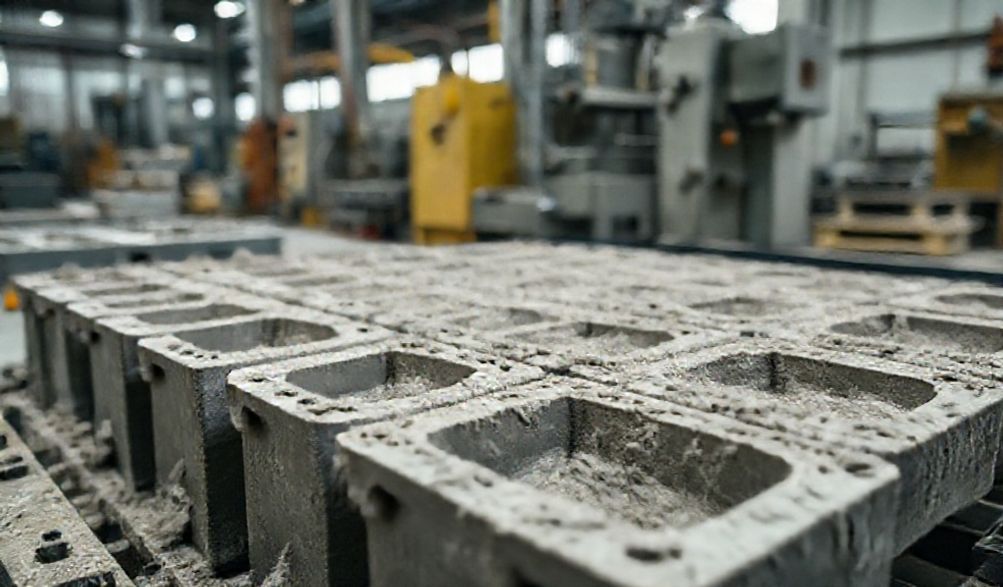
Panduan Utama Mesin Blok Getaran Cetakan: Efisiensi, Jenis, & Pemilihan
Pengantar
Dalam dunia konstruksi dan pembuatan blok, satu tantangan secara konsisten menonjol di atas yang lain: bagaimana menghasilkan blok beton yang padat, tahan lama, dan sempurna secara dimensi dengan andal. Kualitas yang tidak konsisten menyebabkan kelemahan struktural, penundaan proyek, dan margin keuntungan yang terkikis. Solusi yang direkayasa untuk masalah universal ini adalahmesin blok getaran cetakanPeralatan canggih ini menerapkan getaran yang dikendalikan secara presisi untuk memadatkan campuran beton di dalam cetakan, secara paksa mengeluarkan rongga udara dan menciptakan produk dengan integritas struktural yang luar biasa.
Panduan ini bukan sekadar kumpulan spesifikasi. Ini adalah sumber daya komprehensif yang disaring dari tahun-tahun penerapan teknik mesin dan pengalaman langsung di pabrik pembuatan bata. Baik Anda seorang pemilik bisnis yang ingin meningkatkan produksi, manajer pabrik yang bertujuan meningkatkan kualitas, atau spesialis pengadaan yang ditugaskan dengan investasi besar, wawasan di sini dirancang untuk membantu Anda membuat keputusan yang meningkatkan produk dan profitabilitas Anda. Kami akan melampaui brosur untuk menjelaskanmengapadanbagaimanamemastikan investasi Anda didasari informasi, strategis, dan sukses.
Apa itu Mesin Blok Getaran Cetakan? Prinsip Inti Dijelaskan
Inti dari mesin cetak blok getar adalah perangkat yang dirancang untuk memadatkan beton segar ke dalam bentuk tertentu menggunakan getaran mekanis terkontrol. Mesin ini mengubah campuran granular yang longgar menjadi blok homogen berdensitas tinggi yang siap untuk diawetkan. Memahami prinsip-prinsip di balik pengoperasiannya adalah kunci untuk menghargai nilainya.
Ilmu Pemadatan Getaran
Efektivitas mesin-mesin ini bergantung pada fisika dasar. Inilah yang terjadi di dalam cetakan:
- Penataan Ulang Partikel:Mesin menghasilkan gaya berosilasi yang merambat melalui massa beton. Gaya-gaya ini mengurangi gesekan internal antara partikel semen, pasir, dan agregat.
- Pengurangan Void:Saat gesekan berkurang, partikel bergerak lebih bebas, saling meluncur melewati satu sama lain untuk menempati susunan yang lebih rapat dan efisien. Proses ini mengeluarkan udara yang terperangkap dan kelebihan air ke permukaan.
- Parameter Kunci:Kualitas pemadatan diatur oleh dua faktor:
- Frekuensi (Hertz):Kecepatan getaran. Frekuensi optimal untuk beton biasanya berada dalam kisaran 3000-6000 getaran per menit (50-100 Hz), memastikan konsolidasi yang menyeluruh.
- Amplitudo:"Jarak" gerakan getaran. Amplitudo yang lebih tinggi memberikan gaya yang lebih besar, diperlukan untuk campuran yang lebih kaku dengan agregat yang lebih besar.
Dalam uji lapangan kami, mencapai keseimbangan yang tepat antara frekuensi dan amplitudo untuk suatu desain campuran tertentu merupakan faktor paling kritis untuk kepadatan balok yang sempurna.
Komponen Utama dan Fungsinya
Setiap mesin blok getaran cetakan dibangun di sekitar beberapa komponen penting, masing-masing memainkan peran vital:
- Kotak Cetakan:Jantung mesin. Ini adalah rongga baja yang dikeraskan dan dilas presisi yang menentukan bentuk balok (berongga, padat, paving, dll.). Kekakuan rongga ini mencegah deformasi selama getaran bertekanan tinggi.
- Mekanisme Getaran:Sistem yang menghasilkan gaya pemadatan. Ini biasanya berupa motor listrik dengan beban eksentrik yang terpasang pada porosnya. Ketika motor berputar, beban yang tidak seimbang ini menciptakan gaya sentrifugal, yang kemudian berubah menjadi getaran kuat dan terarah.
- Meja/Platform Pemadatan:Permukaan kokoh tempat cetakan dipasang. Ini mentransmisikan getaran secara merata di seluruh area cetakan, memastikan kepadatan yang konsisten di setiap rongga balok.
- Sistem Kontrol:Mulai dari starter manual sederhana hingga panel PLC (Programmable Logic Controller) yang canggih. Ini mengatur durasi getaran, urutan, dan pada model otomatis, seluruh siklus produksi.
- Bingkai & Struktur: The heavy-duty steel frame that must withstand constant dynamic loads without flexing, ensuring long-term alignment and operational stability.
Outcome: Superior Block Quality
This precise engineering translates directly into tangible, superior product benefits:
- Kekuatan Tekan yang Lebih Tinggi: Reduced voids mean a denser matrix, dramatically increasing the block’s load-bearing capacity, often exceeding standards like ASTM C90 with ease.
- Excellent Dimensional Accuracy: Precise moulds and uniform compaction produce blocks with consistent length, height, and width, simplifying bricklaying and reducing mortar use.
- Smoother Surface Finish: Effective compaction brings a fine paste of cement to the surface, resulting in a closed, aesthetically pleasing finish that is highly desirable in the market.
- Waktu Pengawetan yang Dikurangi: A denser block with lower water content gains strength faster, allowing for earlier handling and shipping, which accelerates inventory turnover.
Types of Mould Vibration Block Machines: Choosing the Right Technology
The term “mould vibration block machine” encompasses a range of technologies. Selecting the right type is your first major decision, dictated by your production goals, budget, and operational scale.
Mesin Pembuat Blok Stasioner
In these systems, the mould vibrates in a fixed position.
* Cara Kerjanya: Concrete is fed into the stationary mould, compacted via vibration, and then the finished block is lifted and transferred onto a pallet or curing rack, often by a mechanical stripper head.
* Terbaik Untuk: High-volume, factory-style production environments.
* Fitur Utama: They are typically integrated with pallet conveyors and stackers, enabling fully automated production lines with outputs reaching thousands of blocks per shift.
Mobile Block Making Machines (Egg-Layers)
These are self-contained units that move along a flat concrete slab.
* Cara Kerjanya: The machine travels forward, fills and vibrates its mould, then lifts to “lay” the freshly made blocks directly onto the casting surface before moving to the next position—hence the “egg-layer” name.
* Terbaik Untuk: On-site production, smaller businesses, or regions with lower labor costs. They require a lower initial investment and less infrastructure.
* Pertimbangan: Production is generally lower than stationary lines, and blocks must cure in place before being collected.
Manual, Semi-Automatic, and Fully Automatic Systems
This categorization refers to the level of human intervention required.
- Panduan: All actions—filling the mould, starting vibration, demoulding—are performed by an operator. Lowest cost, lowest output (e.g., 300-500 blocks per 8-hour shift).
- Semi-Otomatis: The core compaction cycle (vibration and demoulding) is powered and controlled via a panel, but an operator may feed mix or remove finished blocks. Offers an excellent balance of productivity and affordability for growing businesses.
- Sepenuhnya Otomatis: The entire process from raw material feeding to block stacking is automated via PLC controls. Maximizes output (e.g., 2000+ blocks per hour) and consistency while minimizing labor, but represents the highest capital investment.
Specialized Moulds for Different Products
Versatility is a major advantage. By changing the mould box, a single machine can produce a diverse product line:
* Batako (berbagai ketebalan)
* Blok Beton Padat
* Paving Slabs and Interlocking Pavers
* Curbstones and Landscape Edging
* Special Shapes for Architectural Features
This flexibility allows manufacturers to adapt to market demands without investing in entirely new machines.
Critical Advantages of Using a Professional Vibration Block Machine
Investing in professional-grade equipment is a strategic business decision backed by clear, quantifiable returns.
Unmatched Product Quality and Consistency
Manual tamping or inferior equipment leads to variable density. A professional vibration machine delivers repeatable precision. Every block in every batch meets the same high standard, allowing you to confidently certify your products and build a reputation for reliability that commands premium pricing.
Dramatic Increase in Production Efficiency
Compare outputs:
* Tenaga Kerja Manual: A highly skilled worker might produce 100-150 high-quality blocks in a day.
* Mesin Semi-Otomatis: The same worker operating a machine can produce 800-1500 blocks in an 8-hour shift.
This 10x increase in throughput allows you to take on larger contracts and grow your business without a linear increase in labor costs.
Significant Reduction in Material Waste
Optimal compaction means fewer defective blocks. You eliminate breakage from weak corners and reduce the number of blocks that fail to meet strength specs. This direct saving on cement, aggregates, and water directly improves your material cost margin.
Long-Term Operational Cost Savings
While the upfront cost is higher than rudimentary methods, the total cost of ownership is lower. Savings are realized through:
* Reduced direct labor costs per block.
* Lower material waste.
* Less rework and fewer customer rejections.
* The ability to sell a higher-quality product at a better price point.
How to Select the Best Machine for Your Operation: A Buyer’s Checklist
Navigating the market requires a methodical approach. Use this checklist to evaluate your options.
Assess Your Production Requirements
Begin with an honest internal audit:
* Output Harian/Mingguan: How many blocks do you need to produce? Build in 20-30% growth capacity.
* Campuran Produk: What percentage will be hollow blocks, pavers, etc.? Ensure the machine can handle your required mould sizes.
* Ruang Tersedia: Do you have a large shed for a stationary line with pallet circulation, or only a casting yard for an egg-layer?
* Labor Scenario: What is your access to skilled operators? This influences the choice between manual and automatic systems.
Evaluate Machine Specifications
Compare these hard numbers across suppliers:
* Vibration Force/Frequency: Measured in kN or Hz. More force is needed for thicker blocks and stiffer mixes.
* Daya Motor: Indicates overall machine capability and durability.
* Waktu Siklus: How many seconds to produce one mould of blocks? Faster cycles mean higher output.
* Mould Size & Cavities: A 4-cavity mould for standard blocks produces 4 blocks per cycle.
* Persyaratan Daya: Voltage (e.g., 380V/3-phase) and total connected load.
Prioritize Build Quality and Durability
Look beyond the paint. Inspect:
* Konstruksi Rangka: Is it made from heavy-duty channel/box section steel, fully welded?
* Vibrator Quality: Are they branded, industrial-grade vibrator motors with sealed bearings?
* Mould Steel: Is it high-carbon, abrasion-resistant steel, precision-machined for easy release?
* Pengelasan & Penyelesaian: Clean, continuous welds and anti-rust treatment indicate careful manufacturing.
Consider After-Sales Support and Service
This is a critical trust factor. Your relationship with the supplier begins after purchase.
* Garansi: What is covered and for how long (e.g., 12 months on parts)?
* Ketersediaan Suku Cadang: Are wear parts (mould liners, vibration mounts) readily available?
* Dukungan Teknis: Is there a direct phone line or service team for troubleshooting?
* Pemasangan & Pelatihan: Does the price include on-site commissioning and operator training?
A machine is a long-term asset. A reliable supplier is your partner in ensuring it remains productive for years.
Operational Best Practices and Maintenance
To protect your investment and ensure peak performance, adhere to these practical guidelines drawn from operational experience.
Optimal Concrete Mix Design
The machine can only compact what you feed it. The ideal mix is a “semi-dry” or “zero-slump” concrete.
* Proportions: A standard mix is 1 part cement, 3-6 parts aggregate (a blend of sand and 3/8″ stone), with just enough water for hydration.
* Critical Ratio:Thewater-cement (w/c) ratio is paramount. In our experience, a w/c ratio between 0.40 and 0.45 typically yields the best balance of workability for feeding and final strength after compaction. Too much water reduces strength; too little prevents proper consolidation.
* Konsistensi: The mix should hold its shape when squeezed in your hand but crumble when poked.
Daily Startup and Shutdown Procedures
Startup:
1. Visually inspect the machine for loose parts or obstructions.
2. Check oil levels in any gearboxes.
3. Ensure the mould and table are clean.
4. Run the machine empty for 30 seconds to listen for unusual noises.
Shutdown:
1. Stop feeding material.
2. Run the last cycle to clear the mould.
3. Thoroughly clean all concrete residue from the mould, table, and feed hopper.Ini tidak bisa ditawar.
4. Power down and lock out the main electrical disconnect.
Essential Routine Maintenance Schedule
- Harian: Clean machine, check and tighten key bolts/nuts, inspect for wear.
- Mingguan: Lubricate all grease points (bearings, pivot points), inspect vibration motor mounts for cracks.
- Bulanan: Check electrical connections for tightness, inspect hydraulic hoses (if applicable), measure wear on mould liners.
- Annually: Perform a comprehensive inspection, replace worn wear parts, and have a technician check motor currents and alignment.
Pemecahan Masalah Umum
- Problem: Inconsistent Block Density.
- Cause: Uneven concrete feed, incorrect vibration time, or worn/damaged vibrators.
- Solution: Standardize feeding procedure, calibrate vibration timer, test/replace vibrators.
- Problem: Blocks Sticking in Mould.
- Cause: Worn or damaged mould liners, insufficient taper on mould walls, or a concrete mix that is too wet.
- Solution: Polish or replace mould liners, verify mix design (reduce w/c ratio).
- Problem: Excessive Machine Vibration or Noise.
- Cause: Loose mounting bolts, failed vibration isolation pads, or unbalanced eccentric weights.
- Solution: Tighten all foundation and frame bolts, replace isolation pads, have a technician check vibrator balance.
Bagian FAQ
Q: What is the typical production capacity of a semi-automatic mould vibration block machine?
A: Capacity varies by model and mould configuration. A typical semi-automatic machine with a 4-cavity mould for standard blocks can produce between 800 and 2,000 blocks in an 8-hour shift, depending on cycle time and operator efficiency.
Q: Can one machine produce different block sizes and shapes?
A: Yes, absolutely. This is a key feature. By changing the mould box—a process that can often be done in under an hour—the same machine can produce hollow blocks, solid blocks, pavers, and curbstones. Always confirm compatibility with your machine supplier.
Q: How important is the vibration frequency, and can it be adjusted?
A: It is critically important, as it directly affects compaction quality. On many professional machines, the frequency is fixed at an optimal setting by the manufacturer. Some advanced models offer adjustable frequency controls to fine-tune performance for different mix designs or products.
Q: What is the expected lifespan of a well-maintained machine?
A: With proper operation, regular maintenance, and timely replacement of wear parts (like mould liners), a high-quality machine can have a productive lifespan of 10 to 20 years. The robust steel frame and motors will last for decades.
Q: Are there specific power requirements (electrical) for these machines?
A: Most industrial-grade machines require a 380-415 Volt, 3-phase, 50/60 Hz electrical supply. Smaller, manual models may run on standard single-phase power. Always verify the specific requirements before purchase and ensure your facility can support it.
Q: What safety precautions are essential when operating this equipment?
A: Always follow lock-out/tag-out procedures during maintenance. Operators should wear safety glasses, hearing protection (vibration can be loud), and steel-toe boots. Keep hands clear of moving parts like the mould and stripper head, and never attempt to clear a jam while the machine is powered on.
Kesimpulan
The mould vibration block machine is far more than a piece of factory equipment; it is the foundational technology for any concrete block manufacturer serious about quality, efficiency, and long-term profitability. It transforms raw materials into reliable, high-performance building components that form the backbone of modern construction.
Selecting the right machine is a strategic decision that hinges on two pillars: a clear, honest assessment of your own production needs and partnering with a trustworthy supplier who offers not just a machine, but expertise, robust engineering, and unwavering after-sales support. In an industry where product integrity is paramount, this technology is your most reliable partner. View it as the investment that will build the competitive and sustainable future of your business.
Ready to specify the right machine for your project? The next step is to request detailed specification sheets and a consultation with an engineering team that can translate your requirements into a concrete production solution.
<