
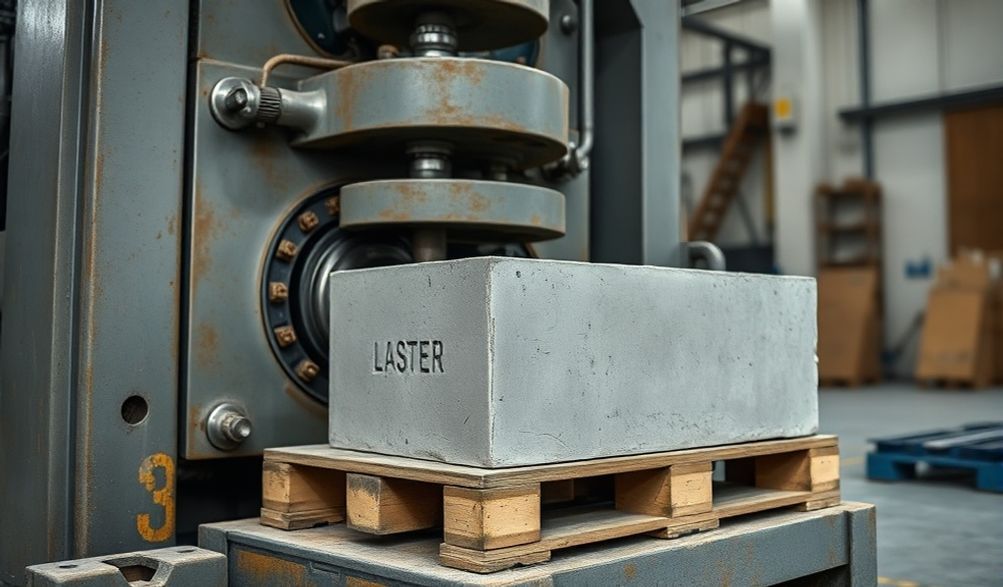
Panduan Utama Mesin Cetak Blok Tunggal: Efisiensi, Jenis & Tips Membeli
Pengantar
Di dunia konstruksi dan manufaktur, konsistensi adalah hal yang utama. Baik Anda seorang kontraktor yang menghadapi penundaan karena pasokan bata yang tidak andal, atau seorang pengusaha yang menyaksikan keuntungan terkikis oleh limbah dan biaya tenaga kerja, tantangan untuk memproduksi bata beton berkualitas tinggi dan seragam sesuai permintaan merupakan masalah umum yang dirasakan. Metode manual lambat dan tidak konsisten, sementara pabrik besar yang sepenuhnya otomatis mewakili investasi yang menakutkan. Ada jalan tengah strategis yang menjadi tulang punggung bagi banyak usaha kecil hingga menengah dan lokasi proyek yang sukses: mesin cetak bata tunggal.
Panduan komprehensif ini dibangun di atas landasan wawasan industri, prinsip-prinsip teknik mesin, dan pengalaman lapangan kolektif selama beberapa dekade dalam bidang mesin konstruksi. Kami akan mengungkap seluk-beluk peralatan penting ini. Mesin cetak blok tunggal secara tepat sesuai dengan namanya: sebuah perangkat mekanis yang dirancang untuk memproduksi satu blok beton—baik itu berongga, padat, paving, atau bentuk khusus—dalam setiap siklus operasinya. Ini merupakan landasan produksi yang terarah dan efisien untuk UKM, startup, dan kebutuhan proyek spesifik.
Bagi para pengusaha, manajer konstruksi, dan petugas pengadaan, tulisan ini menjadi sumber referensi utama Anda. Kami melampaui spesifikasi dasar untuk memberikan saran yang dapat diterapkan dalam memilih mesin yang tepat, mengoperasikannya untuk kinerja puncak, dan merawatnya demi keawetan. Di akhir panduan ini, Anda akan dibekali kemampuan untuk membuat investasi yang terinformasi dan percaya diri, selaras dengan tujuan operasional dan keuangan Anda. Mari kita mulai dengan memahami mekanisme inti yang membuat mesin ini berfungsi optimal.
Bagaimana Cara Kerja Mesin Cetak Blok Tunggal? Mekanisme Inti
Inti dari mesin cetak blok tunggal adalah mengotomatisasi dan menyempurnakan proses kuno dalam memadatkan campuran beton ke dalam cetakan berbentuk. Memahami cara kerjanya adalah kunci untuk menghargai nilainya dan memecahkan masalah yang mungkin timbul di kemudian hari.
Siklus Empat Tahap: Pengisian, Pemadatan, Pembentukan, dan Pengeluaran
Operasi mesin ini merupakan siklus berirama empat tahap yang berulang untuk menghasilkan balok demi balok.
- Pemberian Makan:Siklus dimulai dengan pemuatan campuran beton mentah setengah kering (campuran semen, pasir, dan agregat) ke dalam corong mesin. Dari sini, sejumlah takaran dimasukkan ke dalam rongga cetakan kosong, yang terletak di atas palet atau baki yang dapat digerakkan. Dalam praktiknya, operator harus memastikan volume umpan yang konsisten untuk menghindari balok yang kurang terisi atau terlalu padat.
- Pemadatan:Ini adalah fase paling kritis untuk kekuatan balok. Begitu cetakan terisi, motor getaran yang kuat diaktifkan. Getaran ini, sering dikombinasikan dengan tekanan dari alat penekan hidrolik atau pneumatik, memadatkan campuran dengan kuat. Proses ini mengusir kantong udara dan memastikan material memenuhi setiap bagian cetakan secara penuh, menghasilkan balok yang padat dan kokoh secara struktural. Bayangkan seperti mengetuk wadah berisi gula merah dengan kuat untuk menghilangkan celah.
- Pembentukan:Pemadatan dan pencetakan terjadi secara bersamaan. Saat campuran ditekan, ia mengambil bentuk cetakan atau matras yang presis—baik itu blok berongga standar 6 inci, blok padat, atau paving blok saling mengunci. Kualitas permukaan bagian dalam cetakan secara langsung memengaruhi hasil akhir permukaan blok Anda.
- Pengusiran:Setelah pemadatan, kotak cetakan diangkat secara vertikal. Blok yang baru terbentuk, sekarang stabil, tetap berada di palet di bawahnya. Mekanisme pengeluaran kemudian mendorong blok dan palet dengan lembut ke atas konveyor atau rak perawatan, membersihkan panggung untuk siklus berikutnya. Palet kembali, dan proses dimulai kembali.
Komponen Utama dan Fungsinya
Setiap bagian mesin memainkan peran khusus dalam siklus ini:
* Hopper:Area bongkar muat untuk campuran beton mentah.
* Cetakan/Die:Jantung mesin yang dapat dipertukarkan. Ia menentukan ukuran, bentuk, dan desain balok (misalnya, pola inti berongga).
* Motor Getar:Memberikan getaran frekuensi tinggi yang penting untuk pemadatan dan kepadatan yang tepat.
* Silinder Hidrolik/Pneumatik:Memberikan tekanan ke bawah untuk membantu pemadatan, terutama untuk balok yang lebih padat seperti batu tepi jalan.
* Sistem Pengumpan Palet:Mengotomatiskan penempatan palet kosong di bawah cetakan sebelum pengisian dan mengangkat palet yang sudah terisi balok setelah proses pengeluaran.
* Panel Kontrol: Houses the switches, timers, and (in advanced models) PLCs that allow the operator to control cycle times, vibration duration, and pressure.
Manual vs. Semi-Automatic vs. Fully Automatic: A Spectrum of Operation
The level of human intervention defines these categories:
* Panduan: The operator manually fills the mould, initiates vibration, and removes the finished block. Lowest cost, highest labor input.
* Semi-Otomatis: The operator initiates the cycle (e.g., with a button or lever), and the machine automates the core processes of vibration, compaction, and ejection. The operator typically handles feeding and block removal. This offers the best balance of affordability, control, and productivity for most SMEs.
* Sepenuhnya Otomatis: The entire cycle—from feeding to pallet handling—is automated, often integrated with mixers and conveyor systems. Highest output and consistency, but at a significantly higher capital cost.
Types of Single Block Moulding Machines and Their Applications
Selecting the right type of machine is less about finding the “best” and more about finding the “best for your specific situation.” Field experience shows that matching the machine to the application is the first step toward profitability.
Stationary Block Moulding Machines
These are workhorses designed for a fixed production location, like a dedicated block-making yard or factory.
* Ideal Untuk: Established SMEs with a steady local market, supplying multiple construction sites from a central point.
* Fitur Utama: They are typically heavier, built on a rigid frame for superior stability during the intense vibration phase. This stability contributes to consistent block quality and longer machine life. Output capacity can be higher, as they are often paired with conveyor systems for efficient curing.
* Real-World Scenario: A block manufacturing business supplying a growing township would invest in a robust stationary machine to serve as the reliable core of its operations.
Mobile Block Moulding Machines
Mounted on a trailer or wheels, these machines bring production directly to the project site.
* Ideal Untuk: Large, remote projects (e.g., rural housing developments, road construction in isolated areas), or contractors who move between sites.
* Fitur Utama: The primary advantage is the drastic reduction in transport costs for finished blocks. You transport raw materials (which are cheaper to move) and produce blocks exactly where they are needed. They are designed to be compact and towable.
* Real-World Scenario: A government housing project in a remote village would benefit immensely from a mobile unit, producing blocks on-site and engaging local labor, slashing logistics expenses.
Machine Classification by Block Output
The mould is interchangeable, making one machine versatile. However, machines are often optimized for certain product lines.
* Standard Hollow/Solid Blocks: The most common type, used for wall construction. Machines for these have standardized mould sizes (e.g., 4″, 6″, 8″).
* Bata Paving Saling Mengunci Used for patios, driveways, and walkways. These machines require precise vibration to produce the intricate, interlocking edges without breakage.
* Batu Trotoar & Pinggiran: These heavy, dense products require machines with exceptionally powerful hydraulic rams and robust moulds to withstand the high pressure needed for compaction.
* Bentuk Khusus: Machines can be fitted with custom moulds for landscaping blocks, vent blocks, or other architectural elements.
Key Advantages of Investing in a Single Block Machine
Why choose a single block machine over a manual method or a larger multi-block system? The arguments, grounded in operational and financial logic, are compelling.
Cost-Effectiveness for SMEs and Startups
The initial capital outlay for a quality single block moulding machine is significantly lower than for a multi-block or fully automatic plant. This lower barrier to entry allows entrepreneurs to start a block-making business or construction companies to bring production in-house without crippling debt. A simple ROI analysis often shows that producing blocks for your own projects can pay for the machine within a few months, after which it becomes a pure profit or cost-saving center.
Operational Flexibility and Ease of Use
This is where experience pays off. Changing a mould on a single block machine to switch from producing hollow blocks to paving blocks can often be done in under an hour. This agility allows you to respond quickly to market demand. Furthermore, the operation is relatively straightforward. Training a new operator on a semi-automatic machine takes days, not weeks, reducing your dependency on highly skilled—and highly paid—technicians.
Consistent Quality and Reduced Waste
Manual compaction can never match the uniform vibration and pressure applied by a machine. This mechanical consistency ensures every block has the same density, dimensions, and compressive strength, which is critical for structural integrity and passing quality inspections. Uniform blocks also lead to less mortar use and faster bricklaying. By minimizing human error, you dramatically reduce the rate of cracked, misshapen, or weak blocks, directly cutting material waste and boosting your yield.
Low Maintenance and Durability
Simplicity is reliable. With fewer complex synchronizing mechanisms than a multi-block machine, a single block machine has a simpler mechanical profile. This translates to easier servicing, more readily identifiable issues, and generally lower maintenance costs. When built with high-grade steel and proper welding, these machines are known to last for decades with basic care, providing an excellent return on investment.
Faktor-Faktor Penting yang Perlu Dipertimbangkan Sebelum Membeli
This is the most critical phase of your journey. A trustworthy guide doesn’t just sell the dream; it equips you with the hard questions to ask. Your due diligence here determines your success for years to come.
Assessing Your Production Needs: Capacity, Block Type, and Scale
Don’t buy a machine based on a supplier’s brochure headline. Do the math yourself.
* Hitung Permintaan Riil: How many blocks do you need per day? Per month? Factor in your project timelines or sales forecasts. Remember, a machine’s “theoretical” output is under ideal conditions. A practical output is 70-80% of that, accounting for maintenance, mould changes, and breaks.
* Block Portfolio: What types of blocks will constitute 80% of your sales? Ensure the machine you choose is proven and commonly used for those specific products.
* Growth Plan: Are you planning to scale? While a single block machine is perfect for starting, consider if the supplier offers models you could upgrade to in the future.
Power Source: Electric, Diesel, or Hybrid?
Your local infrastructure dictates this choice.
* Listrik: Clean, quiet, and cost-effective to run jika you have a stable, uninterrupted grid power supply. Unstable power can damage motors and halt production.
* Diesel: Offers complete independence from the grid. Essential for sites with no electricity or mobile operations. Higher fuel costs and noise are the trade-offs.
* Hibrida (Listrik/Diesel): Offers the flexibility to switch between power sources, providing a valuable backup. This is often the most pragmatic choice in regions with unreliable electricity.
Machine Build Quality and Material (Steel Grade, Welding)
The machine’s physical construction is non-negotiable. It must withstand millions of cycles of intense vibration.
* Tingkat Baja: Inquire about the grade and thickness of the steel used in the frame and mould. Thicker, high-tensile steel resists fatigue and deformation.
* Welding: Look for clean, continuous, and robust welds—not spotty, superficial beads. Poor welding is the number one cause of frame cracks in heavily vibrated machinery.
* Vibration Mounts: High-quality rubber or spring mounts isolate vibration, protecting both the machine’s structure and the operator.
Dukungan Pasca Penjualan: Faktor Penentu Kesuksesan
The machine’s quality is only half the equation; the supplier’s support completes it.
* Garansi: What is covered, and for how long? A comprehensive warranty on the frame, motor, and hydraulics is a sign of confidence.
* Suku Cadang: Are common wear-and-tear parts (springs, seals, bearings) readily available locally or from the supplier? Long wait times for parts mean costly downtime.
* Dukungan Teknis: Does the supplier offer installation supervision, operator training, and troubleshooting assistance? Can you easily reach them with questions?
Optimizing Performance and Essential Maintenance Tips
Owning the machine is step one; operating it optimally is where expertise turns into profit. These practices, honed from field observations, will maximize your output and machine lifespan.
Best Practices for Raw Material Mix (Cement, Sand, Aggregate)
The machine can only work with what you feed it. A poor mix guarantees poor blocks.
* Ratios: A standard mix might be 1 part cement, 3-4 parts sharp sand, and 4-6 parts aggregate (e.g., 3/8″ stone). The exact ratio depends on the desired block strength and local material properties.
* Kandungan Kelembaban: This is critical. The mix should be semi-dry—holding its shape when squeezed in your hand but crumbling when poked. Too wet causes blocks to slump and stick in the mould; too dry leads to poor compaction and breakage.
* Konsistensi: Use a consistent source and grade of sand and aggregate. Variation in particle size or cleanliness will cause fluctuations in block quality and can damage the machine over time.
Daily, Weekly, and Monthly Maintenance Checklist
Preventative maintenance is cheap; repairs are expensive.
* Harian:
* Clean the hopper, mould, and pallets thoroughly after the last shift to prevent concrete buildup.
* Visually check for loose bolts, hydraulic leaks, or unusual sounds.
* Lubricate all moving joints as per the manual.
* Mingguan:
* Inspect the vibration motors for secure mounting and check electrical connections.
* Tighten all visible bolts and nuts on the frame and mould assembly.
* Check hydraulic oil levels and look for contamination.
* Bulanan:
* Perform a detailed inspection of the mould for wear or damage.
* Check the alignment of the ram and ejection system.
* Grease all bearings.
Pemecahan Masalah Umum
A quick-reference guide for operators:
| Issue | Probable Cause | Suggested Solution |
| :— | :— | :— |
| Block breaking during ejection | Insufficient compaction (mix too dry, vibration time too short) or worn mould. | Adjust mix moisture, increase vibration time, inspect/replace mould. |
| Block surface rough or pitted | Mix is too wet, or excessive vibration is causing segregation. | Reduce water in mix, slightly reduce vibration time. |
| Block dimensions inconsistent | Worn mould, loose mould bolts, or inconsistent feed volume. | Tighten all bolts, inspect mould for wear, standardize feeding procedure. |
| Machine vibrating excessively | Loose mounting bolts, failed vibration mounts, or unbalanced load. | Tighten foundation bolts, inspect and replace rubber mounts. |
| Poor block strength | Incorrect cement/sand ratio, inadequate compaction, or improper curing. | Review mix design, ensure proper vibration/pressure, follow curing protocol. |
Pertanyaan yang Sering Diajukan (FAQ)
Q1: What is the average production output of a single block machine per day?
Output varies by model and block type. A typical semi-automatic machine producing standard 6″ hollow blocks can realistically produce 800 to 1,500 blocks in an 8-hour shift, depending on operator efficiency and cycle time settings.
Q2: Can one machine produce different sizes and types of blocks?
Yes, absolutely. This is a key advantage. By purchasing different moulds (which are interchangeable), the same machine can produce hollow blocks, solid blocks, paving blocks, and more. Ensure the machine’s pressure and vibration system is suitable for the densest block you plan to make.
Q3: What is the typical price range for a good quality single block moulding machine?
Prices vary widely based on automation level, power source, and build quality. Expect a range from approximately $3,000 for a basic manual model to $15,000 – $25,000+ for a robust, diesel-powered semi-automatic machine with a strong brand reputation. Consider total cost of ownership, not just purchase price.
Q4: How much space and what kind of foundation is required for installation?
A stationary machine requires a level, solid concrete pad (at least 6 inches thick). The production area, including space for raw materials, block curing, and storage, should be at least 1,500 to 3,000 square feet for efficient operation.
Q5: What safety precautions are essential when operating this machinery?
Always wear safety glasses, hearing protection (due to vibration noise), and sturdy gloves. Never place hands in the mould area during the cycle. Ensure all safety guards are in place. Follow lock-out/tag-out procedures during maintenance.
Q6: Is it profitable to start a block-making business with a single machine?
Yes, it is a proven and viable business model with relatively low entry costs. Profitability hinges on key factors: securing a reliable local market for your blocks, managing raw material costs effectively, maintaining high block quality, and operating the machine efficiently. A well-run single machine operation can see a full return on investment within 12-24 months.
Kesimpulan
The single block moulding machine stands out as a strategic, flexible, and cost-efficient solution for targeted concrete block production. It bridges the gap between labor-intensive manual methods and capital-intensive industrial plants, empowering SMEs, entrepreneurs, and project managers to take control of their supply chain and quality.
As we’ve explored, success is not guaranteed by the machine alone. It is achieved by meticulously aligning the machine’s specifications—its type, power, build quality, and support network—with your precise business goals, production needs, and operational environment. The lowest purchase price is rarely the path to the lowest long-term cost.
Use this guide as your checklist. When you engage with suppliers, ask the detailed questions outlined here. Demand to see the machine in operation, either through videos or, ideally, a live demonstration. Speak to their existing customers. This due diligence transforms you from a hopeful buyer into an informed investor, ready to make a purchase that will build the foundation of your success, one perfect block at a time.
This guide was developed based on insights from industry professionals with over 20 years of experience in construction machinery design, sales, and field operation.
<