
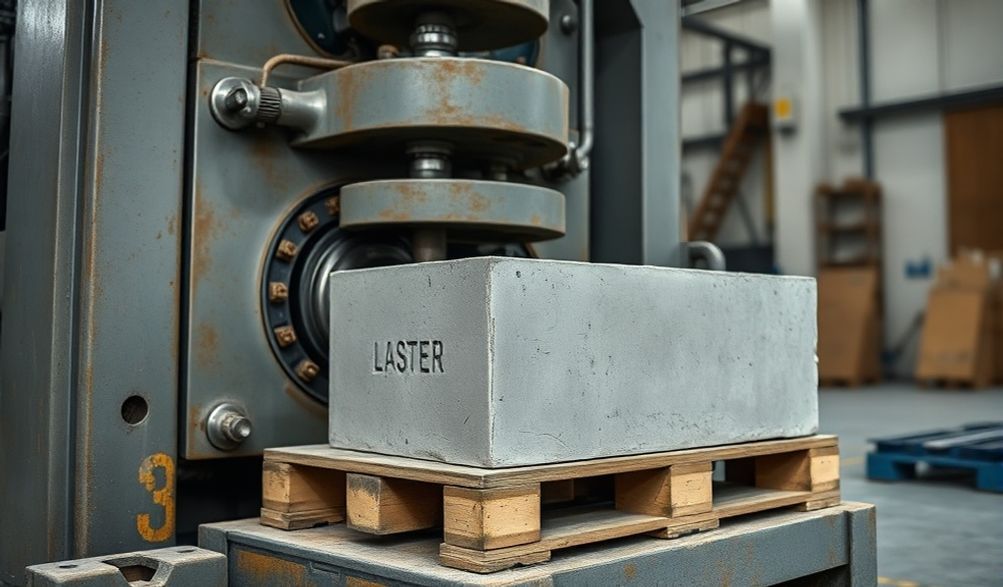
Жалғыз блокты қалыптау машиналарының жан-жақты нұсқаулығы: Тиімділік, Түрлері және Сатып алу кеңестері
Кіріспе
Құрылыс және өндіріс әлемінде тұрақтылық патша болып табылады. Сендердің сенімсіз блок жеткізуінің кешігуіне тап болған мердігер болсаңыз да, немесе қалдықтар мен еңбек шығындарынан пайданың азаюын бақылап отырған кәсіпкер болсаңыз да, жоғары сапалы, біркелкі бетон блоктарын қажеттілік бойынша өндіру мәселесі әмбебап қиындық болып табылады. Қолмен жасалатын әдістер баяу және тұрақсыз, ал ірі, толық автоматтандырылған зауыттар қорқынышты инвестицияны талап етеді. Шағын және орта кәсіпорындар мен табысты жобалар алаңдарының тірек сүбегі ретінде стратегиялық орташа шешім бар: жалғыз блок қалыптау машинасы.
Бұл жан-жақты нұсқаулық өнеркәсіптік түсініктерге, механикалық инженерия қағидаттарына және құрылыс техникасы саласындағы ондаған жылдардың жинақталған тәжірибесіне негізделген. Біз бұл маңызды жабдықтың құпиясын ашамыз. Блок қалыптау машинасы атауынан көрініп тұрғандай: бір операциялық циклде бір темірбетон блокты — ол қуыс, қатты, тротуар тақтасы немесе арнайы пішінде болуы мүмкін — өндіруге арналған механикаландырылған құрылғы. Бұл ШҚК, стартаптар және нақты жобалардың талаптары үшін нысаналы және тиімді өндірістің негізгі тасы болып табылады.
Кәсіпкерлерге, құрылыс менеджерлеріне және сатып алу қызметкерлеріне арналған бұл жазба сіздің шешуші ақпарат көзіңіз болады. Біз негізгі сипаттамалардан асып, дұрыс машинаны таңдау, оны максималды өнімділікпен жұмыс істеу және ұзақ мерзімді қызмет ету үшін қамтамасыз ету бойынша іс-әрекетке бағытталған кеңестер ұсынамыз. Бұл нұсқаулықты оқып болған соң, сіз өз операциялық және қаржылық мақсаттарыңызға сәйкес келетін хабардар және сенімді инвестиция жасауға қаруланған боласыз. Алдымен, осы машинаның жұмыс істеуінің негізгі механикасын түсінуден бастайық.
Бір блокты қалыптау машинасы қалай жұмыс істейді? Негізгі механикасы
Оның негізінде, бір блок қалыптау машинасы бетон қоспасын пішінді қалыпқа тығыздаудың ежелгі үрдісін автоматтандырады және жетілдіреді. Оның жұмысын түсіну оның құндылығын бағалау және кейінгі проблемаларды шешу үшін өте маңызды.
Төрт кезеңді цикл: Тыңайту, Қысу, Қалыптау және Шығару
Машинаның жұмысы ритмді, төрт кезеңді цикл болып табылады, ол блоктан кейінгі блокты өндіру үшін қайталанады.
- Тамақтандыру:Цикл шикі, жартылай құрғақ бетон қоспасын (цемент, құм және агрегат қоспасы) машинаның бункеріне тиеумен басталады. Осы жерден өлшенген мөлшер бос қалып қуысына беріледі, ол қозғалмалы палета немесе табақшада орналасады. Тәжірибеде операторлар толық емес немесе артық толтырылған блоктарды болдырмау үшін тұрақты беру көлемін қамтамасыз етуі керек.
- Тығыздау:Бұл блок беріктігі үшін ең маңызды кезең. Қалып толтырылғаннан кейін, қуатты діріл моторлары іске қосылады. Бұл діріл, жиі гидравликалық немесе пневматикалық поршеннің қысымымен қосылып, қоспаны күшті тығыздайды. Ол ауа қабаттарын шығарып, материалдың қалыптың әр бөлігін толық алуын қамтамасыз етеді, нәтижесінде тығыз, құрылымдық тұрғыдан берік блок алынады. Оны қоңыр қант контейнеріндегі саңылауларды жою үшін мықтап ұруға ұқсатуға болады.
- Қалыптау:Қысу және қалыптау бір мезгілде жүреді. Қоспа қысылған кезде, ол қалыптың немесе штамптың нақты пішінін қабылдайды — бұл стандартты 6 дюймдық кеуекті блок, қатты блок немесе бір-бірімен ілінісетін плитка болсын. Қалыптың ішкі бетінің сапасы соңғы блоктың бетінің сапасына тікелей әсер етеді.
- Атқылау:Қысудан кейін қалып қорасы тігіс көтеріледі. Жаңа қалыптасқан, енді тұрақты блок астындағы паллетада қалады. Содан кейін шығару механизмі блок пен паллетаны конвейерге немесе қатайту сөресіне ақырын итереді, келесі циклге дайындау үшін кеңістікті босатады. Паллета қайта оралады және процесс қайта басталады.
Негізгі компоненттер және олардың функциялары
Машинаның әрбір бөлігі осы циклде белгілі бір рөл атқарады:
* Хоппер:Шикі бетон қоспасын тиеу алаңы.
* Қалып/Штамп: The interchangeable heart of the machine. It defines the block’s size, shape, and design (e.g., hollow core pattern).
* Vibration Motor(s): Provides the high-frequency shaking essential for proper compaction and density.
* Hydraulic/Pneumatic Ram: Applies downward pressure to aid compaction, especially for denser blocks like kerbstones.
* Pallet Feeder System: Automates the placement of the empty pallet under the mould before filling and removes the block-laden pallet after ejection.
* Басқару панелі: Houses the switches, timers, and (in advanced models) PLCs that allow the operator to control cycle times, vibration duration, and pressure.
Manual vs. Semi-Automatic vs. Fully Automatic: A Spectrum of Operation
The level of human intervention defines these categories:
* Нұсқаулық: The operator manually fills the mould, initiates vibration, and removes the finished block. Lowest cost, highest labor input.
* Жартылай автоматты: The operator initiates the cycle (e.g., with a button or lever), and the machine automates the core processes of vibration, compaction, and ejection. The operator typically handles feeding and block removal. This offers the best balance of affordability, control, and productivity for most SMEs.
* Толық автоматты: The entire cycle—from feeding to pallet handling—is automated, often integrated with mixers and conveyor systems. Highest output and consistency, but at a significantly higher capital cost.
Types of Single Block Moulding Machines and Their Applications
Selecting the right type of machine is less about finding the “best” and more about finding the “best for your specific situation.” Field experience shows that matching the machine to the application is the first step toward profitability.
Stationary Block Moulding Machines
These are workhorses designed for a fixed production location, like a dedicated block-making yard or factory.
* Үшін Қолайлы: Established SMEs with a steady local market, supplying multiple construction sites from a central point.
* Негізгі ерекшеліктері: They are typically heavier, built on a rigid frame for superior stability during the intense vibration phase. This stability contributes to consistent block quality and longer machine life. Output capacity can be higher, as they are often paired with conveyor systems for efficient curing.
* Real-World Scenario: A block manufacturing business supplying a growing township would invest in a robust stationary machine to serve as the reliable core of its operations.
Mobile Block Moulding Machines
Mounted on a trailer or wheels, these machines bring production directly to the project site.
* Үшін Қолайлы: Large, remote projects (e.g., rural housing developments, road construction in isolated areas), or contractors who move between sites.
* Негізгі ерекшеліктері: The primary advantage is the drastic reduction in transport costs for finished blocks. You transport raw materials (which are cheaper to move) and produce blocks exactly where they are needed. They are designed to be compact and towable.
* Real-World Scenario: A government housing project in a remote village would benefit immensely from a mobile unit, producing blocks on-site and engaging local labor, slashing logistics expenses.
Machine Classification by Block Output
The mould is interchangeable, making one machine versatile. However, machines are often optimized for certain product lines.
* Standard Hollow/Solid Blocks: The most common type, used for wall construction. Machines for these have standardized mould sizes (e.g., 4″, 6″, 8″).
* Құлыптасқан тас жол блоктары: Used for patios, driveways, and walkways. These machines require precise vibration to produce the intricate, interlocking edges without breakage.
* Шағыл тастар мен жиектеулер: These heavy, dense products require machines with exceptionally powerful hydraulic rams and robust moulds to withstand the high pressure needed for compaction.
* Арнайы пішіндер: Machines can be fitted with custom moulds for landscaping blocks, vent blocks, or other architectural elements.
Key Advantages of Investing in a Single Block Machine
Why choose a single block machine over a manual method or a larger multi-block system? The arguments, grounded in operational and financial logic, are compelling.
Cost-Effectiveness for SMEs and Startups
The initial capital outlay for a quality single block moulding machine is significantly lower than for a multi-block or fully automatic plant. This lower barrier to entry allows entrepreneurs to start a block-making business or construction companies to bring production in-house without crippling debt. A simple ROI analysis often shows that producing blocks for your own projects can pay for the machine within a few months, after which it becomes a pure profit or cost-saving center.
Operational Flexibility and Ease of Use
This is where experience pays off. Changing a mould on a single block machine to switch from producing hollow blocks to paving blocks can often be done in under an hour. This agility allows you to respond quickly to market demand. Furthermore, the operation is relatively straightforward. Training a new operator on a semi-automatic machine takes days, not weeks, reducing your dependency on highly skilled—and highly paid—technicians.
Consistent Quality and Reduced Waste
Manual compaction can never match the uniform vibration and pressure applied by a machine. This mechanical consistency ensures every block has the same density, dimensions, and compressive strength, which is critical for structural integrity and passing quality inspections. Uniform blocks also lead to less mortar use and faster bricklaying. By minimizing human error, you dramatically reduce the rate of cracked, misshapen, or weak blocks, directly cutting material waste and boosting your yield.
Low Maintenance and Durability
Simplicity is reliable. With fewer complex synchronizing mechanisms than a multi-block machine, a single block machine has a simpler mechanical profile. This translates to easier servicing, more readily identifiable issues, and generally lower maintenance costs. When built with high-grade steel and proper welding, these machines are known to last for decades with basic care, providing an excellent return on investment.
Сатып алмас бұрын ескеру керек маңызды факторлар
This is the most critical phase of your journey. A trustworthy guide doesn’t just sell the dream; it equips you with the hard questions to ask. Your due diligence here determines your success for years to come.
Assessing Your Production Needs: Capacity, Block Type, and Scale
Don’t buy a machine based on a supplier’s brochure headline. Do the math yourself.
* Нақты сұранысты есептеңіз: How many blocks do you need per day? Per month? Factor in your project timelines or sales forecasts. Remember, a machine’s “theoretical” output is under ideal conditions. A practical output is 70-80% of that, accounting for maintenance, mould changes, and breaks.
* Block Portfolio: What types of blocks will constitute 80% of your sales? Ensure the machine you choose is proven and commonly used for those specific products.
* Growth Plan: Are you planning to scale? While a single block machine is perfect for starting, consider if the supplier offers models you could upgrade to in the future.
Power Source: Electric, Diesel, or Hybrid?
Your local infrastructure dictates this choice.
* Электрлік: Clean, quiet, and cost-effective to run егер you have a stable, uninterrupted grid power supply. Unstable power can damage motors and halt production.
* Дизель: Offers complete independence from the grid. Essential for sites with no electricity or mobile operations. Higher fuel costs and noise are the trade-offs.
* Hybrid (Electric/Diesel): Offers the flexibility to switch between power sources, providing a valuable backup. This is often the most pragmatic choice in regions with unreliable electricity.
Machine Build Quality and Material (Steel Grade, Welding)
The machine’s physical construction is non-negotiable. It must withstand millions of cycles of intense vibration.
* Steel Grade: Inquire about the grade and thickness of the steel used in the frame and mould. Thicker, high-tensile steel resists fatigue and deformation.
* Welding: Look for clean, continuous, and robust welds—not spotty, superficial beads. Poor welding is the number one cause of frame cracks in heavily vibrated machinery.
* Vibration Mounts: High-quality rubber or spring mounts isolate vibration, protecting both the machine’s structure and the operator.
After-Sales Support: The Make-or-Break Factor
The machine’s quality is only half the equation; the supplier’s support completes it.
* Кепілдік: What is covered, and for how long? A comprehensive warranty on the frame, motor, and hydraulics is a sign of confidence.
* Қосалқы бөлшектер: Are common wear-and-tear parts (springs, seals, bearings) readily available locally or from the supplier? Long wait times for parts mean costly downtime.
* Техникалық қолдау: Does the supplier offer installation supervision, operator training, and troubleshooting assistance? Can you easily reach them with questions?
Optimizing Performance and Essential Maintenance Tips
Owning the machine is step one; operating it optimally is where expertise turns into profit. These practices, honed from field observations, will maximize your output and machine lifespan.
Best Practices for Raw Material Mix (Cement, Sand, Aggregate)
The machine can only work with what you feed it. A poor mix guarantees poor blocks.
* Ratios: A standard mix might be 1 part cement, 3-4 parts sharp sand, and 4-6 parts aggregate (e.g., 3/8″ stone). The exact ratio depends on the desired block strength and local material properties.
* Ылғалдылық мөлшері: This is critical. The mix should be semi-dry—holding its shape when squeezed in your hand but crumbling when poked. Too wet causes blocks to slump and stick in the mould; too dry leads to poor compaction and breakage.
* Тұрақтылық: Use a consistent source and grade of sand and aggregate. Variation in particle size or cleanliness will cause fluctuations in block quality and can damage the machine over time.
Daily, Weekly, and Monthly Maintenance Checklist
Preventative maintenance is cheap; repairs are expensive.
* Күнделікті
* Clean the hopper, mould, and pallets thoroughly after the last shift to prevent concrete buildup.
* Visually check for loose bolts, hydraulic leaks, or unusual sounds.
* Lubricate all moving joints as per the manual.
* Апталық:
* Inspect the vibration motors for secure mounting and check electrical connections.
* Tighten all visible bolts and nuts on the frame and mould assembly.
* Check hydraulic oil levels and look for contamination.
* Ай сайын:
* Perform a detailed inspection of the mould for wear or damage.
* Check the alignment of the ram and ejection system.
* Grease all bearings.
Жиі кездесетін мәселелерді шешу
A quick-reference guide for operators:
| Issue | Probable Cause | Suggested Solution |
| :— | :— | :— |
| Block breaking during ejection | Insufficient compaction (mix too dry, vibration time too short) or worn mould. | Adjust mix moisture, increase vibration time, inspect/replace mould. |
| Block surface rough or pitted | Mix is too wet, or excessive vibration is causing segregation. | Reduce water in mix, slightly reduce vibration time. |
| Block dimensions inconsistent | Worn mould, loose mould bolts, or inconsistent feed volume. | Tighten all bolts, inspect mould for wear, standardize feeding procedure. |
| Machine vibrating excessively | Loose mounting bolts, failed vibration mounts, or unbalanced load. | Tighten foundation bolts, inspect and replace rubber mounts. |
| Poor block strength | Incorrect cement/sand ratio, inadequate compaction, or improper curing. | Review mix design, ensure proper vibration/pressure, follow curing protocol. |
Жиі қойылатын сұрақтар (ЖҚС)
Q1: What is the average production output of a single block machine per day?
Output varies by model and block type. A typical semi-automatic machine producing standard 6″ hollow blocks can realistically produce 800 to 1,500 blocks in an 8-hour shift, depending on operator efficiency and cycle time settings.
Q2: Can one machine produce different sizes and types of blocks?
Yes, absolutely. This is a key advantage. By purchasing different moulds (which are interchangeable), the same machine can produce hollow blocks, solid blocks, paving blocks, and more. Ensure the machine’s pressure and vibration system is suitable for the densest block you plan to make.
Q3: What is the typical price range for a good quality single block moulding machine?
Prices vary widely based on automation level, power source, and build quality. Expect a range from approximately $3,000 for a basic manual modelto$15,000 – $25,000+ for a robust, diesel-powered semi-automatic machine with a strong brand reputation. Consider total cost of ownership, not just purchase price.
Q4: How much space and what kind of foundation is required for installation?
A stationary machine requires a level, solid concrete pad (at least 6 inches thick). The production area, including space for raw materials, block curing, and storage, should be at least 1,500 to 3,000 square feet for efficient operation.
Q5: What safety precautions are essential when operating this machinery?
Always wear safety glasses, hearing protection (due to vibration noise), and sturdy gloves. Never place hands in the mould area during the cycle. Ensure all safety guards are in place. Follow lock-out/tag-out procedures during maintenance.
Q6: Is it profitable to start a block-making business with a single machine?
Yes, it is a proven and viable business model with relatively low entry costs. Profitability hinges on key factors: securing a reliable local market for your blocks, managing raw material costs effectively, maintaining high block quality, and operating the machine efficiently. A well-run single machine operation can see a full return on investment within 12-24 months.
Қорытынды
The single block moulding machine stands out as a strategic, flexible, and cost-efficient solution for targeted concrete block production. It bridges the gap between labor-intensive manual methods and capital-intensive industrial plants, empowering SMEs, entrepreneurs, and project managers to take control of their supply chain and quality.
As we’ve explored, success is not guaranteed by the machine alone. It is achieved by meticulously aligning the machine’s specifications—its type, power, build quality, and support network—with your precise business goals, production needs, and operational environment. The lowest purchase price is rarely the path to the lowest long-term cost.
Use this guide as your checklist. When you engage with suppliers, ask the detailed questions outlined here. Demand to see the machine in operation, either through videos or, ideally, a live demonstration. Speak to their existing customers. This due diligence transforms you from a hopeful buyer into an informed investor, ready to make a purchase that will build the foundation of your success, one perfect block at a time.
This guide was developed based on insights from industry professionals with over 20 years of experience in construction machinery design, sales, and field operation.
<